- Company Articles
- Products and Technology
- Installation And Maintenance
- Castor Fixed Plate Installation Cost: Budgeting for Material Handling Upgrades

Castor Fixed Plate Installation Cost: Budgeting for Material Handling Upgrades
Related Product
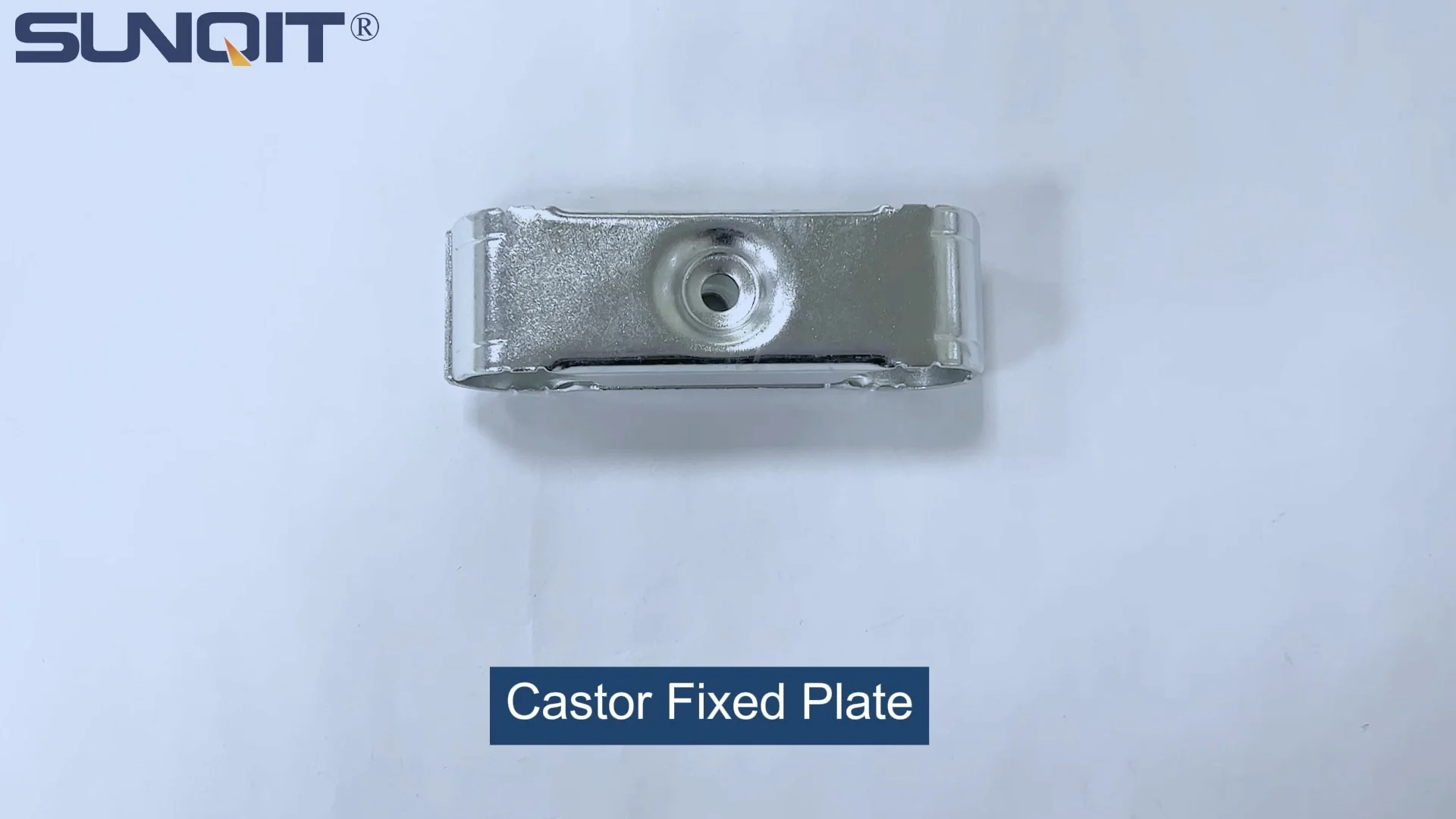
Castor Fixed Plate
Castor fixed plate, used for castor installation, one castor need two pcs castor plate to fix under the workbench, flow rack, and hand trolley.
Introduction: The Hidden Hero of Material Handling Efficiency
In the bustling world of warehouses, manufacturing plants, and distribution centers, every second counts. Material handling—the process of moving, storing, and controlling goods—often feels like the unsung backbone of operational success. When things run smoothly, products glide from assembly lines to shipping docks, teams collaborate seamlessly, and deadlines are met with ease. But when inefficiencies creep in—like a wobbly workbench, a stuck conveyor, or a caster wheel that refuses to roll—productivity grinds to a halt, frustration builds, and costs start to pile up.
One often-overlooked component that can make or break material handling efficiency is the castor fixed plate . This simple yet critical piece of hardware connects caster wheels to equipment, ensuring stability, safety, and smooth movement. Whether you're upgrading a single workbench, retrofitting a fleet of turnover trolleys, or installing a new conveyor system, getting the castor fixed plate installation right isn't just about "bolting on wheels"—it's about investing in long-term reliability and performance.
But here's the question many operations managers and small business owners ask: How much does it actually cost to install castor fixed plates, and how do I budget for it without breaking the bank? In this guide, we'll break down the costs, explore the factors that influence them, and share actionable tips to help you plan a material handling upgrade that balances quality, efficiency, and affordability. Along the way, we'll touch on key elements like caster and accessories , the role of a trusted lean system supplier , and how even small choices (like the type of workbench) can impact your bottom line.
One often-overlooked component that can make or break material handling efficiency is the castor fixed plate . This simple yet critical piece of hardware connects caster wheels to equipment, ensuring stability, safety, and smooth movement. Whether you're upgrading a single workbench, retrofitting a fleet of turnover trolleys, or installing a new conveyor system, getting the castor fixed plate installation right isn't just about "bolting on wheels"—it's about investing in long-term reliability and performance.
But here's the question many operations managers and small business owners ask: How much does it actually cost to install castor fixed plates, and how do I budget for it without breaking the bank? In this guide, we'll break down the costs, explore the factors that influence them, and share actionable tips to help you plan a material handling upgrade that balances quality, efficiency, and affordability. Along the way, we'll touch on key elements like caster and accessories , the role of a trusted lean system supplier , and how even small choices (like the type of workbench) can impact your bottom line.
What Is a Castor Fixed Plate, and Why Does It Matter?
Before diving into costs, let's clarify what a castor fixed plate is and why it's so important. Imagine a standard workbench—say,
Workbench E (single deck-without caster)
, a common model in many factories. Without casters, it's stationary, limiting flexibility; workers have to walk back and forth to retrieve tools or materials. Add caster wheels, and suddenly the workbench can be moved to where it's needed most—whether that's next to an assembly line, a packing station, or a storage rack.
But caster wheels alone aren't enough. To attach them securely to the workbench (or any equipment), you need a fixed plate—a flat, sturdy piece of metal (usually steel or aluminum) that bolts to the equipment's base and provides a stable mounting point for the caster. Think of it as the "bridge" between the caster and the equipment: too flimsy, and the caster could wobble or even detach under load; too heavy, and it adds unnecessary weight, making movement harder.
The right castor fixed plate does more than just hold wheels in place. It:
But caster wheels alone aren't enough. To attach them securely to the workbench (or any equipment), you need a fixed plate—a flat, sturdy piece of metal (usually steel or aluminum) that bolts to the equipment's base and provides a stable mounting point for the caster. Think of it as the "bridge" between the caster and the equipment: too flimsy, and the caster could wobble or even detach under load; too heavy, and it adds unnecessary weight, making movement harder.
The right castor fixed plate does more than just hold wheels in place. It:
- Prevents accidents: A loose caster can cause equipment to tip, leading to injuries or damaged goods.
- Reduces wear and tear: Proper alignment from a well-installed fixed plate extends the life of caster wheels and bearings.
- Boosts efficiency: Smooth-rolling, stable equipment means faster material movement and less worker fatigue.

Breaking Down the Costs: What Goes Into Castor Fixed Plate Installation?
The total cost of installing castor fixed plates depends on three main categories:
material costs
,
labor costs
, and
additional expenses
. Let's unpack each one.
1. Material Costs: The Parts That Make It Happen
Materials are the foundation of any installation, and here's where your choice of
caster and accessories
(like wheels, brakes, and mounting hardware) and fixed plate quality will have the biggest impact.
Caster and Accessories: Casters come in all shapes and sizes, from lightweight plastic wheels for office furniture to heavy-duty steel wheels rated for thousands of pounds. For industrial use (like on workbenches, conveyors, or turnover trolleys), you'll likely need medium to heavy-duty casters, which range in price from $20 to $150 per caster , depending on:
Fixed Plates: These are typically made of steel (strong, affordable) or aluminum (lightweight, rust-resistant). A basic steel fixed plate for a small workbench might cost $8–$15, while a heavy-duty aluminum plate for a conveyor could run $25–$50. If you need custom sizing (e.g., to fit a non-standard workbench or trolley), costs can jump to $75–$150 per plate, as suppliers may need to fabricate it from scratch.
Other Materials: Don't forget small but essential items like threadlocker (to prevent bolts from loosening), anti-slip pads (for extra stability), or paint/coating (to protect against rust). These add $10–$30 to your material budget.
Caster and Accessories: Casters come in all shapes and sizes, from lightweight plastic wheels for office furniture to heavy-duty steel wheels rated for thousands of pounds. For industrial use (like on workbenches, conveyors, or turnover trolleys), you'll likely need medium to heavy-duty casters, which range in price from $20 to $150 per caster , depending on:
- Load capacity: A caster rated for 500 lbs will cost more than one rated for 200 lbs.
- Wheel material: Rubber wheels (quiet, good for floors) are pricier than plastic; metal wheels (durable for rough surfaces) cost the most.
- Features: Locking brakes, swivel locks, or shock absorption add to the cost.
Fixed Plates: These are typically made of steel (strong, affordable) or aluminum (lightweight, rust-resistant). A basic steel fixed plate for a small workbench might cost $8–$15, while a heavy-duty aluminum plate for a conveyor could run $25–$50. If you need custom sizing (e.g., to fit a non-standard workbench or trolley), costs can jump to $75–$150 per plate, as suppliers may need to fabricate it from scratch.
Other Materials: Don't forget small but essential items like threadlocker (to prevent bolts from loosening), anti-slip pads (for extra stability), or paint/coating (to protect against rust). These add $10–$30 to your material budget.
2. Labor Costs: The Expertise Behind the Installation
Even if you're handy with tools, installing castor fixed plates on industrial equipment isn't a DIY project for everyone. Improper installation can lead to wobbly equipment, damaged floors, or even injuries, so hiring a professional is often worth the investment.
Labor costs vary based on:
Labor costs vary based on:
- Complexity of the job: Installing casters on a simple Workbench E (single deck-without caster) might take 30 minutes per unit. Retrofitting a 50-foot conveyor with custom fixed plates? That could take a team of 2–3 workers a full day.
- Expertise needed: A general handyman might charge $50–$80 per hour, but for specialized equipment (like ESD workstations or stainless steel conveyors), you'll need a technician with experience in industrial installations, who could charge $100–$150 per hour.
- Location: Labor rates are higher in urban areas than in rural ones. For example, hiring a technician in New York City might cost 30% more than in a smaller Midwestern town.
3. Additional Costs: The "Hidden" Expenses
No project goes exactly as planned, so it's smart to budget for unexpected costs. These might include:
- Tools and Equipment: If your installer needs specialized tools (like torque wrenches, hole saws, or floor levelers), they may charge a rental fee ($20–$50 per day).
- Customization: If your equipment has non-standard dimensions (e.g., a custom-built material rack), you may need to pay for design tweaks or one-off parts.
- Shipping and Delivery: Ordering casters and fixed plates from a lean system supplier across the country? Shipping heavy steel parts could add $50–$200 to your bill.
- Maintenance Supplies: After installation, you'll need lubricants, cleaning products, and replacement parts (like extra bolts) to keep things running smoothly. Budget $20–$50 for a basic maintenance kit.

Factors That Influence Cost: Why Your Neighbor's Bill Might Be Different Than Yours
Two companies installing castor fixed plates on similar equipment might end up with very different bills. Why? Because several variables can drive costs up or down. Here are the most common ones:
1. The Type of Equipment You're Upgrading
A small
Workbench E (single deck-without caster)
used for light assembly will need smaller, cheaper casters and fixed plates than a heavy-duty material rack loaded with steel parts. For example:
- Light-duty (workbenches, small trolleys): $50–$150 per unit in materials, $100–$200 in labor.
- Medium-duty (conveyors, medium trolleys): $200–$400 per unit in materials, $300–$600 in labor.
- Heavy-duty (industrial racks, large conveyors): $500–$1,000+ per unit in materials, $800–$2,000+ in labor.
2. The Environment: Where You're Installing
Installing casters in a clean, climate-controlled factory is easier (and cheaper) than in a wet, dusty warehouse or an outdoor yard. For example:
- Indoor, smooth floors: Standard casters and fixed plates work fine; no extra weatherproofing needed.
- Outdoor or rough floors: You'll need rust-resistant casters (stainless steel or galvanized), heavier fixed plates, and possibly floor protectors—adding 20–30% to material costs.
- ESD-sensitive areas (like electronics manufacturing): ESD-compliant casters and conductive fixed plates are required, which can cost 50% more than standard parts.
3. Your Supplier Choice: Going Generic vs. Specialized
Buying casters from a big-box hardware store might seem cheaper upfront, but a
lean system supplier
—one that specializes in material handling equipment—can often save you money in the long run. Here's why:
- Expertise: They'll help you choose the right caster and fixed plate for your needs, avoiding overbuying (e.g., paying for a 1,000-lb caster when you only need 500 lbs).
- Bulk Discounts: Ordering multiple sets of caster and accessories from a supplier often comes with volume pricing.
- Integration: If you're upgrading multiple systems (like workbenches, conveyors, and racks), a lean system supplier can ensure all parts work together seamlessly, reducing installation time and errors.

Real Numbers: A Cost Comparison Table
To make this concrete, let's compare three common installation scenarios. All prices are estimates based on national averages and assume you're working with a mid-range
lean system supplier
.
| Scenario | Equipment Type | Material Costs (Caster + Fixed Plates + Accessories) | Labor Costs | Additional Expenses (Shipping, Tools, etc.) | Total Estimated Cost |
|---|---|---|---|---|---|
| Small Office/Workshop Upgrade | 2x Workbench E (single deck, no casters) | $120 (2 casters @ $40 each + 2 fixed plates @ $15 each + hardware) | $150 (1.5 hours @ $100/hour) | $30 (local shipping + basic tools) | $300 |
| Medium Factory Retrofit | 5x Turnover Trolleys + 1x Material Rack B (3 row, 3 floor) | $850 (20 casters @ $35 each + 20 fixed plates @ $10 each + rack hardware) | $800 (4 hours @ $200/hour for 2 workers) | $150 (shipping + custom brackets for rack) | $1,800 |
| Large Industrial Installation | 1x 50ft Roller Conveyor + 10x Heavy-Duty Workbenches | $4,500 (50 heavy-duty casters @ $70 each + 50 steel fixed plates @ $25 each + conveyor parts) | $3,000 (15 hours @ $200/hour for 2 workers) | $500 (freight shipping + specialized tools + maintenance kit) | $8,000 |
*Note: Prices exclude taxes and vary by location, supplier, and customization needs.
Real-World Example: How One Factory Saved $5,000 in 6 Months
The Problem:
A mid-sized electronics manufacturer in Ohio was struggling with slow assembly lines. Their workbenches were stationary, so workers wasted 2–3 hours per day walking to retrieve tools and parts. The few mobile trolleys they had used cheap casters that often jammed, leading to 1–2 breakdowns per week.
The Solution:
They hired a
lean system supplier
to upgrade 10 workbenches with heavy-duty casters and steel fixed plates, plus 5 new turnover trolleys. Total installation cost: $3,200 (materials: $1,800; labor: $1,200; additional: $200).
The Result:
Within 6 months:
- Worker walking time dropped by 80%, freeing up 10+ hours per week for productive tasks.
- Breakdowns decreased to zero—no more lost time waiting for repairs.
- Assembly line throughput increased by 15%, leading to $8,000 in extra revenue.
Budgeting Tips: How to Get the Most Bang for Your Buck
Now that you know what goes into the cost, here's how to budget smartly for your castor fixed plate installation:
1. Start With a Needs Assessment
Before you call a supplier, ask:
What do I really need?
Do you need heavy-duty casters for 1,000-lb loads, or will medium-duty ones suffice? Is mobility the top priority, or is stability (e.g., for precision work on a workbench) more important? Answering these questions helps you avoid overbuying.
For example, a bakery using workbenches to hold mixing bowls doesn't need the same casters as a metal shop moving steel sheets. A lean system supplier can help you audit your needs and recommend the right parts.
For example, a bakery using workbenches to hold mixing bowls doesn't need the same casters as a metal shop moving steel sheets. A lean system supplier can help you audit your needs and recommend the right parts.
2. Get Multiple Quotes (But Compare Apples to Apples)
Don't settle for the first quote you get. Reach out to 2–3 suppliers (including at least one
lean system supplier
and one general hardware supplier) and ask for detailed breakdowns of materials, labor, and extras. But beware of rock-bottom prices—if a quote seems too good to be true, it might be using cheap casters or cutting corners on labor.
For example, Supplier A might quote $500 for 5 caster installations, while Supplier B quotes $700. But if Supplier A uses plastic fixed plates that will crack in 6 months, and Supplier B uses steel plates that last 5 years, Supplier B is the better deal.
For example, Supplier A might quote $500 for 5 caster installations, while Supplier B quotes $700. But if Supplier A uses plastic fixed plates that will crack in 6 months, and Supplier B uses steel plates that last 5 years, Supplier B is the better deal.
3. Factor in Long-Term Savings
A higher upfront cost often leads to lower long-term expenses. For example:
- Spending $50 more on a caster with a brake could prevent a $500 accident later.
- Paying $200 extra for a skilled installer might save $1,000 in repairs down the line.
4. Plan for Contingencies
No project is perfect. Set aside 10–15% of your total budget for surprises—like a last-minute need for custom parts or a delay in shipping. For a $2,000 project, that's $200–$300 in "just-in-case" funds.
Conclusion: Investing in Efficiency Pays Off
Castor fixed plate installation might not be the most glamorous part of running a warehouse or factory, but it's a cornerstone of efficient material handling. By understanding the costs—materials, labor, and extras—and planning for variables like equipment type, environment, and supplier choice, you can budget wisely and avoid overspending.
Remember: this isn't just about "buying wheels." It's about investing in a smoother workflow, happier workers, and a more profitable operation. Whether you're upgrading a single Workbench E or overhauling your entire material handling system, partnering with a trusted lean system supplier and prioritizing quality caster and accessories will ensure your investment pays off for years to come.
So, what are you waiting for? Start assessing your needs, get a few quotes, and take the first step toward a more efficient, cost-effective workplace. Your bottom line (and your team) will thank you.
Remember: this isn't just about "buying wheels." It's about investing in a smoother workflow, happier workers, and a more profitable operation. Whether you're upgrading a single Workbench E or overhauling your entire material handling system, partnering with a trusted lean system supplier and prioritizing quality caster and accessories will ensure your investment pays off for years to come.
So, what are you waiting for? Start assessing your needs, get a few quotes, and take the first step toward a more efficient, cost-effective workplace. Your bottom line (and your team) will thank you.