- Company Articles
- Products and Technology
- Product knowledge
- Castor Fixed Plate Load Capacity: Calculating for Material Rack B

Castor Fixed Plate Load Capacity: Calculating for Material Rack B
Related Product
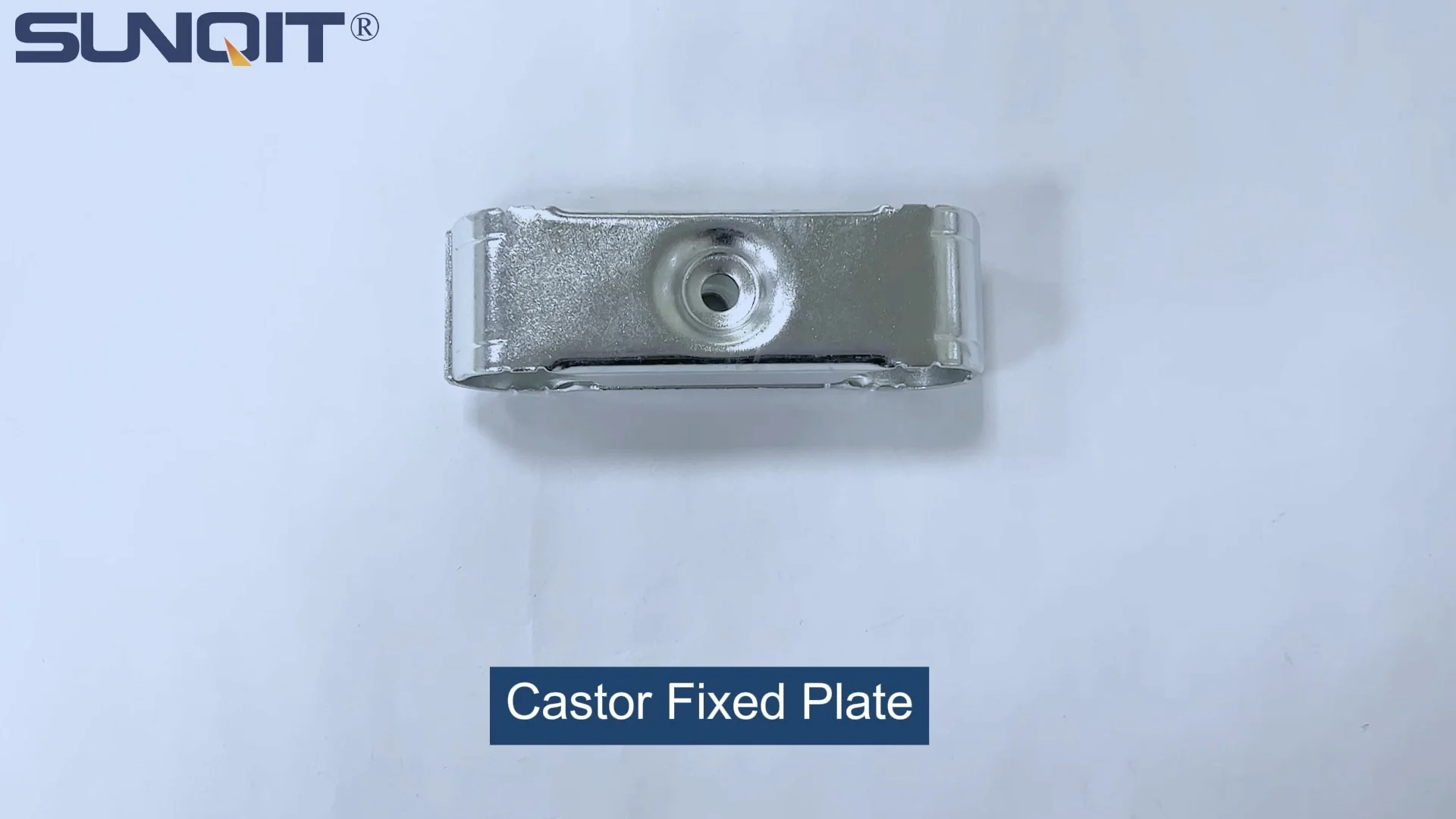
Castor Fixed Plate
Castor fixed plate, used for castor installation, one castor need two pcs castor plate to fix under the workbench, flow rack, and hand trolley.
In the bustling world of warehouses, factories, and distribution centers, the unsung heroes of daily operations are often the structures we rely on to keep things moving—like material racks. These sturdy systems hold everything from raw components to finished products, and their reliability directly impacts efficiency, safety, and even the bottom line. Among these, Material Rack B (3 row and 3 floor) stands out as a workhorse, designed to maximize vertical storage while keeping items accessible. But what makes this rack truly functional? Beyond its aluminum frames and shelf design, there's a critical component that often goes unnoticed: the castor fixed plate. This small but mighty part connects the rack's legs to its casters, bearing the weight of the entire structure and its contents. Get its load capacity wrong, and you're looking at bent frames, stuck wheels, or worse—safety hazards that grind operations to a halt. Today, we're diving deep into how to calculate castor fixed plate load capacity specifically for Material Rack B, why it matters, and how it ties into building a robust lean system.
What Even Is a Castor Fixed Plate, and Why Does It Matter?
Let's start with the basics. A castor fixed plate is exactly what it sounds like: a flat, sturdy plate (usually made of metal like steel or aluminum) that bolts to the bottom of a rack's legs and provides a stable base for attaching casters. Think of it as the bridge between the rack itself and the wheels that let you move it around. Without a reliable castor fixed plate, the caster would wobble, the rack would lean, and the whole system would feel like a house of cards—especially when loaded with heavy materials.
For Material Rack B, which features 3 rows and 3 floors, the stakes are even higher. This rack isn't just a simple shelving unit; it's designed to hold multiple layers of goods, potentially with varying weights across its rows. Imagine stacking heavy boxes on the top floor, tools on the middle, and raw materials on the bottom—suddenly, the weight distribution becomes uneven, and the castor fixed plate has to handle not just the total load, but also the stress of that imbalance. Add in the fact that Material Rack B is often moved to reconfigure workspaces (a key part of lean system flexibility), and you've got a component that's under constant pressure—both static (when the rack is stationary) and dynamic (when it's being rolled across the floor).
Here's the thing: castor fixed plates aren't one-size-fits-all. A plate that works for a lightweight tool cart might buckle under the weight of Material Rack B. That's why calculating its load capacity isn't just a "nice-to-know"—it's essential. Get it right, and your rack glides smoothly, lasts longer, and keeps your team safe. Get it wrong, and you're looking at costly repairs, downtime, or even workplace accidents. So, how do we figure out exactly how much weight a castor fixed plate can handle for Material Rack B?
Breaking Down Load Capacity: The Key Factors
Load capacity isn't just a single number stamped on a product. It's a calculation that considers multiple variables, each playing a role in how much weight the castor fixed plate can safely support. Let's break down the most critical factors, using Material Rack B as our real-world example.
1. The Material of the Castor Fixed Plate
First up: what's the plate made of? Most castor fixed plates are either steel, aluminum, or occasionally stainless steel (for corrosion-resistant environments). Each material has different strength properties, and that directly impacts load capacity. For instance, steel is known for its high tensile strength—meaning it can resist bending or breaking under heavy loads. A 5mm thick steel plate, for example, will typically handle more weight than a 5mm aluminum plate, thanks to steel's denser molecular structure. Aluminum, on the other hand, is lighter, which might be preferable if the rack needs to be moved frequently, but it trades some strength for that lightness.
For Material Rack B, which is often loaded with heavy items (think automotive parts, electronics components, or bulk materials), steel is usually the go-to. But not all steel is the same. Hot-rolled steel is more malleable but slightly weaker than cold-rolled steel, which undergoes additional processing to harden it. A cold-rolled steel castor fixed plate, even in a thinner gauge (like 4mm vs. 5mm hot-rolled), might offer better load capacity for the same weight. It's a trade-off between durability and weight that depends on your specific use case.
2. The Design and Thickness of the Plate
Next, let's talk about the plate's design. A castor fixed plate isn't just a flat square of metal—it often has bolt holes, reinforcing ribs, or bent edges to add strength. These design features prevent the plate from warping under pressure. For example, a plate with a 90-degree bend along its edges (forming a shallow "U" shape) will be stiffer than a completely flat plate of the same thickness. Why? Because the bend distributes stress across a larger area, reducing the chance of bending in the middle.
Thickness is another big player. Generally, thicker plates can handle more weight—up to a point. A 6mm steel plate will obviously outperform a 3mm one, but there's a limit to how thick you can go before the plate becomes too heavy, making the rack harder to move (defeating the purpose of having casters in the first place). For Material Rack B, which typically has four casters (one at each leg), the plate thickness needs to balance strength with practicality. Most manufacturers recommend plates between 4mm and 8mm for this type of rack, depending on the expected load.
3. The Caster's Load Rating (and How It Ties In)
Here's a common misconception: people often assume the castor itself is the only component that matters for load capacity. While casters do have their own load ratings (the maximum weight each wheel can handle), the castor fixed plate is just as critical. Think of it this way: if your caster is rated for 500kg, but the plate can only handle 300kg, the plate becomes the weak link. The entire system is only as strong as its weakest component.
For Material Rack B, which usually has four casters, you might think, "Just divide the total load by four, and that's what each caster (and plate) needs to handle." But it's not that simple. When a rack is moving, weight shifts—especially if you hit a bump or stop suddenly. This dynamic load can add 20-30% more stress to the casters and plates than static load (when the rack is stationary). So, if your Material Rack B weighs 200kg empty and you load it with 800kg of materials, the total static load is 1000kg. Divided by four casters, that's 250kg per caster. But with dynamic load factored in, that number jumps to 300-325kg per caster. Your castor fixed plate needs to handle that higher number, not just the static 250kg.
4. Weight Distribution on Material Rack B
Material Rack B's 3-row, 3-floor design is great for organization, but it also introduces variables in weight distribution. If you stack all your heaviest items on the top-right floor and leave the bottom-left empty, the rack's center of gravity shifts. This uneven loading means some castor fixed plates will bear more weight than others. In the worst-case scenario, one plate might end up supporting 40-50% of the total load, while others carry far less. That's why we can't just rely on average load per caster—we need to calculate for the "worst case."
Let's put this into numbers. Suppose Material Rack B has a total loaded weight of 1200kg. If the weight is perfectly balanced, each of the four casters (and their plates) would handle 300kg. But if the load is uneven—say, 60% of the weight is on the front two casters and 40% on the back—suddenly the front plates are dealing with 360kg each (60% of 1200kg divided by 2), and the back ones with 240kg. If your castor fixed plate is only rated for 350kg, the front plates will fail. To avoid this, always calculate load capacity based on the most uneven distribution you can reasonably expect in your operation.
5. Safety Margins: Because "Just Enough" Isn't Enough
Even if you've crunched all the numbers and your castor fixed plate seems to handle the maximum expected load, there's one more step: adding a safety margin. Industry standards typically recommend a safety factor of 1.5x to 2x the calculated load. That means if your worst-case dynamic load per plate is 400kg, you should choose a plate rated for at least 600kg (1.5x) or 800kg (2x). Why? Because real-world conditions are unpredictable. Maybe a forklift bumps the rack, or someone overloads a shelf by accident, or the plate weakens slightly over time due to rust or wear. The safety margin acts as a buffer, ensuring the plate can handle these unexpected stresses without failing.
Real-World Example: Why Safety Margins Matter
A mid-sized electronics factory once installed Material Rack B with castor fixed plates rated for 400kg per plate. Their calculations showed the worst-case dynamic load was 350kg, so they skipped the safety margin to save costs. Six months later, a new operator stacked heavy circuit boards on the top floor, pushing the total load to 1400kg (instead of the usual 1200kg). During a routine move, the front-left castor fixed plate bent, causing the rack to tip.,,.,1.5(400kg × 1.5 = 600kg),,.?——.

Step-by-Step: Calculating Castor Fixed Plate Load Capacity for Material Rack B
Now that we understand the factors at play, let's walk through a step-by-step process to calculate the required load capacity for a castor fixed plate on Material Rack B. We'll use a realistic scenario to make it concrete.
Step 1: Determine the Total Load
First, add up the weight of the empty rack and the maximum weight of the materials it will hold. For Material Rack B, the empty weight is typically around 150-200kg (depending on whether it's made of aluminum or steel). Let's say we're using an aluminum frame version, so empty weight = 180kg. Now, the maximum load: if each of the 3 floors can hold 300kg (a common rating for this rack), total material weight = 3 floors × 300kg = 900kg. Total load = empty weight + material weight = 180kg + 900kg = 1080kg.
Step 2: Account for Dynamic Load
As we discussed, dynamic load (when moving the rack) adds stress. A good rule of thumb is to multiply the total static load by 1.25 to account for movement. So dynamic total load = 1080kg × 1.25 = 1350kg.
Step 3: Assume Uneven Weight Distribution
For worst-case distribution, assume 60% of the dynamic load is concentrated on two opposite casters (e.g., front-left and back-right). Why two? Because racks tend to pivot or shift weight diagonally when moving over uneven floors. So, load on two casters = 1350kg × 0.6 = 810kg. Load per caster (and thus per castor fixed plate) = 810kg ÷ 2 = 405kg.
Step 4: Add the Safety Margin
Using a 1.5x safety factor (common for general industrial use), required plate load capacity = 405kg × 1.5 = 607.5kg. Round up to the nearest standard rating, so we need a castor fixed plate rated for at least 610kg.
Step 5: Verify with Caster and Caster Accessories
Finally, check that the caster itself is rated for at least 610kg (since the plate and caster work together). Also, don't forget caster accessories like bolts and washers—these should be strong enough to secure the plate to the rack leg and caster. A high-rated plate won't matter if the bolts shear under load!
| Calculation Step | Details | Result |
|---|---|---|
| Total Static Load | Empty rack (180kg) + Max material (900kg) | 1080kg |
| Dynamic Load | Static load × 1.25 (movement factor) | 1350kg |
| Worst-Case Load per Caster | 60% of dynamic load ÷ 2 casters | 405kg |
| Required Plate Capacity (with 1.5x safety margin) | 405kg × 1.5 | 607.5kg (round to 610kg) |

Common Mistakes to Avoid When Calculating Load Capacity
Even with the steps above, it's easy to slip up. Let's cover some of the most common mistakes people make when calculating castor fixed plate load capacity for Material Rack B—and how to steer clear of them.
Mistake #1: Ignoring the Rack's Empty Weight
It's tempting to only think about the materials you're loading, but the rack itself has weight! A steel Material Rack B can weigh 250kg or more empty, which adds significantly to the total load. Forgetting this leads to underrating the required plate capacity. Always include the empty weight in your calculations.
Mistake #2: Using Static Load Instead of Dynamic Load
If your rack stays in one place forever, static load might be enough. But Material Rack B is designed for mobility—part of what makes it a great fit for lean systems, where flexibility is key. Failing to account for dynamic load (movement, bumps, stops) is a recipe for failure. Always multiply by a movement factor (1.2-1.3 is standard) to get the real-world load.
Mistake #3: Assuming Perfect Weight Distribution
In theory, everyone loads racks evenly. In practice? Life happens. A busy operator might toss a heavy box on the nearest shelf, or a shipment might arrive with unevenly distributed goods. Assuming perfect balance leads to undercalculating the worst-case load. Always plan for uneven distribution—60/40 front/back or side/side is a safe bet.
Mistake #4: Skimping on Caster Accessories
The castor fixed plate is only as strong as the bolts, nuts, and washers holding it in place. Using cheap, low-quality caster accessories can cause the plate to loosen or even detach, even if the plate itself is rated for the load. Invest in high-tensile bolts and corrosion-resistant hardware—your future self (and your safety inspector) will thank you.
Mistake #5: Choosing the Wrong Material for the Environment
A steel castor fixed plate might have a higher load rating, but if your warehouse is humid or handles corrosive materials, it will rust over time—weakening the plate. In these cases, stainless steel or aluminum plates (with proper coatings) are better, even if their load rating is slightly lower. Always factor in environmental conditions when choosing plate material.

Choosing the Right Castor Fixed Plate for Material Rack B
Now that you know how to calculate load capacity, how do you pick the right castor fixed plate? It starts with understanding your specific needs and working with reliable suppliers who prioritize quality. Here's what to look for:
Material: Steel, Aluminum, or Stainless Steel?
As we covered, steel is the go-to for high load capacities (600kg+ per plate) in dry environments. Aluminum is lighter (great for frequent movement) but has lower tensile strength (best for loads under 500kg per plate). Stainless steel is ideal for wet or corrosive environments, though it's pricier. For Material Rack B with typical loads (1000-1500kg total), steel is usually the most cost-effective choice.
Thickness and Design Features
Look for plates with reinforcing ribs or bent edges to add stiffness. Thickness-wise, 5-8mm steel plates are standard for loads up to 800kg per plate. Avoid thin plates (under 4mm) unless your load is very light. Also, check the bolt hole pattern—make sure it matches your caster's mounting holes and the rack's leg design. Mismatched holes mean the plate won't bolt on securely, reducing its effective load capacity.
Certifications and Testing
Reputable manufacturers will test their castor fixed plates and provide load ratings backed by data. Look for plates that meet industry standards like ISO 10528 (casters and wheels) or have been tested by third-party labs. Avoid generic "no-name" plates—if the supplier can't tell you how they tested the load capacity, walk away.
Supplier Reliability
Your castor fixed plate is only as good as the supplier who makes it. Lean system suppliers often carry high-quality material handling components, including castor fixed plates and caster accessories. These suppliers understand the demands of industrial environments and can help you select the right plate for Material Rack B. They'll also offer support if you have questions or need replacements down the line.
The Big Picture: How This Ties Into Your Lean System
At this point, you might be thinking, "This is a lot of detail for a single plate—does it really matter that much?" The answer is a resounding yes—and not just for safety. Properly calculating castor fixed plate load capacity is a cornerstone of building a lean system. Here's why:
Lean systems thrive on efficiency, reliability, and continuous improvement. A Material Rack B with a faulty castor fixed plate causes waste—downtime when the rack breaks, extra labor to repair it, and even damaged inventory. By ensuring your castor fixed plate can handle the load, you eliminate these wastes, keeping operations running smoothly. Plus, a mobile, reliable rack lets you reconfigure workspaces quickly (a key lean principle), adapting to changing production needs without delays.
Think of it this way: in lean, every component should add value. The castor fixed plate adds value by making Material Rack B functional, mobile, and safe. When it works, it's invisible—allowing your team to focus on what matters: getting work done. When it fails, it becomes a bottleneck. By taking the time to calculate load capacity and choose the right plate, you're investing in a lean system that works for you, not against you.
Final Thoughts: Don't Overlook the Small Stuff
Material Rack B (3 row and 3 floor) is a vital tool in modern material handling, but its performance hinges on details like the castor fixed plate. Calculating load capacity might seem like a tedious task, but it's one that pays off in safety, efficiency, and peace of mind. By considering factors like material, thickness, dynamic load, weight distribution, and safety margins, you can choose a plate that keeps your rack moving, your team safe, and your lean system humming.
Remember: the next time you see a Material Rack B gliding smoothly across the warehouse floor, take a second to appreciate the castor fixed plate doing its job. It's not glamorous, but it's essential. And when you're in the market for a new plate or rack, partner with suppliers who understand these details—because the best lean systems are built on a foundation of small, reliable components working together seamlessly.
So, grab your calculator, measure your loads, and give your castor fixed plate the attention it deserves. Your warehouse (and your bottom line) will thank you.