- Company Articles
- Products and Technology
- Product knowledge
- Castor Fixed Plate Load Testing: Ensuring Safety for Heavy Automotive Parts

Castor Fixed Plate Load Testing: Ensuring Safety for Heavy Automotive Parts
Related Product
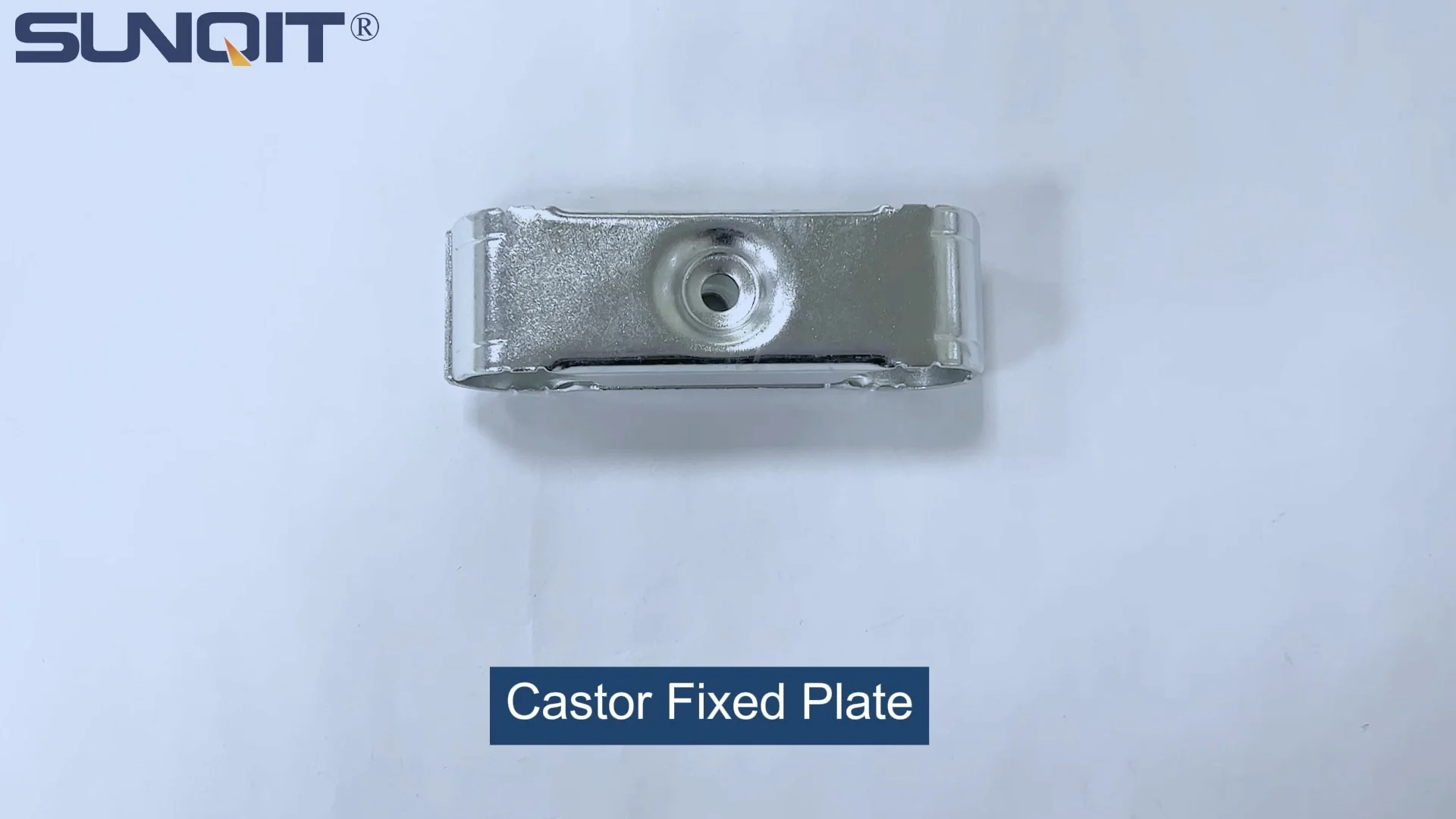
Castor Fixed Plate
Castor fixed plate, used for castor installation, one castor need two pcs castor plate to fix under the workbench, flow rack, and hand trolley.
In the fast-paced world of automotive manufacturing, every component—no matter how small—plays a critical role in keeping operations running smoothly and safely. Among these unsung heroes are castor fixed plates, the unassuming yet vital links that secure casters to trolleys, workbenches, and material racks. When dealing with heavy automotive parts like engines, transmissions, or axle assemblies, the reliability of these plates isn't just a matter of efficiency—it's a matter of protecting workers, preventing costly downtime, and maintaining product integrity. This article dives into the world of castor fixed plate load testing, exploring why it's indispensable, how it's done, and why cutting corners in this process can have devastating consequences.
The Role of Castor Fixed Plates in Automotive Manufacturing
Walk through any automotive assembly plant, and you'll see a symphony of movement: workers maneuvering turnover trolleys stacked with brake components, material handlers pushing racks loaded with engine blocks, and assembly line operators sliding workbenches into place to access heavy parts. Behind nearly all this mobility are casters—and behind those casters, castor fixed plates. These metal plates, often made of steel or aluminum, serve as the bridge between the caster and the equipment it's attached to, distributing the weight of the load evenly and ensuring the caster remains securely fastened even under stress.
Consider a typical scenario: a turnover trolley and rack loaded with three 200kg transmission housings. The total weight here could easily exceed 650kg, including the trolley itself. Without a robust castor fixed plate, the caster might loosen, bend, or even detach, causing the trolley to tip, the parts to crash, and potentially injuring anyone nearby. In automotive manufacturing, where precision and safety are non-negotiable, the castor fixed plate isn't just a "part"—it's a critical safety component that directly impacts workplace well-being and operational continuity.
But what exactly makes a castor fixed plate reliable? It's not just about thickness or material (though those matter). It's about how well it's designed to handle both static loads (when the equipment is stationary) and dynamic loads (when it's moving, turning, or hitting bumps). This is where load testing comes in—a rigorous process that ensures the plate can withstand the forces it will face in real-world conditions, day in and day out.
What Are Castor Fixed Plates, and Why Do They Matter?
At first glance, a castor fixed plate might seem like little more than a flat piece of metal with bolt holes. But looks can be deceiving. These plates are engineered to perform under extreme conditions, and their design is tailored to the specific equipment they'll support. Let's break down their key features and why they're so important:
Material Selection: Most castor fixed plates are made from steel, aluminum, or stainless steel. Steel is favored for heavy-duty applications (like supporting 1,000kg+ loads) due to its high tensile strength, while aluminum is chosen for lighter loads where weight reduction is a priority (e.g., mobile workbenches). Stainless steel is reserved for environments where corrosion resistance is critical, such as plants with high humidity or exposure to chemicals.
Design Elements: A well-designed castor fixed plate will have strategically placed bolt holes to distribute weight evenly across the caster mounting plate and the equipment frame. Thickness is another key factor: thicker plates (often 6mm–12mm for steel) resist bending under load, while reinforced edges or gussets add extra stability for dynamic stress. Some plates also include anti-slip coatings or rubber padding to prevent shifting during movement—an often-overlooked detail that can make a big difference in safety.
Integration with Caster and Accessories: Castor fixed plates don't work in isolation; they're part of a larger system that includes casters, wheels, and mounting hardware. A mismatch between the plate's load rating and the caster's capacity (e.g., using a 500kg-rated plate with a 1,000kg caster) is a recipe for failure. This is why reputable caster suppliers emphasize matching plates to casters and accessories as part of a complete, tested system.
In short, castor fixed plates are the "glue" that holds together the mobility solutions automotive plants rely on. Without them, turnover trolleys would wobble, workbenches would tip, and material racks would be stuck in place—grinding production to a halt and putting workers at risk.

Why Load Testing Isn't Optional: The Risks of Cutting Corners
Imagine this: It's a busy morning on the automotive assembly line. Maria, a material handler with 10 years of experience, is wheeling a turnover trolley loaded with four 250kg engine blocks toward the final assembly station. The trolley, which was delivered last month by a new supplier, has seemed sturdy enough—until today. As she rounds a corner, there's a loud "crack," followed by a lurch. The trolley tilts violently, spilling the engine blocks onto the floor. Maria jumps back just in time, but the damage is done: two engines are dented, the trolley's caster is bent, and production is delayed by hours. An investigation later reveals the culprit: a castor fixed plate that failed under the load. The supplier had skipped load testing, assuming the plate's thickness was sufficient. This scenario isn't fictional—it's a cautionary tale that plays out in plants worldwide when load testing is overlooked.
The risks of inadequate load testing are clear and far-reaching:
Worker Safety: The most tragic consequence is the potential for injury or even death. A falling load of heavy automotive parts can crush limbs, cause trips and falls, or lead to secondary accidents (e.g., fires from spilled fluids). According to OSHA, over 20% of workplace injuries in manufacturing involve material handling equipment—many of which trace back to component failures like faulty castor plates.
Financial Costs: Beyond medical bills and workers' compensation claims, failed castor fixed plates lead to direct costs like damaged parts, equipment repair, and production downtime. A single incident can cost tens of thousands of dollars in lost productivity alone, not to mention the reputational damage if customers lose trust in the plant's ability to deliver quality products on time.
Regulatory Repercussions: Automotive manufacturing is heavily regulated, with standards like ISO 45001 (occupational health and safety) and IATF 16949 (automotive quality management) mandating rigorous testing of equipment components. Skipping load testing can result in fines, audits, or even shutdowns if violations are severe.
In an industry where margins are tight and deadlines are tight, it's tempting for some suppliers or plant managers to skip load testing to save time or money. But as the saying goes, "You pay now, or you pay later—and later is always more expensive."

The Load Testing Process: How Castor Fixed Plates Are Put to the Test
Load testing castor fixed plates is a systematic process designed to simulate real-world conditions and ensure the plates can handle both expected and unexpected stresses. While methods vary by manufacturer and application, most testing protocols follow these key steps:
1. Pre-Test Inspection
Before any load is applied, the castor fixed plate undergoes a visual and mechanical inspection. Technicians check for defects like cracks, rust, or uneven bolt holes, which could weaken the plate. They also verify that the plate is properly mounted to a test rig that mimics the equipment it will eventually be attached to (e.g., a steel frame representing a turnover trolley). This ensures the test results reflect real-world performance.
2. Static Load Testing
Static load testing measures how the plate performs under a constant, stationary load. The process involves:
- Gradually applying weight to the plate using hydraulic presses or calibrated weights. Loads start at 50% of the rated capacity and increase in 25% increments until reaching 150% (the "overload" test).
- Maintaining the maximum load for a set duration (typically 1–4 hours) to check for creep (slow deformation over time).
- Measuring deflection (bending) using dial indicators or laser sensors. Acceptable deflection varies by standard but is usually limited to 0.1mm per 100kg of load.
- Inspecting for permanent deformation or failure (e.g., cracks, bolt pull-out) after the load is removed.
For example, a castor fixed plate rated for 1,000kg static load would be tested with 1,500kg for 2 hours. If it bends more than 1.5mm or shows signs of cracking, it fails the test.
3. Dynamic Load Testing
Unlike static testing, dynamic testing simulates the forces of movement—acceleration, deceleration, vibration, and cornering—that a castor fixed plate experiences in daily use. This is critical for automotive applications, where trolleys and workbenches are constantly on the move.
Dynamic tests often involve mounting the plate and caster onto a test trolley, then rolling it over uneven surfaces (e.g., concrete with 5mm gaps), up inclines (typically 5–10 degrees), and around tight corners at speeds up to 3 mph. Loads are applied using weighted carts or pneumatic systems, and sensors track stress, vibration, and deflection in real time. The goal is to ensure the plate doesn't loosen, bend, or fail after thousands of cycles (simulating months of use).
4. Impact Testing
Even the most careful material handlers occasionally hit bumps or drop loads. Impact testing mimics these sudden forces by dropping a weighted object onto the plate or slamming the trolley into a barrier. The test measures the plate's ability to absorb shock without fracturing. For heavy automotive parts, impact loads can exceed twice the static load, so this step is non-negotiable.
5. Documentation and Certification
Every test is meticulously documented, with results compared to industry standards (e.g., ISO 10523 for caster load ratings). Plates that pass receive a certification stating their static and dynamic load capacities, while failures are analyzed to improve design (e.g., increasing thickness or adding reinforcements). Reputable suppliers provide this documentation to customers, ensuring transparency and compliance with regulatory requirements.
| Testing Type | Purpose | Key Equipment | Test Duration | Success Criteria |
|---|---|---|---|---|
| Static Load | Test performance under constant, stationary weight | Hydraulic press, calibrated weights, dial indicators | 1–4 hours at max load | No permanent deformation; deflection ≤ 0.1mm/100kg |
| Dynamic Load | Simulate movement, vibration, and cornering forces | Test trolley, uneven track, vibration sensors | 10,000+ cycles at 100% rated load | No loosening, cracking, or excessive wear |
| Impact Load | Check shock absorption from sudden forces | drop weight system, impact tester | Single impact at 200% rated load | No fracture or bolt failure |

Industry Standards: Setting the Bar for Safety
Load testing doesn't happen in a vacuum—it's guided by strict industry standards that ensure consistency and reliability across manufacturers. For automotive applications, two sets of standards are particularly influential:
ISO 10523: Industrial Castors and Wheels – Load Ratings: This international standard specifies how castors and their components (including fixed plates) should be tested for static, dynamic, and impact loads. It defines load classes (e.g., Class 5 for 1,000kg+ static loads) and requires suppliers to provide test data proving compliance.
IATF 16949: Automotive Quality Management System: While not specific to castor plates, IATF 16949 mandates that automotive suppliers implement rigorous quality control processes, including component testing. Suppliers must document load testing results and maintain traceability (e.g., batch numbers, test dates) for every part—a requirement that helps automakers track and recall faulty components if needed.
In addition to these global standards, many automotive OEMs (Original Equipment Manufacturers) have their own specifications. For example, a luxury carmaker might require castor fixed plates to withstand 150% of their rated load for 4 hours (instead of the standard 2), or to pass dynamic testing over 50,000 cycles. Meeting these stringent requirements is why partnering with a reputable caster supplier—one that invests in certified testing labs and quality control—is so critical for automotive plants.
Case Study: How Load Testing Prevented a Catastrophe
The Near-Miss at Midwest Automotive Assembly Plant
Background: In early 2023, Midwest Automotive, a Tier 1 supplier of axle assemblies, switched to a new supplier for turnover trolleys to cut costs. The new supplier, a small manufacturer with limited testing capabilities, provided trolleys with castor fixed plates that were visually similar to the previous ones but cheaper. The plates came with a "1,000kg static load rating" sticker but no test documentation.
The Incident: Three weeks after the trolleys were deployed, a material handler was moving a load of six axle assemblies (total weight: 900kg, under the "rated" 1,000kg) when the left-front castor fixed plate cracked. The trolley lurched, and two axles fell, narrowly missing the handler's foot. An inspection revealed the plate had only 4mm thickness (vs. the required 6mm) and had not been load-tested.
The Fix: Midwest immediately halted use of the new trolleys and brought in a third-party lab to test the remaining plates. All failed at 800kg static load—200kg below the claimed rating. The plant switched to a reputable caster supplier that provided certified load test reports, including 1,500kg static and 1,200kg dynamic ratings. They also implemented a new policy: no equipment enters the facility without proof of load testing.
Outcome: In the 12 months following the switch, Midwest saw zero incidents related to castor or trolley failures. Worker confidence in material handling equipment improved, and production delays due to equipment issues dropped by 35%. The plant manager later noted, "The extra cost of certified plates was nothing compared to the cost of a single injury or production shutdown."
This case study highlights a critical point: load testing isn't an expense—it's an investment in safety and reliability. By prioritizing certified components and working with suppliers who value testing, automotive plants can avoid the high costs of failure.
Beyond Load Capacity: Choosing the Right Castor Fixed Plate
Load testing ensures a castor fixed plate can handle weight, but selecting the right plate involves more than just matching load ratings. Here are key factors automotive plants should consider:
Environment: Will the plate be used in a dry assembly area, a humid paint shop, or a facility with exposure to oils and chemicals? Stainless steel or coated steel plates are better for corrosive environments, while aluminum may suffice in clean, dry settings.
Equipment Compatibility: The plate must fit both the caster and the equipment frame. Mismatched bolt patterns or mounting holes can lead to uneven weight distribution, even if the plate itself is load-tested. Always check the caster supplier's specifications for compatible plates and accessories.
Long-Term Maintenance: Plates that are easy to inspect and replace save time and money. Look for features like accessible bolt heads, corrosion-resistant coatings, and clear load rating labels (to avoid overloading). Regular inspections—checking for loose bolts, cracks, or rust—should be part of every plant's maintenance schedule.
Total Cost of Ownership: A cheaper plate might save money upfront, but if it fails after six months, the cost of replacement, downtime, and potential injuries will far exceed the initial savings. Investing in a high-quality, load-tested plate from a trusted supplier often results in lower long-term costs.
The Future of Castor Fixed Plate Testing: Innovation and Technology
As automotive manufacturing becomes more automated and data-driven, load testing is evolving too. Here are three trends shaping the future of castor fixed plate safety:
Smart Sensors: Some manufacturers are embedding strain gauges or RFID tags into castor fixed plates to monitor stress in real time. These sensors can alert maintenance teams to potential failures (e.g., increasing deflection) before they happen, allowing for proactive replacement.
Advanced Materials: Composite materials (e.g., carbon fiber reinforced plastic) are being tested as alternatives to steel and aluminum. These materials are lighter than steel but offer comparable strength, making them ideal for applications where weight reduction is key (e.g., automated guided vehicles, or AGVs).
AI-Powered Testing: Machine learning algorithms are being used to analyze load test data, identifying patterns that human inspectors might miss. For example, an AI system could detect subtle changes in vibration during dynamic testing that predict future failure, leading to more accurate load ratings.
These innovations won't replace traditional load testing—they'll enhance it, making castor fixed plates even more reliable and better equipped to handle the demands of modern automotive manufacturing.
Conclusion: Safety Starts with the Smallest Components
In the grand scheme of automotive manufacturing, castor fixed plates are easy to overlook. They're not as flashy as robots or as critical as engines, but their role in keeping heavy parts moving safely is irreplaceable. Load testing isn't just a box to check—it's a commitment to worker safety, product quality, and operational efficiency.
As automotive plants strive to meet tighter deadlines, reduce costs, and improve safety, the message is clear: never underestimate the importance of a well-tested castor fixed plate. By partnering with reputable suppliers, following industry standards, and investing in regular testing and maintenance, plants can ensure that every trolley, workbench, and material rack moves with the confidence that comes from knowing the smallest components are built to handle the biggest challenges.
After all, in manufacturing—as in life—safety starts with the details. And when it comes to heavy automotive parts, there's no detail too small to test.