- Company Articles
- Products and Technology
- Product knowledge
- Castor Fixed Plate Material Thickness: Impact on Strength for Warehouse Racks

Castor Fixed Plate Material Thickness: Impact on Strength for Warehouse Racks
Related Product
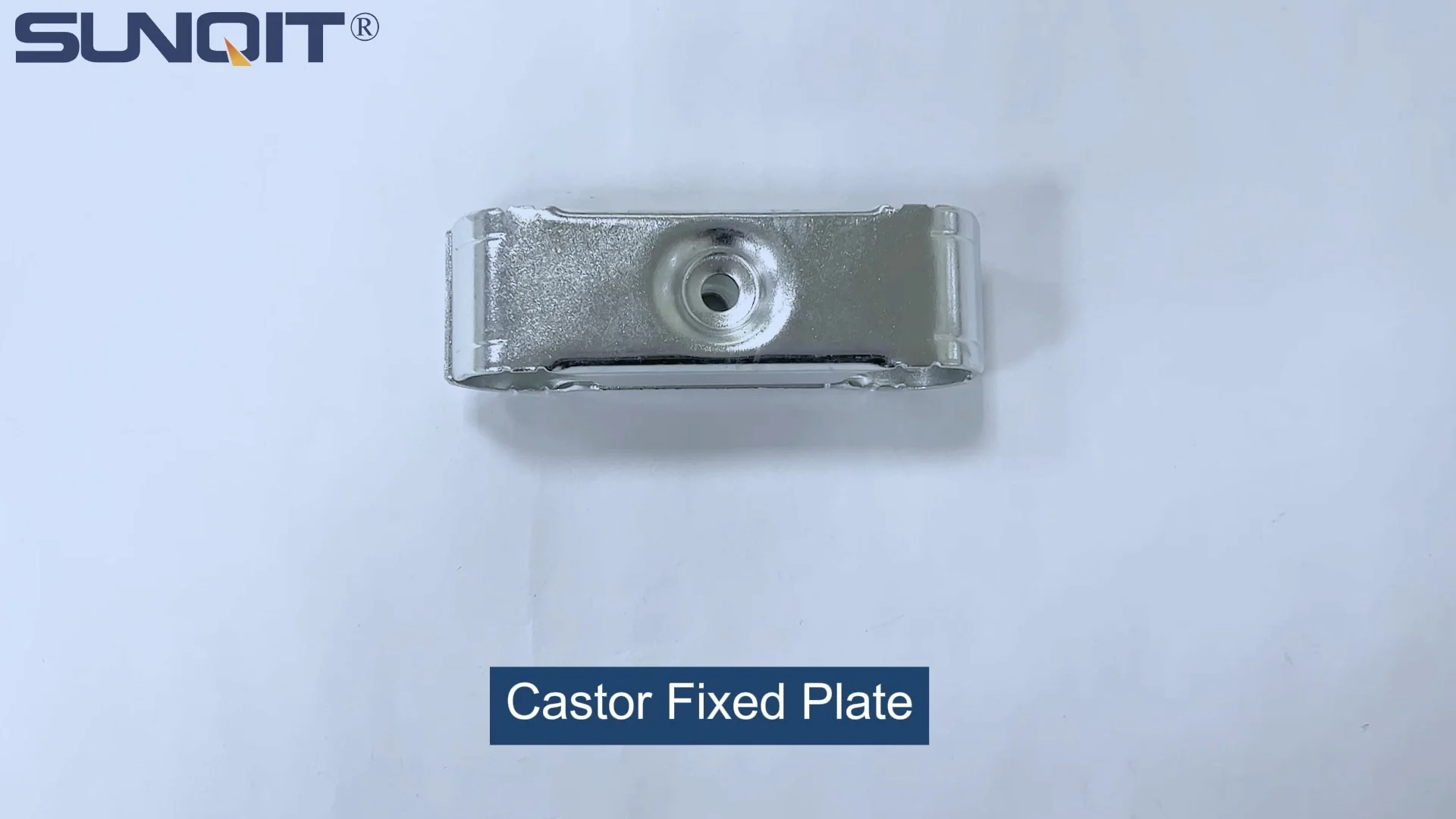
Castor Fixed Plate
Castor fixed plate, used for castor installation, one castor need two pcs castor plate to fix under the workbench, flow rack, and hand trolley.
In the bustling world of warehouses and manufacturing facilities, efficiency is the name of the game. Every component, no matter how small, plays a role in keeping operations running smoothly—from the tallest racks to the tiniest fasteners. One such unsung hero? The castor fixed plate. Tucked beneath trolleys, workbenches, and material racks, this humble piece connects the castor wheel to the equipment, bearing the weight of tools, products, and sometimes even workers. But here's the thing: not all fixed plates are created equal. The thickness of the material used can mean the difference between a sturdy, reliable setup and one that bends, breaks, or disrupts workflows. Let's dive into why castor fixed plate thickness matters, how it impacts strength, and what warehouse managers need to know to choose the right one.
What Is a Castor Fixed Plate, Anyway?
Before we get into thickness, let's make sure we're all on the same page. A castor fixed plate—sometimes called a mounting plate—is a flat, rigid component that acts as the bridge between a castor wheel and the equipment it's attached to. Think of it as the "feet" of a turnover trolley or the "base" of a mobile workbench. When you push a loaded trolley across the warehouse floor, the fixed plate takes the brunt of the weight, transferring it from the equipment down to the castor wheel and, ultimately, the ground.
These plates come in various shapes and sizes, but their core job remains the same: to provide a stable, secure connection. They're typically made from metals like steel or aluminum, though some lighter-duty versions might use high-strength plastics. The key here is rigidity. A flimsy plate will warp under pressure, causing the castor to tilt, the equipment to wobble, or even the wheel to detach entirely. And in a busy warehouse, that's a recipe for delays, damaged goods, or worse—worker injuries.
Why Thickness Isn't Just a Number
At first glance, thickness might seem like a simple metric: "thicker is stronger, right?" Well, yes—but it's not that straightforward. The thickness of a castor fixed plate directly impacts three critical factors: load capacity, durability, and safety. Let's break them down.
Load Capacity: How Much Weight Can It Handle?
Load capacity is the maximum weight a fixed plate can support without bending or failing. This isn't just about the static weight of the equipment and its contents (though that's part of it). It also includes dynamic forces—like the stress of starting and stopping a moving trolley, navigating uneven floors, or hitting a small bump. Thicker plates, with more material to distribute that stress, can handle higher loads. For example, a 3mm steel plate might comfortably support 200kg on a light workbench, but a heavy-duty turnover trolley carrying 500kg of automotive parts? That would need something sturdier, like a 5mm or 8mm plate. Skimp on thickness here, and you'll likely end up with a plate that bends under pressure, causing the trolley to list to one side or the castor to jam.
Durability: Will It Stand the Test of Time?
Warehouses are tough environments. Trolleys get dragged over concrete floors, bumped into racks, and left out in humid or dusty conditions. A thin fixed plate might hold up initially, but over time, repeated stress can lead to metal fatigue. Imagine bending a paperclip back and forth: after a few times, it snaps. The same principle applies here. Thicker plates have more material to resist wear and tear, meaning they'll last longer and require fewer replacements. This isn't just about saving money on parts—it's about avoiding unplanned downtime. If a fixed plate fails mid-shift, that trolley or workbench is out of commission until it's repaired, throwing schedules off track.
Safety: Protecting Workers and Products
Safety should always be top of mind in any industrial setting. A warped or broken fixed plate isn't just an inconvenience—it's a hazard. A tilted trolley could spill its contents, risking damage to expensive components. A detached castor wheel could cause a worker to trip. Even a slightly bent plate can make equipment harder to maneuver, leading to strained muscles or accidents. Thicker plates reduce these risks by providing a stable base. They're less likely to deform under load, ensuring the equipment stays balanced and the castor wheel remains securely attached.

Material Matters: Steel vs. Aluminum Plates
Thickness doesn't work in a vacuum—it's closely tied to the material used. The two most common options for castor fixed plates are steel and aluminum, and each has its own strengths and weaknesses when paired with different thicknesses.
Steel Plates: Steel is the heavyweight champion here. It's dense, strong, and affordable, making it ideal for high-load applications. A 5mm steel plate, for example, can handle significantly more weight than a 5mm aluminum plate. Steel also holds up well to impact, which is a plus in busy warehouses where collisions are inevitable. The downside? Steel is heavy. A thick steel plate can add unnecessary bulk to lighter equipment, making it harder to push. It's also prone to rust if not coated (like with zinc plating), which can weaken the material over time in humid environments.
Aluminum Plates: Aluminum is the lightweight alternative. It's corrosion-resistant (no rust!), making it a good fit for warehouses with strict cleanliness standards (like food processing or electronics manufacturing). While aluminum is less dense than steel, it's still strong—especially when paired with the right thickness. A 6mm aluminum plate might match the load capacity of a 4mm steel plate but weigh half as much. The tradeoff? Aluminum is more expensive than steel, and it's not as impact-resistant. A sharp collision could dent a thick aluminum plate more easily than a steel one.
So, which is better? It depends on the job. For heavy-duty turnover trolleys carrying metal parts, steel is probably the way to go. For a lightweight mobile workbench in a cleanroom, aluminum might be the smarter choice. The key is to balance thickness, material, and the specific needs of your operation.

Thickness in Action: Real-World Applications
To understand how thickness plays out in practice, let's look at three common warehouse setups: mobile workbenches, turnover trolleys, and lean system material racks. Each has unique demands, and the right fixed plate thickness can make or break their performance.
1. Mobile Workbenches
A mobile workbench is a staple in many warehouses—think of it as a portable desk where workers assemble parts, pack orders, or test products. These workbenches might hold tools, small components, and sometimes even laptops or monitors. On average, a loaded workbench could weigh 150–300kg. For this, a medium-thickness plate is usually sufficient. A 4mm steel plate or a 5mm aluminum plate would provide the rigidity needed to keep the workbench stable while still keeping it light enough to push around.
Case in point: A electronics manufacturer we worked with once used 3mm steel plates on their mobile workbenches. At first, everything seemed fine. But over time, as workers piled on heavier tools (like soldering irons and oscilloscopes), the plates started to bend. The workbenches wobbled, making precise assembly difficult, and one even tilted so much that a laptop slid off, costing the company $1,200 in repairs. Switching to 5mm steel plates solved the problem—no more wobbles, no more accidents.
2. Turnover Trolleys and Racks
Turnover trolleys and racks are workhorses of the warehouse, shuttling everything from raw materials to finished products. These can get heavy—really heavy. A fully loaded trolley might carry 500–1,000kg of goods (think stacks of boxes, metal parts, or pallets of inventory). For these, thin plates are a non-starter. A 6–8mm steel plate is more appropriate here, as it can handle the static weight of the load plus the dynamic stress of movement (like when the trolley is pushed up a slight incline or suddenly stopped).
Take a distribution center that handles bulk food items. Their turnover trolleys, loaded with 800kg of canned goods, were using 4mm aluminum plates. After just a few months, the plates began to crack at the bolt holes—a result of the constant vibration and weight. The cracks led to loose castors, which slowed down workers and risked spills. Upgrading to 8mm steel plates with reinforced bolt holes eliminated the cracking, and the trolleys now last twice as long between replacements.
3. Lean System Material Racks
Lean systems are all about efficiency—minimizing waste, streamlining workflows, and keeping tools and materials within arm's reach. Mobile material racks (like those used in kanban systems) are a key part of this, holding parts that need to be restocked at assembly lines. These racks are often loaded with lightweight to medium-weight items (200–400kg), but they're moved frequently—sometimes multiple times per hour. For lean systems, durability and maneuverability are equally important. A 5mm steel plate or a 6mm aluminum plate strikes a good balance: strong enough to handle the load, light enough to move quickly.
A automotive parts supplier we consulted with had a lean system in place but was struggling with their material racks. They'd opted for 3mm aluminum plates to keep the racks light, but the constant movement caused the plates to flex. This led to the racks leaning, which made it hard to slide bins in and out. By switching to 5mm aluminum plates, they kept the weight low but added the rigidity needed to keep the racks straight. Workers reported faster restocking times, and the racks required less maintenance.

How to Choose the Right Thickness: A Quick Guide
So, how do you determine the right thickness for your castor fixed plates? It boils down to three questions:
- What's the maximum load? Calculate the total weight the equipment will carry, including the equipment itself. Add 20% to account for dynamic forces (movement, bumps, etc.).
- What material are you using? Steel can handle more weight per mm than aluminum. If you need corrosion resistance, aluminum is better—but you may need a thicker plate to match steel's strength.
- How often will it be moved? Frequent movement means more stress on the plate. If it's a stationary setup (rarely moved), you might get away with a thinner plate. For daily use, go thicker.
To make it easier, we've put together a handy reference table. Keep in mind that these are general guidelines—always check with your castor and accessories supplier for specific load ratings!
| Equipment Type | Max Load (kg) | Recommended Material | Recommended Thickness (mm) | Best For |
|---|---|---|---|---|
| Light mobile workbench | 100–200 | Aluminum | 4–5 | Small tools, electronics assembly |
| Medium workbench | 200–350 | Steel or Aluminum | 5 (Steel) / 6 (Aluminum) | Heavy tools, parts bins |
| Light turnover trolley | 300–500 | Steel | 5–6 | Boxes, small parts |
| Heavy turnover trolley | 500–1,000 | Steel | 8–10 | Metal parts, bulk goods |
| Lean system material rack | 200–400 | Aluminum or Steel | 5 (Aluminum) / 4 (Steel) | Frequent movement, medium loads |
The Cost of Cutting Corners
It's tempting to save a few dollars by choosing a thinner, cheaper fixed plate. After all, a 3mm steel plate might cost half as much as a 5mm one. But here's the problem: the upfront savings almost always disappear when you factor in the costs of replacements, downtime, and repairs. Let's do the math.
Suppose you buy 10 heavy-duty turnover trolleys, each with a 3mm steel fixed plate, for $200 per trolley (total: $2,000). Within six months, the plates start bending, and you need to replace them—costing $50 per plate ($500 total). Then, a trolley fails mid-shift, causing a 2-hour delay that costs $300 in lost productivity. Total cost in a year: $2,000 + $500 + $300 = $2,800.
Now, compare that to buying the same 10 trolleys with 5mm steel plates for $250 each (total: $2,500). These plates last 3+ years without replacement, and there are no delays from failures. Total cost in three years: $2,500. Over time, the "more expensive" option is actually cheaper—and that's not even counting the stress of dealing with breakdowns.
Maintenance Matters: Keeping Plates Strong
Even the thickest, strongest fixed plate won't last forever if it's not maintained. Here are a few tips to extend their lifespan:
- Inspect regularly: Check plates for bending, cracks, or rust. Pay extra attention to bolt holes—this is where stress tends to concentrate.
- Tighten bolts: Loose bolts can cause the plate to flex, even if it's thick. Tighten them monthly (or more often for frequently used equipment).
- Clean and protect: Wipe down steel plates to remove dirt and moisture, and consider applying a rust-resistant coating if needed. Aluminum plates just need a quick wipe to prevent buildup.
- replace when needed: If you notice bending or cracks, don't wait—replace the plate immediately. A small investment now beats a big repair later.
Wrapping Up: Small Plate, Big Impact
At the end of the day, the castor fixed plate might not be the most glamorous part of your warehouse setup, but it's one of the most critical. Its thickness directly impacts how much weight your equipment can carry, how long it will last, and how safe your workplace is. By taking the time to choose the right thickness and material, you'll keep your trolleys rolling, your workbenches stable, and your operations efficient.
So, the next time you're ordering new equipment or replacing castors, don't overlook the fixed plate. Ask your supplier about thickness options, share your load requirements, and make sure you're getting a plate that's up to the job. Your workers, your bottom line, and your peace of mind will thank you.