- Company Articles
- Products and Technology
- Product knowledge
- Castor Fixed Plate Myths Debunked: Strength, Weight, & Durability

Castor Fixed Plate Myths Debunked: Strength, Weight, & Durability
Related Product
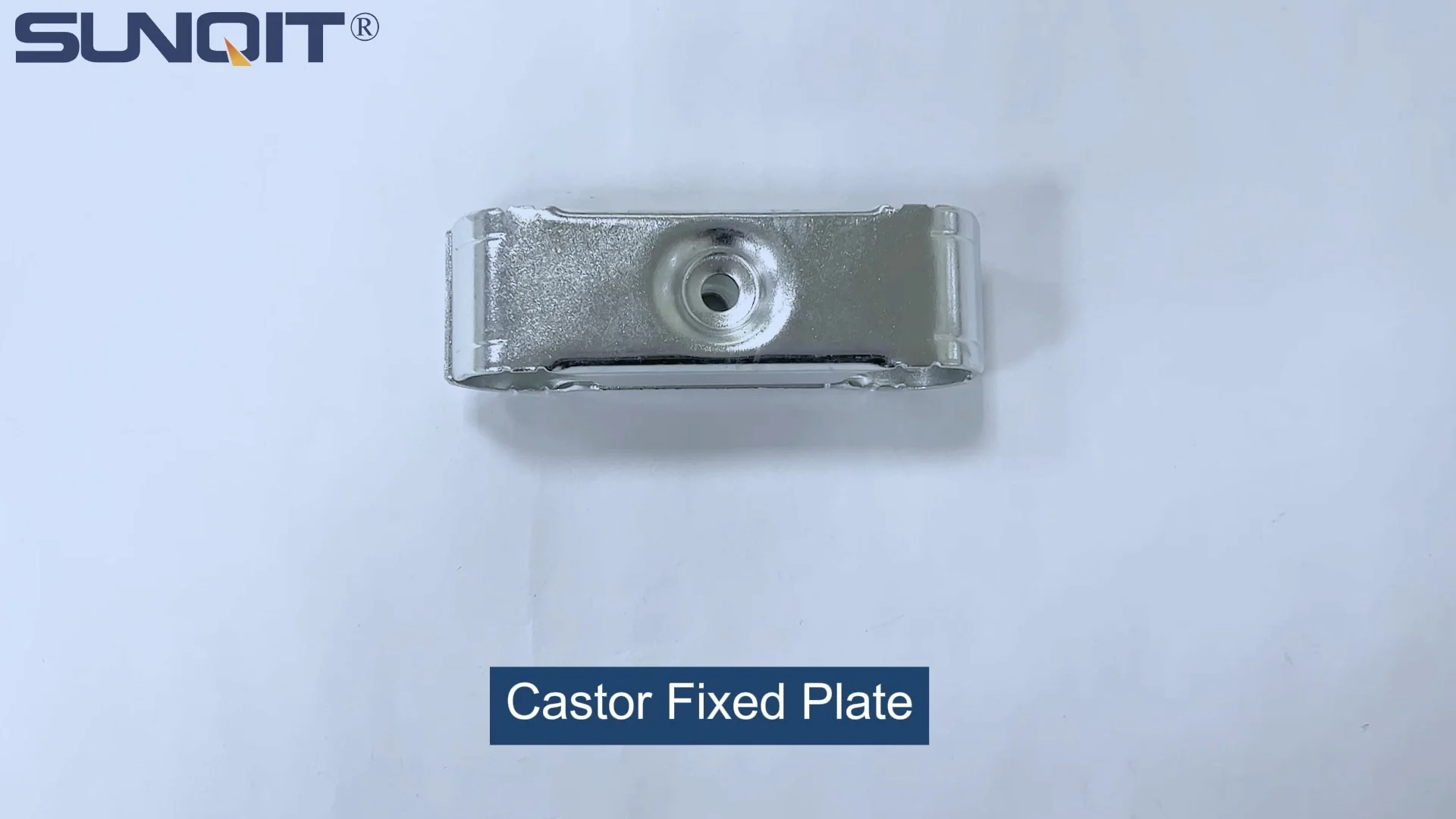
Castor Fixed Plate
Castor fixed plate, used for castor installation, one castor need two pcs castor plate to fix under the workbench, flow rack, and hand trolley.
Why the unsung hero of your caster system deserves more attention
Let's start with a scenario we've all seen (or maybe even lived through): A warehouse team is rushing to meet a deadline. Carts loaded with inventory zip past, but one cart—let's call it Cart 7—isn't cooperating. It wobbles side to side, makes a (screeching) noise, and feels like it might tip over if someone so much as sneezes near it. The team groans, blames the "cheap caster wheels," and adds "replace caster wheels" to tomorrow's to-do list. But here's the twist: The wheels are fine. The real problem? A flimsy, overlooked component called the castor fixed plate.
Caster wheels get all the glory. They're the ones that roll, after all. But castor fixed plates? They're the quiet workhorses holding everything together—literally. These metal (or sometimes plastic) plates bolt the caster wheel to the cart, shelf, or equipment, transferring weight, absorbing shocks, and keeping the whole setup stable. Yet, despite their critical role, castor fixed plates are surrounded by myths that lead teams to waste time, money, and sanity on unnecessary repairs. Today, we're setting the record straight. Let's debunk the top myths about castor fixed plates, focusing on strength, weight capacity, durability, and compatibility—because your Cart 7 (and your sanity) deserve better.
Myth #1: "Castor Fixed Plates Are Just 'Extra Metal'—Strength Doesn't Matter"
Walk into any hardware store or browse caster and accessories online, and you'll see fixed plates ranging from thin, bendable sheets that feel like they'd snap under a textbook to thick, rigid slabs that look like they belong on a tank. The common myth? "Any plate works—they're all just metal squares holding wheels on." But that couldn't be further from the truth. The strength of your castor fixed plate directly impacts stability, safety, and how long your equipment lasts.
Let's break it down: When you push a loaded cart, the force doesn't just go through the wheels—it travels up through the caster fork, into the fixed plate, and then into the cart's frame. If the plate is weak (think: thin steel or low-grade aluminum), it can bend or warp under pressure. A bent plate means the wheel isn't aligned properly, leading to that wobbly, "about to tip" feeling we mentioned earlier. Over time, a warped plate can even cause the wheel to seize up or the bolts to loosen, turning a minor annoyance into a major safety hazard.
Take it from Mike, a maintenance supervisor at a large distribution center I spoke with recently. "We had a fleet of 50 carts used to move bulk packages—each loaded with up to 800 lbs," he told me. "We kept having issues with wheels locking up, so we replaced the caster wheels with heavy-duty ones rated for 1000 lbs. The problem got worse. Turns out, the original fixed plates were 16-gauge steel (super thin), and even with stronger wheels, the plates were bending under the weight. We swapped in 11-gauge steel fixed plates, and suddenly, those carts glided like new. No more lockups, no more wobbles. We'd been blaming the wheels for months, but it was the plates all along."
"Strength isn't just about thickness—it's about material and design. A well-designed plate with reinforced edges or gussets (those little triangular supports) can handle more weight than a thicker but poorly shaped plate. I always tell clients: If your cart feels 'squishy' when you push it, check the plate first. Chances are, it's flexing." — Jamie, an engineer at a leading caster supplier with 20 years in the industry.
So, what makes a fixed plate strong? Look for: Material thickness (11-gauge steel or thicker for heavy loads), manufacturing method (stamped plates are cheaper but can have weak points; forged or laser-cut plates are more durable), and reinforcements (like raised edges or welded gussets). For example, a 4x4-inch fixed plate made from 11-gauge steel can typically handle 1000+ lbs, while a 16-gauge plate of the same size might max out at 300 lbs. That's a huge difference—and it's why strength matters.
Myth #2: "Weight Capacity Is All About the Caster Wheel—The Fixed Plate Doesn't Affect It"
Here's another common misconception: "If the caster wheel is rated for 1000 lbs, the whole setup can handle 1000 lbs." Wrong again. Your caster wheel's weight rating is important, but it's only part of the equation. The castor fixed plate has its own weight capacity, and if it's lower than the wheel's, it becomes the weak link in the chain. It's like putting a race car engine in a go-kart frame—it might work for a minute, but eventually, the frame (or in this case, the plate) will fail.
Let's get technical (but in a simple way). Caster systems are rated for two types of weight: static load (weight when the cart is stationary) and dynamic load (weight when it's moving). Both matter for fixed plates. When the cart is moving, sudden stops or starts create "shock loads"—extra force that the plate has to absorb. A plate rated for 500 lbs static might only handle 300 lbs dynamically because of these shocks.
Consider a hospital setting, where carts carry sensitive equipment or medical supplies. A nurse pushing a medication cart loaded with 300 lbs of supplies might hit a bump in the hallway. If the fixed plate is underrated, that bump could jolt the plate, causing it to crack. Now you've got a broken cart, delayed patient care, and a potential injury risk. Not exactly ideal.
| Fixed Plate Material & Thickness | Typical Static Load Capacity | Typical Dynamic Load Capacity | Best For |
|---|---|---|---|
| 16-Gauge Steel (Thin) | 200-300 lbs | 150-200 lbs | Light duty: office chairs, small tool carts |
| 11-Gauge Steel (Medium) | 500-800 lbs | 350-600 lbs | Medium duty: warehouse carts, delivery trolleys |
| 7-Gauge Steel (Heavy) | 1000-2000 lbs | 800-1500 lbs | Heavy duty: industrial machinery, bulk material carts |
| 6061 Aluminum (3/16" Thick) | 400-600 lbs | 300-450 lbs | Corrosive environments: food processing, marine use |
The key takeaway? Always check both the caster wheel and the fixed plate's load ratings. Most reputable caster suppliers list both, so don't just look at the wheel's specs—dig into the details of the plate too. Your back (and your budget) will thank you.

Myth #2: "Weight Capacity Is All About the Caster Wheel—The Fixed Plate Doesn't Affect It"
This myth is so pervasive, even some experienced facility managers fall for it. You buy a caster wheel rated for 1500 lbs, bolt it to your cart with whatever fixed plate was in the box, and assume you're good to go. But here's the harsh reality: If your fixed plate can only handle 800 lbs, your entire setup is now limited to 800 lbs—no matter how tough the wheel is. It's like using a rope rated for 1000 lbs to lift a 1500 lb weight, but tying it with a knot that only holds 500 lbs. The weak link determines the limit.
Dynamic vs. static load is crucial here. Static load is the weight the plate can handle when the cart is sitting still. Dynamic load is what it can handle when moving, which is almost always lower because of the added forces from motion. A plate that handles 1000 lbs static might only manage 700 lbs when you're rolling the cart across the floor. Ignore this, and you're asking for trouble.
Let's take a real-world example from a furniture manufacturer I worked with. They were assembling heavy wooden bookshelves, each weighing about 600 lbs, and moving them on carts with caster wheels rated for 800 lbs. The carts kept failing—wheels were popping off, plates were bending. The team was frustrated, thinking they'd gotten defective wheels. After inspecting the carts, I noticed the fixed plates were tiny, plastic ones meant for light office furniture (rated for 250 lbs dynamic load). The wheels were fine, but the plates couldn't handle the moving weight of the bookshelves. Swapping in steel fixed plates rated for 700 lbs dynamic load solved the problem entirely. No more broken carts, no more delays.
"I see this all the time—companies overspend on premium caster wheels but skimp on the fixed plate. It's like buying a luxury car and putting cheap tires on it. The wheels might be great, but if the plate fails, the whole system fails. Always match the plate's load rating to the wheel's, and err on the side of higher capacity if you're unsure." — Lisa, a caster and accessories specialist with 12 years in industrial supply.
So, how do you avoid this? When shopping for caster and accessories, look for sets where the wheel and plate are matched by the manufacturer. Many suppliers sell caster assemblies (wheel + fork + plate) pre-tested for specific load capacities, taking the guesswork out of it. If you're mixing and matching, check the specs for both components and go with the lower of the two ratings. Better safe than sorry!

Myth #3: "All Castor Fixed Plates Last the Same—Durability Is a Non-Issue"
"It's metal—how long can it really last?" That's the thinking behind this myth. But durability isn't just about how long the plate takes to break—it's about how well it holds up in your environment. A plate that lasts 10 years in a dry, climate-controlled office might rust and fail in 6 months in a wet warehouse or a chemical plant. Durability depends on the material, coating, and the conditions it's exposed to.
Let's talk materials first. Steel is strong, but it's prone to rust if not coated. Zinc plating (a common finish) helps, but if the coating chips—say, from a cart bumping into a wall—the steel underneath will start to corrode. Aluminum is lighter and naturally resistant to rust, making it great for damp environments like food processing plants or outdoor use. Plastic (usually nylon or polypropylene) is lightweight and chemical-resistant but not as strong, so it's best for light-duty, clean environments like labs or medical facilities.
Then there are coatings. Powder coating adds a thick, durable layer that resists scratches and chemicals, making it ideal for industrial settings. Stainless steel plates are pricey but worth it if you're dealing with saltwater, heavy moisture, or harsh cleaners (think: marine docks or commercial kitchens). Even the type of paint matters—cheap paint will chip; high-quality enamel or epoxy will stick around.
Take the example of a seafood processing plant I visited last year. They were using standard zinc-plated steel fixed plates on their material carts. Within a few months, the plates were rusting badly from the constant exposure to water and salt. The rust wasn't just unsightly—it was weakening the plates, leading to frequent replacements. The solution? Switching to stainless steel fixed plates. Yes, they cost more upfront, but they lasted 5+ years instead of 6 months, saving money in the long run.
Durability also plays into maintenance. A plate with poor durability might require frequent cleaning, painting, or tightening of bolts. A high-quality, durable plate? Install it and forget it (until it's time for a routine check, of course). So, when choosing a castor fixed plate, ask: Where will this live? Is it dry? Wet? Exposed to chemicals or salt? Answering those questions will help you pick a plate that lasts.

Myth #4: "Any Fixed Plate Fits Any Caster Wheel—Compatibility Isn't a Big Deal"
You've got a cart with a broken fixed plate. You head to the store, grab the first plate that looks similar, drill a few holes, and bolt it on. What could go wrong? A lot, actually. The myth that "all plates are interchangeable" ignores the fact that caster wheels, forks, and plates come in different sizes, hole patterns, and mounting styles. Using an incompatible plate can lead to instability, stripped bolts, or even the wheel falling off entirely.
Let's start with hole patterns. Fixed plates have pre-drilled holes to bolt onto the cart, and caster forks have holes to bolt onto the plate. If the holes don't line up, you'll either have to drill new holes (weakening the plate) or use adapters that add unnecessary bulk. Even if the holes line up, the bolt size matters—using bolts that are too small can strip the threads; too large can crack the plate.
Size is another factor. A tiny plate on a large caster wheel will look (and act) ridiculous. The plate should be proportional to the wheel and the load. A 6-inch caster wheel needs a larger plate than a 2-inch wheel to distribute weight properly. Imagine putting a bicycle wheel on a truck—it might fit, but it won't work well. Same with plates and wheels.
Mounting style is often overlooked too. Some plates are designed for top mounting (bolted from above), others for bottom mounting (bolted from below). Mixing styles can leave bolts sticking out, causing snags or injuries. There are also swivel plates (which let the wheel rotate 360 degrees) and rigid plates (fixed in one direction). Using a rigid plate when you need a swivel wheel? Your cart will only go straight, making it impossible to maneuver in tight spaces.
John, a small business owner who runs a brewery, learned this the hard way. "We built custom carts to move kegs, and we used whatever fixed plates we had leftover from another project," he said. "The holes didn't line up perfectly, so we drilled new ones. A few weeks later, a cart tipped over, spilling a keg and nearly injuring an employee. Turns out, drilling those extra holes weakened the plate, and it cracked under the weight. Now we order plates specifically matched to our caster wheels from a lean pipe supplier who helps us check compatibility. No more DIY disasters."
The solution? When replacing a fixed plate, take the old one with you to the store, or measure carefully: hole spacing (center to center), plate dimensions (length and width), bolt size, and mounting style. If you're buying online, check the manufacturer's specs or reach out to their customer service. Most caster suppliers are happy to help you find the right plate for your wheel—after all, they want you to be satisfied (and come back for more).
The Bottom Line: Don't Sleep on the Castor Fixed Plate
Caster wheels might be the stars of the show, but castor fixed plates are the directors—quietly ensuring everything runs smoothly. By debunking these myths, we hope you'll see why choosing the right plate matters: it keeps your equipment stable, your team safe, and your budget intact.
So, the next time you're dealing with a wobbly cart, a seized wheel, or a mysterious equipment failure, take a second look at the fixed plate. Is it bent? Rusty? Too small? Mismatched with the wheel? Chances are, that "extra metal square" is the culprit. And when you're shopping for caster and accessories, remember: strength, weight capacity, durability, and compatibility aren't just buzzwords—they're the keys to a system that works for years, not months.
Your Cart 7 (and every cart, shelf, and piece of equipment in your facility) deserves a castor fixed plate that's up to the job. Don't settle for "good enough"—invest in the right plate, and watch your workflow (and sanity) improve. After all, in the world of caster systems, the unsung heroes often make the biggest difference.