- Company Articles
- Products and Technology
- Product knowledge
- Castor Fixed Plate vs. Castor Bracket: Understanding the Differences

Castor Fixed Plate vs. Castor Bracket: Understanding the Differences
Related Product
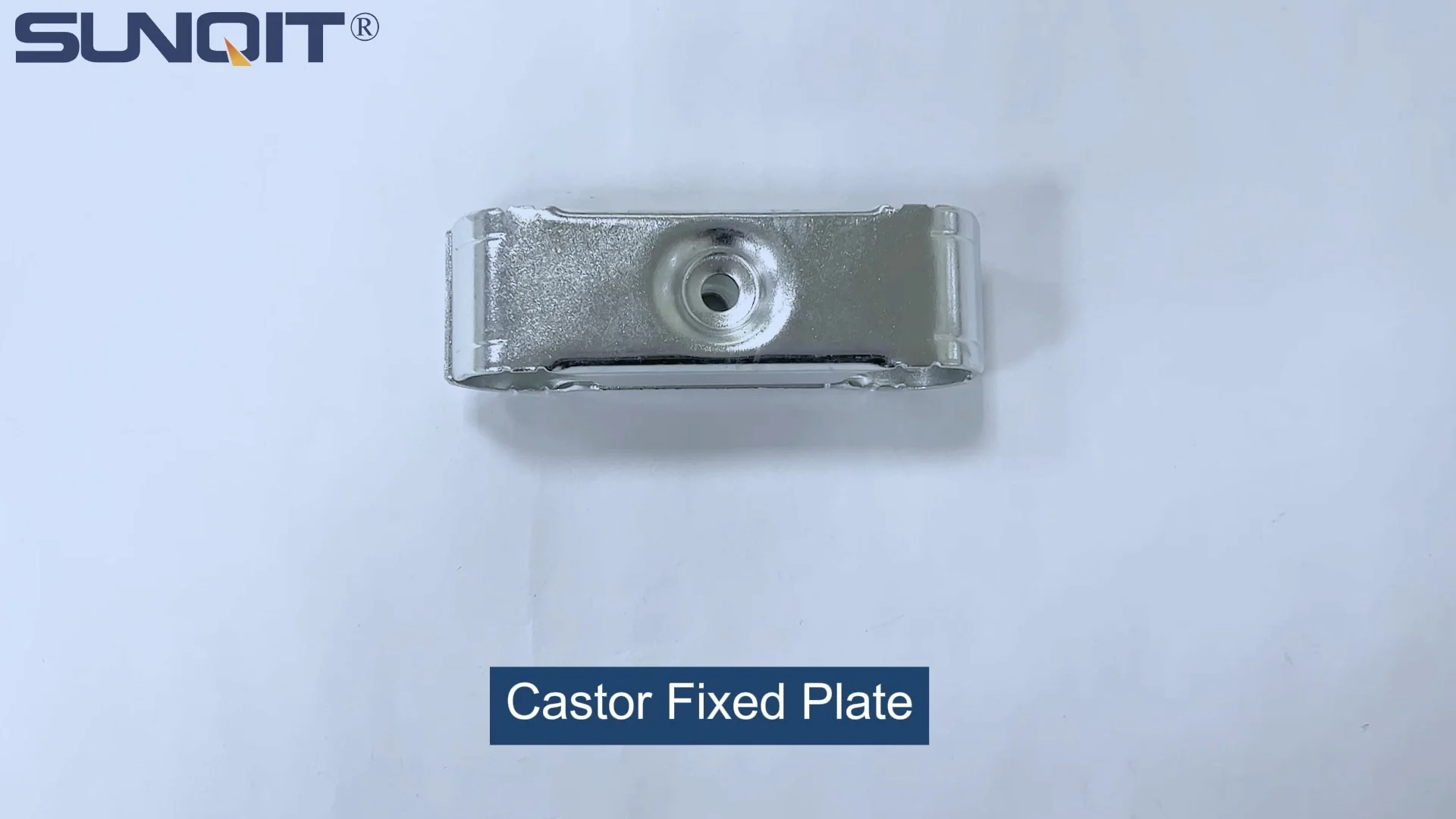
Castor Fixed Plate
Castor fixed plate, used for castor installation, one castor need two pcs castor plate to fix under the workbench, flow rack, and hand trolley.
If you've ever walked through a busy warehouse, stood beside a production line, or even assembled a mobile workbench in your garage, you've probably encountered casters—the small wheels that make heavy objects moveable. But what you might not have noticed is what holds those casters in place: the unsung heroes known as caster fixed plates and caster brackets . These two components might seem interchangeable at first glance, but choosing between them can make or break the stability, durability, and functionality of your equipment. Let's dive into their differences, uses, and how to pick the right one for your needs.
What Is a Castor Fixed Plate?
Imagine a thick, flat piece of metal (or sometimes aluminum) with pre-drilled holes, designed to bolt directly onto the bottom of a piece of equipment. That's a castor fixed plate. Its job? To create a rigid, unshakable connection between the caster and the equipment it's moving. Fixed plates are all about strength—they distribute weight evenly across a larger surface area, making them ideal for heavy-duty applications where stability is non-negotiable.
Most fixed plates are made from steel (often galvanized or powder-coated to resist rust) or thick-gauge aluminum. Steel plates handle extreme loads, while aluminum options are lighter and corrosion-resistant, perfect for cleanrooms or food processing environments. You'll find them on everything from industrial workbenches (like the workbench e (single deck-without caster) when retrofitted with mobility) to large material racks (think material rack b (3 row and 3 floor) loaded with heavy inventory).
Real-World Example: Heavy-Duty Workbench
A manufacturing plant uses a steel workbench to assemble car parts. The bench weighs 500 lbs empty and often holds another 300 lbs of tools and components. To move it between assembly stations, they attach casters with fixed plates. The plates bolt securely to the bench's steel frame, ensuring the caster doesn't shift or bend under the load—even when rolled over uneven concrete floors.
What Is a Castor Bracket?
Now, picture a more compact, often L-shaped or angled piece of metal (or sometimes plastic) that acts as a bridge between the caster and the equipment. That's a castor bracket. Unlike fixed plates, brackets prioritize flexibility and adjustability. They're designed to attach to thinner surfaces, like the frame of a lightweight trolley or the edge of a shelving unit, and often feature slotted holes for (fine-tuning) the caster's position.
Brackets come in a range of materials: steel for medium loads, aluminum for lightweight applications, and even reinforced plastic for low-weight, corrosion-prone settings. They're the go-to choice for equipment that needs occasional mobility but doesn't require the brute strength of a fixed plate. Think turnover trolley and rack units used to transport small parts, or mobile carts in retail stockrooms.
Real-World Example: Retail Stock Cart
A bookstore uses a lightweight aluminum cart to restock shelves. The cart weighs 80 lbs and carries up to 150 lbs of books. Castor brackets attach to the cart's thin aluminum frame via small bolts. The slotted holes in the brackets let workers adjust the caster alignment if the cart starts to wobble, ensuring smooth movement through narrow aisles.

Key Differences: A Side-by-Side Comparison
| Feature | Castor Fixed Plate | Castor Bracket |
|---|---|---|
| Load Capacity | High (typically 500–2,000 lbs per caster) | Medium to Low (typically 100–800 lbs per caster) |
| Mounting Style | Bolts directly to equipment base (requires solid, flat surface) | Attaches to edges or thin frames (often with slotted holes for adjustment) |
| Weight Distribution | Even distribution across a large surface area | Concentrated on bracket arms (may stress thin frames) |
| Adjustability | Limited (fixed position once bolted) | High (slots allow for alignment tweaks post-installation) |
| Common Materials | Steel, stainless steel, heavy-gauge aluminum | Light steel, aluminum, reinforced plastic |
| Best For | Heavy equipment, workbenches, material racks | Light trolleys, carts, shelving units, turnover racks |

Why Material Matters: Steel, Aluminum, and Beyond
Steel: The Workhorse
Steel fixed plates and brackets are the backbone of industrial settings. Hot-rolled steel offers unmatched strength, while cold-rolled steel adds precision for tighter tolerances. Galvanized steel resists rust, making it ideal for outdoor use or damp warehouses. If you're moving stainless steel pipe series or heavy machinery, steel is your safest bet.
Aluminum: The Lightweight Champion
Aluminum fixed plates and brackets shine in applications where weight and corrosion resistance matter. They're 30% lighter than steel but still strong enough for medium loads. You'll see aluminum brackets on aluminum profile workbenches or cleanroom equipment, where avoiding rust and reducing manual handling strain are priorities. Plus, aluminum's natural finish fits modern, sleek workspaces.
Plastic: The Budget-Friendly Option
Reinforced plastic brackets are rare but useful for ultra-light loads (think office carts or retail display units). They're cheap, corrosion-proof, and quiet—but skip them for anything over 100 lbs. They're more likely to crack under stress compared to metal alternatives.

Choosing the Right One: 5 Critical Questions to Ask
1. How Much Weight Will It Carry?
Start here. If your equipment (plus its load) weighs over 800 lbs total, fixed plates are non-negotiable. For example, a material rack b (3 row and 3 floor) loaded with metal parts could hit 1,500 lbs—fixed plates will prevent the casters from tearing free. For loads under 500 lbs, brackets might be sufficient and more cost-effective.
2. What's the Surface Like?
Rough concrete, gravel, or uneven floors demand stability. Fixed plates reduce wobble, lowering the risk of equipment tipping. Smooth warehouse floors with roller track systems are gentler, making brackets a viable choice for mobile trolleys.
3. How Often Will It Move?
Equipment that stays put 90% of the time (like a stationary workbench occasionally moved for cleaning) can get by with brackets. But if you're rolling heavy loads multiple times daily, fixed plates' rigid connection will outlast brackets, which may loosen over time from vibration.
4. What's the Environment Like?
Wet, humid, or corrosive environments (like marine facilities or chemical plants) need stainless steel fixed plates or aluminum brackets. Dry, indoor spaces (like offices or retail) can use standard steel brackets to save money.
5. Is Adjustment Needed?
If your equipment's frame isn't perfectly square (common with DIY builds), brackets' slotted holes let you align casters to prevent wobbling. Fixed plates require precise drilling—off by even 1/8 inch, and your equipment might roll crookedly.
Installation Tips: Getting It Right the First Time
Installing a Castor Fixed Plate
1. Prep the Surface: Ensure the equipment base is flat and clean. Remove rust or paint where bolts will go. 2. Mark Holes: Use the plate as a template to mark bolt positions—measure twice, drill once! 3. Use the Right Bolts: Grade 8 steel bolts for heavy loads; stainless steel for corrosion resistance. 4. Tighten Evenly: Crank bolts in a star pattern to avoid warping the plate. 5. Test Load: Add weight gradually to check for shifting before full use.
Installing a Castor Bracket
1. Check Frame Thickness: Brackets need enough material to grip—avoid attaching to frames thinner than 1/8 inch. 2. Align Slots: Use the slotted holes to center the caster before tightening. 3. Use Lock Washers: Prevent loosening from vibration with split lock washers or thread locker. 4. Test Mobility: Roll the equipment back and forth to ensure casters track straight—adjust slots if needed.
When to Upgrade: Signs Your Current Setup Isn't Working
Even the best components wear out. Watch for these red flags:
- Bolts backing out or stripping (fixed plates): Your plate is undersized for the load.
- Bracket arms bending (casters): Upgrade to a heavier gauge or switch to fixed plates.
- Equipment wobbling excessively: Brackets may need realignment, or fixed plates could provide better stability.
- Rust eating through metal: Switch to stainless steel or aluminum components.
Final Thoughts: It's All About Balance
Castor fixed plates and brackets aren't enemies—they're tools for different jobs. Fixed plates are the reliable bodyguards of heavy equipment, while brackets are the flexible assistants for lighter, mobile tasks. By matching load capacity, environment, and adjustability needs to the right component, you'll keep your equipment rolling smoothly for years.
Next time you're shopping for casters, don't just focus on the caster wheel —ask about the plate or bracket holding it. After all, even the sturdiest wheel is only as good as what connects it to your equipment. Whether you're outfitting a turnover trolley and rack or upgrading a workbench, getting this decision right will save you time, money, and headaches down the line.