- Company Articles
- Products and Technology
- Product knowledge
- Castor Fixed Plate vs. Heavy-Duty Brackets: Load Capacity Comparison

Castor Fixed Plate vs. Heavy-Duty Brackets: Load Capacity Comparison
Related Product
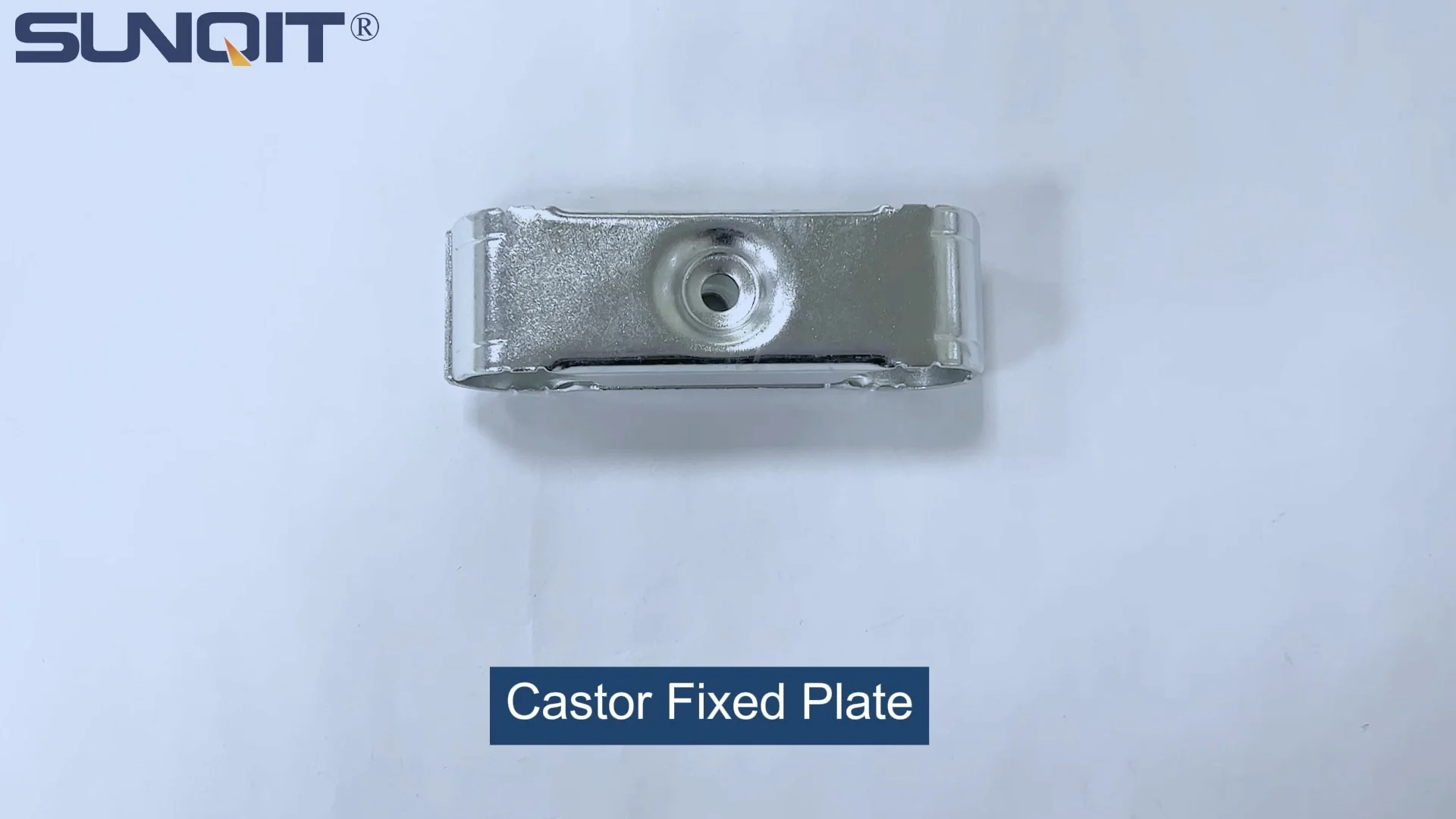
Castor Fixed Plate
Castor fixed plate, used for castor installation, one castor need two pcs castor plate to fix under the workbench, flow rack, and hand trolley.
In the fast-paced world of manufacturing, warehousing, and logistics, every component of your workspace matters. From the workbench where operators assemble products to the turnover trolley and rack that moves materials across the floor, the stability and load-bearing capacity of your equipment can make or break daily operations. Two components that often fly under the radar but play a critical role in this equation are castor fixed plates and heavy-duty brackets. While they might seem like small parts, their ability to support weight directly impacts safety, efficiency, and even the longevity of your setup. In this article, we'll dive deep into how these two components stack up in terms of load capacity, helping you make informed choices for your specific needs—whether you're optimizing a lean system or building a new workspace from scratch.
What Are Castor Fixed Plates?
Let's start with the basics: castor fixed plates. If you've ever pushed a mobile workbench or a trolley across a factory floor, you've interacted with these unsung heroes. Castor fixed plates are the metal (or sometimes plastic) plates that secure casters (wheels) to the bottom of equipment. Think of them as the bridge between the caster and the equipment itself—they distribute the weight of the load across the caster, ensuring stability and preventing the caster from detaching under stress.
Most castor fixed plates are made from steel, aluminum, or reinforced plastic, depending on the application. Steel plates are the workhorses here, favored for their high tensile strength, while aluminum options are lighter and resistant to corrosion—ideal for environments where moisture is a concern. Plastic plates, though less common, are used in lightweight setups where cost and weight are prioritized over maximum load capacity.
These plates come in various shapes and sizes, but the most common design is a flat, rectangular plate with pre-drilled holes. The holes align with the mounting points on the caster and the equipment, allowing bolts or screws to secure everything in place. Some plates also feature reinforced edges or additional bracing to handle heavier loads, making them a versatile choice for everything from small tool carts to large industrial trolleys.
Fun fact: Castor fixed plates are often grouped under caster accessories —a category that includes everything from brake mechanisms to axle caps. This means when you're shopping for casters, you'll likely need to consider the plate as part of the full package.
What Are Heavy-Duty Brackets?
Now, let's shift gears to heavy-duty brackets. Unlike castor fixed plates, which focus on securing wheels, heavy-duty brackets are all about reinforcement and support. These are the sturdy metal pieces that hold up shelves, reinforce workbench frames, or anchor equipment to walls or floors. Imagine a shelf loaded with heavy boxes—without brackets, the shelf would sag or collapse. Heavy-duty brackets step in to distribute that weight evenly, ensuring the structure remains stable.
Materials matter here, too. Heavy-duty brackets are typically made from steel or aluminum profile (extruded aluminum with a T-slot design that allows for easy customization). Steel brackets are known for their raw strength—they're the go-to for industrial settings where loads can reach thousands of pounds. Aluminum profile brackets, on the other hand, offer a balance of strength and flexibility. Their T-slot design lets you add or remove components (like shelves or tools) quickly, making them a favorite in lean systems where adaptability is key.
Design-wise, heavy-duty brackets come in L-shapes, T-shapes, or even custom angles, depending on the application. L-brackets are the most common, used to support shelves or attach equipment to vertical surfaces. T-brackets, with their central crossbar, provide extra stability for longer spans, while angled brackets are perfect for corner installations. Many also feature gussets (triangular reinforcements) at the joints to prevent bending under heavy loads—a small detail that makes a big difference in load capacity.

Load Capacity: The Key Factors
Load capacity isn't just a number on a product spec sheet—it's a complex interplay of material, design, and installation. Let's break down how these factors affect both castor fixed plates and heavy-duty brackets.
1. Material Strength
For castor fixed plates, the material's tensile strength (how much force it can withstand before breaking) is critical. A 1/4-inch steel plate, for example, can typically support 500–800 lbs per caster, while an aluminum plate of the same thickness might max out at 300–500 lbs. Plastic plates, as mentioned earlier, are limited to lighter loads—usually 100–200 lbs—making them unsuitable for heavy industrial use.
Heavy-duty brackets, especially those made from aluminum profile or steel, rely on both tensile strength and rigidity. Steel brackets, with their higher density, can handle more weight per square inch, but aluminum profile brackets, thanks to their hollow, reinforced design (think of the T-slots as internal bracing), often punch above their weight. A 2-inch steel L-bracket, for instance, might support 1,000 lbs when mounted to a wall, while an aluminum profile bracket of similar size could handle 800–900 lbs—impressive for a lighter material.
2. Design and Distribution
How a component is designed directly impacts how it distributes weight. Castor fixed plates with larger surface areas spread the load more evenly across the caster and the equipment, reducing stress points. A plate that's 6x8 inches, for example, will handle more weight than a 4x4 inch plate of the same material, simply because there's more metal to absorb the pressure.
Heavy-duty brackets, on the other hand, depend on their shape. L-brackets with a wide "foot" (the part that attaches to the wall) and a long "arm" (the part that holds the shelf) distribute weight vertically, transferring it from the shelf to the wall. Gusseted brackets take this a step further by adding a triangular piece at the joint, which resists bending and prevents the bracket from "opening up" under load. This is why you'll often see gussets on brackets used for heavy tools or machinery.
3. Installation Quality
Even the strongest component will fail if installed poorly. For castor fixed plates, using the wrong size bolts or under-tightening them can lead to the plate warping or the caster coming loose. Similarly, mounting a steel plate to a flimsy wooden trolley frame is a recipe for disaster—the frame itself will give way before the plate does.
Heavy-duty brackets require secure anchoring, too. Wall-mounted brackets need to be fastened into studs or concrete (not just drywall!), and shelf brackets must be aligned perfectly to avoid uneven weight distribution. A bracket that's tilted even slightly will put extra stress on one side, reducing its effective load capacity by 20–30%.

Load Capacity Comparison: The Numbers
To make this tangible, let's look at real-world load capacity ranges for both components. The table below compares typical capacities under ideal conditions (proper installation, standard materials, and even weight distribution).
| Scenario | Castor Fixed Plates (Typical Load Capacity) | Heavy-Duty Brackets (Typical Load Capacity) |
|---|---|---|
| Light-Duty (Home/Office Use) | 100–200 lbs (plastic or small aluminum plates) | 200–400 lbs (aluminum profile or small steel brackets) |
| Medium-Duty (Warehouse Trolleys, Workbenches) | 300–600 lbs (steel or reinforced aluminum plates) | 500–1,000 lbs (steel L-brackets or heavy aluminum profile) |
| Heavy-Duty (Industrial Machinery, Large Racks) | 800–1,500 lbs (thick steel plates with gussets) | 1,000–3,000 lbs (thick steel brackets, often with welded reinforcements) |
| Extreme-Duty (Mining, Heavy Manufacturing) | 1,500+ lbs (custom steel plates with forged joints) | 3,000+ lbs (industrial-grade steel brackets, sometimes with alloy additives) |
Important: These numbers are averages. Always check the manufacturer's specs for your specific product—factors like plate thickness, bracket height, and material grade can push capacities higher or lower.

Application Scenarios: When to Choose Which?
Now that we have the numbers, let's talk about real-world applications. Castor fixed plates and heavy-duty brackets each have sweet spots where they excel.
Castor Fixed Plates: Best for Mobile Loads
If your equipment needs to move—think mobile workbenches, tool trolleys, or turnover trolley and rack systems—castor fixed plates are non-negotiable. They're designed to handle dynamic loads (weight that shifts as the equipment moves), which is crucial for preventing tipping or caster failure. For example, a mobile workbench loaded with 400 lbs of tools will rely on its castor fixed plates to keep the casters anchored as it's pushed over uneven floors. In lean system setups, where flexibility and quick reconfiguration are key, castor fixed plates allow teams to rearrange workstations on the fly without sacrificing stability.
Heavy-Duty Brackets: Best for Static or Vertical Loads
When the load is stationary or needs vertical support—like wall shelves, overhead racks, or fixed workbench frames—heavy-duty brackets take the lead. A wall-mounted shelf holding 800 lbs of inventory, for instance, depends on brackets to transfer that weight safely to the wall studs. Similarly, the frame of a fixed workbench often uses brackets to reinforce the legs and tabletop, ensuring it doesn't wobble under the weight of power tools or assembly materials. In warehouses, heavy-duty brackets are the backbone of pallet racks, where they support tons of goods day in and day out.
The Overlap: Hybrid Setups
Sometimes, you'll need both. Imagine a mobile workbench that also has a overhead shelf for storage. The base of the workbench uses castor fixed plates to keep it mobile, while the overhead shelf relies on heavy-duty brackets to stay attached to the workbench frame. In these cases, it's critical to balance the load capacity of both components—you don't want a shelf that can hold 500 lbs paired with casters that max out at 400 lbs, as the total load (workbench + tools + shelf items) could exceed the casters' limits.
Pros and Cons: Weighing Your Options
No component is perfect, so let's break down the advantages and drawbacks of each.
Castor Fixed Plates
Pros:
•
Flexibility:
Enables mobility, a must for dynamic workspaces like lean systems.
•
Even Weight Distribution:
Spreads load across casters, reducing stress on individual components.
•
Easy Installation:
Pre-drilled holes and standardized sizes make them simple to mount.
•
Cost-Effective:
More affordable than custom brackets for mobile setups.
Cons:
•
Limited by Caster Capacity:
Even the strongest plate can't overcome a weak caster.
•
Dynamic Load Risks:
Sudden movements or uneven floors can reduce effective load capacity.
•
Material Restrictions:
Plastic and aluminum options aren't suitable for extreme loads.
Heavy-Duty Brackets
Pros:
•
Static Load Champion:
Excels at supporting heavy, unmoving loads.
•
Customizable:
Can be welded, cut, or shaped for unique applications.
•
Durable:
Steel and aluminum profile brackets resist wear and tear in harsh environments.
•
Vertical Support:
Ideal for wall-mounted or overhead storage where space is limited.
Cons:
•
Immobility:
Doesn't help with moving equipment (you'll need casters separately).
•
Installation Complexity:
Often requires precise alignment and heavy-duty fasteners.
•
Weight:
Steel brackets add extra weight to structures, which can be a drawback in mobile setups.
Conclusion: Choosing the Right Component for Your Needs
At the end of the day, the choice between castor fixed plates and heavy-duty brackets comes down to one question: Is your load mobile or static? For mobile equipment like turnover trolley and rack systems or mobile workbenches, castor fixed plates are the way to go—just ensure you pair them with casters that match their load capacity. For static setups like wall shelves, fixed workbenches, or pallet racks, heavy-duty brackets (especially those made from steel or aluminum profile ) will provide the stability and strength you need.
And remember, in lean system environments, where efficiency and adaptability are prioritized, you might find yourself using both. A well-designed workspace balances mobility (castor fixed plates) and stability (heavy-duty brackets) to keep operations running smoothly. By understanding their load capacities and limitations, you'll be able to build a setup that's not just functional, but also safe and long-lasting—because in the world of manufacturing and logistics, the right components aren't just parts; they're the foundation of success.