- Company Articles
- Products and Technology
- Product knowledge
- Castor Fixed Plate vs. Mounting Plate: What's Better for Lean Workstations?

Castor Fixed Plate vs. Mounting Plate: What's Better for Lean Workstations?
Related Product
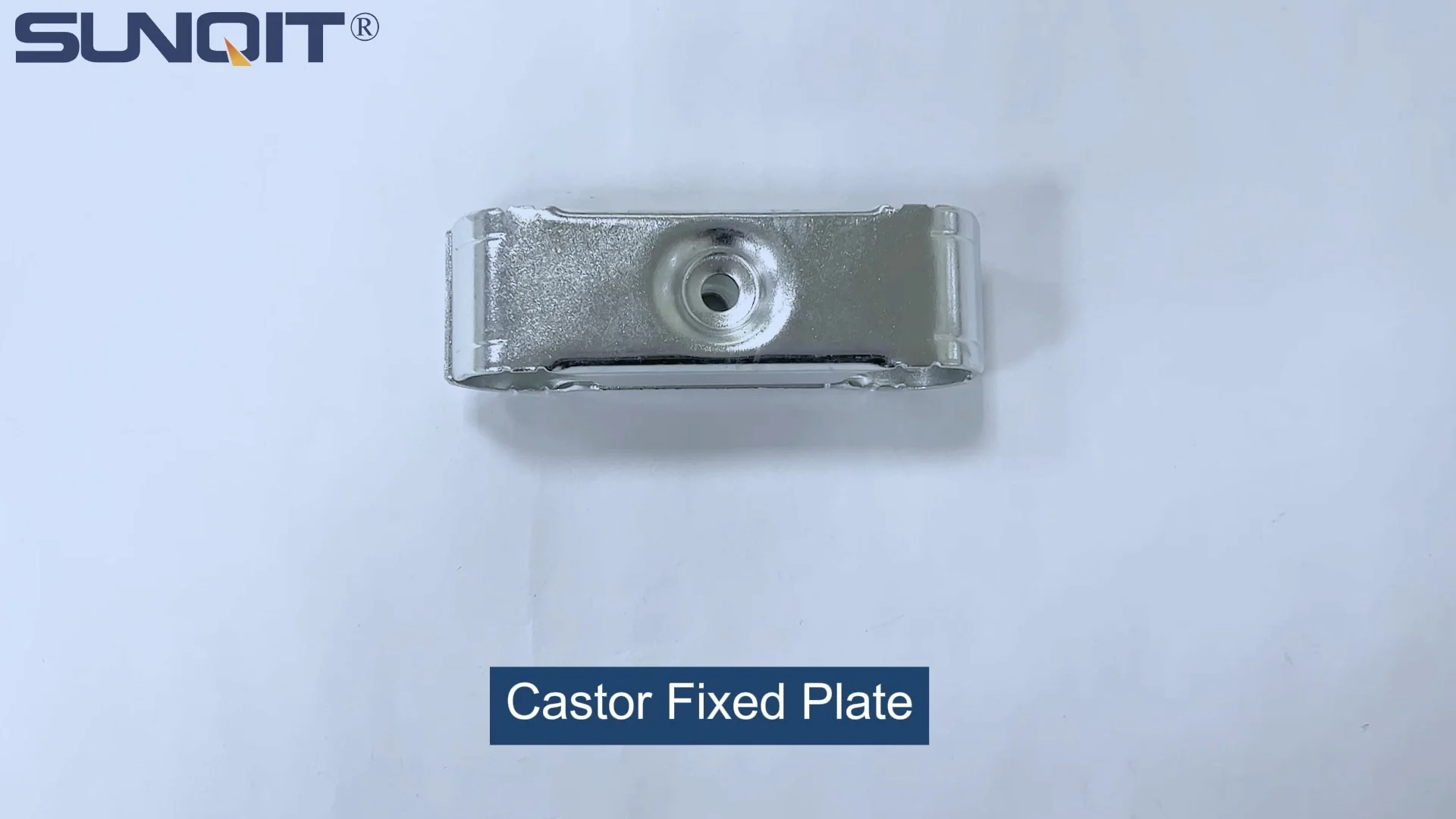
Castor Fixed Plate
Castor fixed plate, used for castor installation, one castor need two pcs castor plate to fix under the workbench, flow rack, and hand trolley.
Walk into any well-run manufacturing facility, and you'll notice something right away: the workstations hum with purpose. Every tool has a place, every movement feels intentional, and there's a quiet efficiency that makes even the busiest floor feel organized. That's the magic of lean manufacturing—but it doesn't happen by accident. Behind that efficiency are hundreds of small, often overlooked components working together seamlessly. Today, we're zooming in on two such unsung heroes: the castor fixed plate and the mounting plate. These humble pieces of hardware might not grab headlines, but they play a critical role in determining whether a lean workstation is a source of frustration or a catalyst for productivity.
Imagine standing on a factory floor where assembly line workers are rushing to meet a tight deadline. A turnover trolley loaded with components gets stuck halfway to the workstation because its wheels wobble—turns out, the plate holding the casters wasn't secured properly. Down the line, a quality control inspector struggles to keep their tools steady on a workbench that shifts slightly every time they lean on it; the mounting plate connecting the bench to the floor just isn't up to the task. These might sound like minor hiccups, but in lean manufacturing, minor hiccups add up. They disrupt flow, waste time, and chip away at the very efficiency lean systems aim to create.
So, what's the difference between a castor fixed plate and a mounting plate? When should you use one over the other? And how do these choices impact everything from worker safety to production speed? Let's dive in. By the end, you'll not only understand the technical differences but also how to pick the right plate for your specific needs—because in lean manufacturing, the details matter.
First Things First: What Even Is a Lean Workstation?
Before we get into the nitty-gritty of plates, let's make sure we're on the same page about lean workstations. At their core, these are workspaces designed with one goal in mind: to eliminate waste. That means no unnecessary movement, no cluttered surfaces, no tools out of reach. A well-designed lean workstation adapts to the task at hand, supports the worker's body mechanics, and integrates seamlessly with the overall production flow. Think of it as the nerve center of a lean system—where materials, tools, and people come together to turn raw components into finished products with minimal fuss.
But here's the thing: a lean workstation isn't just a table with a few tools. It's a system of interconnected parts. There's the workbench itself (often built with lean pipe and accessories for flexibility), the storage solutions (like flow racks or material racks), the mobility elements (casters and their mounting hardware), and even the ergonomic details (height adjustability, anti-fatigue mats). Every piece, including the plates we're discussing, needs to align with the principles of lean: efficiency, flexibility, and continuous improvement.
Now, within this system, the castor fixed plate and mounting plate serve distinct but equally vital roles. One is all about movement—making sure that when a workstation or trolley needs to roll, it does so smoothly and safely. The other is about stability—keeping a workstation anchored in place so that precision work can happen without distractions. Let's break them down.
Castor Fixed Plates: When Mobility Matters Most
What Is a Castor Fixed Plate?
Let's start with the basics: a castor fixed plate is a flat, sturdy piece of metal (usually steel or aluminum) designed to attach casters (those small wheels you see on trolleys, workbenches, and racks) to the base of a piece of equipment. Think of it as the bridge between the caster and the workstation itself. Without it, the caster would be bolted directly to the frame, which might seem simple, but would likely lead to wobbling, loosening, or even failure under heavy loads.
These plates come in various shapes and sizes, but they all share a few key features. First, they have pre-drilled holes that align with standard caster bolt patterns, making installation straightforward. Second, they're thick enough to distribute the weight of the workstation (and whatever it's carrying) evenly across the caster, preventing stress points that could bend or break the plate. Third, they're often coated with finishes like zinc or powder coating to resist rust and wear—important in factories where oil, coolant, or moisture might be present.
How Do Castor Fixed Plates Actually Work?
Picture this: You've got a turnover trolley and rack loaded with heavy aluminum extrusion profiles. You need to move it from the storage area to the assembly line. The trolley has four casters, each mounted to the frame via a castor fixed plate. When you push the trolley, the weight of the profiles (let's say 300 pounds) presses down on the frame, which transfers that weight to the plates. The plates, in turn, spread that weight across the caster's mounting plate, ensuring that no single bolt or section of the caster takes too much stress. As the trolley rolls, the plate also acts as a stabilizer, preventing the caster from twisting or tilting—even if the floor isn't perfectly smooth.
But it's not just about weight. Castor fixed plates also play a role in how the caster swivels (if it's a swivel caster) or locks (if it has a brake). A poorly mounted plate can cause the caster to bind up when turning, making the trolley hard to maneuver. A well-designed plate, though, keeps the caster aligned, so it swivels smoothly and locks securely when needed. That's why caster accessories like these plates are so critical—they turn a basic wheel into a reliable mobility solution.
The Benefits: Why Bother with a Fixed Plate?
At this point, you might be thinking, "Can't I just skip the plate and bolt the caster directly to the workstation?" In theory, yes. But in practice, you'd be asking for trouble. Here's why castor fixed plates are worth the investment:
- Stability Under Load: Workstations and trolleys in manufacturing environments often carry heavy loads—think boxes of components, tools, or even semi-finished products. A fixed plate distributes that weight evenly, reducing the risk of the caster breaking or the workstation tipping over.
- Reduced Vibration: When a trolley rolls over a uneven floor, vibrations can loosen bolts over time. The plate acts as a buffer, absorbing some of that shock and keeping the caster securely attached.
- Easier Maintenance: If a caster needs to be replaced (and trust us, they wear out), a fixed plate makes the process simple. Just unbolt the old caster from the plate, bolt on the new one, and you're done—no need to drill new holes in the workstation frame.
- Compatibility: Most casters are designed to work with standard fixed plate sizes. That means if you decide to upgrade your casters later (say, switching from plastic wheels to steel for heavier loads), you won't need to replace the entire workstation—just the casters and possibly the plate (if the new casters have a different bolt pattern).
Ideal Use Cases for Castor Fixed Plates
Castor fixed plates shine in situations where mobility is a priority. Here are a few scenarios where you'd want to reach for them:
Example 1: Mobile Assembly Workstations
In a car manufacturing plant, assembly line workers might need to move their workstations along with the vehicle as it progresses down the line. A lean pipe workbench mounted on casters with fixed plates allows the worker to stay right next to the car, eliminating the need to walk back and forth to a stationary bench. The plates ensure the bench rolls smoothly, even when loaded with power tools and spare parts.
Example 2: Turnover Trolleys for Material Transport
Warehouses and distribution centers rely on turnover trolleys to move materials from storage to production areas. These trolleys often carry stacked boxes or bulk items, so stability is key. Castor fixed plates prevent the casters from shifting under heavy loads, reducing the risk of spills or injuries. Plus, when the trolley needs to be cleaned or repaired, the plates make it easy to remove and reattach the casters.
Example 3: Flexible Workbenches in Small Batch Production
In a facility that produces custom electronics, production runs might be small and varied. A single workbench might need to be reconfigured for different products—moved to a new location, adjusted for height, or paired with different tools. Casters with fixed plates let workers reposition the bench quickly, adapting to changing needs without disrupting the workflow.

Mounting Plates: When Stability Is Non-Negotiable
What Is a Mounting Plate?
If castor fixed plates are all about movement, mounting plates are all about staying put. These are flat, rigid plates (often made of steel or thick aluminum) used to anchor a workstation, rack, or piece of equipment to a fixed surface—usually the floor, a wall, or a larger structural frame. Unlike castor plates, which connect to wheels, mounting plates connect to the ground (or another stable structure), preventing the workstation from moving, shifting, or vibrating during use.
Mounting plates come in even more varieties than castor plates, but they share a common purpose: to create a rock-solid foundation. Some are designed to bolt directly into concrete floors (using expansion bolts), others to clamp onto existing steel beams, and still others to attach to aluminum profiles (a common material in lean workbench construction). They might be small and simple (like a square plate with four holes) or large and complex (with slots for adjustability or reinforced edges for heavy loads).
How Do Mounting Plates Work?
Let's take a typical scenario: a quality control workstation where inspectors use precision tools to measure small components (think circuit boards or medical devices). Even the tiniest movement of the workbench could throw off measurements, leading to errors. So, the workbench is mounted to the floor using a heavy-duty steel mounting plate. The plate is bolted into the concrete at four corners, and the workbench frame is then bolted to the plate. Now, when the inspector leans on the bench or uses a torque wrench, the plate transfers that force directly to the floor, preventing the bench from shifting.
But mounting plates aren't just for preventing movement—they also help with alignment. In production lines where multiple workstations need to be perfectly positioned relative to each other (like in an assembly cell), mounting plates ensure that each station stays in its assigned spot, even after years of use. They can also reduce vibration, which is crucial for sensitive equipment like microscopes or testing machines. By anchoring the workstation to a stable surface, the plate acts as a dampener, absorbing vibrations from the floor or nearby machinery.
The Benefits: Why Stability Matters
You might be wondering, "If lean manufacturing is all about flexibility, why would I want a workstation that can't move?" The answer is simple: some tasks require absolute stability. Here's why mounting plates are indispensable in those cases:
- Precision Work: Tasks like soldering, measuring, or assembling small parts demand a steady surface. A mounting plate ensures that the workstation doesn't shift, even when the worker applies force (like pressing down with a tool).
- Safety: Heavy machinery or workstations loaded with hazardous materials (like chemicals or sharp tools) need to stay anchored to prevent tipping. Mounting plates reduce the risk of accidents by keeping the equipment firmly in place.
- Reduced Wear and Tear: Workstations that shift or vibrate excessively can wear out faster. Bolting them down with a mounting plate minimizes movement, extending the life of the frame, shelves, and other components.
- Consistency: In lean systems, consistency is key. If a workstation moves even a few inches over time, it can throw off the entire production flow—materials might no longer line up with conveyors, or workers might have to reach further than they should. Mounting plates keep everything where it's supposed to be, day in and day out.
Ideal Use Cases for Mounting Plates
Mounting plates are the go-to choice when mobility takes a backseat to stability. Here are some common situations where they're essential:
Example 1: ESD Workstations in Electronics Manufacturing
Electrostatic discharge (ESD) can destroy sensitive electronics, so ESD workstations need to be grounded. A mounting plate not only keeps the workstation stable but also provides a secure connection point for grounding wires. This ensures that any static charge dissipates safely into the floor, protecting components from damage.
Example 2: Heavy-Duty Material Racks
Material racks loaded with steel pipes or aluminum extrusion profiles can weigh thousands of pounds. If a rack shifts or tips, it could cause serious injury. Mounting plates bolt the rack to the floor, preventing movement even if the rack is overloaded (though we always recommend sticking to weight limits!). They're especially important in earthquake-prone areas, where seismic activity could otherwise topple unanchored equipment.
Example 3: Testing and Calibration Stations
Laboratories or manufacturing facilities that test equipment (like sensors or gauges) need ultra-stable workbenches. A mounting plate ensures that the testing equipment doesn't vibrate or move during calibration, leading to more accurate results and fewer retests.

Castor Fixed Plate vs. Mounting Plate: A Head-to-Head Comparison
Now that we've covered the basics of each plate, let's put them side by side. The table below breaks down their key differences, so you can see at a glance which one might be right for your needs.
| Feature | Castor Fixed Plate | Mounting Plate |
|---|---|---|
| Primary Purpose | Attach casters to workstations/trolleys for mobility | Anchor workstations/equipment to fixed surfaces for stability |
| Mobility | Enables movement (via casters) | Prevents movement (anchors to floor/wall) |
| Stability | Moderate (stabilizes casters during movement but allows rolling) | High (prevents all movement, even under force) |
| Load Capacity | Varies by size/thickness (typically 200–1,000 lbs per plate) | Higher (can support thousands of lbs when bolted to concrete) |
| Installation | Relatively simple (bolts to workstation frame and caster) | More complex (may require drilling into concrete/walls) |
| Flexibility | High (easily reposition workstations as needs change) | Low (permanently anchors equipment; hard to relocate) |
| Best For | Mobile workstations, turnover trolleys, assembly line carts | ESD workstations, heavy material racks, precision testing stations |
| Maintenance Needs | Moderate (check bolts for tightness; replace casters as needed) | Low (once installed, rarely needs adjustment) |
| Cost | Lower (simple design; often sold with casters as a set) | Higher (thicker materials; may require professional installation) |

How to Choose: Key Factors to Consider
Deciding between a castor fixed plate and a mounting plate isn't just about mobility vs. stability—it's about understanding your specific workflow, environment, and goals. Here are the questions to ask yourself before making a choice:
1. Does the Workstation Need to Move?
This is the most obvious question, but it's worth starting here. If the workstation stays in one spot 99% of the time (like a quality control bench), a mounting plate makes sense. If it needs to be repositioned daily (like a mobile assembly cart), go with a castor fixed plate. But what if you need both? Some workstations use locking casters with fixed plates—lock the casters when stability is needed, unlock them when you need to move. It's a flexible middle ground, though keep in mind that locked casters still aren't as stable as a fully mounted workstation.
2. What's the Load Capacity?
Castor fixed plates are rated for specific weight limits, just like casters. If you're moving heavy loads (over 1,000 lbs), you'll need a thick, reinforced plate. Mounting plates, on the other hand, can handle much more weight since they distribute it to the floor. Always check the manufacturer's specs—overloading a plate is a safety hazard.
3. What's the Floor Like?
Rough or uneven floors can make castor fixed plates less effective—casters might get stuck, and the plate might take extra stress. In that case, you might opt for a mounted workstation to avoid the hassle. Conversely, if the floor is smooth and level, casters with fixed plates will roll easily. Also, consider floor finishes: mounting plates require drilling into concrete, which might not be possible on polished or rented floors.
4. How Often Does Your Workflow Change?
Lean manufacturing thrives on continuous improvement, which means workflows can change. If you're constantly reconfiguring your production line (adding new stations, rearranging cells), castor fixed plates give you the flexibility to move workstations without rebuilding them. Mounting plates are better for static workflows that rarely change.
5. What Are the Safety Requirements?
Certain industries have strict safety standards. For example, in food processing, workstations might need to be moved frequently for deep cleaning—casters with fixed plates make that easier. In construction, heavy equipment must be anchored to prevent tipping—mounting plates are a must. Always check OSHA or industry-specific regulations to ensure compliance.
Real-World Stories: When the Right Plate Made All the Difference
To bring this all to life, let's look at two real-world examples of how choosing the right plate transformed a workstation from a problem to a solution.
Case Study 1: Automotive Plant Boosts Efficiency with Castor Fixed Plates
A mid-sized automotive parts manufacturer was struggling with their assembly line. Workers had to walk 20 feet back and forth between their workbench and the material storage area every time they needed a new component—a classic case of wasteful motion. The team decided to build mobile workstations using lean pipe workbenches, but the first prototypes had a problem: the casters kept wobbling, making the benches hard to push and causing components to fall off.
After consulting with a lean pipe supplier, they realized the issue was the casters were bolted directly to the bench frame without fixed plates. They switched to heavy-duty castor fixed plates, which distributed the weight evenly and stabilized the casters. Almost immediately, the workstations rolled smoothly, and workers could keep materials right at their side. The result? A 15% reduction in assembly time and fewer dropped parts—all from adding a simple plate.
Case Study 2: Electronics Manufacturer Reduces Errors with Mounting Plates
An electronics manufacturer was having trouble with their ESD workstations. Inspectors were finding tiny scratches on circuit boards, but no one could figure out why. After reviewing video footage, they noticed the workbench shifted slightly every time the inspector opened a drawer or leaned on the surface. The bench wasn't mounted, so even small movements were causing the circuit boards to rub against tools, leading to defects.
The solution? Installing mounting plates to anchor the workbench to the floor. Once the bench was stable, the scratches disappeared. The manufacturer estimated the change saved them $50,000 a year in rework and scrap—proof that even the smallest components can have a big impact on the bottom line.
Beyond the Plate: Building a Truly Lean Workstation
While castor fixed plates and mounting plates are important, they're just one piece of the puzzle. To build a truly lean workstation, you need to consider the entire system. Here are a few tips to keep in mind:
- Start with the Worker: Design the workstation around the person using it. Consider height, reach, and ergonomics—then choose plates and other components that support that design.
- Use Quality Components: A cheap plate might save money upfront, but it will fail faster. Invest in high-quality casters, fixed plates, and mounting hardware from a reputable lean pipe supplier.
- Test and Iterate: Build a prototype workstation, test it with workers, and gather feedback. You might find that a combination of plates (like a mobile workstation with locking casters and a removable mounting plate for when stability is needed) works best.
- Train Your Team: Even the best workstation won't work if workers don't know how to use it. Train the team on adjusting casters, locking plates, and maintaining the workstation properly.
Final Thoughts: It's All About Balance
At the end of the day, there's no "better" plate—only the right plate for the job. Castor fixed plates excel when mobility and flexibility are key, while mounting plates are indispensable for stability and precision. The secret to a lean workstation is understanding your unique needs, asking the right questions, and choosing components that align with your goals.
So, the next time you're designing or upgrading a workstation, take a moment to think about those humble plates. They might not be the most glamorous part of the process, but they're the foundation on which efficiency, safety, and productivity are built. And in lean manufacturing, a strong foundation makes all the difference.
Whether you're rolling out mobile workbenches with castor fixed plates or anchoring heavy racks with mounting plates, remember: every component, no matter how small, contributes to the success of your lean system. Choose wisely, and watch your workstation (and your bottom line) thrive.