- Company Articles
- Products and Technology
- Product knowledge
- Castor Fixed Plate vs. Swivel Plate: Which Suits Your Turnover Cart?

Castor Fixed Plate vs. Swivel Plate: Which Suits Your Turnover Cart?
Related Product
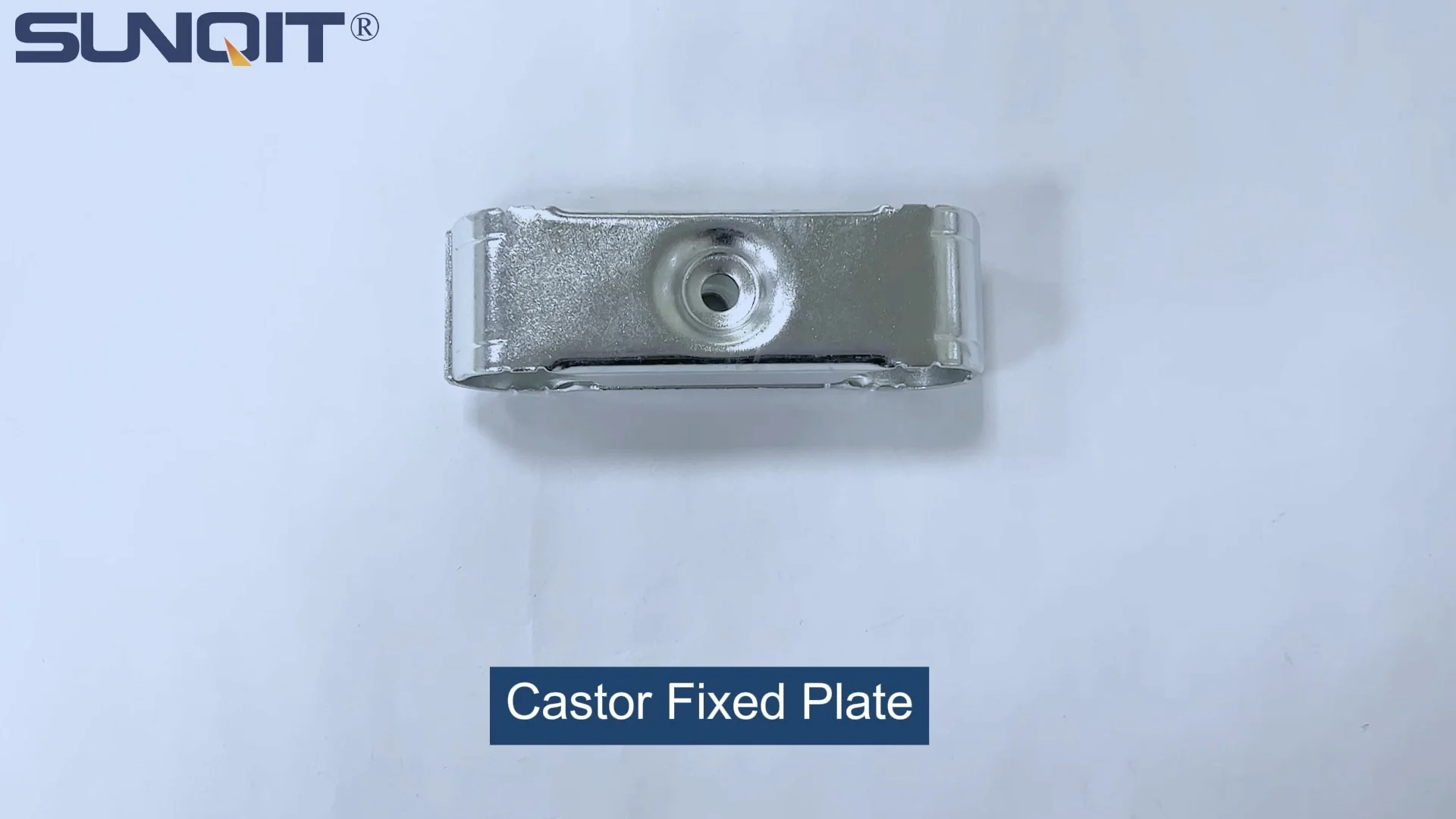
Castor Fixed Plate
Castor fixed plate, used for castor installation, one castor need two pcs castor plate to fix under the workbench, flow rack, and hand trolley.
Walk into any busy warehouse, manufacturing plant, or distribution center, and you'll likely hear the hum of activity: workers loading and unloading goods, machines whirring, and the steady roll of turnover trolley and rack systems moving materials from point A to B. These carts are the unsung heroes of daily operations, but their efficiency hinges on a small yet critical component: the castor plate. Specifically, the choice between a fixed plate and a swivel plate can make or break how well your turnover cart performs—affecting everything from maneuverability to safety to long-term durability.
If you've ever pushed a cart that felt clunky in tight spaces or wobbled under heavy loads, you know how frustrating a poor castor plate choice can be. On the flip side, the right plate turns a cart into a seamless extension of your workflow, reducing strain on workers and cutting down on time wasted navigating obstacles. In this guide, we'll dive deep into the world of castor fixed plates and swivel plates, breaking down their differences, pros and cons, and how to choose the best fit for your turnover trolley and rack needs. We'll also touch on caster and accessories that play into this decision, ensuring you walk away with clarity—no technical jargon, just practical advice.
Understanding the Basics: What Are Castor Plates, Anyway?
Before we compare fixed and swivel plates, let's get on the same page about what a castor plate even is. Think of it as the "bridge" between your caster wheel and the bottom of your turnover cart. It's the metal (or sometimes plastic) plate that attaches the wheel assembly to the cart's frame, providing stability and determining how the wheel moves. Without a sturdy, well-designed plate, even the best caster wheel will fail to perform—bending under weight, jamming, or worse, detaching entirely.
Castor plates come in two primary designs: fixed and swivel. Each serves a unique purpose, and neither is "better" than the other—they're just better suited to different scenarios. Let's start by breaking down what makes each type tick.
Fixed Plates: The Reliable Workhorses
A fixed castor plate, as the name suggests, locks the caster wheel in a single direction—usually forward and backward. Picture a shopping cart's front wheels (the ones that only go straight) or a heavy-duty industrial cart designed to move along a set path. The wheel is bolted or welded to the plate at a fixed angle, so no matter how you push the cart, the wheel stays aligned with the cart's frame.
Fixed plates are all about stability and strength. Because the wheel doesn't swivel, the plate can be built with thicker, sturdier materials (often steel or reinforced aluminum) to handle heavier loads. They're also simpler in design, with fewer moving parts, which means less can go wrong over time. For example, a fixed plate might use a single bolt pattern to attach to the cart, with no need for bearings or swivel mechanisms that could wear out.
Swivel Plates: The Agile Navigators
Swivel plates, on the other hand, let the caster wheel rotate 360 degrees. Think of the wheels on an office chair—you can spin in place, glide sideways, or pivot with minimal effort. The magic here is in the swivel mechanism: the plate sits on a bearing or raceway that allows the wheel assembly to rotate freely relative to the cart's frame. Many swivel plates also come with a locking feature (a common caster and accessories add-on) that lets you "lock" the wheel in place, turning it into a temporary fixed plate when needed.
Swivel plates are designed for flexibility. They shine in tight spaces, like narrow warehouse aisles or crowded manufacturing floors, where you need to make sharp turns or navigate around obstacles. Because the wheel can rotate, you don't have to "backtrack" to change direction—saving time and reducing worker fatigue. However, this agility comes with a trade-off: the swivel mechanism adds complexity, which can mean more maintenance and slightly lower load capacities compared to fixed plates.
Head-to-Head: Fixed Plate vs. Swivel Plate
To really understand which plate is right for your turnover cart, let's put them side by side. The table below breaks down key factors like maneuverability, load capacity, and ideal use cases—so you can see at a glance how they stack up.
| Feature | Fixed Plate | Swivel Plate |
|---|---|---|
| Maneuverability | Limited—only moves forward/backward. Best for straight paths or wide open spaces. | High—360° rotation allows easy turns, pivots, and navigation in tight areas. |
| Load Capacity | Higher (often 500–2,000 lbs per wheel). Sturdy design handles heavy, consistent loads. | Lower (typically 300–1,000 lbs per wheel). Swivel mechanism limits maximum weight. |
| Stability | Excellent—no swivel means less wobble, even on uneven floors or at high speeds. | Good, but less stable at high speeds or with off-center loads. May require locking for stability. |
| Maintenance Needs | Low—fewer moving parts. Only needs occasional bolt tightening and wheel cleaning. | Higher—swivel bearings need regular lubrication; locking mechanisms may wear out. |
| Ideal Use Cases | Straight-line transport (e.g., assembly lines, loading docks), heavy loads, outdoor use. | Tight spaces (e.g., retail stockrooms, lab facilities), frequent direction changes, light-to-medium loads. |
| Compatibility with Turnover Trolley and Rack | Best for large, heavy-duty trolleys/racks that follow fixed routes (e.g., warehouse pallet carts). | Better for smaller, versatile trolleys/racks used in dynamic environments (e.g., picking carts, workshop tool racks). |
Now that we've compared the basics, let's dig deeper into when each plate shines—and when you might want to think twice.
When to Choose a Fixed Plate
Fixed plates are the go-to choice when stability and load capacity are non-negotiable. Here are a few scenarios where they excel:
- Heavy Loads: If your turnover trolley and rack regularly hauls 1,000+ lbs—think stacks of metal parts, large boxes, or industrial equipment—a fixed plate is your safest bet. The rigid design distributes weight evenly, reducing the risk of the plate bending or the wheel detaching.
- Straight-Line Paths: In settings like assembly lines or manufacturing plants where carts move along a fixed route (e.g., from station 1 to station 2), fixed plates prevent "drifting." Workers don't have to fight to keep the cart on track, which cuts down on fatigue and errors.
- Outdoor or Rough Floors: Uneven concrete, gravel, or outdoor terrain can throw swivel plates off balance. Fixed plates, with their stable, one-directional movement, handle bumps and cracks better—no sudden swivels that could tip the cart.
- Low-Maintenance Environments: If your team doesn't have time for regular upkeep (e.g., lubricating swivel bearings), fixed plates are a lifesaver. With just a quick check of bolts and wheels every few weeks, they'll keep rolling smoothly.
When to Choose a Swivel Plate
Swivel plates are all about adaptability. They're the better choice when your workflow demands flexibility. Here's where they stand out:
- Tight Spaces: Narrow aisles, cluttered workbenches, or retail backrooms where you need to navigate around shelves, machinery, or other carts—swivel plates let you pivot on a dime. For example, a pharmacy using a turnover cart to restock shelves can easily twist around display racks without backing up.
- Frequent Direction Changes: If your cart moves in multiple directions (e.g., from a storage area to a packing station to a shipping dock), swivel plates eliminate the need for "three-point turns." Workers can simply push and glide, saving time and energy.
- Light-to-Medium Loads: For loads under 800 lbs—like electronics, small parts, or office supplies—swivel plates offer enough strength without sacrificing maneuverability. A lab using a cart to transport samples between stations, for instance, benefits from the ability to swivel around lab equipment.
- Ergonomic Needs: Pushing a cart with fixed plates in a tight space often requires awkward bending or pulling, which can lead to back strain. Swivel plates reduce physical effort, making them a better choice for worker safety in dynamic environments.

Beyond the Plate: How Caster and Accessories Play a Role
The plate itself is just one piece of the puzzle. To get the most out of your castor setup, you'll also need to consider caster and accessories that complement your plate choice. These add-ons can enhance performance, safety, and longevity—so don't overlook them.
Brakes: A Must-Have for Swivel Plates
Most swivel plates come with optional brake mechanisms (a key caster and accessories item) that lock the wheel in place. This is a game-changer for stability. For example, if you're loading a swivel-plate cart with boxes, hitting the brake prevents the cart from rolling or swiveling mid-load. Some brakes even lock both the wheel and the swivel mechanism, turning the plate into a temporary fixed plate for extra security.
Wheel Type: Matching the Floor
The caster wheel material matters just as much as the plate. For fixed plates on rough concrete, a steel wheel offers durability. For swivel plates on smooth warehouse floors, a polyurethane wheel provides better grip and reduces noise. Rubber wheels are ideal for indoor settings (like offices or hospitals) where you don't want to scratch floors, while nylon wheels work well for high-temperature environments (e.g., near ovens or furnaces).
Plate Material: Steel vs. Aluminum
Fixed plates are often made of steel for maximum strength, but aluminum is a lighter alternative for smaller carts. Swivel plates may use aluminum to reduce the weight of the swivel mechanism, making rotation smoother. If corrosion is a concern (e.g., in food processing or outdoor settings), look for stainless steel plates—they resist rust and stand up to moisture.
Mounting Hardware: The Unsung Heroes
Even the best plate won't perform if it's not mounted properly. Caster and accessories like lock washers, hex bolts, and reinforced mounting brackets ensure the plate stays attached to the cart frame. For heavy loads, use grade 8 bolts (stronger than standard bolts) and torque them to the manufacturer's specs—loose bolts are a common cause of plate failure.

Real-World Stories: How the Right Plate Made a Difference
To bring this all to life, let's look at two real-world examples of businesses that upgraded their turnover trolley and rack castor plates—and the impact it had.
Case Study 1: A Manufacturing Plant Switches to Fixed Plates
A mid-sized automotive parts manufacturer was using swivel-plate carts to move heavy engine blocks along their assembly line. The carts kept veering off course, causing delays, and the swivel bearings wore out every few months, leading to costly downtime. After consulting with a caster and accessories supplier, they switched to fixed plates with steel wheels. The result? Cart drift dropped by 90%, maintenance costs fell by $2,000 per year, and workers reported less fatigue from pushing straight-moving carts.
Case Study 2: A Retail Warehouse Upgrades to Swivel Plates
A large retail chain's distribution center was struggling with fixed-plate carts in their narrow aisles. Workers spent 20 minutes per shift just maneuvering carts around corners, and the rigid wheels often scraped against shelving, damaging inventory. They switched to swivel plates with brake locks and polyurethane wheels. Almost immediately, cart navigation time dropped by 40%, and shelving damage decreased by 75%. Workers also noted that the swivel plates made restocking faster, as they could pivot to reach multiple shelves without repositioning the cart.

Choosing the Right Plate: A Step-by-Step Guide
Now that you know the ins and outs of fixed and swivel plates, how do you decide which one is right for your turnover cart? Follow these steps to narrow it down:
- Calculate Your Load: Weigh your typical load (including the cart itself) and divide by the number of wheels (most carts have 4). This gives you the weight per wheel. If it's over 800 lbs, lean toward fixed plates.
- Map Your Path: Walk the route your cart takes daily. Are there tight turns? Narrow aisles? If yes, swivel plates are better. If it's a straight shot, fixed plates will work.
- Check the Floor: Rough, uneven floors? Go with fixed plates. Smooth, indoor floors? Swivel plates are fine.
- Assess Maintenance: Do you have a maintenance team to lubricate swivel bearings? If not, fixed plates are lower hassle.
- Test It Out: If possible, borrow a cart with each plate type and have workers test them. Their feedback on maneuverability and comfort is invaluable.
Maintenance Tips to Extend Plate Life
No matter which plate you choose, a little maintenance goes a long way. Here's how to keep your castor plates (and caster wheel systems) rolling strong:
- Fixed Plates: Tighten bolts monthly to prevent wobbling. Clean wheels weekly to remove debris (like dirt or metal shavings) that can scratch floors or jam the wheel.
- Swivel Plates: Lubricate swivel bearings every 3 months with a lithium-based grease. Check brake mechanisms monthly—replace worn brake pads to avoid sudden failure.
- All Plates: Inspect for rust (especially in humid environments) and replace corroded parts ASAP. If a wheel starts to drag or make noise, replace it before it damages the plate.
Final Thoughts: It's All About Your Workflow
At the end of the day, there's no "perfect" castor plate—only the one that fits your unique needs. Fixed plates are the steady, reliable choice for heavy loads and straight paths, while swivel plates bring agility to tight spaces and dynamic workflows. By considering your load, environment, and maintenance capacity, you can pick the plate that turns your turnover trolley and rack from a basic tool into a productivity booster.
And don't forget: caster and accessories like brakes and high-quality wheels can take your setup to the next level. Invest in the right combination, and you'll spend less time fighting with carts and more time focusing on what matters—growing your business.
So, which will it be? The steady strength of a fixed plate or the nimble flexibility of a swivel plate? Whatever you choose, here's to smoother rolls, happier workers, and a more efficient workflow.