- Company Articles
- Products and Technology
- Procurement Guidelines
- Castor Fixed Plate Warranty: What to Look for When Buying

Castor Fixed Plate Warranty: What to Look for When Buying
Related Product
Castor Fixed Plate
Castor fixed plate, used for castor installation, one castor need two pcs castor plate to fix under the workbench, flow rack, and hand trolley.
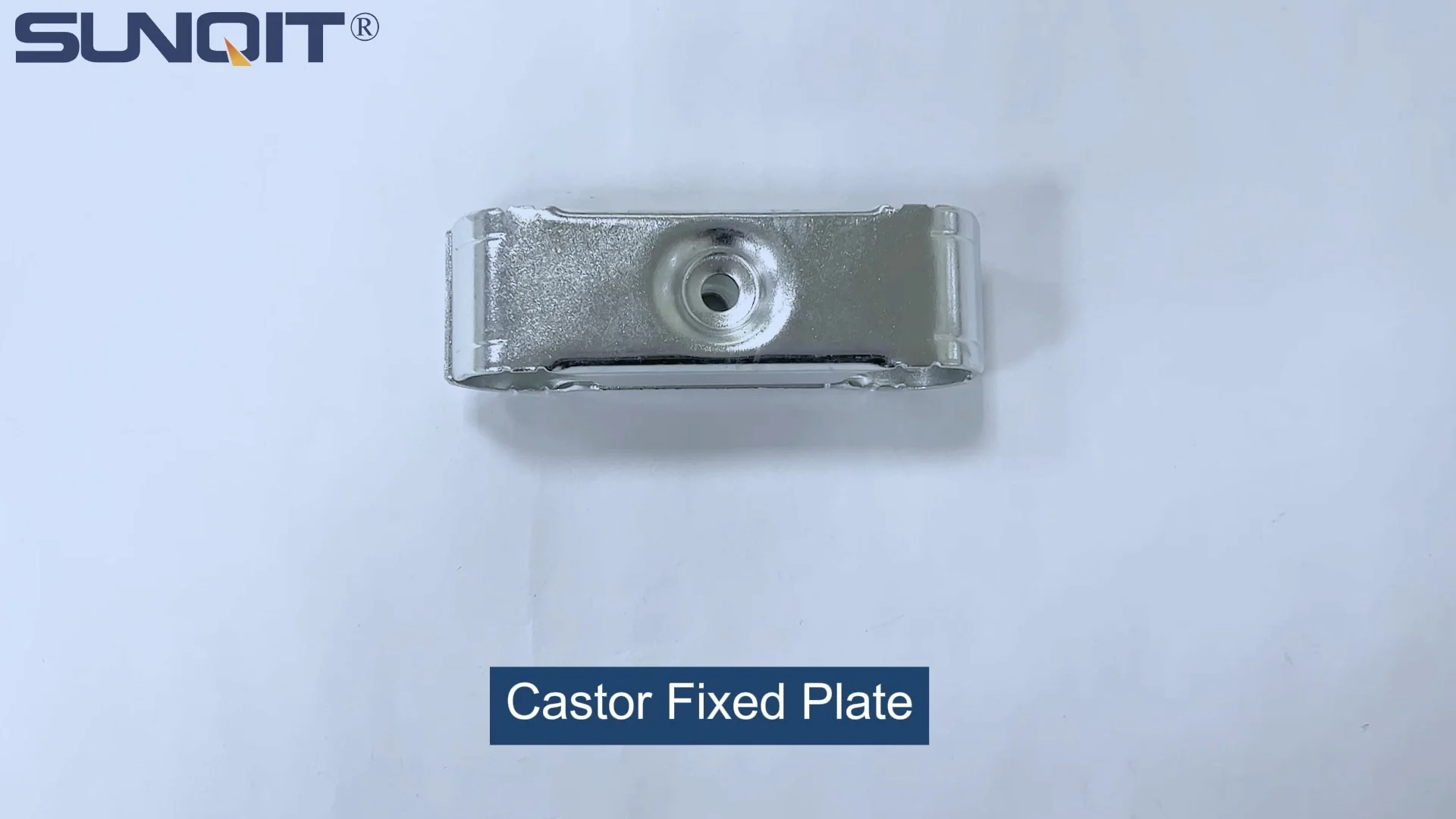
If you've ever walked through a busy warehouse, stood beside a manufacturing workbench, or pushed a loaded turnover trolley across a factory floor, you've probably interacted with caster systems—even if you didn't realize it. Those humble wheels that make heavy equipment movable, the structures that keep them stable, and the components that hold everything together are the unsung heroes of efficiency in countless industries. Among these components, the caster fixed plate might seem, but it's the backbone of any reliable caster setup. It's the metal (or sometimes aluminum) plate that bolts the caster wheel to the equipment, bearing the brunt of weight, friction, and daily wear. And when this small but critical part fails, the consequences can range from minor delays to major production halts. That's why, when investing in caster and accessories , understanding the warranty behind the caster fixed plate isn't just a "nice-to-have"—it's essential. In this guide, we'll break down everything you need to know about caster fixed plate warranties, from why they matter to how to spot a great one (and avoid a dud).
Understanding Castor Fixed Plates: More Than Just a "Plate"
Before diving into warranties, let's take a moment to appreciate what a caster fixed plate actually does. Imagine a workbench in an electronics assembly line: it needs to be mobile so workers can reposition it for different tasks, but it also needs to stay steady when someone leans on it or places heavy components on top. The caster fixed plate is what connects the workbench's frame to the caster wheel. It's not just a flat piece of metal—it's engineered to distribute weight evenly, resist bending under load, and withstand the vibrations and impacts of daily use. Depending on the application, fixed plates can be made from steel (for heavy-duty use), aluminum (for lighter, corrosion-resistant setups), or even reinforced plastic (for specialized environments). Some are coated to prevent rust; others have pre-drilled holes for easy installation. But no matter the material or design, their job is simple: keep the caster wheel attached, and keep the equipment moving (or staying put) safely.
Why does this matter for warranties? Because the caster fixed plate's role is so critical, a defect here isn't just an inconvenience. If a plate cracks under normal use, the caster could detach, causing the equipment to tip over. In a warehouse, that might mean damaged inventory. In a factory, it could lead to worker injuries or broken machinery. For businesses, downtime while waiting for a replacement plate or dealing with repairs can cost thousands of dollars per hour. That's why a strong warranty isn't just about getting a free replacement part—it's about protecting your operations, your team, and your bottom line.
Why Warranty Matters When Buying Caster and Accessories
Let's be honest: when shopping for caster components, it's easy to focus on price. "This supplier offers fixed plates for $5 less than the other one—let's go with them!" But here's the problem: cheap parts often come with cheap warranties (or none at all). And in the long run, that $5 savings can cost you far more. A warranty is a promise from the supplier: "We stand behind this product. If it fails due to our mistake, we'll make it right." It's a signal of quality. Suppliers who cut corners on materials or manufacturing are unlikely to offer robust warranties—they know their products might fail, and they don't want to foot the bill for replacements. On the flip side, reputable suppliers use high-grade materials, rigorous testing, and strict quality control, so they're confident their fixed plates will last. Their warranties reflect that confidence.
Consider a scenario: A manufacturing plant buys 50 turnover trolley and rack units, each equipped with caster fixed plates from a budget supplier. The warranty? 30 days. Three months later, five of the plates crack, causing the trolleys to jam. The supplier says, "Sorry, your warranty expired." Now the plant has to buy new plates, pay for labor to install them, and lose production time while the trolleys are out of commission. Total cost: hundreds of dollars (or more) per trolley. Compare that to a supplier offering a 2-year warranty on fixed plates. If a plate fails in year one, the supplier sends a replacement for free, and maybe even covers shipping. No out-of-pocket costs, minimal downtime. The initial higher price per plate pales in comparison to the savings in the long run.
Warranties also protect against "hidden" issues. Maybe the fixed plate looks fine at first, but a manufacturing defect—like a weak spot in the metal from poor welding—only shows up after a few months of use. Without a warranty, you're stuck replacing it. With a warranty, the supplier takes responsibility. In short, a warranty isn't just about the part—it's about peace of mind.

Key Elements to Check in a Caster Fixed Plate Warranty
Not all warranties are created equal. A warranty that says "1-year coverage" might sound great, but the fine print could exclude 90% of real-world scenarios. To avoid getting stuck with a useless warranty, here are the critical details to look for:
1. Coverage Duration: How Long Are You Protected?
Warranty length is the first thing most buyers notice, and for good reason. Common durations range from 90 days to 5 years (or more for industrial-grade products). But don't just compare numbers—context matters. A 1-year warranty on a fixed plate used in a light-duty workbench (moved once a week, carrying 50 lbs) might be perfectly adequate. But the same 1-year warranty on a fixed plate in a turnover trolley and rack that's pushed 20 times a day, carrying 500 lbs, is probably insufficient. Look for warranties tailored to your use case: suppliers who specialize in heavy-duty equipment should offer longer coverage than those selling hobbyist-grade parts.
Also, check if the warranty starts on the date of purchase or the date of installation. Some suppliers use "date of purchase," which is better if you stockpile parts. Others use "date of installation," which might shorten coverage if you don't use the part right away. Always confirm this upfront.
2. What's Covered: Defects vs. Wear and Tear
This is where warranties often get tricky. Most warranties cover "manufacturing defects," but what does that actually mean? A manufacturing defect is a flaw in the product itself—like a cracked plate due to poor casting, a missing bolt hole from a machining error, or a coating that peels off after a week (indicating low-quality materials). These are issues the supplier should have caught during quality control, so they're responsible for fixing them.
What's not covered? Wear and tear. If your fixed plate shows signs of normal use—like scratches, minor rust (unless it's supposed to be rust-proof), or bending from being overloaded beyond its rated capacity—don't expect the warranty to cover it. That's just the natural lifespan of the part. But here's the catch: some suppliers use vague language like "damage from normal use" to exclude almost everything. To avoid this, look for warranties that clearly define "manufacturing defects" and give examples (e.g., "cracks or breaks in the plate under rated load," "failure of welds due to poor craftsmanship").
3. Repair vs. Replacement: What Happens When Something Goes Wrong?
If a defect is covered, will the supplier repair the fixed plate or replace it? For small, simple parts like fixed plates, replacement is usually the norm—but it's worth confirming. Some warranties might offer a "repair or replace at supplier's discretion," which is reasonable, but you don't want to be stuck with a repaired plate that's weaker than a new one. Also, check if the replacement is free, or if you'll have to pay a fee (e.g., "replacement parts at 50% cost"). A good warranty should cover the full cost of a new plate (or a comparable replacement) if the defect is covered.
4. Shipping and Labor: Who Pays for the Hassle?
Even if the supplier replaces the plate for free, you might still be on the hook for shipping costs. For small parts, this might be negligible, but for heavy steel plates, shipping can add up. Some suppliers cover return shipping for defective parts and send replacements at no cost—this is a sign of a customer-focused company. Labor is another consideration: if you have to pay a technician to uninstall the old plate and install the new one, that's an added expense. While few warranties cover labor, it's worth asking if the supplier offers any compensation (e.g., a discount on future orders) to offset this cost. Every dollar saved here adds up.
5. Exclusions: The Fine Print You Can't Ignore
Exclusions are the clauses that let suppliers off the hook. Common exclusions include: damage from overloading (using the plate beyond its rated weight), improper installation (e.g., drilling extra holes, using the wrong bolts), environmental damage (rust from exposure to chemicals, corrosion from saltwater), and accidents (e.g., the plate getting hit by a forklift). Most of these are reasonable—you can't expect a warranty to cover misuse. But watch for overly broad exclusions, like "damage from normal wear," which could be used to deny claims for legitimate defects. If a warranty's exclusions section is longer than the coverage section, proceed with caution.

Common Warranty Pitfalls to Avoid
Even if you check the key elements above, there are sneaky tactics suppliers use to make their warranties seem better than they are. Here are red flags to watch out for:
"Lifetime Warranty" That's Not Actually Lifetime
"Lifetime warranty" sounds amazing—until you read the fine print and realize "lifetime" refers to the "lifetime of the product," which the supplier defines as 2 years. Or it might only cover the original purchaser, so if you buy the part secondhand, the warranty is void. Always ask: "How do you define 'lifetime'?" If the answer is vague, walk away.
No Written Warranty
A verbal promise ("Don't worry, we'll replace it if it breaks!") is worth nothing. Always get the warranty in writing—preferably in a document you can save (PDF, email, etc.). If a supplier refuses to provide a written warranty, that's a major red flag. It either means they don't stand behind their products, or they plan to weasel out of claims later.
Warranty Only Valid Through "Authorized Dealers"
Some suppliers limit warranty coverage to parts bought directly from them or "authorized dealers." If you buy from a third-party retailer (like Amazon or a local hardware store), the warranty might be void. This isn't inherently bad—suppliers want to ensure parts are stored and sold properly—but it's something to check if you prefer shopping through distributors.
High "Processing Fees" for Claims
You file a claim, and the supplier says, "We'll replace it, but there's a $50 processing fee." If the part only cost $40, that fee makes the warranty useless. Always ask about hidden fees before buying.

How to Verify a Supplier's Warranty Promise
So you've read the warranty document, and it looks solid. But how do you know the supplier will actually honor it when you need them to? Here's how to separate the trustworthy suppliers from the ones making empty promises:
Check Customer Reviews and Testimonials
Search for reviews from other buyers who have filed warranty claims. Did the supplier respond quickly? Did they honor the warranty without hassle? Sites like Google, Yelp, or industry forums (e.g., Reddit's r/manufacturing) can be goldmines for honest feedback. If you see multiple complaints like "Warranty is a scam—they refused to replace a defective plate," take note.
Ask for References
Reputable suppliers will be happy to share references from customers in your industry. Call or email those references and ask: "Have you ever had to use the warranty? How was the experience?" A supplier who can't provide references is a red flag.
Test Their Customer Service
Before buying, send an email or call the supplier with a hypothetical warranty question: "If I buy a fixed plate and it cracks after 6 months under normal use, what's the claims process?" Pay attention to how they respond. Do they answer clearly, or do they dodge the question? Are they friendly and helpful, or dismissive? A supplier with good customer service during the sales process is more likely to be responsive when you need to file a claim.
Real-World Scenario: How a Good Warranty Saved a Manufacturing Plant $10,000
Let's put this all into perspective with a true story (names changed for privacy). A mid-sized automotive parts manufacturer in Ohio purchased 20 turnover trolley and rack units from a supplier, each equipped with steel caster fixed plates. The supplier offered a 3-year warranty covering manufacturing defects. Six months in, two of the trolleys started wobbling—upon inspection, the fixed plates had developed hairline cracks near the bolt holes. The plant manager contacted the supplier, sent photos of the cracks, and within 48 hours, the supplier shipped two new fixed plates—free of charge, including expedited shipping. The total cost to the plant? Zero. The downtime? Minimal (the trolleys were back in use within 3 days). Compare that to a scenario with no warranty: the plant would have paid $150 per plate (plus $50 shipping), and lost $2,000 in production per day the trolleys were out of service. Over three days, that's $6,300—for just two plates! Multiply that by 20 trolleys over three years, and the savings from a good warranty are clear.
Tips for Maximizing Your Warranty Coverage
Even with a great warranty, you need to do your part to ensure it's valid. Here's how to protect your coverage:
- Keep Records: Save your receipt, invoice, and warranty document. If you buy in bulk, note the serial numbers (if available) of each fixed plate. Suppliers often require proof of purchase to process claims.
- Follow Installation Instructions: Use the right bolts, torque them to the recommended specs, and don't modify the plate (no drilling extra holes!). Improper installation is a common warranty exclusion.
- Stay Within Weight Limits: If the fixed plate is rated for 300 lbs, don't load it with 400 lbs. Overloading is almost always excluded, and it's dangerous.
- Report Issues Promptly: If you notice a defect, contact the supplier right away. Waiting months might give them an excuse to say "it's wear and tear" or "you should have reported it sooner."
- Document the Defect: Take photos or videos of the damaged plate, noting the date and how it was used. This helps the supplier verify the claim quickly.
Conclusion: Warranty as a Measure of Quality
When you're shopping for caster fixed plates and other caster and accessories , it's easy to get caught up in price, lead times, or shiny features. But the warranty is a window into the supplier's confidence in their product. A supplier who offers a clear, comprehensive warranty isn't just selling a part—they're selling reliability. They understand that your success depends on their parts working, and they're willing to back that up.
So the next time you're comparing caster fixed plates, remember: the cheapest option might save you a few dollars today, but a slightly pricier plate with a strong warranty could save you thousands tomorrow. Ask questions, read the fine print, and choose suppliers who treat warranty coverage as a promise—not a marketing gimmick. Your workbench , your turnover trolleys, your team, and your bottom line will thank you.