- Company Articles
- Products and Technology
- Application Cases
- Castor Install Base Applications in 3C Product Assembly: Case Studies

Castor Install Base Applications in 3C Product Assembly: Case Studies
Related Product
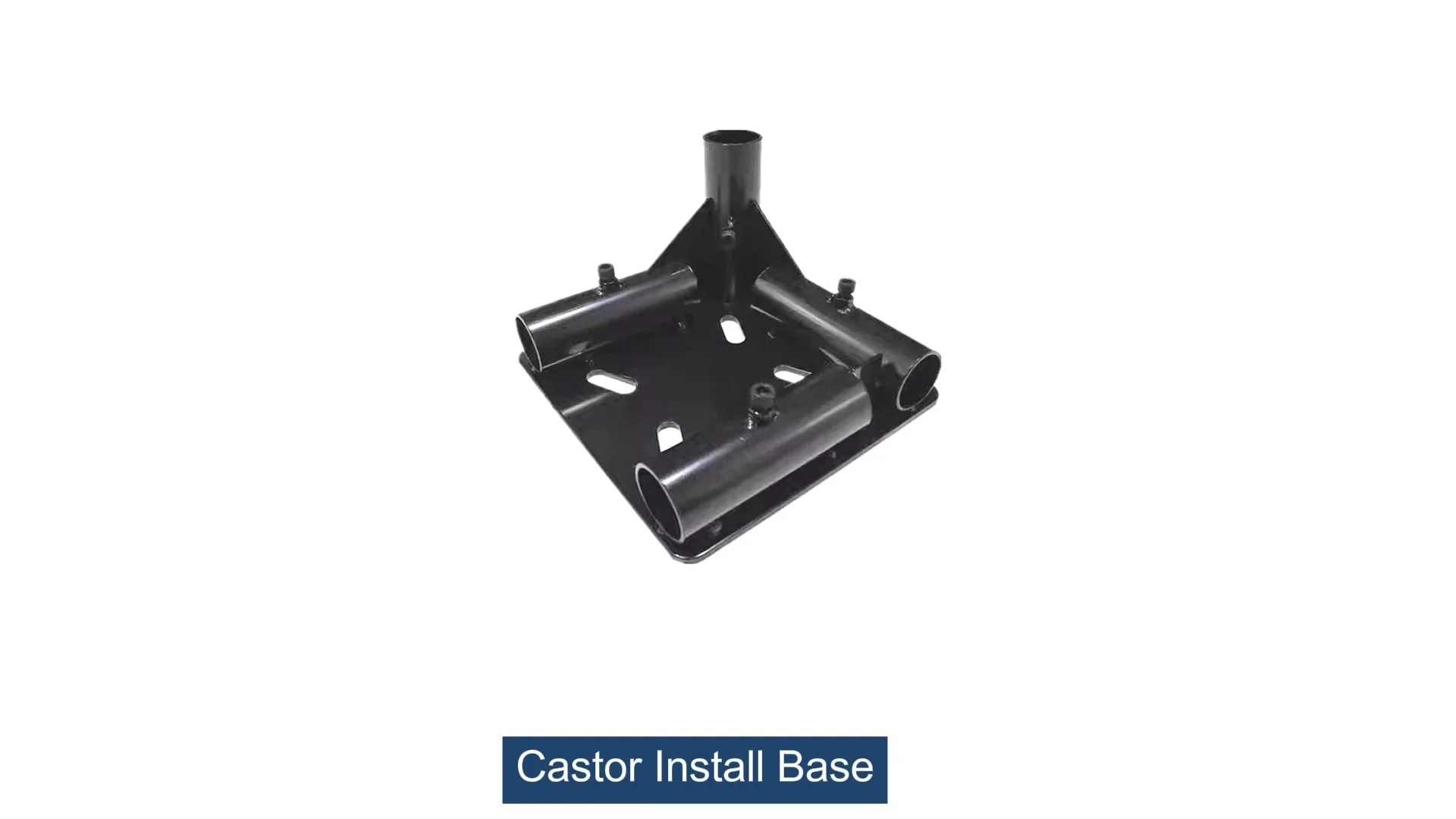
Castor Install Base
Castor install base, used for connection between pipe and castor, it can connect 4 pcs pipe by 1 pcs castor base, to make the structure strong and stable.
In the fast-paced world of 3C (Computers, Communications, and Consumer Electronics) manufacturing, where product lifecycles shrink by the month and assembly lines must pivot quickly to new models, flexibility isn't just a buzzword—it's the backbone of survival. From smartphones with ever-evolving camera modules to lightweight laptops with slimmed-down frames, 3C products demand assembly processes that are agile, precise, and adaptable. One often-overlooked component that quietly drives this flexibility is the castor install base —a humble yet critical part that transforms static workbenches, rigid material racks, and clunky trolleys into dynamic tools capable of keeping up with the industry's relentless pace. In this article, we'll explore real-world case studies where castor install bases have revolutionized 3C assembly lines, paired with insights into how they integrate with lean systems , workbenches , turnover trolleys , and other essential equipment to boost efficiency, reduce waste, and enhance worker productivity.
Understanding the Role of Castor Install Bases in 3C Assembly
Before diving into case studies, let's clarify what a castor install base is and why it matters in 3C manufacturing. At its core, a castor install base is a mounting component that connects casters (wheels) to equipment like workbenches, trolleys, or racks. It acts as the bridge between the equipment and the floor, ensuring stability under load, smooth mobility, and compatibility with different caster types (e.g., swivel, rigid, brake-equipped). In 3C assembly, where production lines are often reconfigured to accommodate new product launches—think shifting from assembling a 6.7-inch smartphone to a foldable model—fixed, immovable equipment becomes a liability. Castor install bases solve this by turning "permanent" fixtures into mobile assets, allowing teams to rearrange workstations, reposition material racks, and adapt workflows in hours rather than days.
But their value goes beyond mobility. 3C assembly lines handle delicate components—microchips, glass screens, precision lenses—that require careful handling. A well-designed castor install base minimizes vibration, preventing damage to sensitive parts during transport. It also distributes weight evenly, reducing floor wear in high-traffic areas (a common issue in facilities running 24/7 shifts). When paired with caster and accessories like shock-absorbing wheels or locking mechanisms, these bases become a cornerstone of both flexibility and safety.
Case Study 1: Enhancing Workbench Mobility in Smartphone Assembly
The Challenge: A leading Asian smartphone manufacturer was struggling with its final assembly line for mid-range devices. The line relied on fixed wooden workbenches bolted to the floor, each dedicated to a specific task—screen mounting, battery installation, or camera module alignment. When the company launched a new model with a redesigned internal layout, the fixed workbenches became a bottleneck. Rearranging them required shutting down the line for 48 hours, hiring contractors to unbolt and reposition the heavy benches, and recalibrating tools—a process that cost over $100,000 in downtime and labor. Worse, the rigid setup made it hard to balance workloads: if one station fell behind, workers couldn't shift tasks to adjacent benches to keep pace.
The Solution: The manufacturer partnered with a supplier to upgrade its workstations to modular aluminum workbenches fitted with castor install bases. The new workbenches featured a lightweight aluminum frame (to reduce overall weight) and castor install bases compatible with 4-inch swivel casters with brake locks. Each base was reinforced with steel plates to support the 150kg load of tools, components, and a worker's weight. The team also added caster accessories like floor protectors to prevent scuffing on the facility's polished concrete floors and dual-lock brakes to keep benches stable during precision tasks like lens alignment.
The Results: The transformation was immediate. When the next product launch arrived—a budget smartphone with a simplified assembly process—the team reconfigured the line in just 4 hours. Workers unlocked the casters, wheeled benches into new positions, and relocked them, eliminating downtime entirely. The flexible layout also improved workflow balance: during peak demand, supervisors shifted underutilized workbenches to bottleneck stations, reducing average assembly time per unit by 12%. Perhaps most notably, worker satisfaction rose—employees reported less fatigue from standing in fixed positions and appreciated the ability to adjust their workbench height (a secondary feature of the modular design) for better ergonomics. After six months, the manufacturer calculated a return on investment (ROI) of 140%, driven by reduced downtime and higher throughput.

Case Study 2: Streamlining Component Handling with Turnover Trolleys
The Challenge: A European electronics contract manufacturer specializing in smartwatch components faced a different issue: material handling. Its facility produced small, high-value parts like OLED display modules and battery connectors, which were transported from storage to assembly lines via steel turnover trolleys . These trolleys, loaded with up to 30kg of components, were heavy and cumbersome—their rigid, non-swivel casters made it hard to navigate tight corners between workstations. Workers often strained to push them, leading to frequent delays and a 15% higher rate of workplace injuries (mostly back strains). Additionally, the metal wheels scraped the facility's epoxy floors, requiring costly repairs every quarter.
The Solution: The manufacturer replaced its old trolleys with lightweight aluminum turnover trolleys equipped with castor install bases and swivel roller balls (1-inch size, from the keyword list). The new castor install bases were designed with a low-profile, wide footprint to distribute the trolley's weight evenly, reducing floor pressure. They were paired with dual-wheel casters: two swivel casters with 360° rotation for maneuverability and two rigid casters for straight-line stability, all fitted with soft rubber wheels to dampen vibrations and protect floors. The install bases also included quick-release pins, allowing workers to swap casters in minutes if a wheel wore out—a critical feature in a 24/7 operation.
The Results: The impact was measurable within weeks. Workers reported a 40% reduction in effort when pushing trolleys, thanks to the swivel casters and smooth-rolling rubber wheels. This translated to faster component delivery times—parts now reached assembly stations 12 minutes earlier on average, cutting down on line downtime caused by material shortages. Floor repair costs dropped by 80%, as the rubber wheels no longer scraped the epoxy. Most importantly, workplace injuries related to material handling fell to zero over six months, reducing workers' compensation claims and boosting team morale. The manufacturer later expanded the use of castor install bases to its flow racks , enabling the racks to be repositioned as production priorities shifted—further embedding lean principles into its operations.

Case Study 3: Lean System Integration in Tablet Assembly
The Challenge: A North American tablet manufacturer embarked on a lean system overhaul to eliminate waste and improve workflow. One of its biggest pain points was "motion waste"—workers walking long distances to retrieve tools or components, or bending awkwardly to access materials stored on low racks. The facility's existing setup included fixed flow racks along the assembly line, but these were spaced too far apart, forcing workers to step away from their stations to grab parts. Additionally, the line's conveyor belts were static, making it hard to reroute products when a station encountered a defect (e.g., a misaligned battery), leading to bottlenecks and increased rework.
The Solution: As part of the lean initiative, the manufacturer redesigned its workflow around mobile, adaptable equipment—with castor install bases at the center. First, it replaced fixed flow racks with mobile versions: aluminum flow racks mounted on castor install bases with locking swivel casters. These racks were positioned directly alongside assembly workstations, reducing worker movement by placing components within arm's reach. Second, it added small, wheeled "helper carts" (essentially mini workbenches on castor install bases) equipped with tools and testing equipment, allowing workers to perform quick inspections without leaving their stations. Finally, the manufacturer integrated castor install bases into sections of its conveyor system, enabling temporary rerouting of defective units to a dedicated rework area without stopping the entire line.
The Results: The lean system, powered by castor install bases, transformed the plant's efficiency. Motion waste was cut by 65%—workers now walked 2.3 miles less per shift on average. Defect rerouting became seamless: defective tablets were diverted to the rework area in under 2 minutes, compared to 15 minutes previously, when the line had to pause. The mobile flow racks also reduced inventory waste—since racks could be moved to follow production demand, the facility stored 30% less safety stock, freeing up warehouse space for new equipment. After one year, the lean initiative, with castor install bases as a key enabler, delivered a 22% increase in overall equipment effectiveness (OEE) and a 15% reduction in production costs.

Comparing Applications: How Castor Install Bases Drive Value Across 3C Equipment
| Equipment Type | Castor Install Base Feature | Key Benefit in 3C Assembly | Commonly Paired Components |
|---|---|---|---|
| Workbench | Wide, reinforced base with brake locks | Quick reconfiguration for new product models; ergonomic height adjustment | Swivel casters, aluminum profile workbench tops, ESD (anti-static) mats |
| Turnover Trolley | Low-profile, weight-distributing design | Reduced worker strain; floor protection; maneuverability in tight spaces | Rubber wheels, swivel roller balls, quick-release pins for caster replacement |
| Flow Rack | Locking swivel casters with high load capacity | Proximity to assembly stations; adaptability to changing demand | Roller tracks, plastic roller track guide rails (grey/yellow), dividers for component organization |
| Material Cart | Shock-absorbing mount | Protection for delicate components (e.g., glass screens, microchips) | Anti-slip mats, side guards to prevent component spillage |
Key Considerations When Choosing Castor Install Bases for 3C Assembly
While the case studies highlight the benefits of castor install bases, selecting the right one for a 3C facility requires careful planning. Here are critical factors to consider:
- Load Capacity: 3C components may be lightweight individually, but workbenches or trolleys loaded with tools, fixtures, and batches of parts can weigh 100–200kg. Choose castor install bases rated for 1.5x the expected load to account for dynamic stress (e.g., sudden stops).
- Floor Compatibility: 3C facilities often use epoxy, vinyl, or polished concrete floors. Opt for soft rubber or polyurethane wheels (paired with the install base) to avoid scratches and reduce noise.
- Locking Mechanisms: For workbenches or flow racks where stability during precision tasks is critical, select castor install bases with dual-lock brakes (locking both swivel and wheel rotation) to prevent movement.
- Corrosion Resistance: 3C assembly areas may use cleaning agents or humidifiers to control dust. Stainless steel or aluminum castor install bases resist rust, ensuring longevity in these environments.
- Compatibility with Lean Tools: Ensure the install base works with other lean equipment, such as roller tracks or aluminum profiles , to maintain a cohesive, adaptable system.
Conclusion: The Unsung Hero of 3C Manufacturing Flexibility
In the high-stakes world of 3C manufacturing, where innovation is constant and inefficiency is costly, the castor install base stands out as a quiet driver of progress. As our case studies show, it transforms static workbenches into agile hubs,, and rigid into dynamic, lean systems capable of keeping up with the industry's demands. Whether paired with workbenches for smartphone assembly, turnover trolleys for component transport, or flow racks in lean tablet production, castor install bases don't just add mobility—they enable a culture of adaptability, where change is met with ease rather than resistance.
For 3C manufacturers looking to stay competitive, the message is clear: don't overlook the small components that make big impacts. By investing in quality castor install bases and integrating them into lean systems, facilities can reduce downtime, cut waste, and empower workers to do their best. In an industry where the next big product is always just around the corner, flexibility isn't optional—and castor install bases are the key to unlocking it.