
Walk into any hospital corridor, and you'll see them: mobile carts gliding past nurses' stations, rolling into patient rooms, and lining the halls outside operating theaters. These carts carry everything from life-saving medications and sterile surgical tools to sensitive monitoring equipment and patient records. They're the backbone of daily operations, but their reliability depends on a component so it's often taken for granted—the castor install base. This small but critical part connects the cart's frame to its wheels, and its design is the difference between a cart that glides smoothly and one that wobbles, jolts, or worse, tips over. In medical settings, where even a minor instability can risk patient safety or disrupt care, getting the castor install base right isn't just a design choice—it's a responsibility.
Why Stability Matters More in Medical Carts Than You Think
Let's start with the stakes. A typical mobile medical cart might carry 50 to 200 pounds of supplies: vials of insulin, IV bags, scalpels, or a portable ultrasound machine. If that cart wobbles while a nurse is pushing it, a vial could shatter, an IV bag might rupture, or a delicate monitor could slide off. In a surgical setting, an unstable cart carrying sterile instruments could compromise an entire procedure. Even beyond equipment damage, there's the risk of injury: a cart that tips could hit a patient, a staff member, or knock over other critical gear. And let's not forget regulatory standards—organizations like the FDA and Joint Commission have strict guidelines for medical equipment stability, making the castor install base a key part of compliance.
But stability isn't just about avoiding disasters. It's also about efficiency. A cart with a poorly designed base requires more effort to push, leading to fatigue for staff who might move dozens of carts daily. It might get stuck on uneven floor transitions or struggle to navigate tight corners, slowing down workflows when every second counts. In short, the castor install base is the quiet force that keeps medical operations moving—literally and figuratively.
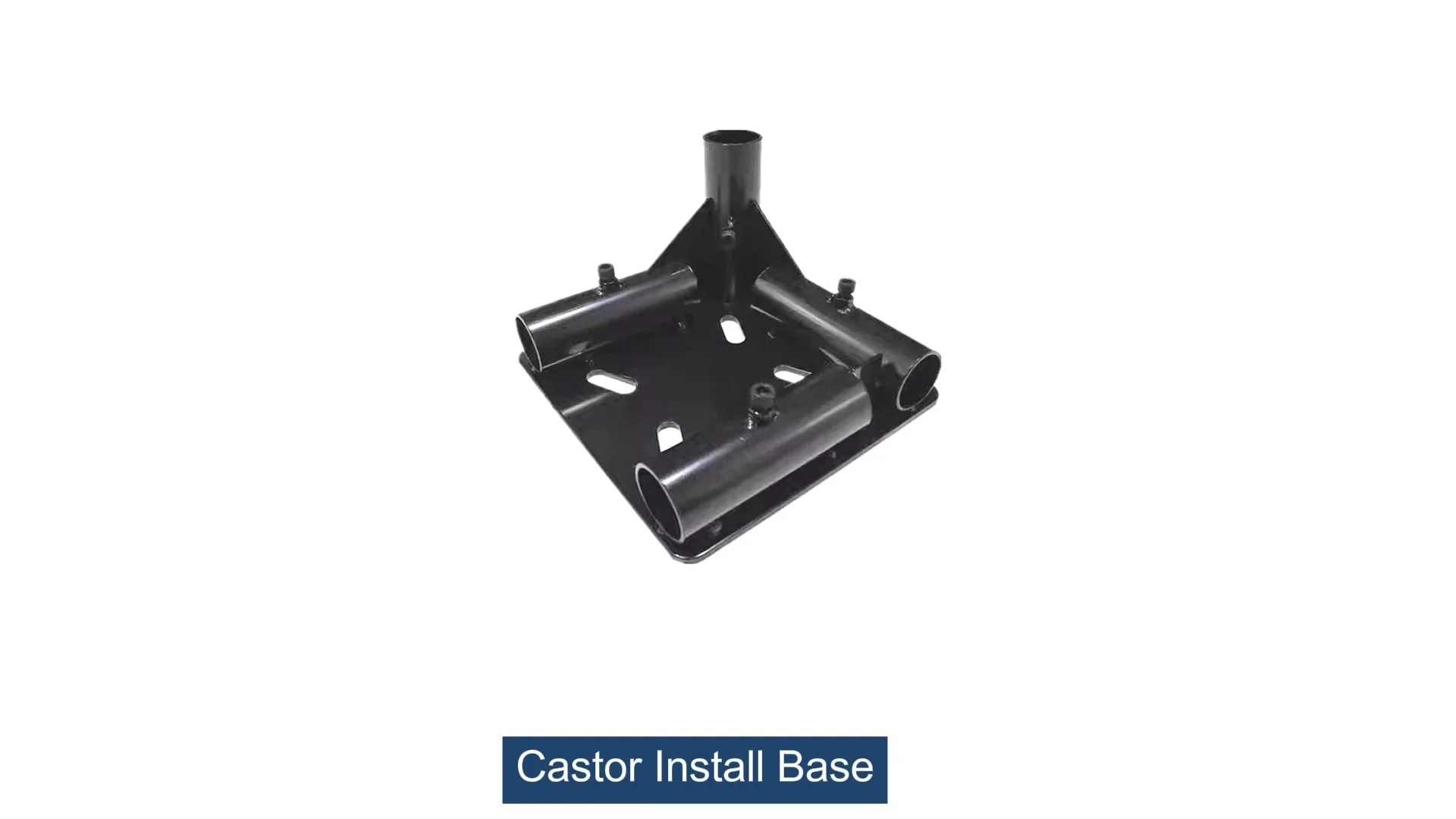
The Anatomy of a Reliable Castor Install Base
At first glance, a castor install base might look like a simple metal plate with holes for bolts. But effective design goes far deeper. Let's break down the key components that make a base stable, durable, and fit for medical environments:
Material: The Foundation of Durability
Medical environments are tough on equipment. Carts are wiped down daily with harsh disinfectants, rolled over uneven floors, and exposed to moisture from spills or cleaning. The material of the castor install base must stand up to all this. Aluminum profile has emerged as a top choice here—and for good reason. Unlike steel, which is heavy and prone to rust if scratched, aluminum is lightweight (reducing cart overall weight for easier pushing) and naturally resistant to corrosion. When anodized or coated, it becomes even more durable, standing up to repeated exposure to bleach-based cleaners or alcohol wipes. Plus, aluminum profiles are easy to machine, allowing for custom designs that fit specific cart frames or caster wheel sizes.
That said, not all bases are aluminum. Some heavy-duty carts (like those carrying MRI machines or large oxygen tanks) use steel bases for extra strength, but they're often paired with corrosion-resistant coatings. Plastic bases exist too, but they're generally reserved for lightweight carts (think: medication trolleys for small clinics) since they lack the load-bearing capacity of metal. For most hospital-grade applications, though, aluminum profile strikes the perfect balance of strength, weight, and longevity.
Load Distribution: Spreading the Weight Smartly
A cart's load isn't always evenly distributed. A nurse might stack supplies on one side, or a monitor might be mounted off-center. If the castor install base doesn't account for this, the cart could tilt, putting extra stress on one wheel and increasing the risk of tipping. Good design addresses this by spreading weight across the base's entire surface area. Look for bases with a wide footprint—wider than the cart's frame, ideally—to create a stable "platform" for the wheels. Some bases even include reinforced ribs or gussets (small metal brackets) to add rigidity, preventing bending under uneven loads.
Another trick? Adjustable mounting points. By allowing the caster wheel to be positioned slightly forward, backward, or sideways on the base, manufacturers can fine-tune weight distribution for specific cart models. This is especially useful for custom carts, where load patterns might vary drastically from one unit to the next.
Compatibility with Caster Wheels and Accessories
A base is only as good as the caster it's paired with. That's why caster accessories —like bolts, washers, and locking mechanisms—play a critical role in stability. The base must have precisely sized holes that align with the caster's mounting plate, ensuring a tight fit that won't loosen over time. Loose bolts are a major cause of wobbling; even a 1mm gap can lead to vibration as the cart moves, which over weeks or months, can damage both the base and the cart frame.
Locking mechanisms are another key accessory. Many medical carts use brakes on their casters to keep them stationary during use (e.g., when a nurse is preparing medication). The base should integrate seamlessly with these brakes, ensuring the locking lever is easy to reach and the brake engages fully without slipping. Some bases even include reinforced tabs where the brake lever sits, preventing bending if the lever is accidentally kicked or bumped.

Design Challenges in Medical Settings (and How to Solve Them)
Designing a castor install base for medical carts isn't without hurdles. Let's walk through the most common challenges and how engineers address them:
Challenge 1: Corrosion from Disinfectants
Hospitals are central—and for good reason. Carts are disinfected multiple times daily to prevent the spread of infections like MRSA or C. diff. But many disinfectants contain chlorine or hydrogen peroxide, which can eat away at metal over time. A steel base might rust; an untreated aluminum base could develop pitting. The solution? Anodization. This process coats aluminum with a layer of oxide, making it 10x more resistant to chemical corrosion. Some manufacturers take it a step further, adding a powder-coat finish over the anodization for extra protection. For caster accessories like bolts, stainless steel is the go-to material, as it resists rust even when exposed to moisture.
Challenge 2: Uneven Floors and Vibration
Hospital floors aren't always smooth. Tile seams, transition strips between departments, or even minor cracks can cause carts to vibrate as they roll. Over time, this vibration can loosen bolts, damage sensitive equipment (like lab samples), or just make the cart harder to push. To combat this, some bases include rubber or silicone gaskets between the base and the cart frame. These act as shock absorbers, dampening vibrations before they reach the cart's contents. Others use caster accessories like spring-loaded axles, which allow the wheel to bounce slightly without transferring motion to the base.
Challenge 3: Space Constraints and Maneuverability
ICU rooms, operating theaters, and patient wards are often tight on space. Carts need to navigate around beds, chairs, and staff without getting stuck. A base that's too wide might make the cart hard to turn, while one that's too narrow could compromise stability. The fix here is balance: a base width that's 1.2x the cart's frame width (providing stability) but still narrow enough to fit through standard doorways (32-36 inches). Some manufacturers also design bases with offset wheel positions—angling the casters slightly—to improve turning radius without sacrificing stability.

Comparing Base Materials: Which Is Right for Your Cart?
Not all medical carts are created equal, so why should their castor install bases be? Let's compare the most common materials to help you understand which fits different use cases:
| Material | Max Load Capacity (lbs) | Weight (per base, lbs) | Corrosion Resistance | Best For |
|---|---|---|---|---|
| Aluminum Profile | 300-800 | 2.5-5 | High (excellent with anodization) | General medical carts (medication delivery, surgical tools, patient monitors) |
| Steel (Coated) | 800-1500 | 6-10 | Medium (good with powder coating; risk of rust if scratched) | Heavy-duty equipment (MRI machines, oxygen tanks, large lab analyzers) |
| Plastic (Polypropylene) | 100-300 | 1-2 | Medium (resistant to chemicals but prone to cracking under stress) | Lightweight carts (small clinics, home healthcare, sample collection) |
As the table shows, aluminum profile is the workhorse of the group, handling most standard medical cart needs. It's why you'll find it in 70% of hospital carts today—from the medication trolley in pediatrics to the instrument cart in the OR. Steel is there for the heavy hitters, and plastic fills the niche for lightweight, low-cost applications.

The Role of Caster and Accessories in Long-Term Reliability
A castor install base doesn't work alone. It's part of a system that includes the caster wheel, axle, brake, and mounting hardware—all of which fall under caster and accessories . Even the best base will fail if paired with low-quality components. Let's take bolts, for example: using standard steel bolts on an aluminum base might seem fine, but over time, the dissimilar metals can cause galvanic corrosion (a chemical reaction that eats away at both materials). Instead, manufacturers use stainless steel bolts or aluminum-compatible coatings to prevent this. Similarly, washers made from rubber or nylon can reduce metal-on-metal friction, preventing bolts from loosening due to vibration.
Brakes are another critical accessory. A good brake should lock both the wheel and the swivel (the part that allows the wheel to turn), preventing the cart from rolling or pivoting when stationary. The base must have a cutout or notch that aligns with the brake lever, ensuring the lever can engage fully without interference. Some bases even include reinforced "brake pads"—thickened sections where the brake presses against the wheel—to prevent wear and tear over time.
Then there are the wheels themselves. Soft rubber wheels are great for quiet operation (important in patient rooms) but can wear down quickly on rough floors. Polyurethane wheels are more durable but slightly noisier. The base must be designed to fit the wheel's bearing size and axle length, ensuring a snug fit that doesn't wobble. Mismatched wheel and base sizes are a common cause of instability—so always check that your base and caster are compatible before purchasing.
Future Trends: Smart Bases for Smarter Hospitals
The medical industry is evolving, and castor install bases are keeping up. Today's hospitals are embracing IoT (Internet of Things) to track equipment, monitor workflows, and improve safety—and bases are getting in on the action. Imagine a base with built-in sensors that detect when a cart is overloaded (alerting staff before it tips) or when a caster wheel is loose (sending a maintenance alert to the engineering team). Some manufacturers are even testing bases with RFID tags, allowing hospitals to track cart location in real time via the facility's Wi-Fi network.
Another trend is customization. As hospitals adopt specialized carts (e.g., for telemedicine equipment or COVID-19 testing), bases are being tailored to unique needs. A cart for mobile X-ray machines might need a wider base with reinforced corners, while a pediatric medication cart could have a curved base to prevent sharp edges from bumping small patients. Aluminum profile is ideal here, as it's easy to cut, drill, or weld into custom shapes without compromising strength.
Final Thoughts: Investing in the Foundation
At the end of the day, the castor install base might not be the most glamorous part of a medical cart, but it's the one that ensures everything else works. It's the difference between a cart that's a reliable tool and one that's a liability. For hospitals and clinics, investing in high-quality bases—made from durable materials like aluminum profile, paired with compatible caster wheels and accessories—isn't just about equipment longevity. It's about protecting patients, supporting staff, and keeping operations running smoothly when lives are on the line.
So the next time you see a mobile medical cart gliding down a hospital hallway, take a moment to appreciate the quiet engineering beneath it. That castor install base? It's doing more than just holding up the cart—it's holding up the entire system of care.