- Company Articles
- Products and Technology
- Product knowledge
- Castor Install Base Design Trends: Focus on Reusability and Modularity

Castor Install Base Design Trends: Focus on Reusability and Modularity
Related Product
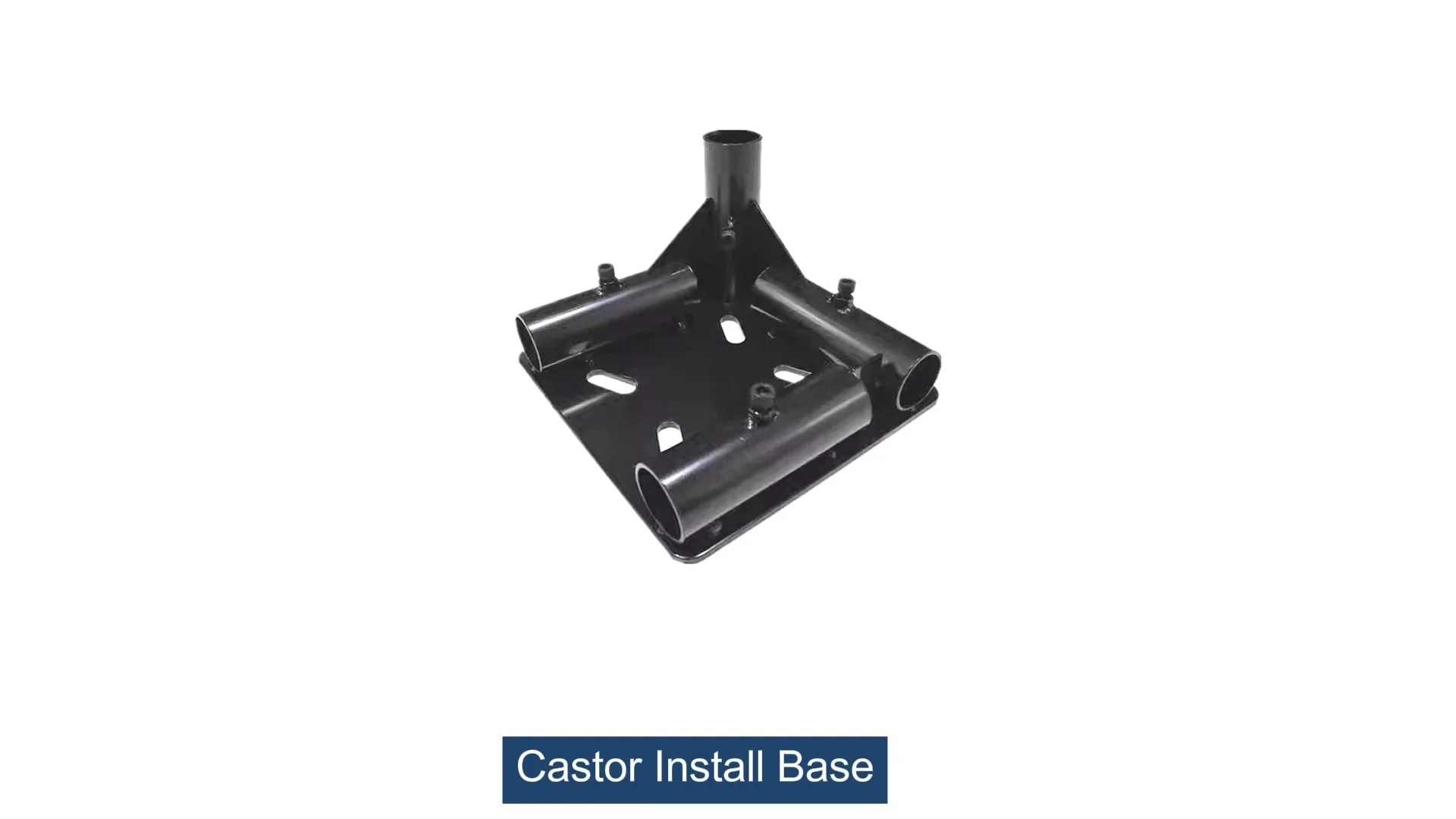
Castor Install Base
Castor install base, used for connection between pipe and castor, it can connect 4 pcs pipe by 1 pcs castor base, to make the structure strong and stable.
In the rhythm of a busy manufacturing plant—where workbenches glide to meet shifting assembly lines, material racks pivot to streamline workflows, and turnover trolleys weave through aisles—there's an unsung component ensuring it all happens smoothly: the castor install base. It's the quiet link between a caster wheel and the equipment it moves, balancing stability with mobility. For too long, these bases were treated as disposable: built for one job, made from flimsy materials, and tossed aside when production needs changed. But today, a quiet revolution is underway. As industries embrace leaner, more sustainable practices, castor install base design is evolving—with reusability and modularity leading the charge. This shift isn't just about better engineering; it's about building industrial tools that adapt, endure, and reduce waste. Let's dive into how these trends are reshaping the future of factory floors, warehouses, and workspaces worldwide.
The Case for Reusability: Beyond "Use It and Lose It"
Walk through a traditional factory, and you'll likely find a graveyard of discarded castor install bases: rusted steel plates, cracked plastic mounts, and bent brackets, all tossed aside because the equipment they supported was upgraded or reconfigured. For decades, this "use it and lose it" approach made sense—cheap materials meant low upfront costs, and with production demands always urgent, there was little incentive to design for longevity. But today, two forces are flipping that script: the push for sustainability and the need for cost efficiency.
Sustainability goals are no longer optional. With regulations cracking down on waste and consumers rewarding eco-conscious brands, manufacturers are under pressure to reduce their environmental footprint. Reusability—designing components to be repurposed, repaired, or recycled—has become a cornerstone of this effort. For castor install bases, this means moving beyond flimsy steel and plastic to durable, multi-lifecycle materials. Enter aluminum profile: a lightweight, corrosion-resistant material that's not only strong enough to withstand heavy loads but also infinitely recyclable. Unlike plastic, which degrades over time, or low-grade steel, which rusts, aluminum profile bases can be cleaned, repaired, and reused for years—even decades—before being melted down and turned into new components. This aligns with the circular economy model, where waste is minimized, and resources stay in use.
Consider a lean system in a electronics manufacturing plant. Five years ago, when the plant updated its assembly line, the castor install bases on old workbenches were stripped off and sent to landfill—even if the casters themselves still worked. Today, with aluminum profile bases, those same bases are detached, inspected, and reused on new workbenches or material racks. The aluminum's durability ensures it handles repeated reconfigurations, and its compatibility with standard caster and accessories means it adapts to new equipment without a complete overhaul. The result? Less waste, lower material costs, and a production line that stays agile without sacrificing sustainability.
Repairability is another pillar of reusability. Traditional bases often used proprietary parts—custom bolts, welded brackets, or unique plastic molds—making repairs nearly impossible. If a bracket cracked, the entire base was useless. Modern designs fix this by using standardized components. A loose bolt? Swap it out with a common fastener from any hardware store. A worn mounting plate? replace just that part, not the whole base. This "fix don't replace" mindset cuts downtime and extends the base's life, turning a once-disposable part into a long-term asset.
Modularity: The Key to Agile Workspaces
In today's manufacturing landscape, "static" is a four-letter word. Factories reconfigure production lines overnight to meet sudden demand spikes. Warehouses shift layouts to accommodate new inventory. Even small workshops need to pivot between projects quickly. This agility demands equipment that can keep up—and that's where modular castor install bases shine. Modularity isn't just about being "adjustable"; it's about designing bases as a system of interchangeable parts that adapt to changing needs, whether that means swapping casters, adjusting height, or reconfiguring for new equipment.
At its core, modular design relies on standardization. Instead of building a base for one specific workbench or cart, manufacturers now create bases with universal interfaces—common mounting patterns, adjustable brackets, and snap-on accessories that work across multiple equipment types. Take the humble workbench: a modular base might feature sliding T-slots (a hallmark of aluminum profile design) that let you attach casters anywhere along the length, or adjustable legs that raise or lower by several inches. Need to move the workbench from a smooth factory floor to a rough warehouse? Swap the soft rubber casters for heavy-duty pneumatic ones—no drilling, no welding, just a few bolts. The base itself stays the same; only the components change.
This flexibility is a game-changer for lean system managers. In a traditional setup, reconfiguring a production line meant ordering custom bases for each new piece of equipment—a process that took weeks and drained budgets. With modular bases, it's a matter of swapping parts. A material rack that once held small components can be retrofitted with larger casters to carry heavy machinery. A mobile workbench can shed its casters entirely, converting into a stationary station with fixed feet. This not only saves time but also reduces inventory: instead of stocking 10 different base types, a facility can stock one modular design and a handful of accessories.
| Feature | Traditional Fixed Bases | Modern Modular Bases |
|---|---|---|
| Flexibility | Built for one equipment type; no adjustments possible | Adapts to multiple equipment sizes/weights via interchangeable parts |
| Lead Time for Reconfiguration | Weeks (requires custom fabrication) | Hours (swap casters/accessories on-site) |
| Long-Term Cost | High (repeatedly replace bases for new equipment) | Low (reuse base with new components) |
| Waste Generation | High (discard entire base when equipment changes) | Low (replace only worn components) |
Modularity also fosters collaboration across teams. Production wants speed, maintenance wants reliability, and sustainability wants minimal waste—modular bases satisfy all three. For production, quick swaps mean lines restart faster. For maintenance, standardized parts mean fewer repairs and easier troubleshooting. For sustainability, reusing bases cuts landfill waste. It's a rare win-win-win in industrial design.

Design Innovations Driving the Trend
Reusability and modularity don't happen by accident—they're the result of intentional design choices. Let's break down the key innovations making modern castor install bases more adaptable, durable, and user-friendly.
Aluminum Profile: The Material of Choice
If modularity has a mascot, it's aluminum profile. This lightweight, rigid material is defined by its T-slot design—longitudinal grooves that let accessories (brackets, clamps, handles) attach anywhere along the length, no drilling required. For castor install bases, this means unparalleled flexibility. Need to shift the caster mounting points to balance a heavy load? Slide a bracket into the T-slot and tighten a bolt. Want to add a crossbar for extra stability? Snap it into place. Aluminum's corrosion resistance and strength-to-weight ratio also make it ideal for reusability: it withstands years of heavy use, and when it finally wears out, it's 100% recyclable. Compare that to plastic bases, which crack under stress, or steel, which rusts—aluminum profile is built to endure.
Standardized Interfaces
Imagine buying a phone charger that only works with one brand of phone—that's how traditional castor bases worked, with custom bolt patterns and proprietary mounts locking facilities into one caster supplier. Today, the industry is moving toward universal interfaces, like the 4-hole mounting plate common in caster and accessories kits. This standardization means a base from Supplier A can use casters from Supplier B, giving facilities the freedom to choose the best caster for the job (e.g., soft wheels for smooth floors, rugged wheels for concrete) without replacing the entire base. It also simplifies inventory: instead of stocking 5 base types for 5 caster brands, you stock one base that fits all.
Adjustable and Multi-Functional Components
Modern bases go beyond "one size fits all"—they're "one size fits many." Adjustable height brackets let bases adapt to equipment from 12" to 36" tall. Swappable feet (casters for mobility, fixed pads for stability) let the same base transition from a mobile cart to a stationary workbench. Even accessories like brake levers or cable management clips attach via T-slots, turning a basic base into a customized tool. For example, a warehouse might use the same modular base for a picking cart (with swivel casters and a handle) and a storage rack (with fixed feet and a shelf bracket)—all by swapping components.

Real-World Impact: Case Studies in Action
Theory is one thing—real-world results are another. Let's look at how two facilities leveraged reusable, modular castor install bases to solve pressing challenges.
Case Study 1: Automotive Plant Cuts Waste by 60%
A mid-sized automotive parts manufacturer in Michigan was struggling with two problems: frequent production line reconfigurations (costing $50,000+ in new equipment annually) and mounting waste disposal fees. Their solution? Swapping traditional steel bases for aluminum profile modular bases. Within a year, the results were clear: old bases were repurposed for new workbenches, reducing material costs by 40%. Repairs dropped by 35% thanks to standardized parts, and waste from discarded bases plummeted by 60%. "We used to order new bases every time we changed a line," says the plant manager. "Now, we just reconfigure what we have. It's like having a toolkit instead of single-use tools."
Case Study 2: E-Commerce Warehouse Adapts to Seasonal Spikes
An e-commerce fulfillment center in Texas faced a classic problem: seasonal demand. During the holidays, they needed 300+ mobile picking carts; in slower months, those carts sat idle, wasting space. Traditional fixed-base carts couldn't be disassembled, so the center was stuck storing them. Enter modular castor install bases. Now, during peak season, the bases are fitted with swivel casters and handles for carts. Off-season? The casters are removed, and the bases are repurposed as supports for roller track systems, which move packages along the warehouse floor. The result: 70% less storage space used, and no need to buy new carts each season. "We're not just saving money—we're making our space work harder," notes the operations director.

Challenges and the Road Ahead
For all their benefits, reusable and modular castor install bases face hurdles. The biggest? Upfront cost. Aluminum profile and standardized components cost more initially than cheap steel or plastic. For small businesses or tight budgets, this can be a barrier. But proponents argue the ROI is clear: a $50 modular base that lasts 10 years is cheaper than five $20 disposable bases over the same period. To bridge the gap, some suppliers offer financing or leasing options, letting facilities spread costs over time.
Another challenge is fragmented standards. While the industry is moving toward universality, there's no global agreement on T-slot sizes or bolt patterns yet. This can frustrate facilities working with multiple suppliers. The solution? Industry groups like the Material Handling Industry (MHI) are developing common standards, and forward-thinking suppliers are aligning with these emerging norms. As standards unify, this pain point will fade.
Looking ahead, the future is bright. We'll likely see "smart" bases with sensors that monitor caster wear or track movement, predicting maintenance needs before failures occur. 3D printing could enable custom base designs while retaining modular components—think a base printed to fit a unique workbench but using standard caster mounts. And as sustainability goals grow more ambitious, we may even see bases made from recycled aluminum or bio-based composites, pushing the envelope of eco-friendly design.
Conclusion: Building a More Adaptable Future
The castor install base may be small, but its evolution reflects a big shift in manufacturing: a move from "disposable" to "durable," from "fixed" to "flexible." Reusability and modularity aren't just trends—they're essential tools for building industrial systems that thrive in a world of constant change. As aluminum profile becomes more accessible, standards unify, and costs drop, we'll see these bases become the norm, not the exception. And in doing so, they'll help factories, warehouses, and workshops become more efficient, sustainable, and ready for whatever the future throws their way. The quiet revolution of the castor install base is here—and it's just getting started.