- Company Articles
- Products and Technology
- Installation And Maintenance
- Castor Install Base for Conveyor Systems: Improving Material Flow in Manufacturing

Castor Install Base for Conveyor Systems: Improving Material Flow in Manufacturing
Related Product
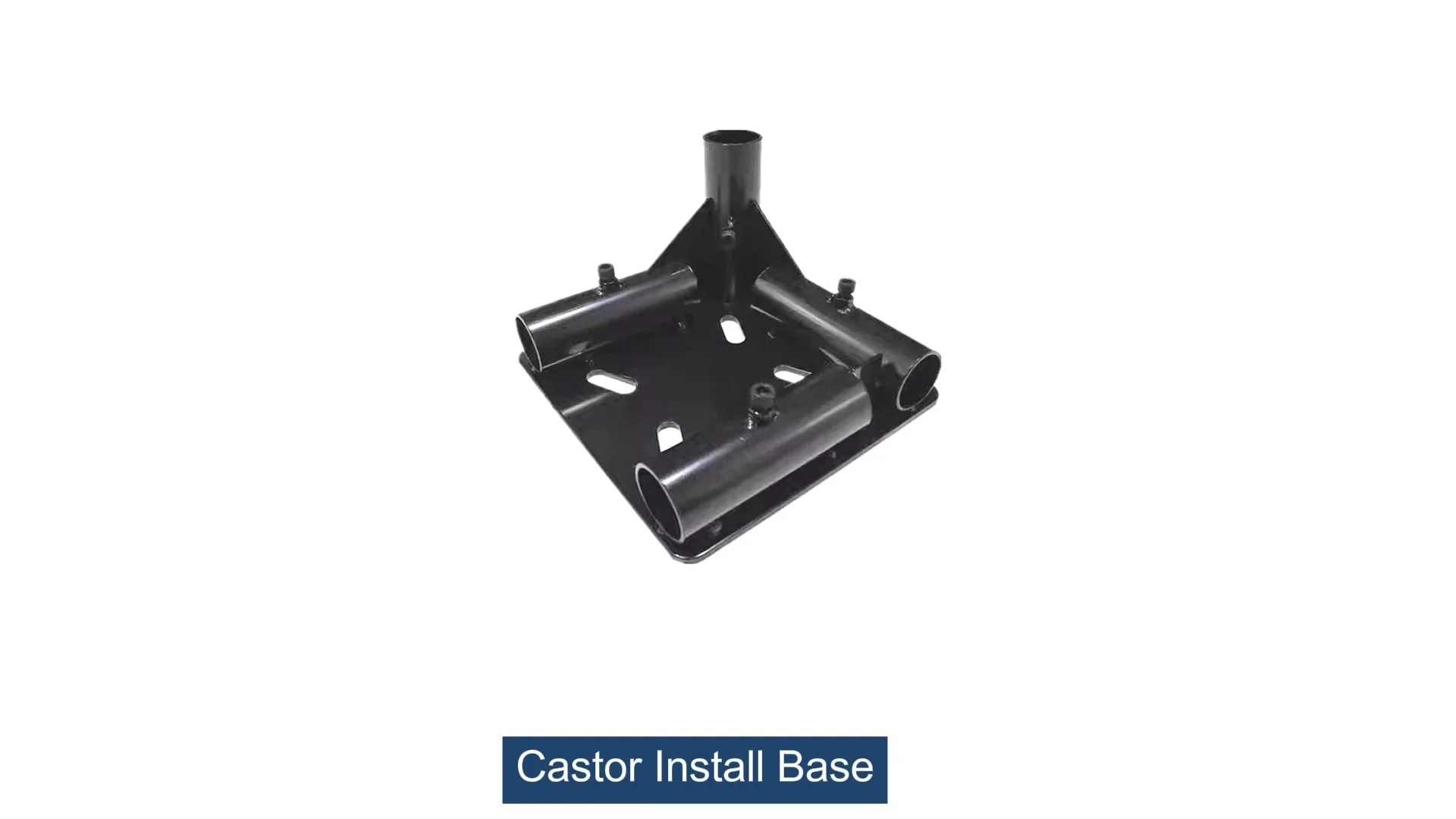
Castor Install Base
Castor install base, used for connection between pipe and castor, it can connect 4 pcs pipe by 1 pcs castor base, to make the structure strong and stable.
Walk into any busy manufacturing plant, and you'll quickly notice the heartbeat of the operation: the steady movement of materials. Parts glide along conveyors, tools roll between workstations, and finished products make their way to packaging—all without a hitch, ideally. But when that flow stutters? It's like a kink in a garden hose: pressure builds, progress stalls, and everyone downstream feels the squeeze. That's where the unsung heroes of manufacturing efficiency come in: components like the castor install base. Small in size but massive in impact, this unassuming part is the quiet force that keeps conveyor systems moving, workbenches stable, and material flow as smooth as a well-oiled machine.
Why Material Flow Matters More Than You Think
Let's start with the basics: in manufacturing, time isn't just money—it's everything. A single bottleneck can throw off production schedules, delay shipments, and even lead to overworked teams scrambling to catch up. Think about it: if a conveyor belt grinds to a halt because a caster is wobbly, or a workstation can't be adjusted because its base is unstable, workers aren't just standing around—they're losing valuable minutes that add up to hours (and dollars) by the end of the day. Worse, uneven material flow creates frustration. When employees have to manually lift heavy parts because a trolley won't roll smoothly, or bend awkwardly to reach tools because a workbench isn't at the right height, morale takes a hit. And unhappy workers? They're less productive, more prone to errors, and more likely to burn out.
But when material flow is seamless? It's a game-changer. Parts arrive exactly when they're needed, tools are within arm's reach, and workers can focus on what they do best: building quality products. That's the promise of lean manufacturing—a philosophy centered on eliminating waste and maximizing value. And at the heart of lean systems? Components that work together to create that frictionless flow. Enter the castor install base: a critical link in the chain that turns chaotic movement into controlled, efficient motion.
What Is a Castor Install Base, Anyway?
If you're not familiar with the term, let's break it down. A castor install base is essentially the "foundation" that connects casters (those small wheels you see on trolleys, conveyors, and workbenches) to the equipment itself. Think of it as the bridge between the caster and the structure it's supporting. Without a sturdy, well-designed base, even the best casters will fail. Imagine trying to build a house on a shaky foundation—no matter how nice the walls or roof, the whole thing will wobble, crack, and eventually collapse. The same goes for manufacturing equipment: a weak castor install base means casters can loosen, tilt, or even snap under pressure, bringing your entire line to a standstill.
But when it's done right? A castor install base distributes weight evenly across the caster, reduces stress on the equipment frame, and allows for smooth, controlled movement. It's designed to handle the daily grind: the constant rolling, the heavy loads (we're talking hundreds, even thousands of pounds), and the inevitable bumps and scrapes of a busy factory floor. And depending on the application, these bases come in all shapes and sizes—from compact steel plates for lightweight workbenches to reinforced aluminum brackets for heavy-duty conveyor systems.

How Castor Install Bases Transform Conveyor Systems
Conveyors are the backbone of material flow in manufacturing. They're the highways that carry raw materials to assembly lines, partially finished products to inspection stations, and final goods to shipping. But even the most advanced conveyor system is only as good as its ability to move freely and stay stable. That's where castor install bases shine—they're the reason your conveyor doesn't tip when loaded with heavy parts, or veer off course when rolling over uneven floors.
Stability That Stands Up to the Pressure
Picture a typical roller track conveyor in an automotive plant, moving engine blocks from one station to the next. Each block weighs hundreds of pounds, and the conveyor itself is often several feet long. Without a solid castor install base, the weight of those blocks could cause the conveyor to sag in the middle, or the casters to sink into the floor. But with a properly installed base—one made from thick, high-grade steel or aluminum—the weight is spread evenly across all casters, keeping the conveyor level and stable. No more wobbling, no more uneven wear on the roller track, and no more risk of parts sliding off or getting stuck between rollers.
Smooth Movement, Even on Rough Floors
Factory floors aren't always perfect. Cracks, uneven concrete, and even small debris can throw off a conveyor's movement. A cheap or poorly designed castor install base might get caught on a bump, causing the conveyor to jerk or stop. But a quality base, paired with the right caster accessories (like shock-absorbing wheels or swivel locks), glides over those imperfections. It's like upgrading from a bumpy dirt road to a smooth highway—suddenly, the ride is quieter, faster, and far less stressful for both the equipment and the workers operating it.
Flexibility to Adapt to Your Needs
Manufacturing lines aren't static. One day you might need a conveyor to move parts to the left; the next, you might need to reconfigure the line entirely to accommodate a new product. That's where mobile conveyors—those on casters—become invaluable. And guess what makes those mobile conveyors possible? You guessed it: castor install bases. These bases allow you to easily move the conveyor, lock it into place when needed, and even adjust its height to align with other equipment. It's lean manufacturing in action: the ability to adapt quickly without disrupting the entire workflow.

Beyond Conveyors: Castor Install Bases in Workbenches and Trolleys
While conveyor systems are a big part of the story, castor install bases play a role in nearly every piece of mobile equipment on the factory floor—including workbenches and turnover trolleys. Let's take workbenches, for example. In electronics manufacturing, ESD workstations (designed to prevent static electricity from damaging sensitive components) are often mounted on casters so they can be moved closer to assembly lines or storage areas. But an ESD workbench isn't just a table with wheels; it needs to stay stable when a technician is leaning on it, or when heavy tools are placed on top. The castor install base ensures that stability, keeping the workbench from tipping even when fully loaded.
Then there are turnover trolleys—those handy carts used to transport parts between stations. A typical trolley might carry bins of screws, nuts, or small components, and it needs to roll smoothly through narrow aisles or around tight corners. Without a good castor install base, the trolley could wobble, spilling parts and creating hazards. But with a base that securely attaches the casters to the trolley frame, the movement is controlled, the load stays balanced, and workers can move quickly without worrying about accidents.

Choosing the Right Castor Install Base: Key Factors to Consider
Not all castor install bases are created equal. To get the most out of your conveyor system, workbench, or trolley, you need to choose a base that's built for your specific needs. Here are the top factors to keep in mind:
Load Capacity: Don't Skimp on Strength
This is non-negotiable. Every castor install base has a maximum load capacity—the amount of weight it can safely support. If you're using a conveyor to move 500-pound machinery parts, a base rated for 300 pounds is a disaster waiting to happen. Always check the load rating and err on the side of caution; it's better to have a base that can handle more weight than you need than one that's just barely sufficient.
Material: Match the Environment
Factory environments vary wildly. Some plants are dry and clean (think electronics manufacturing), while others are wet, dusty, or even corrosive (like food processing or chemical plants). For dry environments, steel bases are a great choice—they're strong and affordable. But in wet or corrosive settings, aluminum or stainless steel bases are better; they resist rust and stand up to moisture. And if you're looking for something lightweight (for mobile workbenches, say), aluminum is the way to go—it's just as strong as steel but much easier to move.
Caster Compatibility: A Perfect Fit
Not all casters attach to bases the same way. Some use bolts, others use screws, and some require specific mounting patterns. Before buying a castor install base, make sure it's compatible with the casters you're using. The last thing you want is to order a base only to find out the holes don't line up with your caster's mounting plate. Most manufacturers list compatibility specs, so take a minute to double-check—your future self (and your maintenance team) will thank you.
Mobility vs. Stability: Lock It Down When Needed
Do you need your equipment to move freely, or stay in one place most of the time? If it's the latter, look for bases that work with casters featuring brakes or locking mechanisms. A castor install base with pre-drilled holes for brake levers or foot locks makes it easy to secure the equipment when it's not in use, preventing accidental movement and keeping workers safe.
| Type of Castor Install Base | Material | Load Capacity (Max) | Best For | Key Features |
|---|---|---|---|---|
| Heavy-Duty Steel Base | Carbon Steel | 2,000 lbs+ | Heavy conveyor systems, industrial trolleys | Reinforced construction, rust-resistant coating, large mounting surface |
| Lightweight Aluminum Base | Aluminum Alloy | 500-1,500 lbs | Mobile workbenches, ESD workstations, small conveyors | Corrosion-resistant, lightweight, easy to install |
| Stainless Steel Base | 304/316 Stainless Steel | 1,000-2,500 lbs | Food processing, pharmaceutical, wet environments | Highly corrosion-resistant, easy to clean, FDA-compliant options |
| Adjustable Height Base | Steel or Aluminum | 800-1,200 lbs | Uneven floors, workstations needing height customization | Built-in leveling feet, shock-absorbing design |
Maintenance Tips: Keeping Your Castor Install Bases (and Conveyors) in Top Shape
Even the best castor install bases need a little TLC to keep performing at their best. Neglecting maintenance is a surefire way to shorten their lifespan and risk unexpected breakdowns. Here's how to keep them (and your conveyor systems) running smoothly:
Inspect Regularly—Catch Problems Early
Make it a habit to check your castor install bases during routine equipment inspections. Look for signs of wear: cracks in the base plate, loose bolts, or bent mounting brackets. If a bolt is starting to rust or a bracket is bent, replace it immediately—small issues become big problems fast. Pay extra attention to areas where the base connects to the caster and the equipment frame; these are the stress points most likely to fail.
Lubricate Moving Parts
If your castor install base has moving components (like adjustable height mechanisms or swivel joints), keep them lubricated with a high-quality industrial grease. This reduces friction, prevents rust, and ensures smooth movement. Just be sure to use a lubricant that's compatible with the base material—for example, avoid oil-based greases on aluminum if you're in a wet environment, as they can attract dirt and cause corrosion.
Clean to Prevent Buildup
Factories are dusty places, and dirt, grime, and debris can accumulate around castor install bases, gumming up the works. Use a brush or compressed air to clean out crevices, and wipe down the base with a damp cloth if needed. For stainless steel bases in food or pharmaceutical plants, use a mild detergent to keep them sanitized and compliant with industry regulations.
replace When Necessary—Don't Wait for Failure
Even with perfect maintenance, castor install bases will eventually wear out. If you notice excessive wobbling, cracks that can't be repaired, or a base that no longer holds the caster securely, replace it right away. Waiting until it fails could lead to equipment damage, production downtime, or even worker injuries—all of which cost far more than a new base.
The Bottom Line: Small Component, Big Impact
In the grand scheme of manufacturing, the castor install base might seem like a minor detail. It doesn't have the flash of a high-tech robot arm or the complexity of a computerized conveyor control system. But ask any plant manager, any maintenance technician, or any worker who's ever had to wrestle with a stuck trolley or a wobbly conveyor: these small components are the unsung heroes that keep the operation running. They turn chaotic movement into controlled flow, reduce waste, and make lean manufacturing a reality.
So the next time you walk through a factory and marvel at how smoothly everything moves, take a second to look down. Chances are, there's a castor install base hard at work—quietly, reliably, and without fanfare—ensuring that materials get where they need to go, when they need to be there. Because in manufacturing, it's often the smallest parts that make the biggest difference.