- Company Articles
- Products and Technology
- Installation And Maintenance
- Castor Install Base for Electronic Assembly Workstations: Precision and Mobility

Castor Install Base for Electronic Assembly Workstations: Precision and Mobility
Related Product
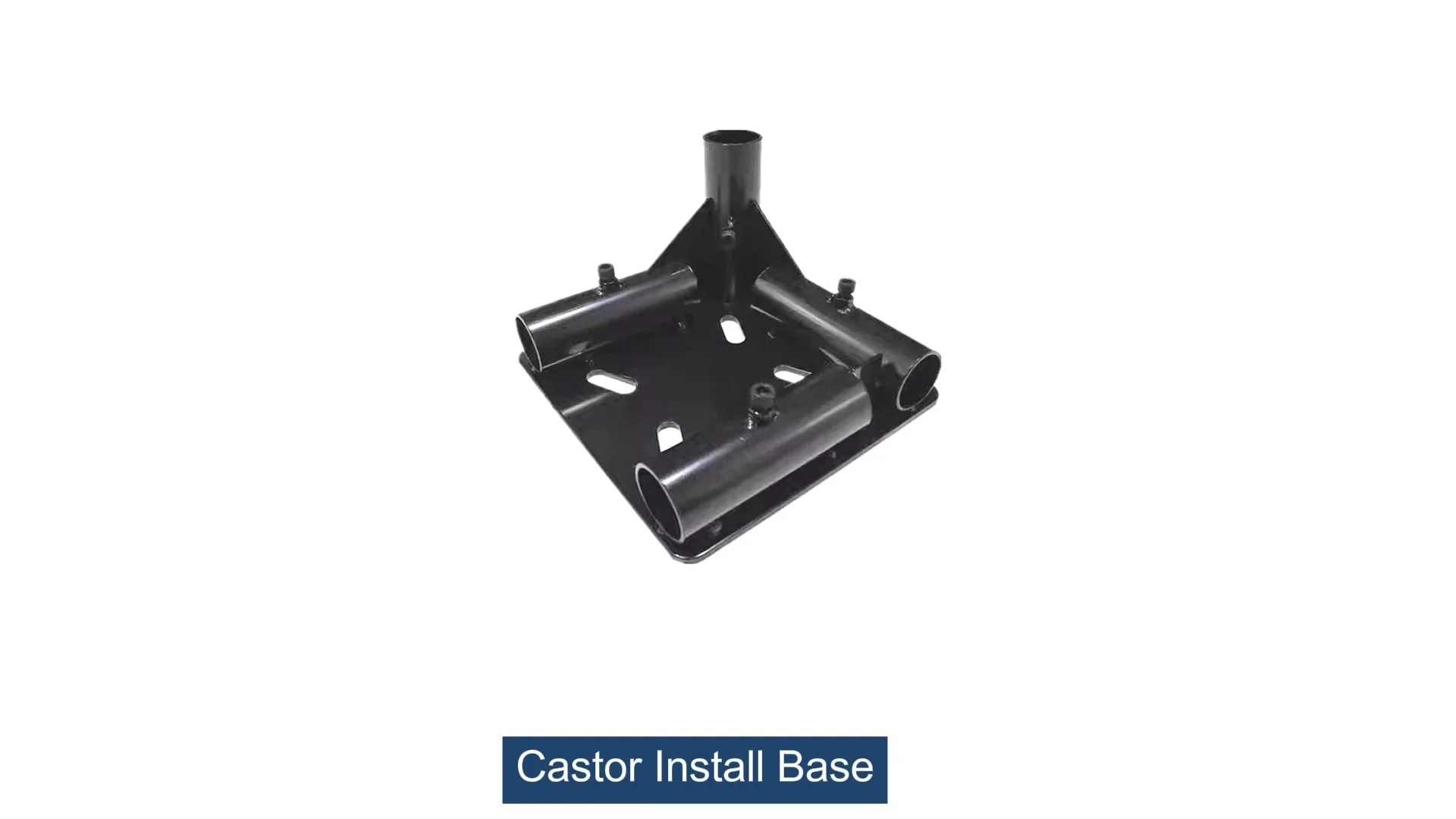
Castor Install Base
Castor install base, used for connection between pipe and castor, it can connect 4 pcs pipe by 1 pcs castor base, to make the structure strong and stable.
Walk into any electronic assembly facility, and you'll notice the quiet hum of productivity: technicians hunched over workbenches, carefully placing microchips, soldering delicate wires, or testing circuit boards. Behind this symphony of precision lies an unsung infrastructure hero—the workstation. But not just any workstation: one that balances two conflicting demands: unwavering precision and agile mobility . In this dance of electrons and efficiency, the castor install base emerges as a critical player, often overlooked but indispensable. Let's dive into why this humble component is the backbone of modern electronic assembly, and how it elevates workstations—from esd workstations to lean pipe workbenches —to new levels of performance.
The Dual Challenge: Precision and Mobility in Electronic Assembly
Electronic assembly isn't for the faint of heart. A single misalignment of a 0.5mm resistor can render a device useless; a static charge of just 250 volts can fry a sensitive integrated circuit (IC). This is why precision isn't optional—it's existential. Workstations must provide a stable, vibration-free platform where every movement is controlled, every tool within arm's reach, and every surface ESD-safe to protect components from electrostatic discharge.
But here's the twist: modern manufacturing thrives on flexibility. Production lines shift daily to meet changing demands—one day assembling smartphones, the next medical devices. Floor plans evolve to accommodate new machinery or comply with social distancing protocols. Workstations can't be fixed monoliths anymore; they need to move. Enter mobility: the ability to reposition workstations quickly, rearrange workflows on the fly, and optimize space without disrupting operations.
So, how do you design a workstation that stays rock-steady when soldering a 01005-sized component (smaller than a grain of rice) yet glides smoothly across the factory floor when the production schedule shifts? The answer lies in the connection between the workstation and the floor: the castor install base.
Enter the Castor Install Base: A Hero with a Big Job
At first glance, a castor install base might seem like little more than a metal plate with holes for casters. But look closer, and you'll realize it's a feat of engineering. Simply put, a castor install base is the interface that attaches casters (wheels) to the bottom of a workstation, providing a stable foundation while enabling movement. But its role goes far beyond "holding wheels." It's the bridge between the workstation's need for stability and the factory's need for flexibility.
Imagine a lean pipe workbench used for assembling printed circuit boards (PCBs). When in use, it must stay perfectly level to ensure accurate component placement. But at the end of a shift, it needs to roll out of the way to make space for a cleaning crew or a new production line. A poorly designed castor install base might wobble during assembly, risking costly errors, or seize up when moved, wasting valuable time. A well-designed one? It locks firmly in place when precision is needed and releases smoothly when mobility calls.
For esd workstations , the stakes are even higher. These workstations are engineered to dissipate static electricity, protecting sensitive electronics from damage. A castor install base here doesn't just hold casters—it must maintain the workstation's ESD continuity. If the base is made of non-conductive materials or has gaps in its design, it could break the ESD path, turning a "safe" workstation into a hazard. Thus, the castor install base isn't just about mechanics; it's about preserving the integrity of the entire ESD protection system.

Key Features of High-Quality Castor Install Bases
Not all castor install bases are created equal. In electronic assembly, where margins for error are measured in micrometers, the difference between a reliable base and a subpar one can cost thousands in scrap or downtime. Here are the features that set top-tier castor install bases apart:
Material Matters: Durability Meets Compatibility
The best castor install bases are built to last, often crafted from aluminum profile or high-grade steel. Aluminum, in particular, shines here: it's lightweight to ease mobility, corrosion-resistant to withstand factory environments (think humidity, cleaning chemicals), and rigid enough to maintain stability under load. For esd workstations , conductive aluminum alloys are even available, ensuring static charges flow safely from the workstation to the floor.
But material choice isn't just about strength—it's about compatibility. Many modern workstations, especially lean pipe workbenches , use modular components like aluminum pipes and joints. A castor install base designed to integrate with these systems (via pre-drilled holes or compatible brackets) eliminates the need for custom modifications, saving time and reducing assembly errors.
Load Capacity: Supporting the Weight of Precision
An electronic assembly workstation isn't just a flat surface. It might hold a soldering iron, a microscope, bins of components, ESD mats, and even a laptop for documentation—easily adding up to 100kg or more. A castor install base must support this weight without flexing or deforming, which could throw off alignment during delicate tasks. Look for bases rated for at least 120% of the workstation's maximum expected load to account for unexpected additions (like a temporary tool cart parked on top).
Stability Locks: When "Stay Put" is Non-Negotiable
Mobility is useless if the workstation drifts mid-assembly. That's why high-quality castor install bases pair with caster accessories like brake levers or foot-operated locks. The best locks engage both the wheel and the swivel mechanism, preventing both rolling and turning. For precision tasks—like aligning a PCB under a pick-and-place machine—this dual locking ensures the workstation stays anchored, even if bumped by a passing trolley.
Noise and Vibration Dampening: The Quiet Factor
Factories are noisy, but excess vibration from a rickety castor install base can disrupt sensitive measurements or cause solder joints to crack. Premium bases often include rubberized gaskets or shock-absorbing pads between the base and the workstation frame, reducing noise and isolating vibrations. This is especially critical for inspection workstations, where microscopes or optical comparators rely on steady platforms to capture accurate readings.

Types of Castor Install Bases: Finding Your Perfect Match
Electronic assembly facilities are diverse, and so are their workstation needs. A small-scale repair shop might prioritize portability, while a high-volume production line needs heavy-duty stability. Here's a breakdown of common castor install base types, along with their ideal use cases:
| Base Type | Material | Load Capacity (kg) | Best For | Key Advantage |
|---|---|---|---|---|
| Fixed Plate Base | Steel or Aluminum Profile | 150–300 | Heavy-Duty Lean Pipe Workbenches | Max stability; minimal flex under load |
| Swivel-Ready Base | Aluminum Alloy | 80–200 | ESD Workstations with Frequent Relocation | 360° mobility; tight turning radius for narrow aisles |
| Adjustable-Height Base | Steel with Aluminum Brackets | 100–250 | Ergonomic Workstations (Sitting/Standing) | Allows height fine-tuning for technician comfort |
| Modular Base | Interlocking Aluminum Profile | Customizable (50–400+) | Custom Lean Systems (e.g., Workbench + Material Rack) | Expandable to fit unique workstation configurations |
For example, a lean pipe workbench used in a 5S-optimized line might pair with a modular base, allowing technicians to add side racks or tool holders without replacing the entire workstation. Meanwhile, an esd workstation in a repair bay could use a swivel-ready base, letting technicians roll it directly to a defective device instead of carrying the device to the bench.

Integration with Lean Systems: Making Every Move Count
Lean manufacturing isn't just a buzzword—it's a philosophy centered on eliminating waste and maximizing value. In this context, lean pipe workbenches are celebrated for their modularity, allowing teams to build, modify, and repurpose workstations as needs change. The castor install base is the glue that makes this flexibility actionable.
Consider a typical lean goal: reducing changeover time between product models. With a castor install base, a workstation set up for smartphone assembly can be rolled to a storage area, and a pre-configured workstation for tablet assembly can roll in—all in under 10 minutes. No more disassembling and rebuilding workbenches; the base ensures the transition is seamless, preserving the workstation's alignment and ESD protection.
Even better, castor install bases support the "Sort" and "Shine" pillars of 5S. A workstation on wheels can be easily moved for deep cleaning (no more dust bunnies under immovable benches!), and tools/parts can be sorted into mobile carts that lock directly into the base, keeping the workspace clutter-free. It's lean thinking in action—turning static infrastructure into dynamic, value-generating assets.
ESD Workstation Synergy: Protecting What Can't Be Seen
Electrostatic discharge (ESD) is the silent killer of electronic components. A charge as small as 50 volts can damage a MOSFET transistor, and humans can accumulate up to 35,000 volts simply by walking across a carpet. ESD workstations are designed to dissipate these charges safely, using conductive mats, wrist straps, and grounded surfaces. But what good is all that if the castor install base breaks the grounding chain?
High-quality castor install bases for ESD workstations are engineered with continuity in mind. Conductive aluminum frames ensure static charges flow from the workstation surface, through the base, and into the grounded casters (which often have conductive rubber wheels). Some even include built-in grounding points for wrist straps or ESD mats, eliminating the need for messy external cables.
Consider this scenario: a technician is assembling a medical device's circuit board on an ESD workstation. Without a properly grounded castor install base, static could build up in the workstation frame, then discharge through the PCB when the technician touches it—ruining the board and delaying production. With a conductive base, that charge is safely routed away, protecting both the component and the company's bottom line.
Installation and Maintenance: Keeping the Base Strong
A castor install base is only as good as its installation. Even the best base will fail if mounted incorrectly—think loose bolts causing wobble, or misaligned holes leading to uneven weight distribution. Here's how to ensure a solid setup:
Installation Tips for Longevity
- Prep the Workstation: Ensure the workstation's bottom frame is flat and free of debris. Use a level to check for warping—even 1mm of unevenness can cause the base to twist under load.
- Torque Bolts Properly: Over-tightening can strip threads or crack the base; under-tightening leads to loosening over time. Follow the manufacturer's torque specs (usually 8–12 Nm for aluminum bases).
- Test the Locks: After installation, engage the caster brakes and push/pull the workstation from all angles. If it shifts, recheck the locks or adjust the base alignment.
Maintenance: Small Checks, Big Returns
Like any factory component, castor install bases need regular love to perform. A quick monthly inspection can prevent costly failures:
- Check for Loose Bolts: Vibration from daily use can loosen fasteners. Tighten any that wiggle.
- Lubricate Moving Parts: Apply a dry lubricant (like silicone spray) to caster axles and swivel joints to prevent squeaking and seizing.
- Inspect for Cracks: Aluminum bases can develop stress cracks near bolt holes if overloaded. If you spot a crack, replace the base immediately—don't risk a catastrophic failure.
- Clean Conductive Surfaces: For ESD bases, wipe down aluminum frames with isopropyl alcohol to remove dirt or grease that could block static dissipation.
Case Study: How a Castor Install Base Transformed a PCB Assembly Line
Let's put this all into context with a real-world example. A mid-sized electronics manufacturer in Taiwan was struggling with two issues: their PCB assembly line took 45 minutes to reconfigure between product models, and technicians reported frequent "drift" in their workstations during soldering, leading to a 2% defect rate. Their workstations were fixed to the floor, and while stable, they couldn't adapt to changing production needs.
The solution? Upgrading to lean pipe workbenches paired with aluminum castor install bases and locking casters. The results were striking:
- Changeover time dropped to 10 minutes: Pre-configured workstations rolled in/out, eliminating disassembly.
- Defect rate fell to 0.5%: Dual-locking bases kept workstations stable, reducing alignment errors during soldering.
- Space utilization improved by 20%: Workstations rolled into storage when not in use, freeing up floor space for new equipment.
As the plant manager noted: "We used to think mobility meant sacrificing precision. The castor install base proved us wrong—it's not just a wheel holder; it's a workflow enabler."
The Future of Castor Install Bases: Smarter, Lighter, More Connected
As electronic assembly grows more automated and data-driven, castor install bases are evolving too. Here's what's on the horizon:
- Smart Locks with IoT Integration: Bases that connect to factory management systems, automatically locking when a workstation enters a production zone and unlocking when a reconfiguration is scheduled. Imagine a tablet alerting you: "Workstation 3 needs to move to Line B in 5 minutes—locks disengaged."
- Lightweight Composites: Carbon fiber or reinforced plastic bases that match aluminum's strength at half the weight, making manual relocation easier for technicians.
- Built-In Sensors: Load sensors that alert managers if a workstation is overloaded, or tilt sensors that warn of instability—preventing accidents before they happen.
Conclusion: The Unsung Hero of Assembly Line Excellence
In the world of electronic assembly, where success hinges on precision and agility, the castor install base is more than a component—it's a strategic asset. It transforms static workbenches into dynamic tools, bridges the gap between lean principles and ESD protection, and ensures that every move on the factory floor adds value, not waste.
Whether you're outfitting a new esd workstation , upgrading a lean pipe workbench , or simply looking to boost your assembly line's efficiency, don't overlook the castor install base. It may not have the flash of a high-tech robot or the allure of a cutting-edge microscope, but in the quiet, relentless pursuit of better, faster, more precise manufacturing—this humble hero delivers.