- Company Articles
- Products and Technology
- Solution
- Castor Install Base for Foldable Material Racks: Space-Saving Solutions

Castor Install Base for Foldable Material Racks: Space-Saving Solutions
Related Product
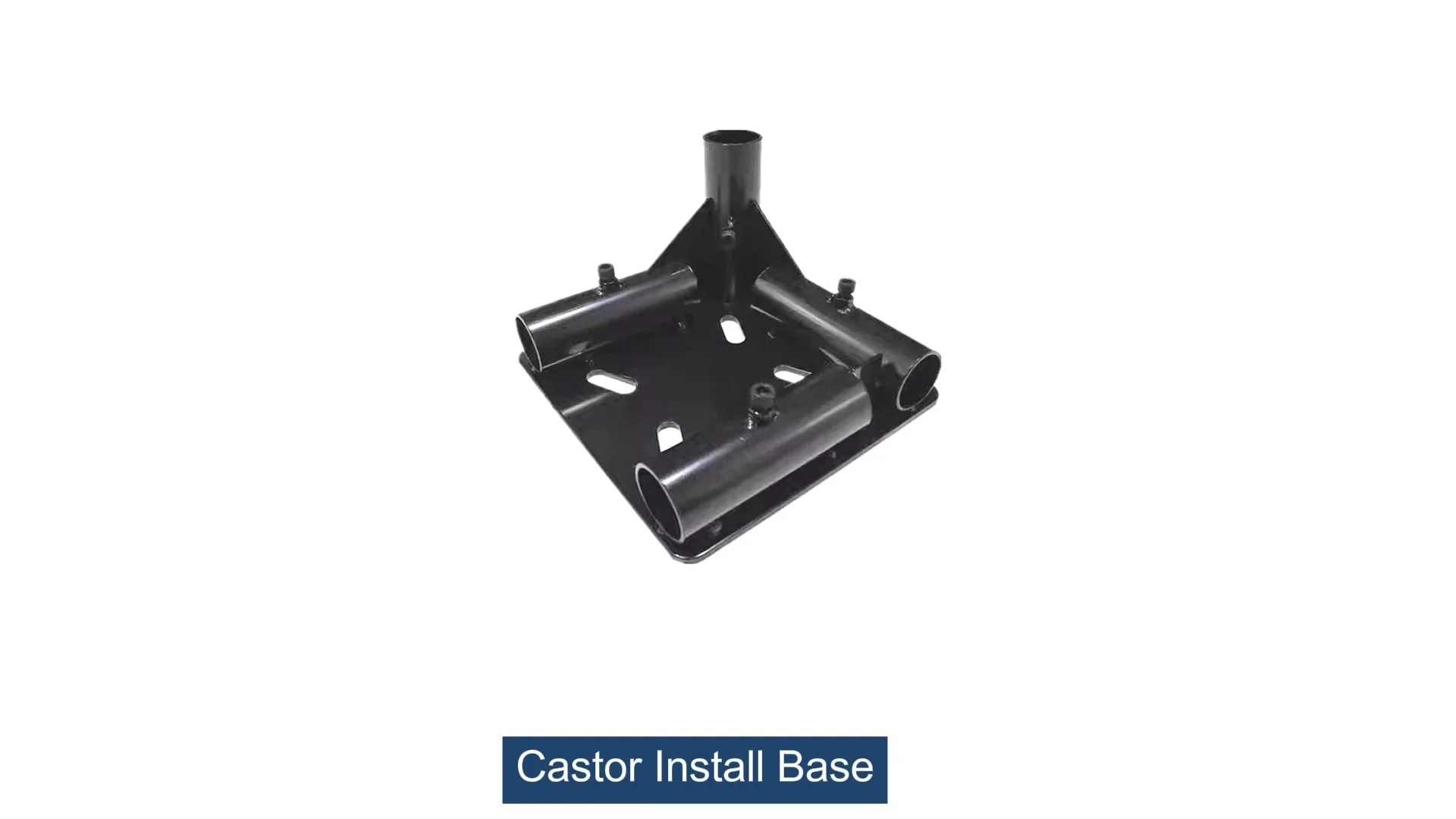
Castor Install Base
Castor install base, used for connection between pipe and castor, it can connect 4 pcs pipe by 1 pcs castor base, to make the structure strong and stable.
Walk into any busy warehouse, manufacturing plant, or retail backroom, and you'll likely spot the same challenge: space. It's the silent hurdle that slows down operations, limits flexibility, and turns even the most well-intentioned workflows into a game of Tetris. Traditional storage racks—heavy, fixed, and unyielding—only make things worse. They take up permanent floor space, become obstacles during peak seasons, and leave little room for adaptability when production needs shift. But what if there was a way to have the best of both worlds: sturdy storage when you need it, and open space when you don't? Enter foldable material racks, and their unsung hero: the castor install base. This small but mighty component is redefining how facilities manage space, mobility, and efficiency—one foldable rack at a time.
Understanding Foldable Material Racks: More Than Just "Collapsible Shelves"
Foldable material racks aren't just your average storage shelves with a hinge. They're engineered to balance durability, flexibility, and space efficiency, making them a staple in lean-driven environments. Unlike fixed steel racks that bolt to the floor or bulky plastic shelves that gather dust in corners when unused, these racks are designed to adapt. When fully assembled, they stand tall, ready to hold boxes, parts, or tools; when the job is done, they fold flat—sometimes to just a few inches thick—so you can tuck them away in a closet, under a workbench, or against a wall.
But what really sets them apart is their construction. Many modern foldable racks use lightweight yet robust materials like aluminum profile or high-grade steel, striking a perfect balance between strength and portability. Take, for example, racks built with aluminum extrusion profile—these are resistant to rust, easy to clean, and light enough for a single person to move (with a little help from our star component, the castor install base, of course). Even better, they often come with adjustable shelves, allowing you to customize the rack's height to fit everything from small electronic components to larger turnover trolley and rack systems.
Let's paint a picture: A small electronics manufacturer runs two shifts. Day shift assembles circuit boards, using material racks loaded with capacitors, resistors, and wiring harnesses. Night shift switches to packaging, needing clear floor space for pallet jacks and temporary storage. With traditional fixed racks, the night crew would spend 30 minutes disassembling or moving racks—a waste of time that cuts into production. With foldable material racks, they simply fold the racks flat, wheel them to the storage corner, and the floor is clear in 5 minutes. That's the power of adaptability.
The Castor Install Base: The Foundation of Mobility
Now, let's talk about the component that turns "foldable" into "functional": the castor install base. If foldable racks are the body, the castor install base is the legs—giving them the ability to move, stay stable, and integrate seamlessly with your workflow. At its core, this base is a plate or frame designed to attach caster wheels to the bottom of a foldable rack. But don't let its simplicity fool you. A well-designed castor install base solves three critical problems: mobility, stability, and compatibility.
Mobility Without Compromise
Anyone who's tried to move a fully loaded rack knows the struggle: even lightweight racks become cumbersome when stacked with materials. The castor install base eliminates this by turning the rack into a mobile unit. By attaching caster wheels (a key part of caster and accessories) to the base, you transform a static storage solution into something you can roll—easily—with one hand. This is a game-changer for environments where materials need to move between workstations, like a production assemble line. Imagine a line worker needing a fresh batch of components: instead of making multiple trips to a distant rack, they roll the foldable rack right to their station. Time saved, energy preserved, frustration avoided.
Stability When You Need It
But mobility shouldn't mean sacrificing stability. A cheap castor base might let the rack wobble or tip when loaded, putting workers and materials at risk. High-quality castor install bases address this with features like wide-set mounting points (to distribute weight evenly) and reinforced corners. Many also work with caster wheels that have built-in brakes—so once you've rolled the rack into place, you flip the brake lever, and it stays put. No more sliding, no more accidents. It's the kind of reliability that makes warehouse managers sleep easier at night.
Compatibility with Your Existing Tools
One of the biggest frustrations in facility management is investing in a new tool only to find it doesn't work with what you already have. The best castor install bases are designed to be versatile, fitting standard caster sizes and foldable rack models. Whether you're using a material rack b (3 row and 3 floor) or a custom-built shelf, the base should adapt. This compatibility extends to caster and accessories too—if you need heavier-duty wheels for concrete floors or ESD-safe casters for electronics assembly, the base should accommodate them without requiring a complete overhaul.

Fitting Into the Lean System: Waste Reduction at Its Finest
Lean system principles are all about eliminating waste—whether it's time, space, or resources. Foldable material racks with castor install bases align perfectly with this mindset, turning "wasted space" into "opportunity space." Let's break down how:
Space Waste: Eliminated
Traditional racks are permanent fixtures. Even if you only need them 50% of the time, they take up 100% of the space. Foldable racks collapse when unused, freeing up floor area for other tasks—like staging shipments, setting up temporary workstations, or even expanding production lines during peak seasons. The castor install base makes this process effortless: fold the rack, roll it to storage, and you're done. No heavy lifting, no disassembly, no wasted man-hours.
Time Waste: Minimized
Time is money, and nothing wastes time like searching for materials or moving heavy loads. With a mobile foldable rack (thanks to the castor base), materials come to the worker, not the other way around. This cuts down on "motion waste"—a key lean enemy. For example, in a bakery, a foldable rack with castor base loaded with dough trays can be rolled from the prep area to the oven, eliminating the need for staff to carry trays back and forth. Every minute saved adds up to higher productivity by the end of the day.
Inventory Waste: Controlled
Overstocking is another lean no-no, often driven by the fear of running out of space to store extra inventory. Foldable racks with castor bases ease this fear by providing flexible storage. During slow periods, you fold the racks and store them; during busy times, you unfold them and expand capacity. This flexibility lets you keep inventory levels lean, reducing the cost of holding excess stock.

Foldable Racks with Castor Bases vs. Traditional Storage: A Side-by-Side Look
Still on the fence? Let's put foldable material racks with castor install bases head-to-head with traditional storage solutions. The table below breaks down the key differences:
| Feature | Foldable Racks with Castor Install Base | Traditional Fixed Racks |
|---|---|---|
| Space Usage | Collapsible; takes up ~10% of unfolded space when stored | Permanent; occupies 100% space at all times |
| Mobility | Highly mobile (casters allow easy rolling); brake-equipped for stability | Static; requires disassembly or heavy lifting to move |
| Setup Time | Unfolds in 1-2 minutes; no tools required | Assembly takes 30+ minutes; often needs tools/hardware |
| Flexibility | Adapts to changing needs (expand/contract storage as required) | Rigid; difficult to reconfigure without modifications |
| Cost Over Time | Higher upfront cost, but saves on space and labor costs long-term | Lower upfront cost, but hidden costs (space, labor inefficiencies) |

Real-World Wins: How Businesses Are Using This Solution
Talk is cheap—let's look at how actual businesses are benefiting from foldable material racks with castor install bases. These stories aren't just anecdotes; they're proof that this solution delivers tangible results.
Case Study 1: A Small Electronics Manufacturer
"We used to have rows of fixed steel racks taking up half our floor space," says Maria, operations manager at a mid-sized electronics plant. "During slow months, those racks sat empty, but we couldn't move them. Then we switched to foldable racks with castor install bases. Now, during our busy season (Q4), we unfold 10 racks and roll them right to the assembly lines. In January, we fold them up, stack them in the corner, and use the space for equipment maintenance. We've saved over 200 square feet of floor space—and our team spends 50 fewer hours per month moving materials. It's been a total game-changer."
Case Study 2: A Retail Distribution Center
Retail distribution centers live and die by speed, especially during holiday rushes. For one center in the Midwest, the problem was seasonal inventory spikes. "We'd bring in extra racks for Black Friday, then have nowhere to put them in February," explains Jake, warehouse supervisor. "Foldable racks with castor bases solved that. Now, we unfold the extra racks in October, load them with holiday stock, and roll them to the picking area. After Christmas, we fold them, roll them to the mezzanine, and they're out of the way. No more renting storage units or cluttering the floor. Plus, the caster bases mean pickers can roll the racks to their stations, cutting down on walk time. Our pick rates went up by 15% in the first month."
Caring for Your Castor Install Base: Simple Tips for Longevity
Like any tool, your castor install base and foldable rack will last longer with a little TLC. Here are some easy maintenance tips to keep them in top shape:
- Clean Regularly: Dust, debris, and spills can gunk up the caster wheels and hinge points. Wipe down the castor base and wheels with a damp cloth weekly, and use a brush to clear out any crumbs or dirt from the wheel bearings.
- Lubricate Caster Wheels: Every 3 months, apply a few drops of lubricating oil to the wheel axles. This keeps them rolling smoothly and prevents squeaking (a common annoyance in busy facilities).
- Check for Loose Bolts: The castor install base is held together with bolts—over time, these can loosen from vibration. Tighten them with a wrench every month to ensure the base stays stable.
- Inspect Brakes: If your caster wheels have brakes, test them monthly to make sure they engage properly. A stuck brake can make moving the rack hard; a loose brake can lead to unwanted rolling.
- Store Properly When Folded: When folding the rack for storage, make sure the castor base is clean and dry. Avoid stacking heavy objects on top of folded racks, as this can warp the base or hinges.
How to Choose the Right Castor Install Base for Your Needs
Not all castor install bases are created equal. To find the best one for your facility, ask yourself these key questions:
1. What's Your Load Capacity?
Start with the basics: how much weight will the rack hold? Castor bases are rated for specific weight limits (e.g., 300kg, 500kg). Always choose a base with a capacity higher than your expected maximum load—overloading leads to premature wear and safety risks.
2. What's Your Floor Type?
Caster wheels (part of caster and accessories) come in different materials: rubber for smooth floors (like warehouse concrete), polyurethane for hardwood or tile (to prevent scratches), and steel for rough surfaces. Match the wheel material to your floor to avoid damage and ensure smooth rolling.
3. Do You Need Brakes?
If the rack will be stationary during use (e.g., at a workbench), brakes are a must. Look for bases compatible with brake-equipped casters—preferably dual-locking brakes (which lock both the wheel and swivel) for maximum stability.
4. Is Compatibility Key?
Make sure the castor base fits your foldable rack model. Most manufacturers list compatible rack sizes, but when in doubt, measure the rack's base dimensions and compare them to the castor base's mounting holes.
The Bottom Line: Space, Mobility, and Lean Efficiency
In a world where every square foot and every minute counts, foldable material racks with castor install bases aren't just a "nice-to-have"—they're a necessity. They solve the age-old problem of space constraints while adding mobility that transforms workflows. Whether you're running a small workshop or a large distribution center, this solution adapts to your needs, reduces waste (a core lean system principle), and makes your team more efficient.
So, if you're tired of staring at empty racks taking up space, or watching your team waste time moving materials, it's time to consider the castor install base. It's a small component with a big impact—one that turns static storage into a dynamic tool for success. After all, in business, the best solutions are the ones that work as hard as you do.