- Company Articles
- Products and Technology
- Installation And Maintenance
- Castor Install Base for Heavy-Duty Pallet Racks: Ensuring Safe Mobility

Castor Install Base for Heavy-Duty Pallet Racks: Ensuring Safe Mobility
Related Product
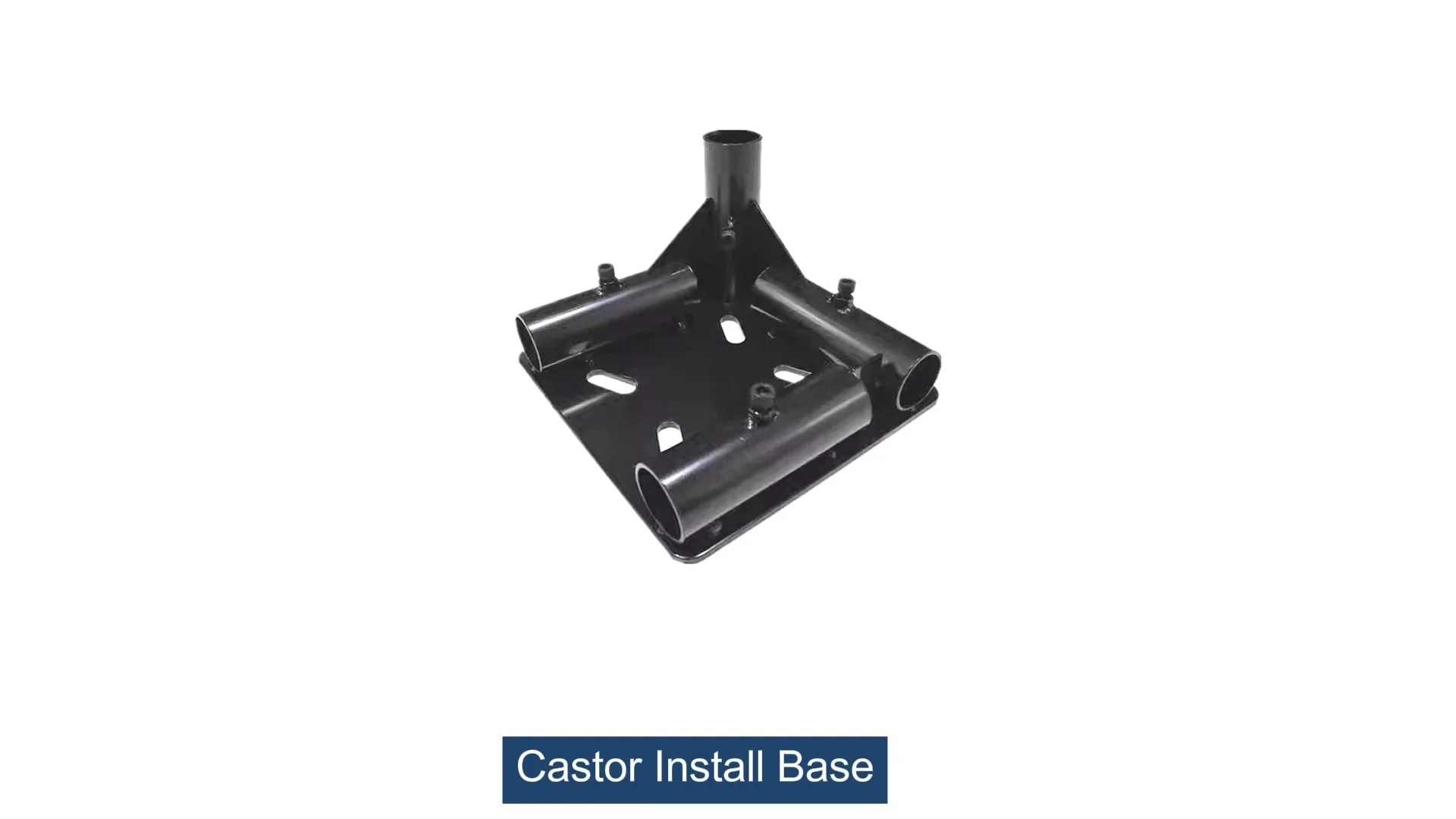
Castor Install Base
Castor install base, used for connection between pipe and castor, it can connect 4 pcs pipe by 1 pcs castor base, to make the structure strong and stable.
The Unsung Hero of Warehouse Efficiency
In the fast-paced world of manufacturing, logistics, and warehousing, every second counts. Imagine trying to keep up with tight production schedules or meet urgent customer orders while struggling with static, immovable equipment. Heavy-duty pallet racks, the workhorses of storage and material handling, are essential for organizing inventory—but their lack of mobility can often become a bottleneck. This is where the castor install base steps in: a seemingly simple component that transforms rigid storage systems into agile, flexible tools that adapt to the ever-changing needs of modern operations.
Whether you're managing a small workshop or a sprawling distribution center, the ability to move heavy loads safely and efficiently directly impacts productivity, labor costs, and workplace safety. A well-designed castor install base doesn't just add wheels to a rack; it integrates seamlessly with your existing setup, turning static storage into a dynamic asset that can be repositioned, reconfigured, and repurposed with minimal effort. In this article, we'll dive deep into the world of castor install bases for heavy-duty pallet racks, exploring their design, benefits, key features, and how they fit into broader lean system frameworks. We'll also touch on related components like caster and accessories , and how they contribute to creating a more efficient, safer workspace.
What Is a Castor Install Base, Exactly?
At its core, a castor install base is a structural component designed to attach casters (wheels mounted on a swiveling or fixed bracket) to heavy-duty pallet racks, workbench units, or turnover trolley and rack systems. Think of it as the bridge between the rack's frame and the caster itself—providing stability, load-bearing support, and a secure connection that ensures the entire setup can handle the weight of loaded pallets without compromising safety.
But not all castor install bases are created equal. Their design varies based on the type of rack they're intended for, the maximum load they need to support, and the environment in which they'll be used. For example, a base used in a food processing facility might need to be corrosion-resistant (often made from stainless steel), while one in a dry warehouse could use a heavy-gauge steel or aluminum construction for durability and weight savings. The key is that the base must be engineered to distribute the load evenly across the casters, preventing tipping, wobbling, or premature wear.
Most bases are made from robust materials like steel, aluminum, or reinforced plastic, with pre-drilled holes or mounting brackets that align with standard rack frames. Some are designed for universal fit, while others are custom-made to match specific rack models. The best ones also include features like brake mounts (for locking the rack in place when stationary), shock absorption, and debris guards to prevent wheels from getting stuck on loose materials or uneven floors.

Why Mobility Matters in Lean Systems
In today's competitive landscape, businesses are increasingly turning to lean manufacturing and logistics principles to eliminate waste, streamline processes, and improve overall efficiency. A lean system is all about maximizing value while minimizing resources—whether that's time, labor, or space. Static pallet racks, however, often create waste in the form of unnecessary movement: employees might have to walk long distances to retrieve items, or forklifts may be overused to shift racks, leading to increased fuel consumption and wear on equipment.
By adding a castor install base to heavy-duty racks, you're essentially introducing "mobility on demand." This aligns perfectly with lean goals: instead of designing workflows around fixed storage, you can design storage around workflows. Need to bring raw materials closer to the production line during a peak shift? Simply unlock the casters, roll the rack into place, and lock it down. Finished goods piling up? Reposition the rack near the shipping dock to speed up loading. This flexibility reduces "transportation waste" (one of the seven wastes in lean methodology) and empowers teams to adapt quickly to changing priorities.
Moreover, mobile racks equipped with castor install bases can be easily reconfigured to accommodate seasonal inventory fluctuations. For example, during the holiday rush, a warehouse might need to expand its picking area—mobile racks can be shifted to create wider aisles or temporary storage zones. In slower months, they can be compacted to free up space for other uses. This adaptability is a cornerstone of lean thinking, ensuring that every square foot of your facility is used optimally.

Key Features to Look for in a Heavy-Duty Castor Install Base
Not all castor install bases are built to handle the rigors of heavy-duty applications. When shopping for one, there are several critical features to consider to ensure safety, durability, and performance. Let's break them down:
1. Load Capacity: The Foundation of Safety
The most important specification for any castor install base is its load capacity—the maximum weight it can safely support, including the rack itself and the loaded pallets. Heavy-duty pallet racks can hold anywhere from 2,000 to 10,000 pounds or more, so the base must be rated to handle at least that weight (and ideally a 20-30% safety margin to account for dynamic loads, like sudden stops or uneven floors).
Load capacity is determined by the base's material thickness, structural design (e.g., reinforced corners, welded joints), and the number of casters it supports. A base with four casters, for example, will distribute weight more evenly than one with three, reducing stress on individual components. Always check the manufacturer's load rating and ensure it aligns with your specific needs—cutting corners here could lead to catastrophic failure.
2. Material: Balancing Strength and Weight
Castor install bases are typically made from one of three materials: steel, aluminum, or stainless steel. Each has its pros and cons, depending on your environment and priorities:
- Steel: The go-to for maximum strength and durability. Hot-rolled or cold-rolled steel bases can handle extremely heavy loads and are resistant to impact. However, they're heavier, which can make manual maneuvering more challenging, and they may require painting or coating to prevent rust in humid or wet environments.
- Aluminum: Lighter than steel but still surprisingly strong, thanks to modern aluminum extrusion profile technology. Aluminum bases are corrosion-resistant, making them ideal for food processing, pharmaceutical, or outdoor applications. They're also easier to move manually, which is a plus for teams that need to reposition racks frequently.
- Stainless Steel: The premium choice for hygiene-critical environments (e.g., medical facilities, cleanrooms) or areas with exposure to chemicals, saltwater, or extreme temperatures. Stainless steel resists corrosion and is easy to sanitize, but it comes with a higher price tag.
3. Compatibility: Fit for Your Racks and Casters
A castor install base is only useful if it fits your existing pallet racks and the caster and accessories you plan to use. Most manufacturers design bases to work with standard rack dimensions (e.g., 48" x 36" pallet racks), but custom sizes are available for non-standard setups. Look for bases with adjustable mounting holes or universal brackets that can accommodate different caster stem sizes (e.g., 1-inch or 2-inch stems) or plate-mounted casters.
It's also important to consider the caster type: swivel casters (which allow 360-degree movement), fixed casters (which only roll forward/backward), or a combination (two swivel, two fixed) for better maneuverability. The base should have mounting points that align with the caster's hole pattern, ensuring a secure bolted or welded connection.
4. Safety Features: Beyond Just Wheels
Mobility without safety is a liability. The best castor install bases include built-in safety features to prevent accidents:
-
Locking Mechanisms:
Many bases are compatible with casters that have integrated brakes (e.g., total lock brakes that lock both the wheel and swivel motion). The base should provide a stable platform for these brakes to engage, ensuring the rack stays firmly in place when stationary.
-
Anti-Tip Design:
Wide-set caster mounting points or a low center of gravity help prevent the rack from tipping when loaded unevenly or moved around corners. Some bases also include outrigger extensions for extra stability.
-
Debris Guards:
Rubber or metal shields around the caster wheels prevent small objects (like screws, pallets chips, or debris) from getting stuck, which can cause jamming or uneven rolling.

Caster and Accessories: The Perfect Partners
A castor install base is just one part of the mobility equation—the casters themselves, along with their accessories, play an equally critical role. Let's take a closer look at the components that work together to make your mobile rack system a success:
Caster Wheels: The Contact Point with the Floor
The type of caster wheel you choose depends on your floor surface, load capacity, and noise requirements. Common wheel materials include:
-
Rubber:
Ideal for smooth floors (concrete, tile) and indoor use. Rubber wheels absorb shocks, reduce noise, and won't mark floors, making them popular in offices or retail backrooms.
-
Polyurethane (PU):
A durable, versatile option that combines the grip of rubber with the load capacity of plastic. PU wheels work well on both smooth and slightly rough floors and are resistant to oils and chemicals.
-
Nylon:
Best for heavy loads and rough surfaces (e.g., warehouse concrete with cracks or uneven patches). Nylon wheels are hard, wear-resistant, and easy to clean, but they can be noisy on smooth floors.
-
Steel:
For extreme loads (10,000+ pounds) or outdoor use. Steel wheels are tough but can damage soft floors and are very noisy.
Caster Accessories: Enhancing Performance
To get the most out of your castor install base, consider adding these accessories:
-
Brake Kits:
As mentioned earlier, total-lock or directional-lock brakes prevent movement when the rack is in use. Some kits include foot-operated levers for easy engagement.
-
Stem Extensions:
For racks with higher clearance needs, stem extensions raise the caster height, preventing the rack from scraping the floor.
-
Wheel Guards:
Metal or plastic covers that protect the wheel bearings from dust, debris, and moisture, extending their lifespan.
-
Swivel Locks:
Convert swivel casters into fixed casters by locking the swivel plate, which is useful for straight-line movement over long distances.
| Caster Type | Best For | Load Capacity (Per Caster) | Safety Features | Price Range |
|---|---|---|---|---|
| Swivel with Total Lock Brake | Heavy loads, tight spaces | 2,000 – 8,000 lbs | Locks wheel and swivel motion | $50 – $150 |
| Fixed Caster | Straight-line movement | 3,000 – 10,000 lbs | No swivel, stable in one direction | $30 – $80 |
| Swivel Without Brake | Light loads, frequent repositioning | 500 – 2,000 lbs | None (use with fixed casters for stability) | $20 – $60 |
| Heavy-Duty Stainless Steel | Corrosive environments | 4,000 – 12,000 lbs | Corrosion-resistant, sealed bearings | $100 – $300 |
Installation: Getting It Right the First Time
Even the best castor install base will underperform if installed incorrectly. Proper installation ensures the base is securely attached to the rack, the casters are aligned, and the entire system is balanced. Here's a step-by-step guide to help you get it right:
Step 1: Prepare the Rack and Workspace
Start by emptying the pallet rack of all inventory—working with a loaded rack is dangerous and can cause uneven weight distribution during installation. Next, clean the area around the rack to remove debris, oil, or grease that could make the floor slippery. If possible, use a level to check the floor surface; significant unevenness may require shims under the casters to prevent tipping.
Step 2: Align the Castor Install Base
Place the castor install base on the floor, positioning it so that its mounting holes align with the rack's bottom frame rails. Most bases have pre-drilled holes that match standard rack bolt patterns, but if you're using a custom base, you may need to drill holes in the rack frame (use a metal drill bit and lubricant to prevent overheating). Ensure the base is centered and square to the rack to avoid uneven weight distribution.
Step 3: Attach the Base to the Rack
Use high-strength bolts (grade 8 or higher) and lock washers to secure the base to the rack frame. Tighten the bolts evenly—alternating between opposite corners—to prevent warping the base. For extra strength, consider welding the base to the rack (this is permanent, so only do this if you don't need to remove the base later). If welding, ensure the base and rack are grounded to prevent electrical shock.
Step 4: Install the Casters
Once the base is secure, attach the casters. For stem-mounted casters, insert the stem into the base's mounting holes and secure with a nut or cotter pin. For plate-mounted casters, align the caster plate with the base's caster mounting holes and bolt them down. If using a combination of swivel and fixed casters, position the swivel casters at the front (for steering) and fixed casters at the rear (for stability).
Step 5: Test for Stability and Mobility
With the casters installed, give the rack a gentle push to check for wobbling or uneven rolling. If it veers to one side, the casters may be misaligned—adjust the mounting bolts or add shims under the appropriate caster. Test the brakes (if equipped) by locking them and trying to move the rack; it should stay firmly in place. Finally, load the rack with a test weight (gradually increasing to full capacity) and repeat the mobility and stability tests to ensure everything holds up.
Real-World Applications: From Workbenches to Turnover Trolleys
Castor install bases aren't limited to heavy-duty pallet racks—they're also indispensable for other equipment in lean manufacturing and warehousing setups. Let's explore a few common applications:
Mobile Workbenches: Flexibility in Production
A workbench is the heart of any assembly line or workshop, but a static workbench ties employees to one spot. By adding a castor install base, you can create a mobile workbench that can be moved to where the work is—whether that's next to a production machine, near a material storage area, or even outdoors for maintenance tasks. Mobile workbenches are especially valuable in lean systems, where the goal is to minimize movement and keep tools and materials within arm's reach.
Turnover Trolley and Rack Systems: Streamlining Material Flow
Turnover trolley and rack systems are used to transport materials between workstations, storage areas, and shipping/receiving. Equipping these trolleys with a robust castor install base ensures they can handle heavy loads (e.g., stacks of boxes, bulk components) while remaining easy to push or pull. In automotive manufacturing, for example, turnover trolleys with castor bases are used to deliver parts to the assembly line, reducing the need for forklifts and cutting down on wait times.
Lean System Integration: A Holistic Approach
When combined with other lean tools—like kanban boards, 5S organization, and continuous improvement processes—mobile racks and workbenches become part of a cohesive system that eliminates waste and boosts efficiency. For example, a mobile rack with a castor install base can be used as a "supermarket" in kanban systems, holding just-in-time inventory that's delivered directly to the production line as needed. This reduces overstocking and frees up floor space, aligning with lean's focus on value-added activities.
Choosing the Right Supplier: Quality Matters
With so many options on the market, selecting the right castor install base supplier can be overwhelming. Here are a few tips to ensure you're partnering with a reliable provider:
-
Look for Experience in Heavy-Duty Applications:
Suppliers who specialize in
lean system supplier
solutions or industrial material handling are more likely to understand the unique demands of heavy-duty pallet racks.
-
Check Certifications:
Look for suppliers whose products meet industry standards like ISO 9001 (quality management) or OSHA (safety). Certifications are a sign of commitment to quality and compliance.
-
Ask About Customization:
If you have non-standard rack dimensions or unique load requirements, a supplier that offers custom castor install bases can ensure a perfect fit.
-
Review Customer Feedback:
Read reviews or ask for references from other businesses in your industry. A supplier with a track record of on-time deliveries, responsive customer service, and durable products is worth the investment.
Maintenance: Keeping Your Castor Install Base in Top Shape
Like any equipment, a castor install base requires regular maintenance to ensure longevity and safety. Here's a simple maintenance checklist to follow:
- Weekly Inspections: Check for loose bolts, cracked welds, or bent components. Tighten any loose fasteners and replace damaged parts immediately.
- Monthly Lubrication: Apply lubricant (e.g., lithium grease) to caster wheel bearings and swivel joints to reduce friction and prevent rust. Wipe away excess lubricant to avoid attracting dust.
- Quarterly Cleaning: Use a brush or compressed air to remove debris from caster wheels and the base frame. For aluminum or stainless steel bases, wipe with a damp cloth and mild detergent to prevent corrosion.
- Annual Load Testing: Periodically test the rack with its maximum rated load to ensure the base and casters are still performing as expected. If you notice any sagging, bending, or instability, replace the base or casters immediately.
Conclusion: Investing in Mobility for a Safer, More Efficient Future
In the world of warehousing and manufacturing, where efficiency and safety are non-negotiable, the castor install base is more than just an accessory—it's a strategic investment. By transforming static heavy-duty pallet racks into mobile assets, these bases empower businesses to adapt to changing demands, reduce waste, and create a more ergonomic workplace. When paired with high-quality caster and accessories , they become a cornerstone of lean system success, supporting everything from mobile workbench setups to turnover trolley and rack systems.
As you explore your options, remember to prioritize load capacity, material durability, compatibility, and safety features. Choose a supplier who understands your industry's unique challenges and can provide customized solutions that fit your workflow. With the right castor install base, you'll not only enhance productivity—you'll also create a safer, more agile operation that's ready to tackle whatever the future brings.
So, the next time you look at a static pallet rack, think about the possibilities: with a simple addition, that rigid structure could become a dynamic tool that drives your business forward. Mobility isn't just about movement—it's about progress.