- Company Articles
- Products and Technology
- Product knowledge
- Castor Install Base for Laboratory Equipment Carts: Precision Movement Solutions

Castor Install Base for Laboratory Equipment Carts: Precision Movement Solutions
Related Product
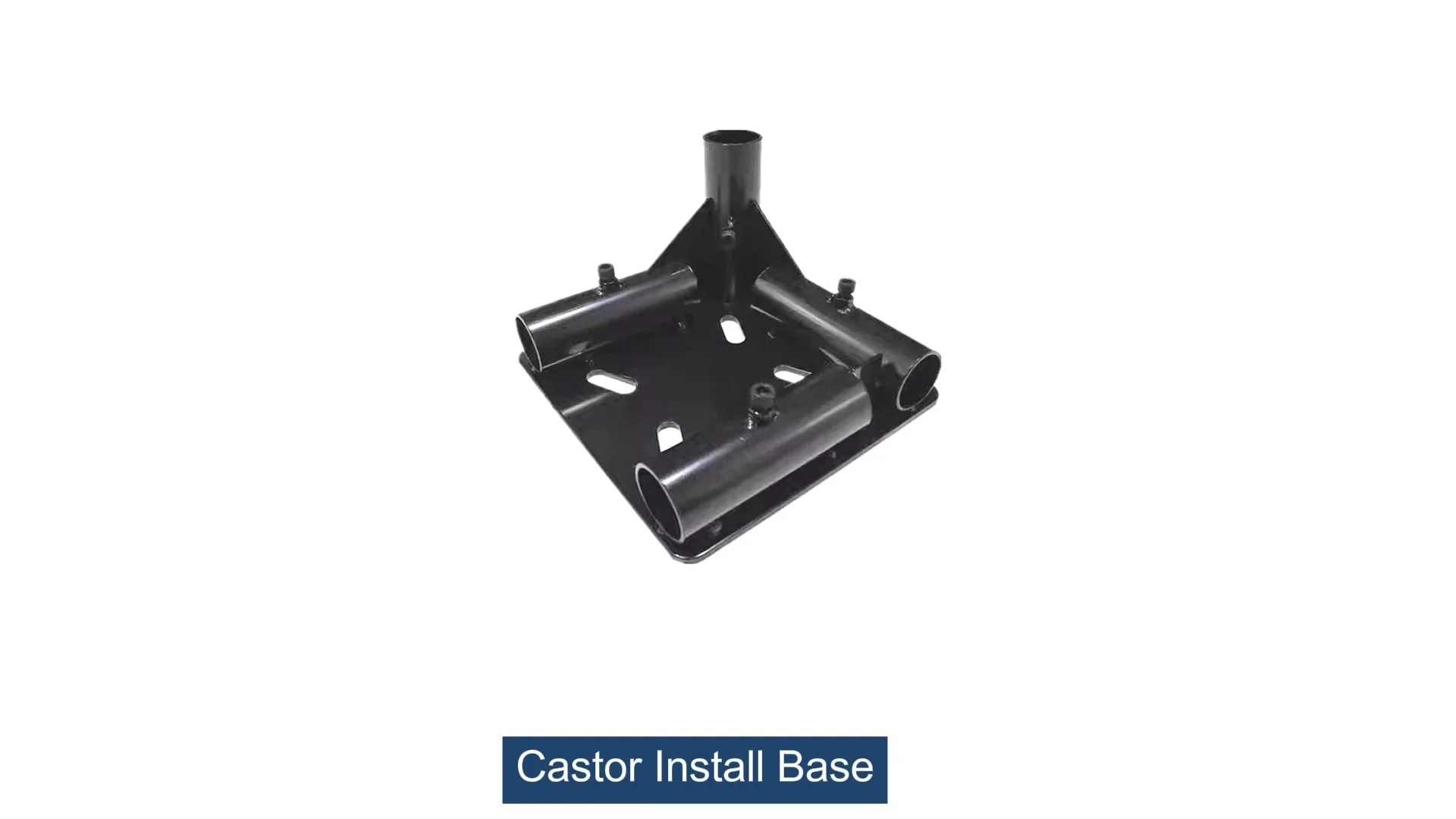
Castor Install Base
Castor install base, used for connection between pipe and castor, it can connect 4 pcs pipe by 1 pcs castor base, to make the structure strong and stable.
Walk into any modern laboratory, and you'll quickly notice a symphony of activity: researchers hunched over microscopes, technicians preparing samples at workbenches, and automated machines whirring in the background. Amidst this organized chaos, one element often goes unnoticed but plays a critical role in keeping operations smooth: the humble laboratory equipment cart. These carts are the unsung heroes of lab mobility, transporting everything from fragile glassware to sensitive analytical instruments. But what makes a lab cart truly reliable? Beyond the caster wheels and the frame, it's the caster install base —the unassuming component that bridges the cart's structure to its wheels—that ensures precision movement, stability, and safety in even the most demanding lab environments.
In this article, we'll dive deep into the world of caster install bases for laboratory equipment carts. We'll explore why these components matter, the unique challenges they solve, and how they integrate with caster and accessories to create seamless mobility solutions. We'll also compare them to other lab fixtures like adjustable leveling feet , discuss key features to look for when selecting a caster install base, and share real-world examples of how the right base can transform lab efficiency. Whether you're a lab manager upgrading equipment or a researcher curious about the tools that keep your workspace functional, this guide will shed light on why the caster install base is the foundation of precision movement in labs today.
The Unique Challenges of Laboratory Mobility
Laboratories are not your average workspaces. They're environments where precision isn't just a goal—it's a requirement. A single misstep in moving equipment can lead to contaminated samples, damaged instruments, or even safety hazards. To understand why caster install bases are so critical, let's first unpack the unique challenges labs face when it comes to mobility.
Sensitivity to Vibration and Instability
Many lab instruments, from centrifuges to mass spectrometers, are exquisitely sensitive to vibration. Even the smallest jolt during movement can disrupt delicate measurements or compromise sample integrity. Imagine transporting a tray of PCR plates across the lab: if the cart wobbles, samples could spill, ruining hours of work. Similarly, a microscope cart that shifts during positioning might throw off a researcher's focus, delaying experiments. In these scenarios, the caster install base acts as a buffer, absorbing shocks and ensuring smooth, steady movement that minimizes vibration.
Heavy Loads and Uneven Weight Distribution
Lab carts rarely carry lightweight items. A typical cart might hold a 200kg autoclave, a stack of reagent bottles, or a row of centrifuges—each with its own weight distribution. Uneven loads can cause carts to tip, especially when navigating tight corners or uneven floors. The caster install base must distribute these weights evenly across the caster wheels, preventing stress on the cart frame and reducing the risk of accidents. Without a robust base, even high-quality caster wheels can fail under the strain of unbalanced loads.
Stringent Environmental Requirements
Laboratories come in all types: clinical labs handling biohazards, chemical labs with corrosive substances, and cleanrooms where sterility is paramount. Each environment imposes unique demands on equipment. In a chemical lab, for example, carts and their components must resist corrosion from spills or fumes. In a cleanroom, materials must be non-shedding to avoid contaminating the air. Caster install bases, often made from materials like aluminum or stainless steel (more on that later), are designed to withstand these harsh conditions, ensuring longevity and reliability where generic bases would fail.
Space Constraints and Maneuverability
Labs are often packed with workbenches, fume hoods, and fixed equipment, leaving little room for error when moving carts. Tight aisles, narrow doorways, and sudden turns require carts that can maneuver with precision. A poorly designed caster install base might limit swivel range or cause wheels to bind, making it difficult to navigate tight spaces. This isn't just an inconvenience—it can slow down workflows and increase the risk of collisions with other equipment or personnel.
These challenges—vibration sensitivity, heavy loads, harsh environments, and limited space—highlight why lab mobility solutions can't rely on generic hardware. They demand components engineered for precision, starting with the caster install base. In the next section, we'll explore how this critical part addresses these issues and forms the backbone of reliable lab carts.
The Role of Caster Install Base: More Than Just a Connector
At first glance, a caster install base might seem like a simple piece of metal or plastic—a mere connector between the cart frame and the caster wheel. But in reality, it's a carefully engineered component that impacts nearly every aspect of a cart's performance. Let's break down its key roles in ensuring precision movement in laboratories.
Load Distribution: Protecting Carts and Equipment
When you place a heavy load on a lab cart, the weight doesn't just rest on the wheels—it travels through the caster install base first. A well-designed base spreads this load evenly across all casters, preventing any single wheel from bearing too much weight. For example, if a cart is loaded with a 300kg freezer, the install base ensures each of the four casters bears approximately 75kg (plus a safety margin). Without this distribution, one caster might fail, causing the cart to tilt and potentially damage the freezer or surrounding equipment.
This even distribution also protects the cart frame itself. Over time, uneven weight can warp or crack the frame, leading to costly repairs or replacements. The caster install base acts as a reinforcement, adding rigidity to the cart's structure and extending its lifespan.
Stability During Movement and Stationary Use
A lab cart needs to be two things: easy to move and rock-solid when stationary. The caster install base plays a role in both. When moving, it allows the casters to swivel freely (if using swivel casters) or roll straight (if using rigid casters), ensuring smooth navigation. When parked, features like locking mechanisms (integrated into some bases) or weight distribution help keep the cart in place, even on slightly uneven floors.
Consider a scenario where a researcher needs to position a cart next to a workbench to unload samples. A high-quality caster install base will prevent the cart from drifting or wobbling as items are added or removed. This stability is especially crucial when working with hazardous materials, where a single spill could have serious consequences.
Vibration Dampening: Protecting Sensitive Instruments
Earlier, we mentioned that lab instruments are sensitive to vibration. The caster install base contributes to vibration dampening in two ways: through material selection and design. Many bases are made with materials like aluminum, which has natural shock-absorbing properties, or include rubberized components that cushion impacts. For example, a base with a rubber gasket between the cart frame and caster can reduce the transfer of vibrations from the floor to the cart, protecting delicate equipment like spectrometers or electron microscopes.
Compatibility with Caster and Accessories
No caster install base works in isolation—it's part of a system that includes caster wheels, brakes, swivel locks, and other caster and accessories . The base must be compatible with these components to ensure optimal performance. For instance, a base designed for threaded stem casters won't work with plate-mount casters, and vice versa. Similarly, if a lab requires casters with foot brakes, the install base must have the right mounting points to accommodate those brakes without interfering with movement.
This compatibility extends to future upgrades, too. A flexible caster install base allows labs to swap out casters as needs change—for example, switching from standard wheels to conductive wheels in an ESD-sensitive environment (like an electronics lab) or adding larger wheels for use on carpeted floors. By choosing a base with universal mounting standards, labs can avoid replacing entire carts when their mobility needs evolve.

Key Features of High-Quality Caster Install Bases
Now that we understand why caster install bases are critical, let's explore the features that set high-quality bases apart from generic or low-grade alternatives. When selecting a base for laboratory use, these are the factors that will ensure reliability, safety, and long-term performance.
Load Capacity: Beyond the "Rated" Weight
Load capacity is perhaps the most important specification to consider. Every caster install base has a maximum weight rating, but labs should always choose a base rated for more than the expected load. Why? Because real-world conditions often exceed ideal scenarios. A cart that typically carries 200kg might occasionally need to hold 250kg during peak periods, or unevenly distributed loads could create stress points that exceed the base's rated capacity. As a rule of thumb, aim for a base with a load capacity of at least 1.5 times the maximum expected load.
For example, a base rated for 400kg would be suitable for a cart that usually carries 250kg. This extra margin ensures the base won't fail under stress, protecting both equipment and personnel.
Material Durability: Choosing the Right Build
The material of the caster install base directly impacts its durability, corrosion resistance, and weight. In laboratories, two materials stand out: aluminum and stainless steel. Let's compare them in the table below:
| Feature | Aluminum Caster Install Base | Stainless Steel Caster Install Base |
|---|---|---|
| Weight | Lightweight (ideal for carts needing frequent movement) | Heavier (adds stability but may require more effort to move) |
| Corrosion Resistance | Good (resists mild chemicals; anodized finishes enhance protection) | Excellent (resists harsh chemicals, salt, and moisture; ideal for cleanrooms or chemical labs) |
| Strength | High strength-to-weight ratio (suitable for medium loads) | Very high strength (best for heavy loads or impact-prone environments) |
| Cost | More affordable | More expensive |
| Best For | General lab use, mobile workbenches, medium-weight equipment | Chemical labs, cleanrooms, heavy equipment (e.g., autoclaves, freezers) |
Some bases also use reinforced plastics or composite materials, which are lightweight and corrosion-resistant but may lack the strength of metal for heavy loads. For most lab applications, however, aluminum or stainless steel is the preferred choice.
Corrosion Resistance: Withstanding Lab Environments
Labs are full of substances that can corrode metal: acids, solvents, disinfectants, and even high humidity. A caster install base that rusts or degrades over time won't just look unprofessional—it will compromise performance. Stainless steel bases are inherently corrosion-resistant, thanks to their chromium content, which forms a protective oxide layer. Aluminum bases, while not as naturally resistant, can be anodized (a process that adds a protective coating) to enhance their durability in wet or chemical-exposed environments.
When evaluating corrosion resistance, look for bases with certifications like ISO 10289 (for stainless steel) or MIL-STD-810 (for environmental testing). These standards ensure the base has been tested to withstand the conditions it will face in a lab.
Mounting Flexibility: Adapting to Caster Types
As mentioned earlier, compatibility with caster and accessories is key. A high-quality caster install base should support multiple caster mounting types, including:
- Threaded stem casters : Casters with a threaded rod that screws into the base.
- Plate-mount casters : Casters with a flat metal plate that bolts to the base.
- Stemless casters : Casters that press-fit into the base (common in lightweight applications).
Some bases even include interchangeable plates or adapters, allowing labs to switch between mounting types without replacing the entire base. This flexibility is invaluable for labs with diverse cart fleets or evolving needs.
Height Adjustability: Leveling on Uneven Floors
Not all lab floors are perfectly level. Uneven surfaces can cause carts to rock, making them unstable during movement or when stationary. Some advanced caster install bases include height-adjustable features, similar to adjustable leveling feet , that allow users to fine-tune the base's height to compensate for floor irregularities. This is especially useful in older buildings or labs with raised floors, where even small dips or bumps can affect cart stability.
Height adjustability also helps when aligning carts with workbenches or other equipment. For example, a researcher might need a cart's surface to be exactly level with a workbench to slide samples back and forth easily. An adjustable base makes this alignment quick and precise.

Caster Install Base vs. Adjustable Leveling Feet: When to Use Each
In lab design, mobility and stability are often seen as opposing needs: mobile equipment is convenient but less stable, while fixed equipment is stable but immobile. However, labs often need both—think of a workbench that should stay put during experiments but be movable for deep cleaning. This is where the choice between caster install bases and adjustable leveling feet comes into play. Let's compare these two solutions to understand when to use each.
Adjustable Leveling Feet: Stability First
Adjustable leveling feet are designed for stability. They consist of a threaded rod with a flat or rubberized foot that screws into the bottom of equipment, allowing users to level the item on uneven floors. Unlike casters, they don't roll, so they keep equipment firmly in place. Leveling feet are ideal for:
- Fixed workbenches : Where stability during experiments is critical, and mobility is rarely needed.
- Heavy equipment : Like centrifuges or incubators, which are rarely moved and require precise leveling for operation.
- ESD-sensitive environments : Where rolling casters could generate static electricity.
However, leveling feet have a major drawback: they make equipment immobile. To move a workbench with leveling feet, you'd need to lift it manually or use a separate dolly—time-consuming and potentially risky for heavy items.
Caster Install Bases: Mobility with Stability
Caster install bases, by contrast, prioritize mobility while still offering stability when needed (via brakes or locking mechanisms). They're best for:
- Mobile carts : Used to transport equipment, samples, or supplies between workstations.
- Equipment that needs occasional movement : Like microscopes or spectrometers, which might be shared between labs or moved for maintenance.
- Dynamic workspaces : Where lab layouts change frequently (e.g., research labs with rotating projects).
The key advantage of caster install bases is their ability to balance mobility and stability. With locking casters, a cart can be secured in place as firmly as a fixed workbench, then unlocked and moved when needed. This versatility makes them a favorite in modern labs, where flexibility is increasingly important.
Hybrid Solutions: Combining the Best of Both Worlds
For labs that need both mobility and precision stability, hybrid systems are emerging. These systems pair caster install bases with retractable leveling feet: when mobility is needed, the feet retract, and the casters take over; when stability is required, the feet extend, lifting the casters off the ground and securing the cart in place. This "best of both worlds" approach is ideal for equipment like mobile workbenches, which need to be moved to different locations but must remain stable during use.
For example, a mobile PCR workstation might use a hybrid system: during setup, the researcher extends the leveling feet to stabilize the bench, then retracts them to move the workstation to a new lab for a collaborative project. This eliminates the need for two separate pieces of equipment (a fixed bench and a cart) and streamlines workflows.

Real-World Applications: How Caster Install Bases Transform Lab Workflows
To put the importance of caster install bases into context, let's look at three real-world case studies. These examples show how the right base can solve common lab challenges and improve efficiency, safety, and reliability.
Case Study 1: Pharmaceutical Lab Reduces Sample Contamination with Stable Transport Carts
A mid-sized pharmaceutical lab was struggling with sample contamination during transport between its prep room and testing area. Researchers were using generic utility carts with basic casters, which often wobbled on the lab's slightly uneven floor. This wobbling caused occasional spills of cell culture media, leading to costly sample loss and delays in drug development.
The lab's solution? Upgrading to carts equipped with aluminum caster install bases and swivel casters with integrated brakes. The new bases distributed the weight of the sample trays evenly, reducing wobbling, while the rubberized components dampened vibrations. The result: a 90% reduction in sample spills over six months, and a 20% increase in workflow efficiency as researchers spent less time redoing contaminated samples.
Case Study 2: Academic Research Lab Enhances Equipment Sharing with Mobile Microscopes
A university research lab with limited funding needed to share a high-end confocal microscope between three different research teams. The microscope was originally mounted on a fixed workbench with adjustable leveling feet , making it impossible to move without disassembling and reassembling— a process that took hours and risked damaging the delicate instrument.
The lab purchased a custom mobile cart with a stainless steel caster install base rated for heavy loads. The base was paired with locking swivel casters and height-adjustable feet (a hybrid system) to ensure stability during use. Now, the microscope can be moved between labs in minutes, with minimal setup time. The result: each team gained 10 additional hours of microscope access per week, accelerating research timelines and fostering collaboration between groups.
Case Study 3: Clinical Lab Improves Safety with Corrosion-Resistant Carts
A clinical diagnostics lab handling blood and tissue samples was facing frequent caster failures on its transport carts. The lab's harsh cleaning protocols—using strong disinfectants to prevent cross-contamination—were corroding the carts' original steel caster install bases, leading to stuck wheels and unstable movement. This posed a safety risk, as technicians struggled to control carts carrying biohazardous materials.
The lab switched to carts with stainless steel caster install bases and corrosion-resistant caster and accessories . The new bases withstood daily exposure to disinfectants, and the sealed bearings in the casters prevented debris buildup. Within three months, caster-related incidents dropped to zero, and technician satisfaction scores improved significantly due to easier, safer cart handling.
Maintenance and Care: Extending the Life of Your Caster Install Base
Even the highest-quality caster install base will underperform if not properly maintained. Labs invest significant resources in their equipment, and extending the life of caster install bases and caster and accessories is key to maximizing that investment. Here are some maintenance tips to keep your bases in top condition:
Regular Cleaning: Preventing Debris Buildup
Labs are dusty environments, and debris like dust, lint, or spilled chemicals can accumulate in the caster install base's mounting holes or around the caster stems. Over time, this buildup can cause casters to bind or the base to corrode. To prevent this, clean the base weekly with a soft brush or compressed air to remove loose debris. For chemical spills, wipe the base immediately with a damp cloth and mild detergent (avoid abrasive cleaners, which can scratch protective coatings).
Lubrication: Ensuring Smooth Movement
If your caster install base includes moving parts (like height-adjustable mechanisms or swivel mounts), regular lubrication is essential. Use a food-grade or medical-grade lubricant (to avoid contamination) on pivot points and threads every three months. This will prevent rust and ensure smooth operation, especially for bases used in cold environments (like walk-in freezers) where metal parts can seize up.
Inspection: Catching Issues Early
Perform monthly inspections of caster install bases to check for signs of wear, including:
- Cracks or bending in the base plate.
- Loose bolts or mounting hardware.
- Corrosion or pitting (especially in chemical labs).
- Worn or damaged caster stems (if integrated into the base).
Addressing these issues early can prevent catastrophic failures. For example, tightening a loose bolt might seem minor, but a loose bolt could lead to uneven weight distribution and a collapsed cart under load.
Replacement: Knowing When to Upgrade
Even with proper maintenance, caster install bases have a lifespan. As a general rule, replace bases every 5–7 years, or sooner if they show signs of significant wear (like cracks or corrosion). If your lab's needs change—for example, if you start using heavier equipment—upgrade to a base with a higher load capacity, even if the old base still seems functional. Investing in a new base is far cheaper than replacing damaged equipment or dealing with accidents.
Choosing the Right Caster Install Base for Your Lab
With so many options on the market, selecting the right caster install base can feel overwhelming. To simplify the process, follow this step-by-step guide:
Step 1: Define Your Load Requirements
Start by calculating the maximum weight your cart will carry. Include the weight of the cart itself, plus the heaviest load you expect to transport (e.g., equipment, samples, supplies). Add a 50% safety margin to this number to determine the minimum load capacity your base should have.
Step 2: Assess Your Environment
Consider your lab's unique conditions:
- Chemicals/solvents : Choose stainless steel or anodized aluminum for corrosion resistance.
- Cleanrooms/sterile environments : Look for bases with smooth, non-porous surfaces that are easy to sanitize.
- ESD sensitivity : select conductive materials to prevent static buildup.
- Floor type : Smooth floors (tile, epoxy) work with most bases; rough floors (concrete) may require reinforced bases to prevent damage.
Step 3: Determine Mobility Needs
How often will the cart be moved? Will it need to navigate tight spaces? Do you need to lock it in place during use? Answering these questions will help you choose between rigid and swivel casters, and whether you need a hybrid system with leveling feet.
Step 4: Check Compatibility
Ensure the base is compatible with your existing caster and accessories (or the casters you plan to buy). Check mounting type (threaded stem, plate-mount), caster size, and brake compatibility.
Step 5: Evaluate Cost vs. Value
While it's tempting to choose the cheapest option, a low-quality base can cost more in the long run (via repairs, replacements, or damaged equipment). Invest in a base from a reputable supplier that offers warranties (look for at least a 2-year warranty) and good customer support.
Future Trends in Laboratory Mobility: What's Next for Caster Install Bases?
As laboratories continue to evolve—becoming more automated, more connected, and more focused on sustainability—so too will the technology that powers their mobility solutions. Here are some emerging trends to watch in caster install bases and lab mobility:
Smart Caster Systems
Imagine a caster install base equipped with sensors that monitor load, temperature, and movement. These "smart" bases could alert lab managers when a cart is overloaded, predict maintenance needs, or even integrate with lab management software to track equipment location. For example, a sensor in the base could detect that a cart's caster bearings are wearing out and send a notification before failure occurs, preventing downtime.
Eco-Friendly Materials
Sustainability is becoming a priority in lab design, and caster install bases are no exception. Manufacturers are exploring recycled aluminum and stainless steel, as well as bio-based composites, to reduce environmental impact. Some are even developing modular bases that can be disassembled and recycled at the end of their lifespan, minimizing waste.
Integration with Lab Automation
Automated labs, where robots handle sample transport, require precise, reliable mobility solutions. Future caster install bases may be designed to work seamlessly with robotic systems—for example, including RFID tags for easy identification or magnetic strips for guided movement along predefined paths. This integration will further reduce human error and speed up workflows in high-throughput labs.
Enhanced Ergonomics
Lab technicians often spend hours moving carts, and repetitive motion injuries are a concern. New caster install base designs are focusing on ergonomics, with features like shock-absorbing materials to reduce strain on wrists and arms, and low-profile bases that lower the cart's center of gravity, making it easier to push.
Conclusion: The Foundation of Precision Movement
In the fast-paced world of laboratory research and diagnostics, every component matters—even the ones we can't see at first glance. The caster install base is one such component: a quiet workhorse that ensures lab equipment moves smoothly, safely, and precisely. From distributing heavy loads to dampening vibrations, from withstanding harsh chemicals to integrating with caster and accessories , this unassuming piece of hardware plays a pivotal role in keeping labs efficient and researchers productive.
As we've explored, choosing the right caster install base requires careful consideration of load capacity, environment, mobility needs, and compatibility. But the effort is well worth it. A high-quality base reduces downtime, protects valuable equipment, and creates a safer workspace for everyone. Whether you're outfitting a new lab or upgrading an existing one, remember: the foundation of precision movement starts with the right caster install base.
So the next time you see a lab cart gliding effortlessly across the room, take a moment to appreciate the caster install base underneath. It may not grab headlines, but it's the reason that cart—and the critical work it supports—keeps moving forward.