- Company Articles
- Products and Technology
- Product knowledge
- Castor Install Base for Medical Carts: Balancing Mobility and Stability

Castor Install Base for Medical Carts: Balancing Mobility and Stability
Related Product
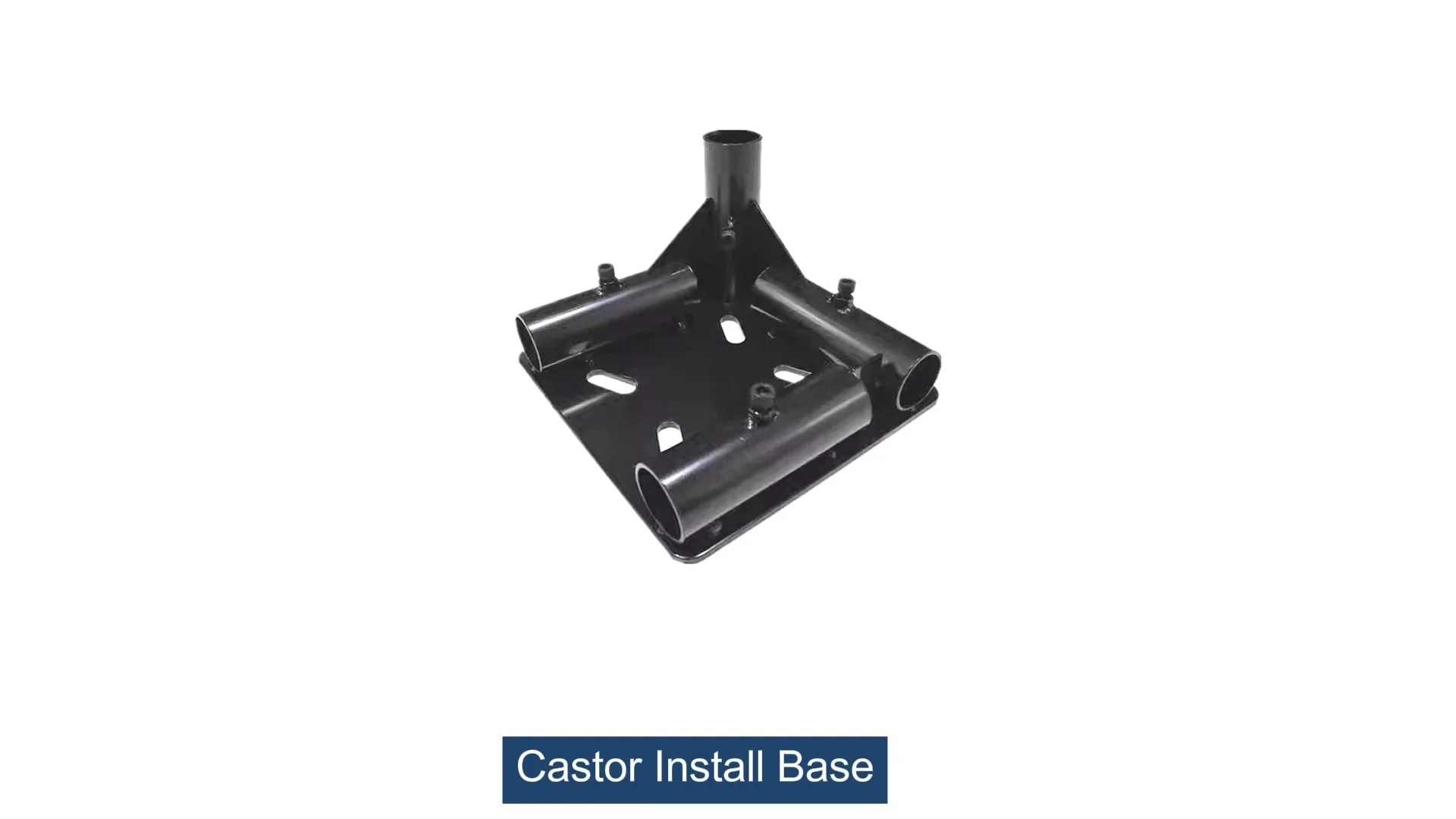
Castor Install Base
Castor install base, used for connection between pipe and castor, it can connect 4 pcs pipe by 1 pcs castor base, to make the structure strong and stable.
The Unsung Hero of Medical Cart Performance
In the fast-paced world of healthcare, every second counts. From the emergency room rushing to stabilize a trauma patient to the ICU nurse delivering life-saving medications, medical professionals rely on tools that keep up with their urgency. Among these tools, medical carts stand out as workhorses—silent partners that carry everything from syringes and scalpels to monitors and defibrillators. Yet, for all their importance, one component often goes unnoticed: the castor install base. This unassuming foundation is the bridge between two critical needs in healthcare settings: mobility and stability. Without it, even the most advanced cart becomes a liability, risking delays, errors, or worse, patient harm.
Imagine a scenario in the ER: a patient arrives in cardiac arrest, and the crash cart must be wheeled from the supply room to the treatment bay in seconds. If the cart's wheels stick or the base wobbles, precious time is lost. Now, picture that same cart at the patient's bedside, where a nurse needs to steady it to draw blood or program an IV pump. If the cart rolls unexpectedly, the needle could slip, or the pump settings might be misadjusted. In both cases, the castor install base is the invisible force ensuring the cart moves when needed and stays put when required. It's not just a mechanical part—it's a guardian of efficiency and safety.
This article dives into the world of castor install bases for medical carts, exploring why they matter, how they work, and the engineering behind balancing mobility and stability. We'll examine the materials, design features, and real-world challenges that shape these critical components, and why choosing the right castor install base isn't just a purchasing decision—it's a commitment to better patient care.
Why Mobility and Stability Are Non-Negotiable in Healthcare
Mobility: Keeping Pace with the Chaos of Care
Healthcare environments are dynamic. A single medical cart might be used in multiple rooms in a single shift: starting in the pharmacy to stock medications, moving to a patient's room for administration, then to a supply closet to restock gloves and bandages. In large hospitals, this could mean traveling hundreds of feet daily, navigating around stretchers, elevators, and crowded corridors. For staff already stretched thin, a cart that's difficult to maneuver is more than an annoyance—it's a drain on time and energy.
Mobility isn't just about speed; it's about precision. Nurses and technicians need to position carts exactly where they're needed—snug against a bedrail, beside a procedure table, or in a tight corner of an exam room. A well-designed castor install base with smooth-rolling caster wheels allows for 360-degree movement, making it easy to pivot and park even in confined spaces. In emergency situations, this agility can be life-saving. For example, in a code blue, every second the crash cart is in transit is a second the patient's chances of survival decrease. A responsive castor system ensures the cart arrives when it's needed most.
Stability: The Foundation of Safe Care Delivery
If mobility is about movement, stability is about control. Once a cart is in position, it must stay there—firmly, reliably, and without compromise. Consider a phlebotomist drawing blood: the cart holds the tubes, tourniquets, and alcohol swabs. If the cart shifts mid-draw, the needle could puncture a vein incorrectly, causing hematoma or pain. Similarly, a medication cart parked at a nurse's station needs to stay steady while staff count pills or input data into an attached computer. Even a small wobble could lead to a medication error, a costly and potentially dangerous mistake.
Stability also plays a role in infection control. Medical carts are frequent touchpoints, and many are equipped with surfaces that need regular cleaning with harsh disinfectants. A stable cart is easier to wipe down thoroughly; a wobbly one might have hard-to-reach crevices where germs linger. In environments like ICUs or isolation rooms, where infection risk is high, this attention to detail can mean the difference between a patient recovering and developing a secondary infection.
Perhaps most critically, stability is about trust. When a nurse leans on a cart to steady themselves during a procedure, or a technician places a heavy monitor on it, they need to be confident it won't tip or slide. That trust comes from knowing the castor install base is engineered to handle the load and the environment—no matter what.

Inside the Castor Install Base: The Components That Make It Work
A castor install base might look simple, but it's a symphony of engineering. Each component is designed to work in harmony, ensuring the cart moves smoothly, stops securely, and stays stable under pressure. Let's break down the key parts:
The Base Plate: The Cart's "Feet"
At the heart of the system is the base plate—the metal or composite structure that connects the cart's frame to the caster wheels. Think of it as the cart's feet: strong, flat, and designed to distribute weight evenly. For medical carts, which often carry loads of 100-300 pounds (or more for specialized equipment), the base plate must be rigid enough to prevent bending or warping. Materials matter here: aluminum is a popular choice for its lightweight strength and corrosion resistance, while stainless steel is preferred for heavier loads or environments where frequent disinfection is required (like operating rooms).
The size and shape of the base plate also impact stability. A wider base, for example, lowers the cart's center of gravity, reducing the risk of tipping. Some designs include reinforcing ribs or gussets to add strength without adding excessive weight. The base plate also features mounting holes for attaching the caster wheels—a detail that might seem minor, but misaligned holes can lead to uneven weight distribution and premature wear.
Caster Wheels: The "Tires" of Medical Carts
No castor install base is complete without caster wheels—the components that enable movement. But not all wheels are created equal. Medical carts require wheels that are:
- Smooth-rolling: Nurses and technicians shouldn't have to exert extra force to move the cart, especially when pushing it for long distances.
- Quiet: In patient rooms, noise is a distraction and can increase anxiety. Soft, non-marking rubber wheels are preferred for their silent operation.
- Lockable: A brake mechanism (often a foot pedal) allows staff to lock the wheels in place, preventing movement during use.
- Non-marking: Hospital floors are often made of linoleum or vinyl, which can scratch easily. Rubber or polyurethane wheels avoid leaving scuffs or marks.
- Resistant to chemicals: Medical carts are cleaned with harsh disinfectants (like bleach or alcohol). Wheels must withstand these chemicals without cracking or degrading.
Swivel casters are standard, allowing the cart to turn 360 degrees, but some bases mix swivel and fixed casters for better control. For example, two fixed casters at the front and two swivel casters at the back might make the cart easier to steer in straight lines—useful for long corridor runs.
Adjustable Leveling Feet: The Unsung Stabilizers
Even the best caster wheels can't overcome uneven floors—and in older hospitals, uneven floors are common. That's where adjustable leveling feet come in. These small, threaded feet are often integrated into the castor install base, allowing staff to "level" the cart by screwing them up or down. When the cart is parked, extending the leveling feet lifts the casters slightly off the ground, adding an extra layer of stability. This is especially useful in areas like patient rooms, where the floor might slope toward drains, or in hallways with cracked tiles.
Adjustable leveling feet also help with load distribution. If a cart is loaded unevenly (e.g., heavier on one side), the feet can be adjusted to ensure all four casters (or feet) bear weight equally, reducing strain on the base plate and wheels.
| Component | Key Function | Common Materials | Design Considerations |
|---|---|---|---|
| Base Plate | Connects cart frame to casters; distributes weight | Aluminum, stainless steel, reinforced composite | Width (stability), thickness (strength), mounting hole alignment |
| Caster Wheels | Enable movement; include brakes for locking | Rubber, polyurethane, thermoplastic | Wheel diameter (roll resistance), brake type (foot pedal vs. hand lever), chemical resistance |
| Adjustable Leveling Feet | Stabilize on uneven floors; balance load | Zinc-plated steel, stainless steel with rubber tips | Thread length (adjustment range), tip material (grip on floors) |

The Balancing Act: Overcoming Engineering Challenges
Designing a castor install base that excels at both mobility and stability is no easy feat. Engineers face a series of trade-offs, where improving one feature can compromise another. Let's explore the most common challenges and how manufacturers address them:
Weight vs. Durability
Medical carts need to be light enough for staff to maneuver, but the castor install base must also support heavy loads. A base made of thick steel might be strong, but it adds pounds to the cart, making it harder to push. Aluminum solves this problem: it's about one-third the weight of steel but offers comparable strength (especially when alloyed with materials like magnesium or silicon). For even lighter loads, some manufacturers use reinforced composites, though these are less common in medical settings due to concerns about chemical resistance.
Mobility vs. Stability
Swivel casters make a cart easy to turn, but they can also make it "twitchy"—prone to veering off course on uneven floors. To balance this, some bases use "directional lock" casters, which allow the swivel function to be locked, turning the cart into a straight-line mover. Others adjust the caster's "lead offset"—the distance between the wheel's center and the swivel axis. A larger offset makes the caster more stable but harder to turn; a smaller offset improves maneuverability but reduces stability. Finding the sweet spot requires testing in real-world environments, like hospital corridors with varying floor textures.
Hygiene vs. Maintenance
Infection control is paramount in healthcare, so castor install bases must be easy to clean. But crevices, seams, and moving parts (like caster wheel bearings) can trap dirt and germs. Manufacturers address this by designing bases with smooth, rounded edges (no sharp corners to catch debris) and sealed bearings to prevent contamination. Some even offer "hygienic design" options, where the base plate is welded (rather than bolted) to eliminate gaps, and caster wheels have removable covers for deep cleaning.
The downside? Sealed components can be harder to repair. If a bearing fails, the entire caster might need to be replaced, rather than just the bearing. This is a trade-off most hospitals are willing to make, as the cost of downtime from a broken cart is far lower than the risk of an infection outbreak.
Case Study: How a Hospital Reduced Cart-Related Incidents by 40% with Better Castor Install Bases
In 2023, a large urban hospital in the Midwest conducted a study on medical cart safety after noticing an uptick in incidents: carts rolling during medication administration, tipping when overloaded, and wheels sticking in corridors. The culprit? Outdated castor install bases on their medication and supply carts, many of which were over five years old.
The hospital partnered with a manufacturer to upgrade 50 carts with new castor install bases featuring aluminum base plates, lockable rubber casters, and adjustable leveling feet. The results were striking:
- Cart-related incidents dropped by 40% in six months, with no reported cases of carts rolling during use.
- Nurse satisfaction scores improved, with 85% reporting the new carts were "easier to push and park" compared to the old models.
- Maintenance costs decreased by 25%, as the new bases required fewer repairs (thanks to sealed bearings and corrosion-resistant materials).
The hospital's director of nursing summed it up: "We didn't realize how much time we were wasting fighting with old carts until we tried the new ones. Now, our staff can focus on patients, not pushing carts."

Choosing the Right Castor Install Base: What Healthcare Facilities Should Consider
Selecting a castor install base isn't a one-size-fits-all decision. Hospitals, clinics, and other healthcare facilities must consider their unique needs, from the types of carts in use to the specific environments they operate in. Here's a checklist to guide the process:
1. Load Capacity
Start by calculating the maximum load the cart will carry. This includes not just the weight of supplies but also any equipment (like laptops or monitors) mounted on the cart. The castor install base should be rated for at least 125% of this load to account for uneven distribution or occasional overloading.
2. Environment
Where will the cart be used? Operating rooms require stainless steel bases for corrosion resistance to sterilizing agents. ICUs might prioritize quiet casters to keep noise levels low. Outdoor clinics (e.g., for mobile vaccinations) need weather-resistant materials, like powder-coated aluminum, to withstand rain and sun.
3. Floor Conditions
Smooth linoleum floors allow for smaller, harder wheels, while carpeted or uneven floors require larger, softer wheels with more tread. If the facility has elevators with metal thresholds, look for casters with shock-absorbing features to prevent jolting when rolling over gaps.
4. Staff Feedback
Who better to ask about cart performance than the staff who use them daily? Nurses, technicians, and pharmacists can provide insights into pain points: "The old carts always get stuck in the elevator," or "I can never get the wheels to lock on the sloped floors in patient rooms." This feedback can guide manufacturers to design bases that solve real problems.
5. Regulatory Compliance
Medical carts must meet strict standards, like those set by the FDA (for devices used in patient care) or OSHA (for ergonomics). Ensure the castor install base complies with these regulations, especially regarding load capacity, chemical resistance, and fire safety (some materials, like certain plastics, are flammable and not allowed in ORs).
The Future of Castor Install Bases: Innovation on the Horizon
As healthcare evolves, so too will the tools that support it. Castor install bases are no exception, with new technologies and materials promising to make medical carts even safer, more efficient, and easier to use. Here are a few trends to watch:
Smart Casters with Sensors
Imagine a castor install base that "knows" when it's on an uneven floor and automatically adjusts the leveling feet, or one that alerts staff when a caster wheel is about to fail (based on vibration or wear sensors). Companies are already developing smart casters with Bluetooth connectivity, allowing carts to send data to a hospital's maintenance system. For example, if a wheel's brake isn't fully engaged, the cart could trigger an alert on a nurse's phone, preventing it from rolling away.
Antimicrobial Materials
With the rise of antibiotic-resistant bacteria, manufacturers are exploring castor install bases treated with antimicrobial agents (like silver ions) that inhibit the growth of germs on surfaces. Early tests show these materials can reduce bacterial counts by up to 99% compared to untreated surfaces, though long-term effectiveness (and cost) is still being evaluated.
Lightweight Composites
While aluminum is currently the gold standard for lightweight strength, new composite materials (like carbon fiber-reinforced polymers) offer even better strength-to-weight ratios. These materials are expensive now, but as production scales, they could become viable for medical carts, reducing weight further and improving maneuverability.
Autonomous Cart Integration
Hospitals are increasingly experimenting with autonomous mobile robots (AMRs) to transport supplies, linens, and medications. These robots rely on precise movement and positioning—something that starts with the castor install base. Future bases might include built-in navigation sensors or compatibility with hospital Wi-Fi systems, allowing AMRs to "communicate" with the cart's casters for smoother, more accurate movement.
Conclusion: The Castor Install Base—Small Part, Big Impact
In the grand scheme of healthcare technology, castor install bases might seem trivial. They don't have screens, buttons, or flashy features. But as we've explored, they are the foundation upon which safe, efficient medical cart performance rests. A well-designed base balances mobility and stability, making it easier for staff to do their jobs and reducing the risk of errors that could harm patients.
For healthcare facilities, investing in high-quality castor install bases isn't just about buying a better cart—it's about investing in the people who use them. It's about giving nurses one less thing to worry about, so they can focus on what matters most: caring for patients. And in a world where every detail counts, that's a difference worth making.
So the next time you see a medical cart gliding through a hospital corridor, take a moment to appreciate the castor install base. It may be out of sight, but it's always hard at work—keeping care moving forward, one roll (and one stop) at a time.