- Company Articles
- Products and Technology
- Product knowledge
- Castor Install Base for Mobile Tool Carts: Essential for Maintenance Workshops

Castor Install Base for Mobile Tool Carts: Essential for Maintenance Workshops
Related Product
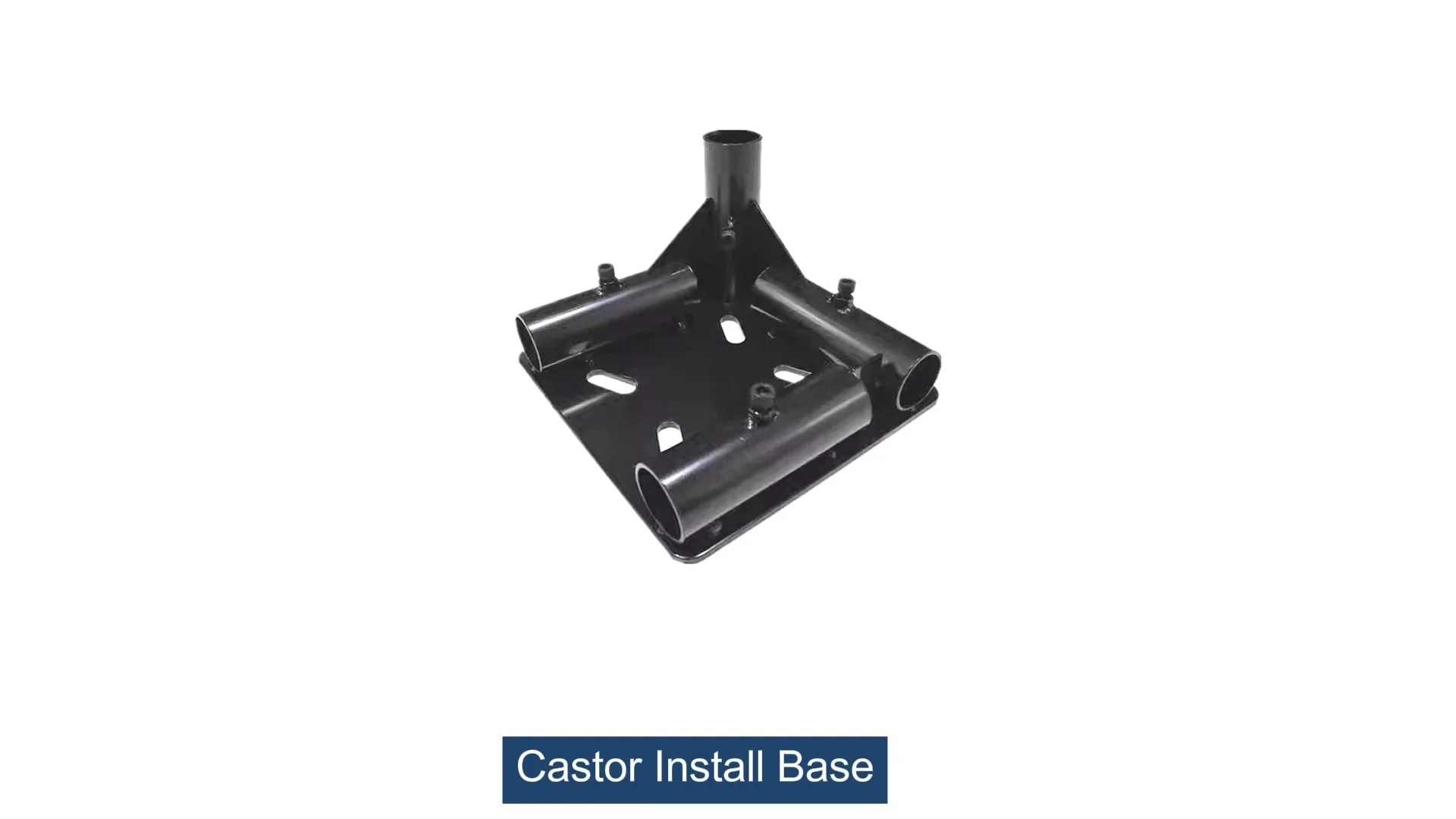
Castor Install Base
Castor install base, used for connection between pipe and castor, it can connect 4 pcs pipe by 1 pcs castor base, to make the structure strong and stable.
1. Introduction: The Heartbeat of Maintenance Workshops
Walk into any busy maintenance workshop, and you'll immediately sense the rhythm: the hum of power tools, the clink of metal parts, and the steady movement of technicians darting between workstations. At the center of this organized chaos lies a critical truth: efficiency depends on accessibility. Every wrench, screwdriver, and spare part needs to be where it's needed, when it's needed. For decades, workshops relied on static toolboxes or bulky shelving—solutions that forced technicians to waste precious minutes fetching tools from across the room. Today, that's changing, thanks in large part to mobile tool carts. But not all mobile carts are created equal. Behind their smooth movement and unwavering stability is a component so essential, yet often overlooked: the castor install base.
Imagine a scenario familiar to many maintenance teams: a technician rushing to fix a critical machine breakdown. Their tool cart, loaded with heavy equipment, wobbles as they push it, tools rattling inside. A sudden jolt sends a wrench crashing to the floor, and the cart veers off course, hitting a coworker. Frustration mounts, time slips away, and the risk of injury looms. This isn't just a productivity issue—it's a safety hazard. The root cause? A subpar castor install base that fails to secure the caster wheel to the cart frame, compromising stability and control. In workshops where every second counts, such inefficiencies can't be tolerated.
2. Mobile Tool Carts: More Than Just Wheels on a Frame
At first glance, a mobile tool cart might seem like a simple invention: a flat workbench surface mounted on a frame with wheels. But dig deeper, and you'll discover a carefully engineered system designed to solve a fundamental problem: how to keep tools and materials mobile without sacrificing organization, durability, or safety. A well-designed cart typically features a sturdy workbench top for on-the-spot repairs, drawers or shelves for storage, and a frame built to withstand the weight of heavy tools. Yet, even the strongest frame and most organized storage mean little if the cart can't move smoothly, safely, or reliably. That's where the castor install base enters the picture.
Think of a mobile tool cart as a team. The workbench surface is the "workhorse," providing a stable platform for tasks. The storage compartments are the "organizers," keeping tools sorted and accessible. The casters are the "legs," propelling the cart where it needs to go. But the castor install base? It's the "glue" that holds the team together. Without it, the casters—those all-important wheels—can't connect securely to the cart frame. A loose base leads to wobbly wheels, uneven weight distribution, and even caster detachment under heavy loads. For technicians, this translates to carts that are hard to maneuver, prone to tipping, and quick to wear out. In short, the castor install base isn't just a part of the cart—it's the foundation of its functionality.

3. Demystifying the Castor Install Base: What It Is and Why It Matters
So, what exactly is a castor install base? In simplest terms, it's the component that bridges the gap between the cart's frame and the caster wheel. Think of it as a mounting plate or bracket, specifically designed to secure the caster to the cart, ensuring that the wheel can rotate, swivel, or lock (depending on the caster type) without compromising stability. Made from materials like steel, aluminum, or reinforced plastic, these bases are engineered to handle specific weight loads, resist corrosion, and withstand the daily bumps and vibrations of workshop life.
The importance of a quality castor install base becomes clear when you consider the forces at play. A fully loaded mobile tool cart can weigh hundreds of pounds—tools, parts, and the cart itself. When moving, that weight shifts: turning a corner creates lateral stress, while uneven floors jolt the base upward. A weak or poorly designed base will flex under this pressure, causing the caster to tilt or the wheel to bind. Over time, this leads to premature wear on the caster wheel, damage to the cart frame, and even safety risks like the cart tipping over. On the flip side, a robust castor install base distributes weight evenly, absorbs shocks, and keeps the caster aligned, ensuring smooth movement and long-lasting performance.
For maintenance workshops, where carts are often used in high-stakes environments—tight spaces, heavy loads, and constant movement—the castor install base isn't just a "nice-to-have." It's a critical safety feature. A secure base reduces the risk of accidents, from tool spills to cart tip-overs, protecting both technicians and equipment. It also minimizes downtime: a cart with a reliable base requires less frequent repairs, keeping tools moving and workflows on track.

4. Types of Castor Install Bases: Finding the Right Fit for Your Workshop
Not all workshops have the same needs. A small auto repair shop might use lightweight carts for hand tools, while a manufacturing plant could require heavy-duty carts hauling industrial machinery parts. As a result, castor install bases come in a variety of types, each tailored to specific applications. Understanding these differences is key to choosing the right base for your mobile tool cart.
Fixed vs. Swivel Bases
Fixed castor install bases lock the caster in place, allowing the wheel to roll forward and backward but not swivel. These are ideal for carts that move in straight lines, like those used to transport materials between two fixed points. Swivel bases, by contrast, let the caster rotate 360 degrees, making the cart highly maneuverable—perfect for tight spaces or workshops where technicians need to navigate around obstacles.
Material Matters: Steel, Aluminum, and Plastic
The material of the castor install base directly impacts its strength, weight, and resistance to wear. Steel bases are the workhorses, offering exceptional durability and high weight capacities (often up to 1,000 lbs or more). They're ideal for heavy-duty applications but can add significant weight to the cart. Aluminum bases are lighter, corrosion-resistant, and a great choice for workshops where rust is a concern (like those with high humidity or exposure to chemicals). Plastic bases, typically reinforced with fiberglass, are lightweight and affordable but best suited for light loads—think carts used for hand tools or small parts.
To help visualize the differences, let's compare common castor install base types:
| Base Type | Material | Typical Load Capacity | Best For | Pros | Cons |
|---|---|---|---|---|---|
| Fixed | Steel | 500–1,500 lbs | Straight-line transport, heavy loads | High stability, low maintenance | Limited maneuverability |
| Swivel | Aluminum | 200–800 lbs | Tight spaces, moderate loads, humid environments | Lightweight, corrosion-resistant, highly maneuverable | Lower weight capacity than steel |
| Swivel-Lock | Reinforced Plastic | 100–300 lbs | Light tools, occasional use, budget-friendly setups | Affordable, lightweight, easy to replace | Not suitable for heavy loads or rough use |
Choosing the right base depends on your workshop's unique demands. A manufacturing facility moving engine parts will prioritize steel fixed bases for stability, while a electronics repair shop might opt for aluminum swivel bases to navigate crowded workbenches.

5. The Critical Role of Caster and Accessories in Base Performance
A castor install base is only as good as the caster wheel and accessories it supports. Even the strongest base can't compensate for a low-quality wheel or missing accessories like brakes or swivel locks. Together, these components form a system that determines how well the cart moves, stops, and handles loads.
Take caster wheels, for example. Hard rubber wheels are durable and work well on smooth concrete, but they can be noisy and struggle on rough surfaces. Polyurethane wheels, on the other hand, offer a smoother ride, reduce noise, and grip better on uneven floors—making them a popular choice for workshops with varied terrain. Steel wheels are tough but can damage delicate floors, so they're often reserved for industrial settings with concrete or metal surfaces. The castor install base must be compatible with the wheel's size and mounting style (e.g., stem-mounted vs. plate-mounted casters) to ensure a secure fit.
Then there are the accessories. Caster accessories like brakes are non-negotiable for safety: a cart loaded with heavy tools needs to stay put when parked, preventing accidental movement that could cause injury. Swivel locks, which fix the caster in a straight position, add stability when moving in a straight line, reducing the risk of tipping. Even small details, like lubricated bearings or corrosion-resistant hardware, can extend the life of both the caster and the install base. For workshops investing in quality, pairing a robust castor install base with high-grade caster and accessories isn't just a luxury—it's a long-term investment in efficiency and safety.
6. Installation and Maintenance: Ensuring Longevity and Safety
Even the best castor install base will underperform if installed incorrectly. Proper installation is critical to ensuring that the base secures the caster tightly to the cart frame, with no gaps or loose bolts. Here's a simplified guide to getting it right:
- Prep the Cart Frame: Clean the mounting area on the cart frame, removing any rust, paint, or debris that could prevent a tight fit.
- Align the Base: Position the castor install base so that the caster wheel will sit centered and perpendicular to the frame. Use a level to ensure the base is flat—misalignment here can cause uneven wear.
- Secure with Hardware: Use the manufacturer-recommended bolts (typically grade 8 for steel bases) and tighten them evenly. Avoid over-tightening, which can strip threads or warp the base.
- Test for Movement: Once installed, check that the caster swivels (if applicable) smoothly and that the base doesn't flex when pressure is applied.
Maintenance is equally important. Regular inspections—weekly for high-use carts—can catch issues before they escalate. Look for loose bolts, cracks in the base, or signs of corrosion. Lubricate swivel joints and caster bearings monthly to prevent binding. If a base shows significant wear (e.g., bent metal, stripped mounting holes), replace it immediately. Ignoring these steps can lead to sudden failure, putting technicians and equipment at risk.
7. Real-World Impact: Stories from the Workshop Floor
To truly understand the value of a quality castor install base, let's look at real-world examples. Take Greenfield Automotive, a mid-sized repair shop with 15 technicians. A year ago, they were struggling with high turnover and frequent delays. Technicians complained about "fighting the carts"—wobbly, hard-to-maneuver models that often got stuck or tipped. After switching to steel swivel castor install bases paired with polyurethane wheels, the difference was night and day. "Now, I can push my cart with one hand, even loaded with a transmission," says lead technician Maria Gonzalez. "No more chasing tools that fall off, no more straining my back to turn corners. We're finishing jobs 20% faster, and I haven't heard a single complaint about cart issues in months."
Another example: Precision Manufacturing, a plant that produces aerospace components. Their old mobile carts used plastic castor install bases, which frequently cracked under the weight of heavy metal parts. This led to unexpected downtime as carts were taken out of service for repairs. After upgrading to aluminum bases with reinforced mounting brackets, they reduced cart-related downtime by 85%. "The aluminum bases are lightweight but tough," notes plant manager James Chen. "They don't rust, even in our humid washdown areas, and the casters stay tight. We're saving thousands in repair costs and keeping production on schedule."
8. Beyond the Cart: Castor Install Bases in Turnover Trolley and Rack Systems
The utility of castor install bases extends far beyond mobile tool carts. In many workshops, turnover trolley and rack systems rely on these bases to keep materials moving efficiently. Turnover trolleys—used to transport bulk parts or finished products—often carry even heavier loads than tool carts, making a sturdy base essential. Similarly, mobile racks, which store everything from inventory to work-in-progress, need stable bases to prevent tipping when loaded to capacity.
Consider a warehouse that uses turnover trolley and rack systems to move pallets of components. A single pallet can weigh over 1,000 lbs, so the castor install base must distribute that weight evenly across four or more casters. A steel base with a high load rating ensures that the trolley glides smoothly, even over uneven warehouse floors, while reinforced brackets prevent the base from pulling away from the trolley frame. For mobile racks, which are often tall and narrow, a wide-based castor install design reduces the risk of tipping during movement—a critical safety feature in busy facilities.
9. Choosing the Right Castor Install Base: A Buyer's Guide
Ready to upgrade your workshop's mobile tool carts? Start by asking these key questions:
- What's the maximum load? Calculate the total weight of tools, parts, and the cart itself. Choose a base with a load capacity 20% higher than this number to account for unexpected shifts.
- What's the workshop environment like? Humid or chemical-exposed areas need corrosion-resistant materials (aluminum or stainless steel). Rough floors may require shock-absorbing bases.
- How will the cart be used? Tight spaces demand swivel bases; straight-line transport can use fixed bases. Frequent movement requires durable, low-maintenance materials.
- What's the budget? While steel bases cost more upfront, they often last longer than aluminum or plastic, making them a better investment for heavy use.
Don't forget to consult with suppliers who specialize in workshop equipment. Reputable caster and accessories suppliers can provide load charts, material recommendations, and even custom solutions for unique needs. Avoid generic, off-the-shelf bases—these rarely meet the demands of professional workshops.
10. Conclusion: Investing in the Foundation of Mobility
In the fast-paced world of maintenance workshops, every component matters. From the workbench surface to the caster wheel, each part plays a role in keeping operations running smoothly. Yet, few components have as much impact on efficiency, safety, and longevity as the castor install base. It's the unsung hero that turns a simple cart into a mobile powerhouse—one that moves smoothly, carries heavy loads, and stands up to the rigors of daily use.
By investing in quality castor install bases, workshops aren't just upgrading their equipment—they're investing in their technicians. A stable, maneuverable cart reduces physical strain, cuts down on frustration, and lets teams focus on what they do best: solving problems and keeping machinery running. It's a small change with big returns: fewer accidents, faster repairs, and a workshop that feels less like a battlefield and more like a well-oiled machine.
So, the next time you walk through your workshop, take a closer look at those mobile tool carts. Underneath the tools and the storage bins, you'll find the quiet strength of a castor install base—proof that even the smallest components can make the biggest difference.