- Company Articles
- Products and Technology
- Technology Sharing
- Castor Install Base Innovations: Supporting Industry 4.0 Smart Factories

Castor Install Base Innovations: Supporting Industry 4.0 Smart Factories
Related Product
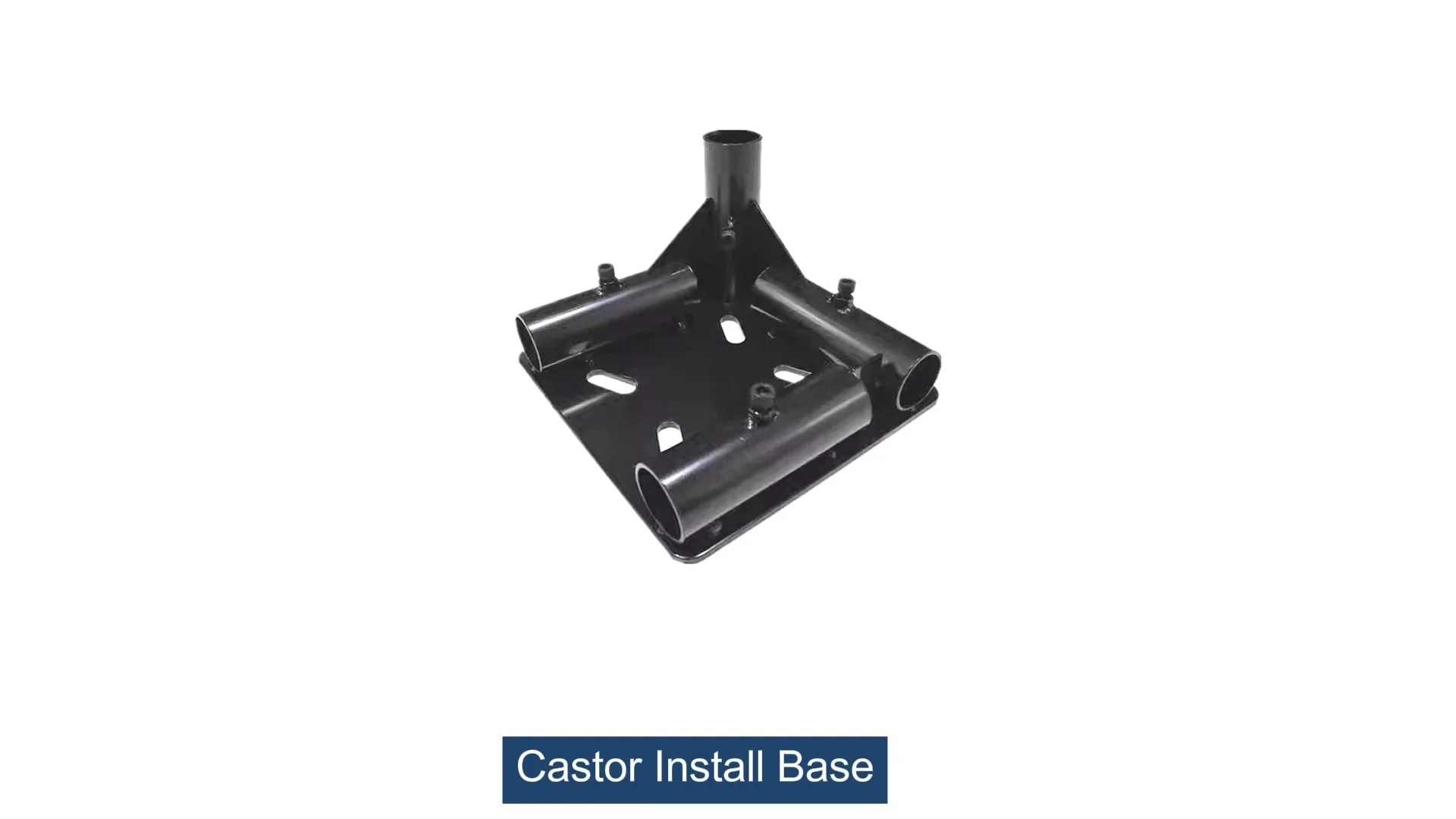
Castor Install Base
Castor install base, used for connection between pipe and castor, it can connect 4 pcs pipe by 1 pcs castor base, to make the structure strong and stable.
Walk into any modern smart factory today, and you'll likely be struck by the harmony of technology and human effort: robots zip along predefined paths, IoT sensors hum with data, and production lines adapt in real time to changing demands. But beneath this high-tech symphony lies a quieter, equally critical foundation—the physical infrastructure that keeps materials, tools, and workstations moving. In this ecosystem, one component stands out for its understated importance: the castor install base. Far more than just a "wheel holder," today's castor install bases are engineered marvels, designed to meet the rigorous demands of Industry 4.0. Let's dive into how these unassuming components are reshaping smart manufacturing, one roll at a time.
Why Industry 4.0 Can't Thrive Without Flexible Mobility
Industry 4.0 isn't just about automation or big data—it's about agility. Factories today need to pivot quickly: switching between product lines, scaling production up or down, and reconfiguring workspaces to accommodate new processes. This flexibility hinges on the ability to move physical assets—workbenches, material racks, turnover trolleys—as easily as data flows through a network. Traditional fixed infrastructure, like bolted-down workstations or immovable storage racks, simply can't keep up. That's where mobility comes in, and at the heart of mobility lies the castor install base.
Think about it: A smart factory might produce 10 different product variants in a single day. Each variant requires unique tools, components, and assembly steps. If workers have to trek across the floor to fetch materials or rewire fixed workstations, precious time (and money) is wasted. But with mobile workstations mounted on innovative castor install bases, teams can bring the workspace to the task. Need to assemble a new product? Roll the workstation to the assembly line. Running low on parts? Move the material rack directly to the operator. It's this "on-demand" mobility that turns static factories into dynamic, responsive ecosystems.
From Afterthought to Engineering Priority: The Evolution of Castor Install Bases
Not long ago, castor install bases were an afterthought. Manufacturers would slap generic, heavy steel bases onto equipment, prioritizing cost over performance. These bases were bulky, hard to install, and prone to rust or wear. Worse, they offered little flexibility—swap out a caster wheel, and you'd often need a whole new base. For factories stuck in rigid, mass-production models, this was manageable. But for Industry 4.0, where change is constant, these limitations became deal-breakers.
Today, the tide has turned. Leading suppliers now treat castor install bases as critical engineering components, investing in R&D to address three key challenges: adaptability, durability, and integration. Let's break down the innovations driving this transformation.
1. Material Science: Lighter, Stronger, Smarter
Gone are the days of one-size-fits-all steel bases. Modern castor install bases leverage advanced materials to balance strength and weight. Aluminum, for example, has emerged as a game-changer. Unlike steel, aluminum is naturally corrosion-resistant, making it ideal for factories with strict hygiene standards (like food packaging or pharmaceuticals). It's also 30% lighter than steel, reducing the effort needed to move loaded trolleys—a small detail that adds up to big wins for operator fatigue and productivity.
But it's not just about aluminum. Some suppliers are experimenting with composite materials, blending polymers and metal fibers to create bases that are both lightweight and shock-absorbent. Imagine a material rack loaded with delicate electronics: a composite castor install base can dampen vibrations during movement, protecting sensitive components from damage. For high-heat environments, like automotive welding shops, stainless steel variants with heat-resistant coatings ensure the base remains stable even at extreme temperatures.
2. Modular Design: Build It Your Way, When You Need It
The most innovative castor install bases today are modular by design. Instead of being locked into a fixed size or caster type, they use a "building block" approach that lets factories customize on the fly. Need a base for a heavy-duty workbench? Add reinforced brackets. Switching from smooth concrete floors to uneven warehouse terrain? Swap out standard caster wheels for rugged, shock-absorbing ones—no need to replace the entire base. This modularity aligns perfectly with lean system principles, which emphasize eliminating waste (in this case, waste from overbuying or underutilizing equipment).
Take, for example, a manufacturer producing medical devices. One week, they might need a small trolley for transporting sterile tools (requiring non-marking caster wheels and a compact base). The next week, they scale up to a larger material rack for bulk packaging (needing a wider base and heavy-duty casters). With a modular castor install base, they can reconfigure the same core component instead of buying two separate units. It's this kind of flexibility that makes lean manufacturing feasible in the age of high-mix, low-volume production.
3. Smart Integration: When Castors Talk to the Factory
If Industry 4.0 is about connectivity, then castor install bases are getting in on the conversation. Some cutting-edge bases now come with embedded sensors that track movement, temperature, and wear. Picture this: A fleet of turnover trolleys equipped with smart castor install bases. The sensors monitor how often each trolley is moved, the load it carries, and even the condition of the caster wheels. Data is sent to a central dashboard, alerting maintenance teams when a wheel is wearing thin or a base needs lubrication. No more reactive repairs—factories can schedule maintenance proactively, avoiding costly downtime.
In some cases, these smart bases even integrate with factory IoT systems. For example, if a workstation equipped with a smart castor install base is moved outside its designated zone, the base can trigger an alert, ensuring compliance with safety protocols. Or, during a production line reconfiguration, the base can send real-time location data to the factory's ERP system, updating inventory tracking automatically. It's small-scale connectivity with big-picture impact.

A Closer Look: Key Innovations in Modern Castor Install Bases
To truly appreciate the leap forward, let's compare traditional and innovative castor install bases side by side. The table below highlights the most critical advancements:
| Feature | Traditional Castor Install Bases | Innovative Castor Install Bases |
|---|---|---|
| Material | Heavy steel, prone to rust | Aluminum, composites, or stainless steel; corrosion-resistant and lightweight |
| Installation | Welded or bolted; difficult to modify | Tool-free assembly with snap-fit or quick-lock mechanisms |
| Caster Compatibility | Limited to specific caster sizes/types | Universal mounting plates; works with most caster wheels and accessories |
| Weight Capacity | Fixed (often over-engineered to avoid failure) | Adjustable; reinforced brackets for heavy loads, slim profiles for light tasks |
| Smart Features | None | Embedded sensors for tracking movement, load, and wear |
| Maintenance | Frequent lubrication; hard to access components | Sealed bearings; self-lubricating joints; easy access for repairs |
The "Caster and Accessories" Ecosystem: More Than Just Wheels
Innovative castor install bases don't work in isolation—they're part of a broader ecosystem of caster and accessories that enhance their functionality. For example, swivel locks ensure that mobile workstations stay put during use, preventing accidental movement. Brake pedals, integrated into the base, let operators lock/unlock casters with a simple foot tap. Even something as small as a caster wheel's tread matters: soft rubber treads reduce noise on concrete floors, while polyurethane treads offer better grip on wet surfaces. The best castor install bases are designed to accommodate this wide range of accessories, turning a basic mobility solution into a tailored tool for specific tasks.

Real-World Impact: How Innovations Are Transforming Factories
To see these innovations in action, let's visit a hypothetical (but representative) electronics manufacturer, "TechFlex," which recently upgraded to modular castor install bases. Before the upgrade, TechFlex's assembly line was static: workbenches were bolted to the floor, and material racks were fixed in place. Switching between smartphone and tablet production took 8 hours—most of it spent disassembling and reassembling workstations.
After installing aluminum-based, modular castor install bases on their workbenches and material racks, everything changed. Now, when a product switch is needed, teams simply unlock the casters, roll the workstations into new configurations, and lock them in place. The entire process takes 45 minutes instead of 8 hours. What's more, the lighter aluminum bases reduced operator fatigue—workers report less strain during material transport, and injury rates dropped by 22% in the first quarter. TechFlex also added sensor-equipped bases to their critical material racks, which now alert maintenance when casters need replacement. Unplanned downtime due to caster failure? Zero.
Another example comes from the automotive industry, where a major manufacturer adopted stainless steel castor install bases for their welding cells. Traditional steel bases would rust quickly in the humid, spatter-filled environment, leading to frequent replacements. The stainless steel bases, however, withstood corrosion and heat, lasting 3x longer. The switch saved the manufacturer $45,000 annually in replacement costs alone.

Looking Ahead: The Future of Castor Install Bases in Industry 4.0
As factories grow smarter, castor install bases will continue to evolve. Here are three trends to watch:
1. Self-Diagnosing Bases
Future bases may come with AI-powered sensors that not only track wear but predict failures. Imagine a base that analyzes vibration patterns to detect a loose caster wheel before it becomes a problem, or one that learns usage patterns to suggest optimal maintenance schedules. This "predictive maintenance" could further reduce downtime and extend equipment life.
2. Eco-Friendly Materials
Sustainability is no longer optional in manufacturing. Suppliers are already exploring recycled aluminum and biodegradable composites for castor install bases. Some are even experimenting with 3D-printed bases, which minimize material waste by building up the base layer by layer, rather than cutting from a solid block.
3. Seamless IoT Integration
As 5G networks expand, castor install bases could become fully integrated into factory digital twins—virtual replicas of the physical plant. Operators could monitor the location and condition of every mobile asset in real time, optimizing workflows with unprecedented precision. For example, a digital twin might flag that a material rack is spending too much time idle, prompting managers to reassign it to a busier line.
The Bottom Line: Small Component, Big Impact
In the grand scheme of Industry 4.0, castor install bases might seem trivial. But as any factory manager will tell you, the smallest components often have the biggest impact on daily operations. A stuck caster can halt a production line. A rusted base can contaminate a batch of sensitive products. An immovable workstation can turn a 10-minute task into an hour-long chore.
Innovative castor install bases solve these problems and more. They're lightweight, durable, and adaptable—built for the factories of today and tomorrow. They support lean system goals by eliminating waste (time, effort, materials) and enable the flexibility that makes smart manufacturing possible. So the next time you walk through a smart factory, take a moment to look down. Those unassuming castor install bases? They're not just rolling—they're propelling Industry 4.0 forward.
As one plant manager put it: "We used to think of castors as 'just wheels.' Now, we see them as the foundation of our agility. You can't build a smart factory on a weak foundation—and these bases? They're rock solid."