- Company Articles
- Products and Technology
- Installation And Maintenance
- Castor Install Base Maintenance Costs: Budgeting for Long-Term Use

Castor Install Base Maintenance Costs: Budgeting for Long-Term Use
Related Product
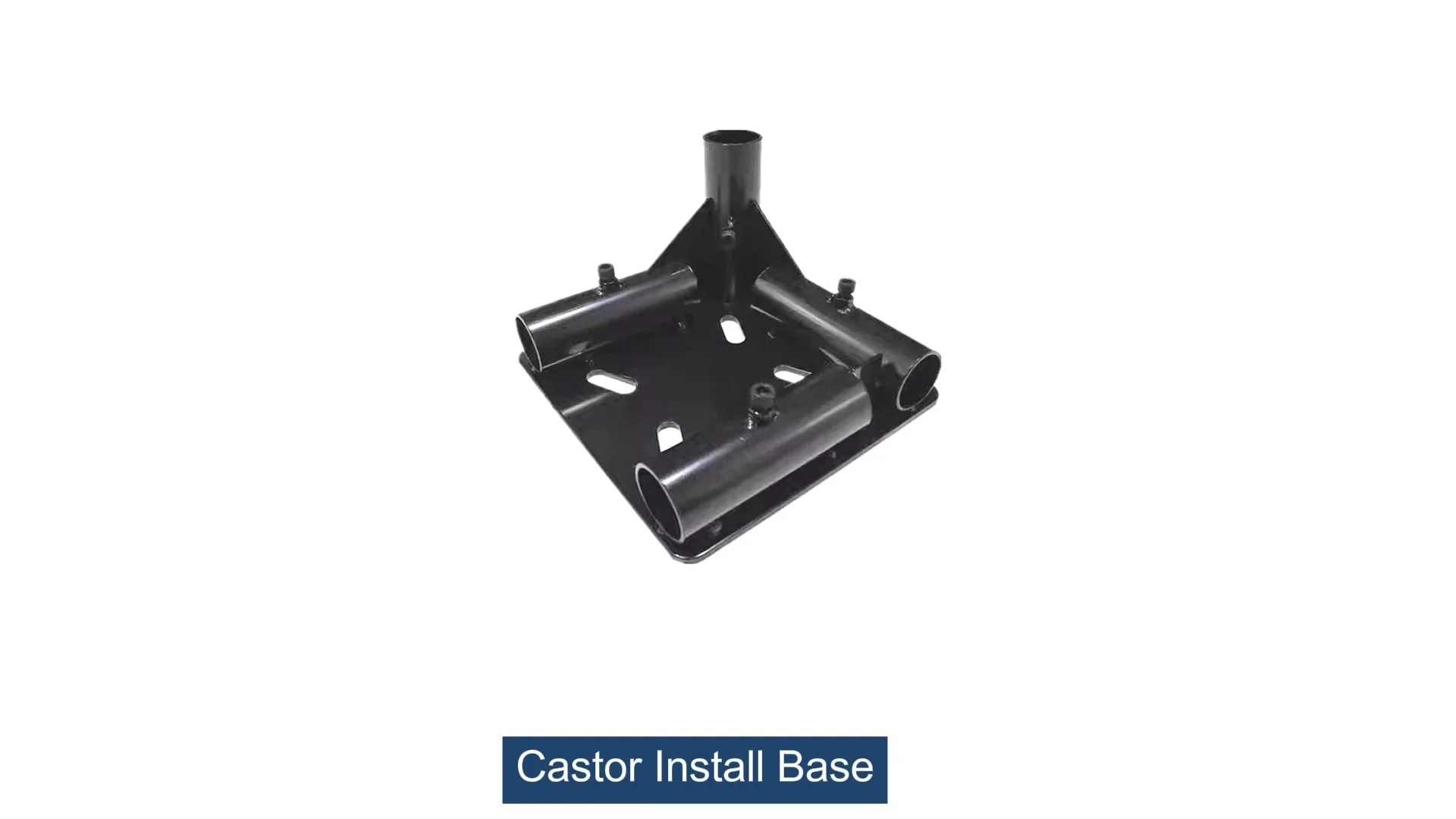
Castor Install Base
Castor install base, used for connection between pipe and castor, it can connect 4 pcs pipe by 1 pcs castor base, to make the structure strong and stable.
Walk into any busy manufacturing plant, warehouse, or production facility, and you'll notice a silent workforce keeping operations moving: the equipment on wheels. From material carts to assembly workbenches, these mobile units rely on one but critical component: the castor install base. It's the unsung hero that ensures smooth movement, reduces physical strain on workers, and keeps workflows efficient. But like any hardworking team member, it needs care to perform at its best. Ignore maintenance, and you're not just looking at a squeaky wheel—you're staring down unexpected repair bills, costly downtime, and even safety risks. In this guide, we'll break down why budgeting for castor install base maintenance isn't just a "nice-to-have," but a strategic move to protect your bottom line and keep your operations running like clockwork.
Why Castor Install Base Maintenance Deserves Your Attention
Let's start with the obvious: when a castor install base fails, everything grinds to a halt. Imagine a scenario where a critical material cart—loaded with parts for the next assembly step—suddenly jams because a caster wheel seized up. The line stops. Workers stand idle. Deadlines get pushed. The cost of that downtime? Depending on your industry, it could range from hundreds to thousands of dollars per hour. But the impact goes beyond immediate delays. A faulty castor install base can also create safety hazards: a wobbly cart might tip, causing injuries or damaged inventory. Over time, uneven wear on caster wheels can even warp the equipment itself, turning a small repair into a full replacement.
In today's lean system-focused environments, efficiency is the name of the game. Lean systems thrive on minimizing waste—whether it's time, materials, or labor. A neglected castor install base is a hidden source of waste. A stuck wheel forces workers to exert extra effort, slowing them down. A loose caster accessory (like a missing bolt) can lead to uneven movement, increasing the risk of product damage. And when you're forced to scramble for emergency repairs, you're diverting resources from planned tasks—exactly the kind of inefficiency lean systems aim to eliminate. Simply put, maintaining your castor install bases isn't just about keeping wheels turning; it's about protecting the very foundation of your operational efficiency.
Breaking Down the Costs: What You're Really Paying For
Maintenance costs aren't a one-size-fits-all expense. They fall into three main categories: preventive, corrective, and emergency. Let's break them down so you can plan accordingly.
1. Preventive Maintenance: The "Stitch in Time" Approach
Preventive maintenance is all about stopping problems before they start. Think of it like changing the oil in your car: regular, low-cost upkeep that prevents expensive engine damage later. For castor install bases, this includes tasks like cleaning debris from caster wheels, lubricating joints, inspecting caster accessories (like brakes and locks), and checking adjustable leveling feet to ensure stability. These tasks are simple, low-cost, and can be done by your existing maintenance team or even floor staff with basic training.
For example, cleaning caster wheels weekly with a brush or compressed air prevents dust and debris from building up and causing jams. Lubricating caster joints every month (using a silicone-based lubricant to avoid attracting more dirt) keeps movement smooth. And inspecting adjustable leveling feet quarterly ensures they're tight and functioning—critical for keeping workbenches stable and carts from wobbling. The goal here is to catch small issues (like a slightly worn caster wheel or a loose caster accessory) before they escalate.
2. Corrective Maintenance: Fixing Small Issues Before They Grow
Even with regular preventive care, parts wear out. Corrective maintenance is when you replace or repair components that are damaged but not yet catastrophic. This might include swapping out a cracked caster wheel, replacing a broken caster accessory (like a missing brake pad), or tightening loose bolts on the castor install base. The key difference from preventive maintenance? These are reactive fixes for problems that slipped through the cracks, but they're still far cheaper than emergency repairs.
Let's say during a quarterly inspection, you notice a caster wheel has a small flat spot. Replacing it then might cost $20–$50, depending on the wheel type. Wait until that flat spot grows into a seized bearing, and you're looking at replacing the entire caster assembly ($100–$200) plus the cost of downtime while the cart is out of service. Similarly, a loose adjustable leveling foot might cost $10 to tighten or replace now, but if left unaddressed, it could lead to a wobbly workbench that damages products or injures a worker—costing far more in the long run.
3. Emergency Repairs: The Cost of Waiting Too Long
Emergency repairs are what happen when preventive and corrective maintenance get pushed aside. This is the worst-case scenario: a caster wheel snaps mid-shift, a castor install base collapses under a heavy load, or a stuck caster causes a cart to tip. The costs here go beyond parts—you're looking at emergency service fees, rushed shipping for replacement caster accessories, and lost productivity while operations are halted. In some cases, you might even need to rent temporary equipment to keep the line moving, adding another layer of expense.
Consider this: A mid-sized manufacturing plant with 50 mobile carts. If one critical cart's castor install base fails during peak production, causing a 2-hour line stoppage, the cost could easily hit $5,000 (factoring in $2,000/hour in lost output, $300 for emergency repair, and $200 for replacement caster wheels and accessories). Multiply that by a few incidents a year, and you're looking at tens of thousands of dollars in avoidable costs.
| Maintenance Type | Common Tasks | Average Cost Range per Year* | Typical Frequency |
|---|---|---|---|
| Preventive | Cleaning caster wheels, lubricating joints, inspecting caster accessories/adjustable leveling feet | $150–$300 per 10 units | Weekly/Monthly/Quarterly |
| Corrective | Replacing worn caster wheels, tightening loose caster accessories, fixing adjustable leveling feet | $300–$800 per 10 units | As needed (2–4 times/year) |
| Emergency | Rushed repairs, replacement of failed castor install base components, downtime | $2,000–$5,000+ per incident | Unplanned (avoidable with proactive care) |
*Costs vary by industry, equipment type, and local labor rates. Based on average data from manufacturing and warehouse operations.

Building Your Maintenance Budget: A Step-by-Step Guide
Now that you understand the costs, let's talk about how to build a budget that covers them without breaking the bank. The goal is to balance preventive spending (which saves money long-term) with a buffer for unexpected fixes. Here's how to get started:
Step 1: Take Inventory of Your Castor Install Bases
First, count how many units you have. This includes everything from small tool carts to large assembly workbenches on casters. For each, note the type of caster install base (e.g., heavy-duty vs. light-duty), the caster wheel material (rubber, polyurethane, steel), and any special features (like brakes or adjustable leveling feet). This inventory will help you estimate how many replacement parts (like caster wheels or caster accessories) you might need and how often.
Step 2: Estimate Annual Preventive Costs
Using the inventory, calculate the cost of preventive maintenance. If you have 50 units, and preventive care costs $200 per 10 units annually (based on the table above), your annual preventive budget would be $1,000. Don't forget to include supplies: lubricants, cleaning tools, and basic caster accessories like replacement bolts or washers. These are small expenses, but they add up—budget an extra 10% to cover them.
Step 3: Set Aside Funds for Corrective Repairs
Next, estimate corrective costs. Using the same 50 units, and assuming $500 per 10 units annually, that's $2,500. If your equipment is older (5+ years), bump this up by 20–30%, as parts wear faster with age. If you're using high-quality caster wheels and accessories (like industrial-grade polyurethane wheels), you might lower it slightly—quality parts last longer.
Step 4: Create an Emergency Buffer
Even with perfect maintenance, surprises happen. Set aside 10–15% of your total preventive + corrective budget for emergencies. For a $3,500 annual maintenance budget, that's $350–$525. This buffer ensures you're not caught off guard if a caster install base fails unexpectedly, or if a batch of caster wheels wears out faster than anticipated.
Step 5: Review and Adjust Annually
Your budget isn't set in stone. At the end of each year, review actual spending versus projections. Did you spend more on corrective repairs than expected? Maybe your preventive schedule needs tightening. Did you underspend? Perhaps you can reduce the emergency buffer or invest in higher-quality caster accessories to extend lifespan. Adjusting annually keeps your budget aligned with real-world needs.

The Hidden Savings: Proactive Maintenance vs. Reactive Repairs
Let's do the math: A company with 100 mobile units spends $5,000 annually on preventive and corrective maintenance (using the numbers above). Over five years, that's $25,000. Now, imagine they skip maintenance. In Year 1, they might get lucky—only a few breakdowns, costing $10,000. Year 2: More failures, $15,000. By Year 3, equipment is wearing out faster; they're spending $20,000 on emergency repairs and downtime. Over five years, that's $75,000+—three times the cost of proactive care.
The savings go beyond dollars. Proactive maintenance also extends the life of your castor install bases. A well-maintained caster system can last 7–10 years, while a neglected one might need replacement in 3–5 years. That's a 40–60% longer lifespan, meaning you delay the huge expense of buying new equipment. And let's not forget the intangibles: happier workers (no one likes wrestling with a stuck cart), fewer safety incidents, and a reputation for reliability with clients and partners.
Real-World Impact: How One Plant Cut Costs by 60% with a Maintenance Plan
Consider a mid-sized electronics manufacturer we worked with—a facility running two shifts daily, with 75 mobile material carts and assembly workbenches. Before implementing a maintenance plan, they were averaging 8–10 caster-related breakdowns per year, costing $15,000 in downtime and $3,000 in repairs. Their lean system was suffering: delays in material delivery caused bottlenecks, and workers were frustrated with unreliable equipment.
They started small: assigning a team member to clean caster wheels and inspect caster accessories (like brakes and locks) during weekly toolbox talks. Every month, maintenance staff lubricated caster joints and checked adjustable leveling feet on workbenches. They also stocked basic replacement parts—caster wheels, bolts, and caster accessories—in a small on-site inventory, so repairs could happen immediately.
The results? In the first year, breakdowns dropped to 2 per year. Downtime costs plummeted to $3,000, and repair costs fell to $800. Total annual savings: $14,200. Over three years, that's $42,600—enough to invest in new, higher-capacity carts and still have money left over. "We used to see caster issues as just 'part of the job,'" said the plant manager. "Now, we see maintenance as an investment. Those small, regular checks have paid off in ways we never expected."

Final Thoughts: Your Castor Install Base is an Investment—Treat It Like One
At the end of the day, budgeting for castor install base maintenance isn't about spending money—it's about protecting the investments you've already made in your equipment and your team. A few hundred dollars spent on lubricant and caster accessories today can save you tens of thousands in emergency repairs tomorrow. In a lean system, where every second and every dollar counts, it's the smartest kind of efficiency play.
So, take that first step: Start with an inventory of your castor install bases. Schedule a weekly 10-minute check for your team. Stock up on basic caster wheels and accessories. And when you see the savings roll in—fewer breakdowns, happier workers, smoother operations—you'll wonder why you didn't start sooner. After all, in the world of manufacturing and logistics, the best-laid plans aren't just about moving forward—they're about making sure the wheels keep turning, too.