- Company Articles
- Products and Technology
- Installation And Maintenance
- Castor Install Base vs. Fixed Mounting Base: Which Suits Your Flexible Workstation?

Castor Install Base vs. Fixed Mounting Base: Which Suits Your Flexible Workstation?
Related Product
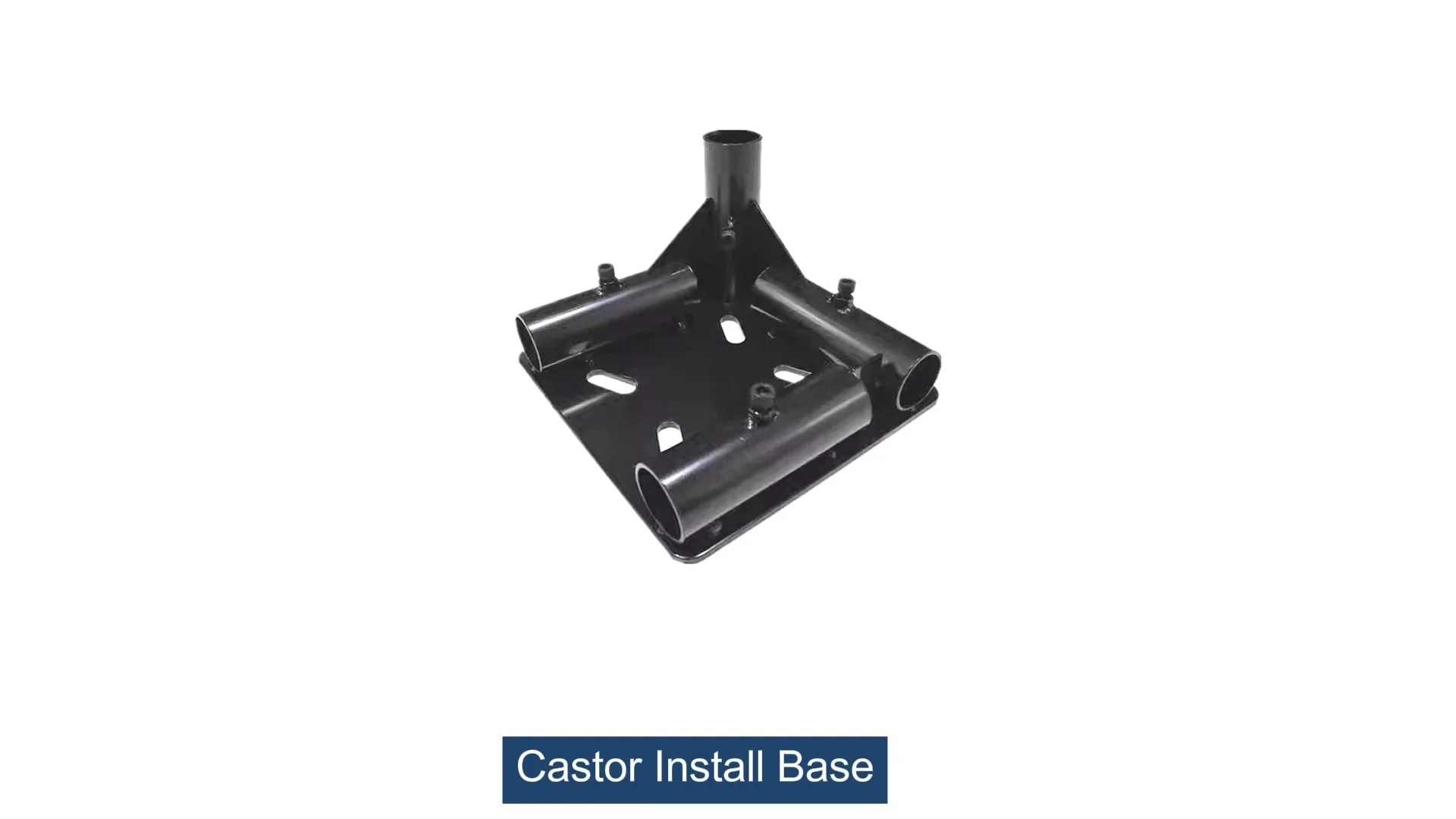
Castor Install Base
Castor install base, used for connection between pipe and castor, it can connect 4 pcs pipe by 1 pcs castor base, to make the structure strong and stable.
Walk into any modern manufacturing facility, warehouse, or workshop, and you'll notice something crucial: the workstations aren't just pieces of furniture. They're the backbone of daily operations—the places where ideas turn into products, where teams collaborate, and where efficiency either thrives or stalls. But here's the thing: even the most well-designed workstation can fall flat if it's built on the wrong foundation. That's where the debate between castor install bases and fixed mounting bases comes in.
Imagine a team assembling electronics on a workbench that's bolted to the floor. It's sturdy, sure, but when a sudden rush order requires rearranging the production line, that "sturdiness" becomes a roadblock. Now picture another scenario: a turnover trolley loaded with heavy components, but its base is wobbly because it's mounted on cheap casters. Suddenly, what should be a time-saver becomes a safety hazard. The choice between a castor install base and a fixed mounting base isn't just about mobility vs. stability—it's about aligning your workstation with the rhythm of your work.
In this article, we're diving deep into this decision. We'll break down what each base type is, how they perform in real-world settings, and which one might be the missing piece in your lean system. Whether you're setting up a new workshop, upgrading existing workstations, or just curious about optimizing your workflow, let's find out which base will keep your operations running smoothly—without the headaches.
What is a Castor Install Base, Anyway?
Let's start with the basics. A castor install base is exactly what it sounds like: a foundation for your workstation (think workbench, turnover trolley, or material rack) that's fitted with caster wheels. These wheels—often made of rubber, polyurethane, or steel—are mounted to the base, allowing the entire unit to roll smoothly across the floor. But it's not just about wheels; a quality castor install base includes components like caster accessories (brakes, locks, swivel joints) that let you control movement, lock the workstation in place when needed, or even adjust height for uneven surfaces.
Take a turnover trolley, for example. These are workhorses in warehouses and factories, shuttling materials from one station to another. Without a castor install base, moving a loaded trolley would mean straining muscles or using forklifts—both slow and risky. But with a well-designed base (think sturdy steel or aluminum frame, heavy-duty caster wheels with brakes), that same trolley becomes a nimble tool, gliding through tight aisles and locking securely at its destination. It's the difference between a workflow that drags and one that flows.
But not all castor install bases are created equal. The best ones are built to handle specific loads. A lightweight workbench for assembling small electronics might use 2-inch caster wheels with a 100kg capacity, while a heavy-duty material rack loaded with metal parts could need 5-inch steel wheels rated for 500kg or more. And let's not forget about the floor: if your workshop has uneven concrete, you'll want casters with shock-absorbing rubber tires to prevent wobbling. If it's a cleanroom or ESD-sensitive area (like an electronics lab), static-dissipative caster wheels are a must to avoid damaging sensitive components.
Fixed Mounting Base: Stability That Stands the Test of Time
On the flip side, a fixed mounting base is all about staying put. Instead of wheels, it uses solid feet, bolts, or brackets to anchor the workstation to the floor or a stable surface. Think of it as the "root system" of your workstation—deeply planted, unmoving, and ready to handle heavy loads or precision work. Fixed bases are often made from thick steel plates, aluminum profile, or reinforced plastic, designed to distribute weight evenly and minimize vibration.
Let's talk about a workbench in a machine shop. When a machinist is using a drill press or milling machine, even the slightest movement can ruin a part. A fixed mounting base bolts the workbench to the concrete floor, eliminating wobble and ensuring every cut is precise. Similarly, in a lab where scientists are handling delicate samples or calibrating equipment, a fixed base provides the stability needed for accuracy. It's not just about preventing movement—it's about creating a reliable, unchanging platform that the user can trust.
Fixed mounting bases also shine in environments where space is tight or safety is critical. In a production line where workers stand at the same station for hours, a fixed workbench won't drift or shift, reducing fatigue and injury risk. In warehouses with high traffic, fixed material racks (like a material rack b with 3 rows and 3 floors) stay in their designated spots, preventing collisions with forklifts or pedestrians. And because they don't have moving parts, fixed bases are often low-maintenance—no need to lubricate wheels, replace brakes, or adjust swivel joints.
But fixed doesn't mean "one-size-fits-all." Modern fixed bases often include adjustable feet (like anti-slip adjustable leveling feet) that let you tweak height to compensate for uneven floors, or rubber pads to dampen noise and protect surfaces. Some even use aluminum profile frames, which are lightweight yet strong, making them easy to install but impossible to move once set up. It's stability with a touch of flexibility—just not the rolling kind.

From a Lean System Lens: Which Base Drives Efficiency?
If you're familiar with lean manufacturing, you know the goal is to eliminate waste—whether it's time, movement, or unnecessary steps. So how do castor install bases and fixed mounting bases fit into this philosophy? Let's break it down.
Lean systems thrive on flexibility. A production line that can reconfigure quickly to meet changing demand (think seasonal spikes or custom orders) reduces downtime and keeps costs low. Here, castor install bases are stars. Imagine a team that needs to shift from assembling 100 small widgets to 10 large machines in a day. With workstations on castor bases, they can rearrange the line in minutes—no tools, no heavy lifting, no delays. It's "just-in-time" workflow design, and it's a game-changer for agile operations.
But lean isn't just about movement—it's about stability, too. In a lean system, every workstation should be optimized for its specific task. A quality control station, for example, needs to stay in one place to maintain consistent lighting, tool access, and workflow. A fixed mounting base here ensures that inspectors don't waste time readjusting their setup or chasing a drifting workbench. It's about creating "cells" of efficiency—stations that are locked in place but designed to minimize motion within their boundaries.
The sweet spot? Often a mix. Many lean facilities use a hybrid approach: fixed workbenches for core tasks (like assembly), paired with turnover trolleys on castor bases for material transport. Roller tracks—another key lean tool—can bridge the gap, moving parts from fixed storage racks to mobile workstations. It's a symphony of stability and mobility, each base type playing its part to eliminate waste.

Use Case Showdown: When to Roll, When to Stay Put
To really understand which base is right for you, let's look at real-world scenarios. These are the situations where the rubber (literally, in caster wheels) meets the road.
Scenario 1: High-Volume Assembly Line (Automotive Parts)
In an automotive parts factory, the assembly line runs 24/7, with workers repeating the same tasks (installing bolts, attaching wiring harnesses) at fixed stations. The workbenches here need to be rock-solid—no movement, no vibration. A fixed mounting base (bolted to the floor, with heavy-duty aluminum profile frames) is ideal. Why? Because precision matters: a wobbly workbench could lead to misaligned parts, rework, or even defects. Plus, workers stand at these stations for hours; a stable base reduces fatigue and injury risk.
But what about moving parts to the line? That's where turnover trolleys on castor install bases come in. These trolleys, loaded with bolts, washers, and tools, roll up to each workstation, lock in place, and keep the line supplied. It's fixed stability for the workbench, mobile flexibility for material transport—a lean combo that keeps production humming.
Scenario 2: Small-Batch Electronics Workshop (Start-Up)
A start-up building custom circuit boards might have small production runs—10 units one week, 50 the next, with designs changing constantly. Their workshop is small, so space is at a premium. Here, flexibility is king. Workstations need to be rearranged daily: today, a soldering station; tomorrow, a testing bench; next week, a packaging area. A castor install base is non-negotiable. Look for workbenches with lockable caster wheels, so they can roll into new configurations, lock down during use, and then reposition again. Add in lightweight aluminum profile frames, and you've got a setup that adapts as fast as the business grows.
Scenario 3: ESD-Sensitive Lab (Semiconductor Manufacturing)
In a lab where technicians handle semiconductors or microchips, static electricity is enemy number one. ESD workbenches are a must, but what about the base? A fixed mounting base is safer here—no caster wheels to generate static, no movement to disrupt sensitive equipment. Plus, ESD workbenches often need to be grounded to the floor, which is easier with a fixed base. That said, material transport might still use ESD-safe trolleys with castor wheels (fitted with static-dissipative rubber) to move wafers between cleanrooms. It's about balancing safety and efficiency, with fixed bases taking the lead where precision and static control matter most.

Castor Install Base vs. Fixed Mounting Base: The Ultimate Comparison
| Feature | Castor Install Base | Fixed Mounting Base |
|---|---|---|
| Mobility | High: Rolls smoothly; ideal for frequent reconfiguration. | None: Anchored in place; no movement possible. |
| Stability | Moderate: Stable when locked, but may wobble on uneven floors. | High: Rock-solid; no vibration or movement during use. |
| Load Capacity | Varies (100kg–1000kg+); depends on caster wheel rating. | Very high (often 1000kg+); limited only by base material. |
| Maintenance | Higher: Requires lubricating wheels, replacing brakes, checking for wear. | Low: No moving parts; occasional cleaning or leveling adjustments. |
| Best For | Turnover trolleys, mobile workbenches, dynamic workflows, small batches. | Fixed assembly lines, precision work (machining, lab testing), heavy loads. |
| Cost | Higher upfront: Caster wheels and accessories add cost. | Lower upfront: Simpler design, no moving parts. |
5 Key Factors to Choose the Right Base
Still on the fence? Here are the questions to ask yourself before deciding:
1. How Often Do You Need to Move the Workstation?
If it's daily (or even weekly), go with a castor install base. If it's once a year (or never), fixed is better.
2. What's the Maximum Load It Will Carry?
Heavier loads (500kg+) often need fixed bases for safety. Lighter loads (under 300kg) can thrive with castors.
3. What's the Floor Like?
Smooth concrete? Castors work great. Uneven or carpeted? Fixed bases avoid wobbling.
4. Is Precision or Flexibility More Important?
Precision (e.g., machining, lab work) needs fixed. Flexibility (e.g., small batches, agile workflows) needs castors.
5. What's Your Long-Term Workflow Plan?
Growing fast? Castors let you scale without rebuilding. Staying steady? Fixed bases are a reliable, low-maintenance investment.
Final Thoughts: It's About Your Workflow, Not Just the Base
At the end of the day, there's no "better" base—only the right one for your needs. A castor install base is a partner in flexibility, turning static workstations into dynamic tools that adapt to change. A fixed mounting base is a foundation of stability, ensuring precision and safety in high-stakes environments. And often, the best solution is a mix: fixed workbenches for core tasks, mobile trolleys for transport, and roller tracks to bridge the gap.
Remember, your workstation is more than just a table or rack—it's the heart of your operation. Choosing the right base (castor or fixed) is about making sure that heart beats in rhythm with your workflow, your team, and your goals. So take the time to assess your needs, test out options if you can, and invest in quality. After all, a workstation that works for you isn't just a tool—it's a catalyst for success.
Whether you're rolling forward with castors or standing firm with fixed, here's to a workstation that keeps your operations lean, efficient, and ready for whatever comes next.