- Company Articles
- Products and Technology
- Installation And Maintenance
- Castor Installation Base Application in Communication Equipment Manufacturing

Castor Installation Base Application in Communication Equipment Manufacturing
Related Product
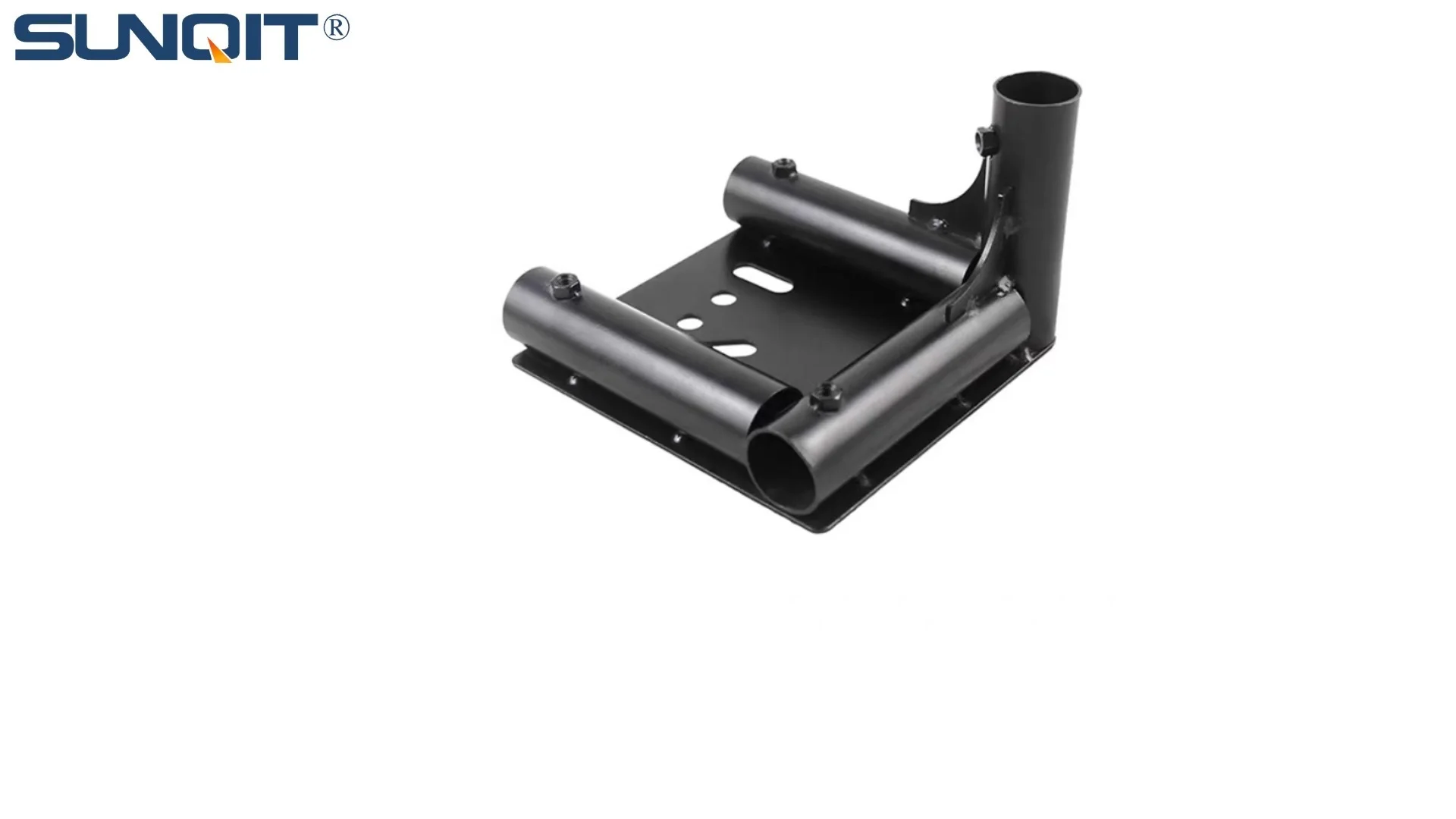
Castor Installation Base
Pipe fitting castor installation base,Well made, precise and strong. Made of high quality of steel,black painting surface treatment for greater resistance to corrosion. It is used for castor or foot lever connection with lean pipe.
The communication equipment manufacturing industry operates in a world where precision, speed, and adaptability are not just buzzwords—they're the backbone of staying competitive. From assembling intricate 5G routers to testing fiber-optic switches, every step on the factory floor demands seamless workflows, minimal downtime, and the ability to pivot quickly to meet evolving production needs. In this high-stakes environment, even the smallest components can make a monumental difference in operational efficiency. One such unsung hero? The castor installation base . Often overlooked amid flashier machinery, this unassuming component plays a critical role in transforming static workspaces into dynamic, agile environments. Let's dive into how castor installation bases are revolutionizing communication equipment manufacturing, and why they've become indispensable for modern factories aiming to streamline processes, enhance safety, and boost productivity.
What Is a Castor Installation Base, Anyway?
Before we explore its applications, let's clarify what a castor installation base actually is. At its core, it's a mounting component designed to securely attach casters (wheels) to equipment, workbenches, trolleys, or racks. Think of it as the bridge between a stationary structure—like a heavy-duty workbench or a material storage rack—and the casters that allow it to move. Made from robust materials such as steel, aluminum, or reinforced plastic, these bases are engineered to withstand the weight of heavy communication equipment, from bulky server chassis to stacks of circuit boards, while ensuring smooth, stable movement across factory floors.
But here's the thing: not all castor installation bases are created equal. They come in various designs—fixed, swivel, or brake-compatible—to suit different needs. Some are built for lightweight applications, like moving small tool carts, while others are reinforced for industrial-grade loads, such as shifting assembly line workstations. In communication equipment manufacturing, where loads can range from delicate PCBs (printed circuit boards) to heavy testing rigs, choosing the right base is crucial. And when paired with compatible caster accessories —like locking mechanisms or shock-absorbing wheels—these bases become even more versatile, adapting to everything from smooth concrete floors to uneven warehouse surfaces.
Key Applications: Where Castor Installation Bases Shine
In communication equipment manufacturing, the magic of castor installation bases lies in their ability to turn rigid, immovable setups into flexible, on-the-go workspaces. Let's break down the most impactful applications:
1. Assembly Workbenches: From Static to Dynamic
Assembly lines are the heart of communication equipment manufacturing. Whether workers are soldering components onto a router's motherboard or attaching ports to a fiber-optic modem, the workbench is their command center. Traditionally, these workbenches were fixed to the floor, meaning workers had to walk back and forth to retrieve tools, materials, or test equipment—a recipe for wasted time and fatigue. Enter the castor installation base. By mounting workbenches onto these bases (paired with heavy-duty casters), manufacturers transform static workstations into mobile hubs. Need to reconfigure the assembly line to accommodate a new product design? Simply unlock the casters, roll the workbench into place, and lock it down. No more dismantling and rebuilding—just quick, effortless adjustments.
Take, for example, a factory producing satellite communication terminals. These devices require multiple assembly stages: circuit board mounting, antenna alignment, and final testing. With mobile workbenches, each stage can be moved closer to the next as a unit is completed, reducing the distance workers travel by up to 30% (based on industry studies). This not only cuts down on time but also minimizes the risk of dropping or damaging sensitive components during transport. And when paired with aluminum profile frames—lightweight yet strong—these workbenches remain sturdy enough to support precision tools while staying easy to maneuver.
2. Material Handling Trolleys: Streamlining the Supply Chain
Communication equipment manufacturing relies on a steady flow of materials: from PCBs and microchips to cables and housing units. Moving these materials from storage to the assembly line (and vice versa) is a logistical puzzle—one that castor installation bases solve with ease. Trolleys equipped with these bases can glide through narrow factory aisles, carrying bulk materials or kitted components directly to where they're needed. Unlike traditional fixed racks, which require workers to manually unload and carry items, mobile trolleys reduce physical strain and speed up material delivery.
Consider a scenario where a production run for a new router model is ramping up. The factory needs to transport 500 sets of antenna modules from the storage warehouse to the assembly line. Without mobile trolleys, this might involve multiple trips with hand trucks, taking hours. With trolleys mounted on robust castor installation bases (fitted with swivel casters for tight turns), a single worker can move an entire batch in one go, slashing transport time by half. Plus, bases with brake features ensure trolleys stay put during loading/unloading, preventing accidents and keeping the workspace organized.
3. Testing Stations: Adapting to Diverse Equipment
Testing is a non-negotiable step in communication equipment manufacturing. Before a product ships, it must undergo rigorous tests—signal strength checks, temperature resistance trials, and durability assessments. The problem? Testing equipment is often bulky and expensive, and factories rarely have the space for a dedicated station for every product type. Castor installation bases solve this by making testing rigs mobile. Need to test a 5G base station today and a Wi-Fi router tomorrow? Just roll the testing station to the relevant assembly line.
For instance, a factory testing fiber-optic transceivers might use a station equipped with oscilloscopes, signal generators, and power meters. Mounted on a castor installation base with locking casters, this station can be positioned next to the assembly line during peak production, allowing workers to test units immediately after assembly—eliminating the need to transport to a separate testing area. This not only speeds up the production cycle but also reduces the risk of damage during transit, ensuring more accurate test results.

Why Castor Installation Bases Are a Must for Lean Systems
In recent years, the lean system philosophy—focused on minimizing waste, maximizing value, and continuous improvement—has become a cornerstone of modern manufacturing. Castor installation bases align perfectly with lean principles, addressing three key areas of waste: motion, waiting, and inventory.
Motion Waste: Lean systems prioritize reducing unnecessary movement of workers and materials. Fixed workbenches and static racks force employees to walk farther, bend more, or stretch to reach tools—all forms of motion waste. Castor installation bases eliminate this by bringing the workspace to the worker. For example, a mobile parts trolley can be positioned within arm's reach of an assembly station, cutting down on walking time by up to 40% (as reported by the Manufacturing Excellence Association).
Waiting Waste: In communication equipment manufacturing, delays are costly. If a workbench is tied up with one product, workers waiting to use it for another task are stuck in limbo. Mobile workstations, enabled by castor installation bases, allow for parallel processing. One team can assemble a router on a mobile bench while another tests a switch on an adjacent bench—no waiting, no bottlenecks.
Inventory Waste: Lean systems aim to keep inventory levels low, producing only what's needed, when it's needed. Mobile storage racks, mounted on castor installation bases, make this easier. Instead of stockpiling materials in a central warehouse, factories can keep small batches of components on mobile racks near the assembly line, replenishing as needed. This "just-in-time" approach reduces overstocking and frees up valuable floor space.
It's no surprise, then, that factories implementing lean systems report a 25-30% improvement in overall productivity after integrating castor installation bases into their workflows. By turning static setups into dynamic, adaptable spaces, these bases help eliminate waste at every turn.

Technical Considerations: Choosing the Right Castor Installation Base
Not all castor installation bases are suited for communication equipment manufacturing. To maximize their benefits, factories must consider several key factors:
| Consideration | What to Look For | Example Use Case in Communication Manufacturing |
|---|---|---|
| Load Capacity | Bases rated for at least 1.5x the maximum expected load (to account for dynamic movement). | Supporting a workbench with a 500kg load (e.g., testing equipment + PCBs). |
| Compatibility with Casters | Standardized mounting holes to fit common caster sizes; compatibility with caster accessories like brakes or shock absorbers. | Using swivel casters with brake locks for assembly workbenches to prevent movement during use. |
| Material Durability | Corrosion-resistant materials (e.g., galvanized steel or aluminum) for longevity in factory environments. | Withstanding exposure to cleaning chemicals or humidity in electronics manufacturing. |
| Floor Protection | Non-marking casters or soft rubber wheels to avoid scratching sensitive floor surfaces (e.g., epoxy-coated floors). | Preventing damage to polished floors in cleanroom assembly areas. |
| Height and Stability | Low-profile bases to lower the center of gravity, reducing the risk of tipping for tall racks. | Stabilizing a mobile material rack with 3 tiers of circuit boards. |
For example, a factory producing outdoor communication antennas might opt for heavy-duty steel castor installation bases with pneumatic casters to handle rough terrain in the warehouse, while a cleanroom assembling fiber-optic components would choose lightweight aluminum bases with non-marking, static-dissipative wheels to prevent ESD (electrostatic discharge) damage to sensitive electronics.

Real-World Impact: A Case Study
Let's look at a hypothetical but realistic example of how castor installation bases transformed a communication equipment manufacturer's operations.
Company X: A mid-sized manufacturer of enterprise-grade routers and switches, struggling with bottlenecks in their assembly line. Their static workbenches and fixed material racks led to long wait times, excessive worker movement, and difficulty adapting to short production runs for custom client orders.
The Solution: The company invested in castor installation bases for 12 assembly workbenches, 8 material trolleys, and 4 testing stations. They paired the bases with swivel casters (with brake locks) and aluminum profile frames to keep setups lightweight yet sturdy.
The Results: Within three months, production cycle time decreased by 28%—largely due to reduced worker movement and faster reconfiguration of assembly lines for custom orders. Worker fatigue complaints dropped by 40%, and the factory was able to increase output by 15% without adding new floor space. The ROI on the castor installation bases? Just 6 months.
This isn't an isolated success story. Across the industry, manufacturers report similar gains when integrating these bases into their workflows—proof that even the smallest components can drive big change.
Looking Ahead: The Future of Castor Installation Bases in Manufacturing
As communication equipment manufacturing continues to evolve—with trends like automation, IoT integration, and modular production on the rise—castor installation bases are poised to play an even bigger role. Imagine smart bases equipped with sensors that monitor load capacity in real time, alerting workers if a trolley is overloaded. Or bases designed to integrate with AGVs (Automated Guided Vehicles), allowing for fully autonomous material transport. The possibilities are endless.
For now, though, the value of castor installation bases is clear: they turn static factories into dynamic, agile workspaces that can keep up with the demands of modern communication equipment manufacturing. Whether paired with lean systems, aluminum profile workbenches, or caster accessories, these unassuming components are proving that sometimes, the most impactful innovations are the ones that keep things moving—literally.
Final Thoughts
In the fast-paced world of communication equipment manufacturing, efficiency isn't optional—it's survival. The castor installation base may not grab headlines, but its ability to transform rigid workspaces into flexible, mobile environments is nothing short of revolutionary. By reducing waste, enhancing safety, and enabling quick adaptation to changing production needs, these bases are helping factories stay competitive in an industry where every second counts. So the next time you see a mobile workbench gliding across a factory floor or a trolley loaded with circuit boards moving seamlessly to an assembly line, remember: it's the castor installation base that's making it all possible.