- Company Articles
- Products and Technology
- Installation And Maintenance
- Castor Installation Base Compatibility: Matching with Lean Pipe Joints (Beginner's Guide)

Castor Installation Base Compatibility: Matching with Lean Pipe Joints (Beginner's Guide)
Related Product
Castor Installation Base
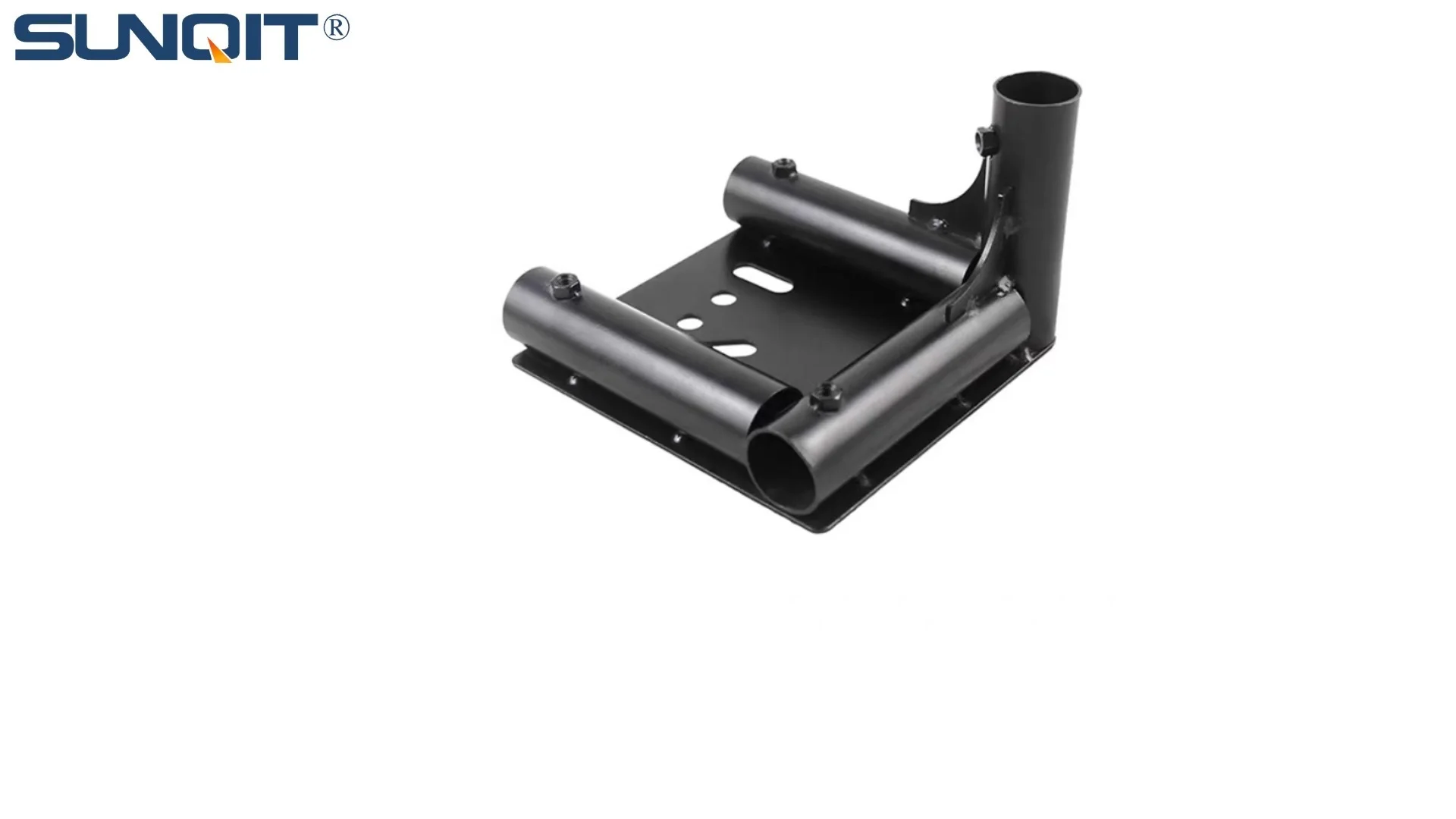
Pipe fitting castor installation base,Well made, precise and strong. Made of high quality of steel,black painting surface treatment for greater resistance to corrosion. It is used for castor or foot lever connection with lean pipe.
If you've ever tried building a DIY shelf or assembling furniture only to find the screws don't fit the pre-drilled holes, you know the frustration of mismatched parts. Now imagine that feeling multiplied when you're setting up a lean manufacturing system—where every component, from the smallest joint to the casters on your workbench, needs to work in harmony. That's where understanding castor installation base compatibility with lean pipe joints becomes critical. Whether you're a small workshop owner setting up your first production line, a warehouse manager upgrading material handling, or a hobbyist building a custom workbench, getting this right saves time, reduces waste, and ensures your setup runs as smoothly as a well-oiled machine.
In this guide, we'll break down the basics of castor installation bases and lean pipe joints, why their compatibility matters, and how to match them like a pro—even if you're new to lean systems. We'll use plain language, skip the jargon, and focus on practical steps you can apply today. By the end, you'll know exactly how to pick the right base for your joints (and vice versa) to build sturdy, mobile, and efficient structures that stand the test of time.
What Even Is a Castor Installation Base?
Let's start with the basics: What is a castor installation base, anyway? Think of it as the unsung hero of your mobile lean setup. It's the component that connects your caster wheels to the rest of the structure—whether that's a workbench, a turnover trolley, or a material rack. Without it, your caster would just be a wheel rolling around loose; the base is what anchors it, distributes weight evenly, and ensures the caster can rotate (if it's a swivel type) without putting stress on the pipes or joints.
Castor installation bases come in all shapes and sizes, but they all share a few key jobs:
- Stability: They prevent the caster from wobbling or bending under load.
- Alignment: They keep the caster wheel perpendicular to the ground, so your trolley rolls straight instead of veering off course.
- Durability: They're designed to handle repeated movement, weight, and even the occasional bump against a wall or pallet.
Most bases are made from metal—aluminum is popular for its lightweight, rust-resistant properties, while steel is used for heavier-duty setups. You'll also find plastic bases, but these are rare in industrial lean systems since they can crack under heavy loads. The design varies too: some bases are flat, sitting flush against the bottom of a workbench; others are "drop-high" (lowered) to keep the structure closer to the ground for stability; and some are shaped to clip directly onto aluminum profiles, making them easy to attach without extra tools.
Quick Tip:
If you're building something mobile (like a turnover trolley or a movable workbench), always prioritize a castor installation base made from the same material as your lean pipes. Aluminum pipes? Go with an aluminum base. Steel pipes? Steel base. Mixing materials (e.g., aluminum base with steel pipes) can lead to corrosion over time, especially in humid environments.
Lean Pipe Joints: The "Glue" of Your Lean System
Now, let's talk about lean pipe joints—the unsung heroes that hold your entire lean system together. If lean pipes are the bones of your structure, joints are the joints (pun intended) that let you connect those bones at angles, build shelves, or add cross-braces for strength. Without the right joint, you can't form a 90-degree corner for a workbench, a 45-degree angle for a sloped material rack, or even a straight line for a conveyor.
Lean pipe joints come in a dizzying array of types, but the most common ones you'll encounter as a beginner are:
- Fixed Joints: As the name suggests, these lock pipes into a specific angle (like 90°, 45°, or 180°) and don't move. They're great for static structures, like the legs of a workbench.
- Rotatory Joints: These let pipes swivel or rotate, which is handy for adjustable setups—think of a material rack where you might need to tilt shelves to unload parts more easily.
- Parallel Joints: These connect two pipes side-by-side, perfect for adding extra support to a shelf or reinforcing a trolley frame.
- Crossing Joints: Designed to connect pipes that cross over each other (like a T-shape or X-shape), these are key for building multi-level racks.
Like castor bases, joints are made from materials that match common lean pipes: plastic-coated steel (for traditional lean pipes), aluminum (for lightweight, corrosion-resistant setups), or stainless steel (for cleanrooms or food-grade environments). The size of the joint matters too—most lean pipes are 28mm in diameter (the standard), but you'll also find smaller (19mm) or larger (40mm) pipes, and joints are sized to fit these diameters exactly.
Here's the thing: A lean pipe joint isn't just a "one size fits all" part. A 90-degree fixed joint for a plastic-coated steel pipe won't fit an aluminum lean pipe, and a joint designed for 28mm pipes will rattle loose on a 19mm pipe. That's why compatibility with your castor installation base (and the rest of your system) is non-negotiable.

Why Compatibility Between Bases and Joints Matters
Let's say you buy a castor installation base labeled "for aluminum lean pipe" and a lean pipe joint labeled "universal fit." You drill the base into your workbench frame, attach the joint, and… the caster wobbles so badly that the whole bench shakes when you roll it. Or worse, the joint cracks under the weight of your tools. What went wrong? Chances are, the base and joint weren't compatible.
Compatibility isn't just about "fitting together"—it's about ensuring the base and joint work as a team to support weight, handle movement, and resist wear. Here are the top reasons it matters:
1. Safety First: Wobbly Structures Are Dangerous
A mismatched base and joint can lead to instability. Imagine pushing a loaded turnover trolley across the workshop: if the castor base isn't properly secured to the joint, the trolley could tip, spilling parts (or worse, injuring someone). Even a small wobble can throw off precision work on a mobile workbench—try assembling electronics when your table shakes with every movement, and you'll get the idea.
2. Efficiency: No One Has Time for Repairs
Lean systems are all about reducing waste, and nothing wastes time like fixing a setup that keeps breaking. A base that's too small for its joint will loosen over time, requiring constant re-tightening. A joint made from weak plastic paired with a steel base will crack, forcing you to stop production and replace parts. Compatibility means fewer repairs, less downtime, and more time focusing on what you actually want to build.
3. Cost: Mismatched Parts = Money Down the Drain
Buying a castor base and joint that don't work together isn't just frustrating—it's expensive. You'll end up reordering parts, paying for shipping twice, or even replacing entire sections of your setup. And if a failed joint damages your lean pipes or casters? That's even more cash out the door. Getting it right the first time saves money in the long run.

The Big Four: Key Factors for Compatibility
Now that you know why compatibility matters, let's dive into how to achieve it. There are four main factors to check before pairing a castor installation base with a lean pipe joint. We'll break them down one by one, with examples to make it concrete.
Factor 1: Material Compatibility
First up: materials. Castor installation bases and lean pipe joints are made from materials like aluminum, steel, or plastic-coated steel (the classic "lean pipe" material). Mixing materials can cause problems, especially over time. For example:
- Aluminum Base + Steel Joint: Aluminum and steel react chemically when they touch (a process called galvanic corrosion), especially in damp environments. Over time, this can eat away at the base or joint, weakening the connection.
- Plastic-Coated Base + Uncoated Steel Joint: The plastic coating on the base might wear off where the steel joint rubs against it, exposing the metal underneath to rust.
The fix? Stick to the same material family. If you're using aluminum lean pipe (a popular choice for its lightweight and rust resistance), use an aluminum castor base and aluminum lean pipe joints. For traditional plastic-coated steel pipes, go with steel or plastic-coated steel bases and joints. Stainless steel is a wildcard—it's compatible with most materials but is pricier, so reserve it for cleanrooms or outdoor setups where corrosion is a big risk.
Factor 2: Size (It's All About the Diameter)
Size matters—especially when it comes to pipe diameter. Lean pipes come in standard diameters, with 28mm (about 1.1 inches) being the most common for industrial use. Castor installation bases and joints are designed to fit specific diameters, so if your pipe is 28mm, your base and joint must also be sized for 28mm pipes. A 20mm joint won't clamp securely onto a 28mm pipe, and a 38mm base will leave a 28mm pipe wobbling loosely.
How do you check the diameter? Grab a ruler or a caliper (a cheap digital caliper from Amazon works fine) and measure across the widest part of the pipe. Most suppliers list pipe diameter in their product names (e.g., "28mm Aluminum Lean Pipe" or "38mm Steel Roller Track"), so double-check that before buying bases or joints.
Pro Move:
If you're unsure about size, buy one base and one joint first, and test them with your pipe before ordering in bulk. It's cheaper to waste $10 on a test pair than $200 on a full set that doesn't fit.
Factor 3: Load Capacity (Don't Overestimate)
Load capacity is the maximum weight a base or joint can support without bending, cracking, or failing. This is crucial for mobile setups—if you're building a turnover trolley to carry 500kg of parts, a base rated for 300kg will buckle under the weight, no matter how well it fits the joint.
Here's the catch: Load capacity isn't just about the base or the joint alone—it's about the combination . A base rated for 500kg paired with a joint rated for 300kg means your entire connection is only as strong as the weakest link (the joint). Always check the load rating of both the base and the joint, and go with the lower number. When in doubt, overestimate: It's better to have a base that can handle 1000kg than to risk a failure with one that just barely meets your needs.
Factor 4: Mobility Needs (Swivel vs. Fixed)
Finally, think about how mobile your structure needs to be. If you're building a fixed workbench that never moves, a simple flat castor base with a fixed 90-degree joint is fine. But if you're building a trolley that needs to swivel around tight corners, you'll need a base that allows the caster to rotate freely without putting stress on the joint.
For example, swivel casters require bases with a "pivot point" that aligns with the joint. If the base is too rigid (like a fixed flat mount), the joint will take the brunt of the swiveling motion, leading to premature wear. On the flip side, if you're using a rotatory joint to adjust the angle of a shelf, pair it with a base that's sturdy enough to handle the extra movement without loosening.

Compatibility Table: Matching Bases to Joints (At a Glance)
To make this easier, we've put together a quick-reference table of common castor installation base types and the lean pipe joints they work best with. Use this as a starting point, and always check with your supplier for specific product specs!
| Castor Installation Base Type | Compatible Lean Pipe Joint Types | Pipe Diameter Range | Best For (Application) | Key Notes |
|---|---|---|---|---|
| Flat Mount Base | 90° Fixed Joint, 180° Straight Joint | 28mm–38mm | Fixed workbenches, static material racks | Sits flush against the structure; minimal height added. |
| drop-High Mount Base | Parallel Rotatory Joint, 45° Fixed Joint | 28mm–40mm | Mobile trolleys, low-profile conveyors | Lowers the caster to keep the structure closer to the ground for stability. |
| Profile-Flat Mount Base | Internal Straight Aluminum Joint, Parallel Fixation Joint | 20mm–30mm (aluminum profiles) | Aluminum profile workbenches, lightweight racks | Clips directly onto aluminum profiles; no drilling needed. |
| Center Support Bracket Base | Three-Way Joint, Five-Way Straight Joint | 38mm–60mm | Heavy-duty material racks, conveyor systems | Adds extra support for wide or long structures. |
Step-by-Step: How to Match Your Base and Joint (For Beginners)
Okay, let's put this all together with a step-by-step process. We'll use a real-world example: building a mobile workbench for a small electronics assembly line. This workbench needs to be sturdy enough to hold tools and parts (about 200kg total), roll smoothly across concrete, and fit through a standard 80cm door.
Step 1: Define Your Structure's Needs
Start by answering these questions:
- What am I building? A mobile workbench.
- How much weight will it hold? 200kg.
- Will it move? Yes (needs casters).
- What material will the frame use? Aluminum lean pipe (lightweight, rust-resistant for a workshop).
Step 2: Choose Your Lean Pipe Diameter
Aluminum lean pipe comes in 28mm and 38mm diameters. For a 200kg workbench, 28mm is plenty strong (38mm would be overkill and heavier). So we'll go with 28mm aluminum lean pipe.
Step 3: select the Castor Installation Base
We need a base that: (1) fits 28mm aluminum pipe, (2) is made of aluminum (to match the pipe), (3) can support at least 50kg per caster (since 4 casters × 50kg = 200kg total), and (4) allows swivel casters (to maneuver through doors).
Looking at supplier catalogs, we find an "Aluminum Profile-Flat Mount Base" rated for 60kg per caster, designed for 28mm aluminum pipe. Perfect—it clips onto the aluminum pipe without drilling, saving time.
Step 4: Pick the Lean Pipe Joint
The workbench has four legs (vertical pipes) connected to a rectangular frame (horizontal pipes). We need 90-degree joints to connect vertical and horizontal pipes. Since the frame is static (no rotation needed), fixed 90-degree aluminum lean pipe joints are ideal. They're rated for 28mm pipe and 100kg per joint—more than enough for our 200kg total.
Step 5: Test the Fit (Critical!)
Before ordering 4 bases and 8 joints (one per corner), we order one base and one joint. We slide the joint onto the 28mm pipe, attach the base to the joint, and give it a shake. No wobbling, the joint clamps securely, and the base sits flat. Success!
Step 6: Assemble and Secure
Once all parts arrive, we assemble the frame, attach the joints at each corner, bolt the castor bases to the joints, and add the casters. We tighten all bolts with a torque wrench (not too tight—over-tightening can strip aluminum threads) and test-roll the workbench. It glides smoothly, no wobbles, and fits through the door. Done!
Common Compatibility Mistakes (and How to Avoid Them)
Even with the best intentions, beginners often run into issues. Here are the most common mistakes and how to sidestep them:
Mistake 1: "Universal" Doesn't Mean "One Size Fits All"
Many suppliers label joints or bases as "universal," but that usually just means they work with multiple pipe diameters (e.g., 28mm and 38mm). They're not universal across materials or load capacities. Always check the fine print—if it says "universal for steel pipes," it won't work with aluminum.
Mistake 2: Ignoring Environmental Factors
A base and joint that work in a dry workshop might fail in a humid warehouse. If you're in a damp environment, avoid steel (it rusts) and opt for aluminum or stainless steel. If you're outdoors, add corrosion-resistant coatings or choose ESD (electrostatic discharge) components, which often have extra protective layers.
Mistake 3: Overlooking Joint Orientation
Some joints are designed to face "in" (toward the center of the structure) or "out" (away from it). Installing a joint backward can leave gaps, weaken the connection, or even prevent the base from attaching. Always check the joint's instructions for orientation—most have arrows or labels like "top" or "bottom."
Maintaining Compatibility Over Time
Compatibility isn't a "set it and forget it" thing. Over time, vibrations from moving trolleys, temperature changes, or heavy use can loosen connections. Here's how to keep your base and joint working together:
- Check Tightness Monthly: Use a wrench to gently tighten joint bolts—they'll loosen over time from vibration.
- Clean Regularly: Wipe down bases and joints with a damp cloth to remove dust or debris that can wear away coatings.
- Lubricate Rotatory Joints: If you're using swivel or rotatory joints, add a drop of silicone lubricant every few months to keep them moving smoothly.
- replace Worn Parts: If a joint cracks, a base bends, or a caster starts to wobble, replace the part immediately. A small fix now prevents a big failure later.
Final Thoughts: Building a Lean System That Grows With You
At the end of the day, castor installation base compatibility with lean pipe joints is all about attention to detail. It's not glamorous work, but it's the foundation of a lean system that works for you—not against you. By matching materials, sizes, load capacities, and mobility needs, you'll build structures that are sturdy, efficient, and adaptable.
Remember: Even experts started as beginners. If you make a mistake, learn from it, adjust, and move on. The more you work with lean systems, the better you'll get at eyeballing which base fits which joint. And when in doubt, ask your supplier—most are happy to help you pick the right parts (after all, they want you to buy again!).
Now go out there and build something amazing. Your future self (and your back, from not lifting wobbly trolleys) will thank you.