- Company Articles
- Products and Technology
- Installation And Maintenance
- Castor Installation Base Compatibility with Different Caster Types (Swivel, Brake, etc.)

Castor Installation Base Compatibility with Different Caster Types (Swivel, Brake, etc.)
Related Product
Castor Installation Base
Pipe fitting castor installation base,Well made, precise and strong. Made of high quality of steel,black painting surface treatment for greater resistance to corrosion. It is used for castor or foot lever connection with lean pipe.
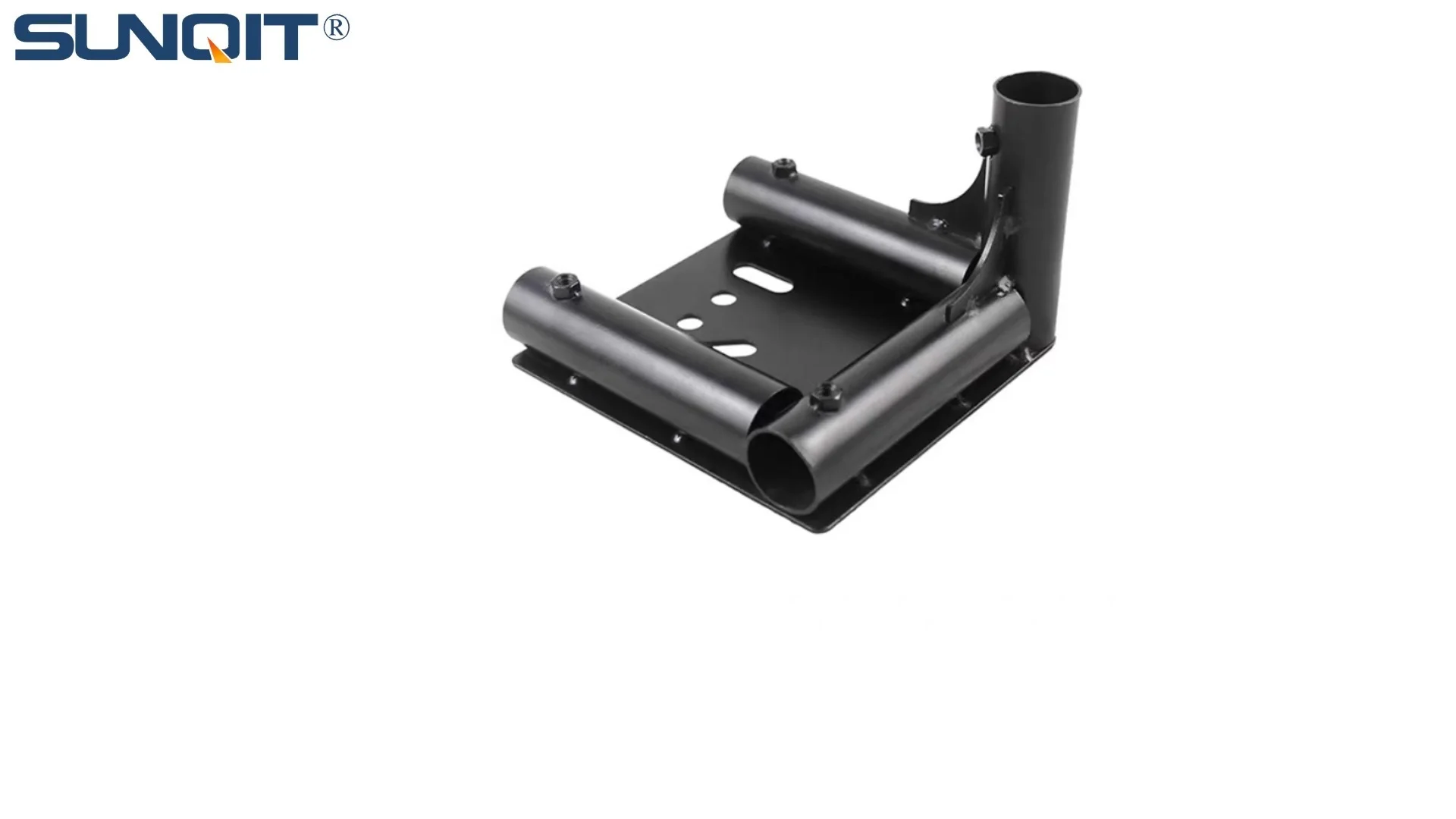
Picture this: You're in a bustling warehouse, pushing a loaded hand trolley stacked with boxes toward the shipping area. As you round a corner, the cart suddenly wobbles, nearly spilling its contents. Frustrating, right? What if we told you the culprit might not be the caster wheel itself, but something far less obvious—the castor installation base? It's the unsung hero that connects the caster to your equipment, and getting its compatibility right can mean the difference between smooth, safe movement and a day filled with headaches. In this guide, we'll dive into why castor installation bases matter, how they interact with different caster types like swivel and brake, and how to ensure you're pairing them correctly for peak performance.
What Exactly Is a Castor Installation Base?
Let's start with the basics. A castor installation base is the critical link between your caster and the equipment it's attached to—whether that's a cart, workbench, or conveyor. Think of it as the foundation: it supports the weight of the load, distributes that weight evenly to prevent stress on the caster, and keeps the caster securely fastened, even during constant movement. Without a reliable base, even the highest-quality caster wheel will underperform, leading to instability, premature wear, or worse, safety risks.
These bases come in a variety of materials, designs, and sizes, each tailored to specific needs. Common materials include steel (durable and heavy-duty), aluminum (lightweight and corrosion-resistant), and plastic (affordable for light loads). Designs range from simple flat plates that bolt directly to equipment to stem mounts that fit into pre-drilled holes, and even expanding stem bases that grip tightly inside hollow tubes. No matter the design, the goal remains the same: to create a rock-solid connection between the caster and your gear.
And let's not forget the role of caster and accessories here. The base itself is just one part of the equation—bolts, washers, locknuts, and adapters often come packaged with the base or caster to ensure a snug fit. These small but mighty components are the final puzzle pieces that turn a "good" installation into a "great" one, preventing loosening from vibration and ensuring long-term reliability.
Breaking Down Caster Types: Swivel, Brake, Rigid, and More
Before we dive into compatibility, let's get familiar with the caster types you're likely to encounter. Each has unique features that demand specific considerations from the castor installation base. Let's break them down:
Swivel Casters: The Maneuverability Masters
Swivel casters are the ones that let you move in any direction—360 degrees—thanks to a rotating raceway (the part that holds the wheel). They're perfect for equipment that needs to navigate tight spaces, like warehouse carts or hospital beds. Inside most swivel casters, you'll find ball bearings that reduce friction, making turns smooth even with heavy loads. But here's the catch: their ability to spin freely means the castor installation base must handle not just vertical weight, but also the lateral forces created during turns. A weak or ill-fitting base here could lead to wobbling or even the caster detaching mid-movement.
Brake Casters: Safety First
Brake casters take swivel functionality a step further by adding a braking mechanism, making them ideal for situations where stability is non-negotiable—think assembly line workbenches or loading docks where carts need to stay put. There are a few brake types: side-lock brakes (activated by stepping on a lever on the side), top-lock brakes (a pedal on top), and total-lock brakes (which lock both the wheel and the swivel motion). A common example is the swivel stem caster wheel with brake , which combines 360-degree movement with the ability to lock in place. For these, the installation base must not only support the caster's weight but also withstand the additional force applied when the brake is engaged—no bending or flexing allowed.
Rigid Casters: Straight-Line Specialists
Unlike swivel casters, rigid casters don't rotate—they only move forward and backward. They're the workhorses of straight paths, often used in pairs on equipment like conveyor systems or heavy machinery that doesn't need to turn. Because they don't swivel, rigid casters put less lateral stress on the base, but they make up for it with sheer vertical load. If you're using rigid casters on a cart that carries hundreds of pounds, the base must be extra sturdy to prevent sagging over time.
Stem vs. Plate Casters: A Quick Note on Mounting Styles
Beyond movement type, casters also differ in how they attach to the base: stem-mounted casters have a rod (stem) that inserts into the base, while plate casters have a flat metal plate that bolts directly to the base. This distinction is crucial because it dictates what kind of castor installation base you'll need—more on that later!

Key Factors That Determine Compatibility
Now, let's get to the heart of the matter: how do you know if a castor installation base will work with a specific caster type? It all comes down to a few critical factors. Ignore them, and you'll be dealing with wobbly carts, broken components, or worse. Let's break them down:
1. Weight Capacity: Don't Skimp on Strength
Every castor installation base has a maximum weight it can support, and this must align with the total load your equipment will carry (equipment weight + contents). For example, if you're using a swivel stem caster wheel with brake rated for 500 lbs, but the base can only handle 300 lbs, you're setting yourself up for failure. The base will bend or crack under strain, causing the caster to misalign or detach. Always check the base's weight rating and ensure it exceeds the caster's capacity by at least 20% to account for sudden jolts or uneven loads.
2. Mounting Style: Match the Base to the Caster
This is where many people go wrong. Casters and bases come in specific mounting styles, and mixing them is a recipe for disaster. Let's say you have a plate caster (with a flat metal plate) but try to attach it to a stem mount base (which has a hole for a stem). It won't work—you'd need an adapter, adding cost and complexity. Conversely, a stem caster won't fit a flat plate base without drilling new holes or using a stem-to-plate converter. Always check if your caster is plate-mounted, stem-mounted, or expanding stem, and choose a base that matches that style exactly.
3. Material Compatibility: Fight Corrosion and Wear
The environment your equipment operates in matters. If you're using casters in a damp warehouse or outdoor setting, a steel base might rust over time, weakening its grip. In that case, an aluminum or stainless steel base would be better. Similarly, if you're dealing with chemicals, a plastic base (like nylon) might resist corrosion where metal wouldn't. Pairing materials that can stand up to your environment ensures the base stays strong and the caster remains secure for years.
4. Size and Fit: No Gaps Allowed
Imagine trying to fit a square peg into a round hole—it just doesn't work. The same goes for castor installation bases and casters. If the base plate is smaller than the caster's mounting plate, the bolts won't line up, and the connection will be unstable. Even a small gap can lead to wobbling as the caster shifts under load. Always measure the caster's mounting dimensions (plate length/width, stem diameter/length) and compare them to the base's specs to ensure a perfect fit.

Common Castor Installation Bases and Their Ideal Caster Pairs
To make things clearer, let's look at the most popular castor installation base designs and which caster types they work best with. We've put together a handy table to summarize:
| Base Type | Design Features | Best for Caster Types | Typical Applications |
|---|---|---|---|
| Flat Plate Base | Rectangular or square steel/aluminum plate with pre-drilled holes for bolts. Most common design. | Plate-mounted swivel, brake, or rigid casters. | Warehouse carts, workbenches, heavy-duty trolleys. |
| Stem Mount Base | Metal or plastic housing with a threaded or smooth stem that inserts into equipment. Often used for hollow tubes. | Stem-mounted swivel or brake casters (e.g., swivel stem caster wheel with brake ). | Lightweight carts, display racks, medical equipment. |
| Expanding Stem Base | Stem with a split design that expands when a bolt is tightened, gripping the inside of hollow tubes. | Stem-mounted swivel casters (no brake, as braking force can loosen the stem). | Furniture, mobile shelving, lightweight hand trolleys. |
| Threaded Stem Base | Stem with external threads that screws into a threaded hole in the equipment. | Small swivel or rigid casters for light loads. | Office chairs, small utility carts. |
Let's take the flat plate base as an example. Its large surface area makes it perfect for distributing weight, so it pairs well with heavy-duty plate-mounted casters—like brake casters on a loading dock cart, where stability during loading/unloading is key. On the flip side, an expanding stem base is great for lightweight applications, like a mobile shelf, where you don't want to drill holes. Just insert the stem into the shelf's hollow leg, tighten the bolt, and the base expands to create a snug fit—ideal for a simple swivel caster.

Troubleshooting Common Compatibility Issues
Even with careful planning, compatibility issues can pop up. Here are some common problems and how to fix them:
Issue #1: Wobbling or Shifting Casters
If your equipment moves with a side-to-side wobble, the first thing to check is the base-to-caster fit. Did you use a base that's too small for the caster plate? Are the bolts loose from vibration? Tightening the bolts with a torque wrench (to the manufacturer's specs) can help, but if the base is undersized, you'll need to replace it with a larger one. Don't forget to use lock washers or thread-locking fluid to keep bolts from loosening over time—these caster accessories are cheap insurance against wobbles.
Issue #2: Caster Detachment
A caster that falls off is a serious safety hazard. This usually happens when the base can't handle the load (weight capacity issue) or when the mounting style is mismatched (e.g., using a stem caster in a plate base). If this occurs, stop using the equipment immediately. Check the base's weight rating and caster mounting style—chances are, you'll need to upgrade to a stronger base or switch to a caster that matches the base's design.
Issue #3: Corrosion or Rust
If you notice rust on the base, it's a sign the material isn't suited for your environment. For example, a steel base in a humid food processing plant will corrode quickly. Swap it out for an aluminum or stainless steel base, and consider applying a rust-resistant coating to the caster wheel and base connection. This simple fix can extend the life of your equipment by years.
How to Choose the Right Castor Installation Base for Your Needs
Now that you know the basics, let's walk through the steps to pick the perfect base:
Step 1: Calculate Your Total Load
Add up the weight of your equipment (cart, workbench, etc.) plus the maximum load it will carry. Multiply that by 1.2 to get a safety buffer, then find a base with a weight rating that exceeds this number.
Step 2: Identify Your Caster Type
Are you using swivel casters for maneuverability? Brake casters for safety? Rigid casters for straight paths? Note whether they're plate-mounted or stem-mounted—this will narrow down your base options.
Step 3: Consider Your Environment
Indoor dry (office, retail)? Outdoor wet (construction site)? Chemical exposure (factory)? Choose a base material (steel, aluminum, plastic) that can handle these conditions.
Step 4: Check Sizing and Fit
Measure your caster's mounting dimensions and compare them to the base's specs. Ensure bolt holes line up, stems fit snugly, and there are no gaps.
Step 5: Don't Forget Caster Accessories
Bolts, washers, and locknuts might not come with the base—check if you need to buy them separately. Opt for high-quality, corrosion-resistant accessories to ensure a secure, long-lasting fit.
Final Thoughts: The Base Matters More Than You Think
At the end of the day, the castor installation base is the quiet foundation of your equipment's mobility. It might not be as flashy as the caster wheel or as attention-grabbing as the brake mechanism, but getting it right ensures smooth, safe movement and avoids costly downtime. By understanding compatibility factors, matching base designs to caster types, and choosing materials that fit your environment, you'll set yourself up for success.
So the next time you're shopping for caster and accessories , don't just focus on the caster itself—give the castor installation base the attention it deserves. Your future self (and your wobbly cart-free warehouse) will thank you.