
In the world of manufacturing and warehouse operations, every detail matters. From the flow of materials to the stability of workstations, small components often play outsized roles in keeping operations running smoothly. One such unsung hero? The castor installation base. It's the quiet foundation that connects your workbenches, racks, and trolleys to the casters that make mobility possible—ensuring everything from assembly lines to storage areas stays efficient, safe, and adaptable. Today, we're diving deep into the specifics of castor installation base dimensions, with a focus on two workhorses of the production floor: Workbench E (Single Deck – Without Caster) and Material Rack B (3 Row and 3 Floor). Whether you're retrofitting existing equipment or designing a new lean system from scratch, getting these dimensions right can mean the difference between seamless workflow and costly disruptions.
Why Castor Installation Bases Matter in Lean Systems
Before we get into the nitty-gritty of dimensions, let's take a step back and talk about why these bases are so critical—especially in a lean system. Lean manufacturing is all about minimizing waste, maximizing efficiency, and keeping processes flexible. That flexibility often hinges on mobility: being able to move workbenches to where tasks are happening, reposition material racks to reduce travel time, or adjust layouts to accommodate new product lines. Casters make that mobility possible, but they're only as reliable as the bases they're mounted on.
A poorly sized castor installation base can lead to a cascade of issues: wobbly workbenches that compromise precision during assembly, material racks that tip under heavy loads, or casters that loosen over time, creating safety hazards. In a lean environment, where downtime and rework are enemies, these problems aren't just inconvenient—they erode the very efficiency lean systems aim to build. That's why custom sizing isn't a luxury here; it's a necessity.
Let's break it down: the castor installation base is the bridge between your equipment (like Workbench E or Material Rack B) and the casters themselves. It distributes the weight of the loaded equipment across the casters, ensures alignment so the casters roll smoothly, and provides a secure mounting point to prevent shifting. When dimensions are off—even by a few millimeters—this bridge weakens. Holes might not line up with caster plates, leading to uneven weight distribution. The base might be too narrow, making the equipment top-heavy. Or the material thickness could be insufficient, causing the base to bend under load. All of these scenarios disrupt workflow and put your team at risk.
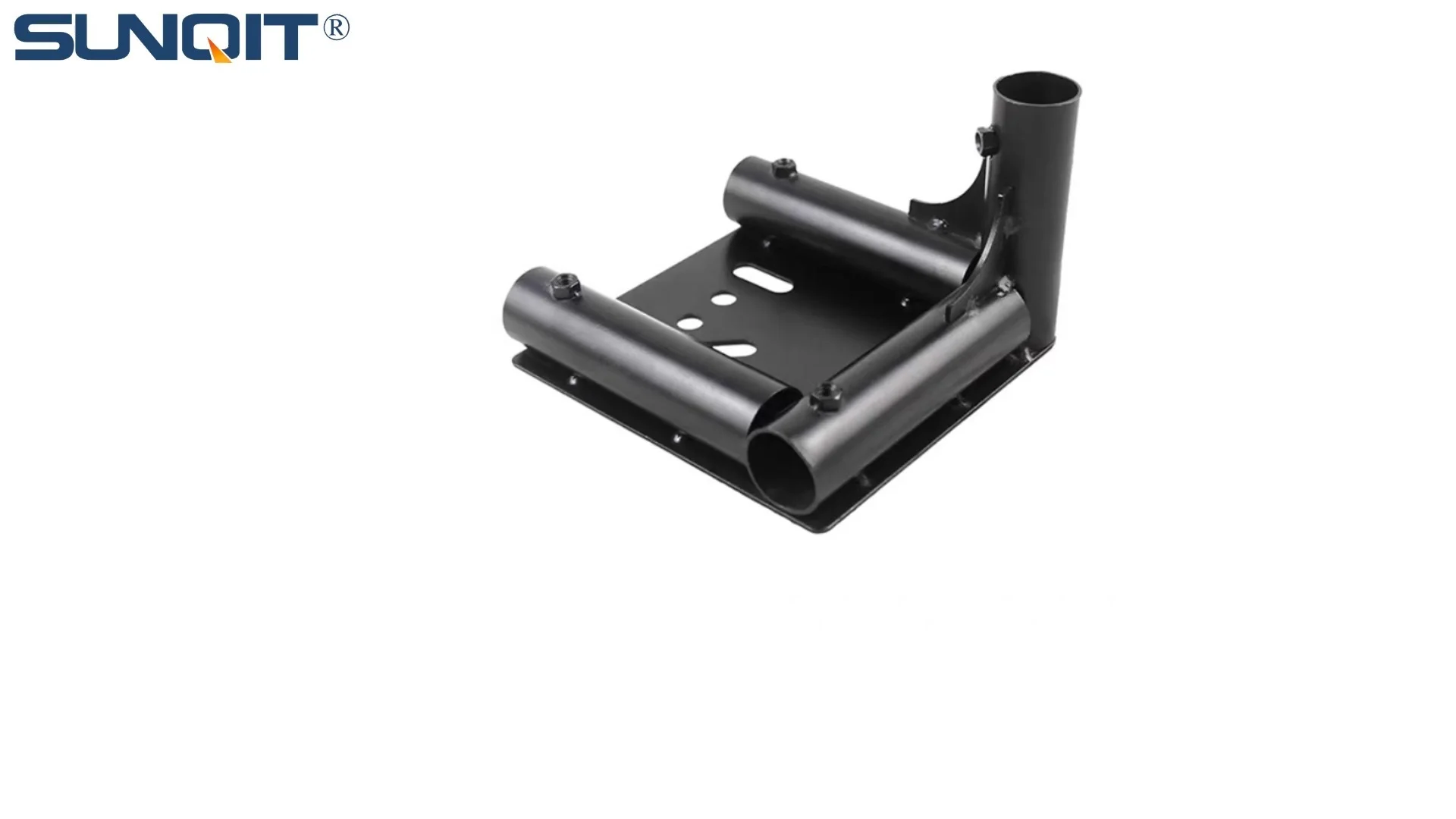
Understanding Castor Installation Bases: Components and Key Terms
To appreciate why custom sizing is so important, let's first get familiar with the basics of a castor installation base. These bases might seem simple, but they're engineered with specific features to meet the demands of industrial environments. Here are the key components you'll encounter:
- Base Plate: The flat, rigid surface that attaches to the bottom of the equipment (e.g., Workbench E's frame or Material Rack B's legs). It's usually made from steel, aluminum, or aluminum profile for durability and weight savings.
- Mounting Holes: Pre-drilled holes in the base plate that align with the holes on the caster's top plate. Proper spacing here is critical—misaligned holes mean you'll either have to drill new ones (weakening the base) or use ill-fitting hardware, which can loosen over time.
- Material Thickness: Thicker plates (typically 3mm to 10mm, depending on load) offer more rigidity and weight capacity. Thinner plates might bend under heavy loads, especially if the equipment is moved frequently.
- Edge Finish: Rounded or deburred edges prevent snags on flooring or injury to workers during installation. This is a small detail but adds to overall safety.
Now, when we talk about "dimensions," we're referring to measurements like length, width, hole spacing (center-to-center distance between mounting holes), and hole diameter. For example, a base designed for Workbench E might need to be 500mm long and 400mm wide to match the workbench's frame, with four mounting holes spaced 100mm apart to fit standard caster accessories like swivel stem casters or flat swivel castor wheels with brakes.
It's also worth noting that castor installation bases aren't one-size-fits-all. A base for a lightweight Workbench E used in electronics assembly (with ESD protection, perhaps) will have different specs than one for a heavy-duty Material Rack B loaded with metal components. That's where custom sizing comes in—tailoring these dimensions to your equipment's unique needs.

Workbench E (Single Deck – Without Caster): Why Base Dimensions Matter for Retrofitting
Let's start with Workbench E, a single-deck workbench that comes "without caster" as standard. If you're thinking, "Why worry about castor bases if it doesn't have casters?" you're not alone—but here's the thing: many facilities opt to retrofit casters later. Maybe your initial layout had the workbench fixed in place, but as production needs changed, you realized moving it to different assembly stations would save time. Or perhaps you want the flexibility to reconfigure the line for small-batch runs. Whatever the reason, retrofitting casters to Workbench E is common—and that's when base dimensions become make-or-break.
Workbench E's design is straightforward: a single, sturdy deck (often made from aluminum honeycomb panel or plywood with a steel frame) supported by four legs. Without a pre-installed castor base, the legs typically end in fixed feet—great for stability but not mobility. To add casters, you'll need to attach a castor installation base to the bottom of each leg (or to the frame, depending on design). The problem? If the base isn't sized to fit Workbench E's leg spacing or frame width, you'll struggle to mount the casters securely.
Key Dimensions for Workbench E Bases
Let's say Workbench E has a frame width of 1200mm and depth of 600mm, with legs spaced 1000mm apart (width) and 450mm apart (depth). The castor installation base for each leg needs to align with that spacing. For example, if the base is too narrow, it might extend beyond the leg, creating a tripping hazard. If the mounting holes don't line up with the leg's bolt pattern, you'll have to drill new holes, which can weaken the leg or frame—especially if the frame is made from aluminum profile, which is strong but less forgiving of imprecise modifications.
Weight capacity is another factor. Workbench E might have a static load capacity of 500kg (when fixed) but when moving it, the dynamic load (the weight while in motion) increases due to momentum. The castor base must be thick enough to handle this dynamic load. A base with 5mm steel might work for static use, but for regular movement, 8mm steel or reinforced aluminum profile could be necessary to prevent bending.
Hole spacing is equally critical. Most standard casters use a 4-hole mounting pattern, with holes spaced 80mm x 80mm or 100mm x 100mm center-to-center. If Workbench E's legs have pre-drilled holes for feet that are spaced 90mm x 90mm, a standard 80mm x 80mm base won't fit. This is where a custom base—with holes spaced to match the leg's existing pattern—saves the day. It eliminates the need for drilling and ensures a secure, tight fit between the leg, base, and caster.
Real-world example: A electronics manufacturer we worked with once tried to retrofit casters to 10 Workbench E units using off-the-shelf bases. The bases had 80mm x 80mm hole spacing, but the workbench legs had 90mm spacing. They drilled new holes in the bases, but the misalignment caused the casters to wobble. Within a month, two casters had loosened, leading to a workbench tipping slightly during movement. The solution? Custom bases with 90mm x 90mm hole spacing, which eliminated wobble and improved safety. The small investment in custom sizing saved them from downtime and potential product damage.

Material Rack B (3 Row and 3 Floor): Stability and Load Distribution
Now, let's turn to Material Rack B: a 3-row, 3-floor storage rack designed to hold tools, components, or finished goods. Unlike Workbench E, which is often used at waist height for assembly, Material Rack B is all about vertical storage—maximizing floor space while keeping materials accessible. With three rows (horizontal sections) and three floors (vertical levels), it can hold a significant amount of weight—think boxes of fasteners, plastic parts, or even small machinery components. That makes its castor installation base not just about mobility, but about preventing catastrophic failure.
Material Rack B's structure is inherently top-heavy when fully loaded. The higher the floors, the more leverage weight has to tip the rack. A poorly sized base exacerbates this risk. For example, a base that's too narrow (width less than the rack's depth) creates a small footprint, making the rack prone to tipping when a heavy box is pulled from the top shelf. Conversely, a base that's too wide might extend beyond the rack's frame, getting caught on nearby equipment or walls when moved.
Critical Dimensions for Material Rack B Bases
Let's outline the key dimensions for Material Rack B's castor base:
- Base Width vs. Rack Depth: The base should be at least as wide as the rack's depth (the distance from front to back). If Material Rack B is 800mm deep, the base width should be 800mm or slightly more (850mm, for example) to provide a stable footprint. This prevents tipping by keeping the center of gravity within the base's width.
- Mounting Hole Spacing: Material Rack B typically has four legs (one at each corner). The castor bases (one per leg) must have hole spacing that aligns with the legs' bolt patterns. If the legs are spaced 600mm apart (width) and 750mm apart (depth), the bases need to attach at those points to distribute weight evenly across all four casters.
- Material Thickness and Load Capacity: A fully loaded Material Rack B could weigh 800kg or more. The castor base must be thick enough (10mm steel, for example) to handle this load without deforming. The base material should also resist corrosion, especially if the rack is used in environments with moisture (like warehouses near loading docks).
- Caster Compatibility: Material Rack B often uses heavy-duty casters (e.g., 5-inch or 6-inch caster wheels with brakes) to handle the weight. The base must have a hole diameter large enough to fit the caster's mounting bolts (typically M12 or M16 for heavy loads). A base with 10mm holes won't work with M12 bolts—another reason custom sizing is essential.
Consider a scenario where a warehouse uses Material Rack B to store automotive parts. Each floor holds 10 boxes, each weighing 25kg—total load of 750kg. If the castor base is only 600mm wide (while the rack is 800mm deep), the center of gravity shifts when a box is removed from the top shelf, causing the rack to lean. Over time, this strain can bend the base or loosen the casters, leading to a dangerous situation. A custom base with 850mm width, paired with 6-inch casters rated for 250kg each (total 1000kg capacity), would distribute the weight safely and prevent tipping.

Custom Sizing: Working with Suppliers to Get It Right
By now, it's clear that off-the-shelf castor installation bases rarely fit Workbench E or Material Rack B perfectly. So, how do you get bases that match your equipment's specs? The answer: partner with a lean pipe workbench supplier or material handling equipment supplier who offers custom sizing. These suppliers have the expertise to design bases tailored to your Workbench E's leg spacing, Material Rack B's load capacity, and unique workflow needs.
What to Provide Your Supplier
To ensure your custom castor installation bases are spot-on, share these details with your supplier:
- Equipment Model: Specify "Workbench E (Single Deck – Without Caster)" or "Material Rack B (3 Row and 3 Floor)" to ensure they reference the correct design specs.
- Dimensions: Provide the equipment's frame width, depth, leg spacing (center-to-center), and existing bolt hole patterns (if retrofitting). If you're unsure, ask the supplier if they have CAD drawings of the equipment—many do, especially if they manufactured the workbench or rack.
- Load Requirements: Static load (weight when stationary) and dynamic load (weight when moving). For Material Rack B, include the heaviest load you expect to store (e.g., "800kg total, with 300kg on the top floor").
- Caster Type: Will you use swivel casters with brakes, rigid casters, or a mix (two swivel, two rigid for maneuverability)? Different casters have different mounting plate sizes and hole patterns.
- Floor Conditions: Is the floor smooth concrete, uneven warehouse pavement, or prone to debris? Uneven floors might require bases with adjustable feet or casters with shock-absorbing features, which can affect base height and thickness.
A reputable supplier will then provide a technical drawing (CAD file) for your approval, showing the base's length, width, hole spacing, material thickness, and load capacity. This step is crucial—review the drawing carefully to ensure it aligns with your equipment and caster specs. Once approved, they'll manufacture the bases to those exact dimensions, often with a quick turnaround (1-2 weeks for small batches).
Technical Specifications Table: Workbench E vs. Material Rack B Bases
| Specification | Workbench E (Single Deck – Without Caster) | Material Rack B (3 Row and 3 Floor) |
|---|---|---|
| Base Material | 6mm Aluminum Profile or 5mm Steel | 10mm Steel or Reinforced Aluminum Profile |
| Base Dimensions (L x W) | 150mm x 150mm (per leg base) | 200mm x 200mm (per leg base) |
| Hole Spacing (Center-to-Center) | 80mm x 80mm (standard 4-hole pattern) | 100mm x 100mm (heavy-duty 4-hole pattern) |
| Hole Diameter | 10mm (fits M8 bolts) | 14mm (fits M12 bolts) |
| Static Load Capacity (Per Base) | 200kg | 300kg |
| Dynamic Load Capacity (Per Base) | 150kg | 250kg |
| Compatible Caster Size | 3-inch to 4-inch Swivel Casters with Brakes | 5-inch to 6-inch Heavy-Duty Swivel Casters with Brakes |
| Edge Finish | Rounded (Deburred) | Rounded (Deburred) |
*Note: These are sample dimensions. Actual specs may vary based on custom requirements and supplier recommendations.
Conclusion: The Bottom Line on Custom Castor Bases
Castor installation bases might seem like small components, but they're the backbone of mobility and safety for Workbench E, Material Rack B, and countless other equipment in your lean system. Getting their dimensions right—through custom sizing—prevents wobbling, tipping, and downtime, while ensuring your team can move equipment efficiently and safely. By partnering with a supplier who understands your equipment's unique needs and provides tailored bases, you're not just investing in hardware—you're investing in the efficiency and reliability of your entire production process.
So, the next time you're considering adding casters to Workbench E or outfitting Material Rack B for mobility, remember: don't settle for off-the-shelf. Go custom. Your floor layout, your team, and your bottom line will thank you.