- Company Articles
- Products and Technology
- Installation And Maintenance
- Castor Installation Base for Automated Guided Vehicles (AGVs): Compatibility Guide

Castor Installation Base for Automated Guided Vehicles (AGVs): Compatibility Guide
Related Product
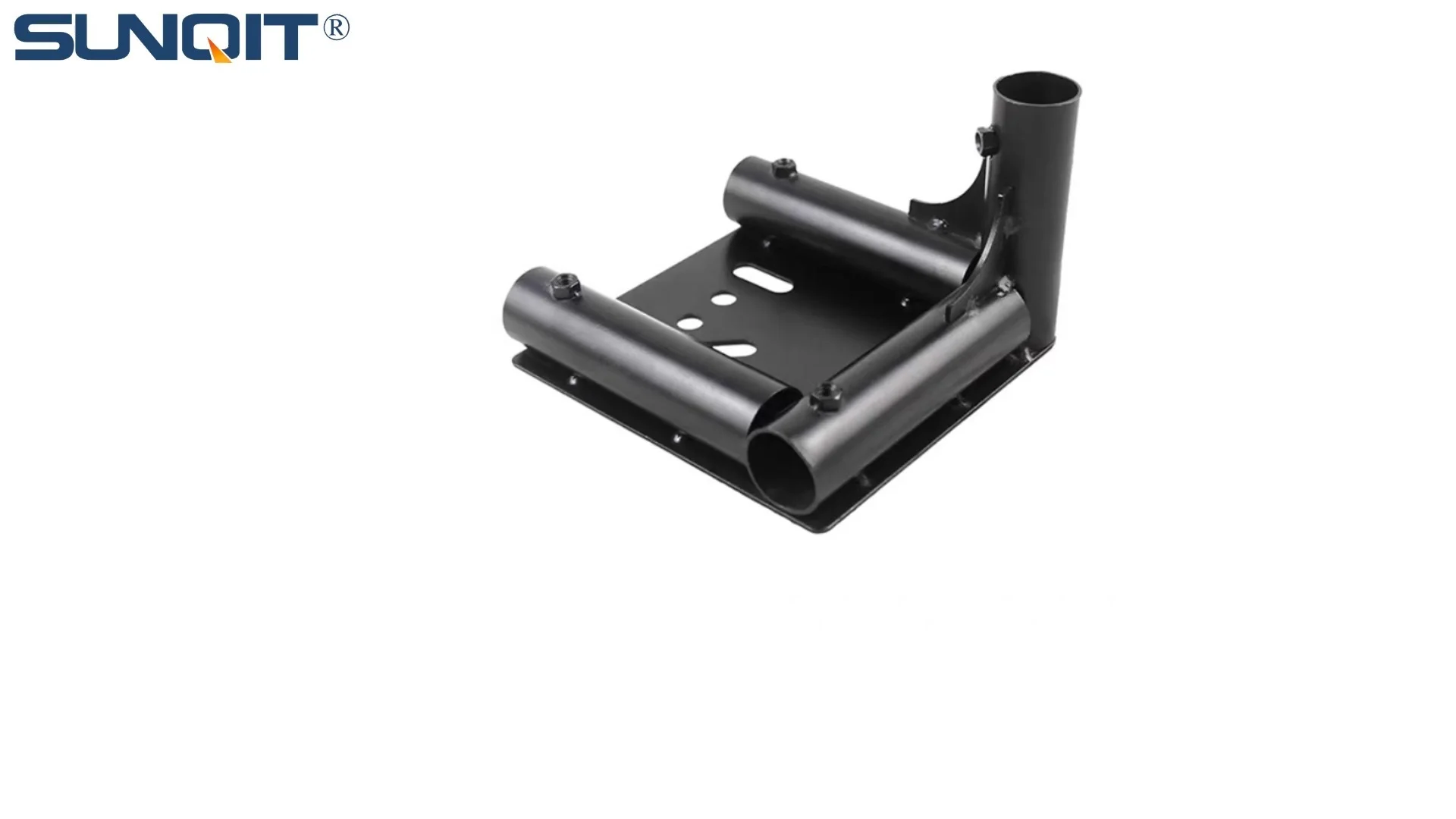
Castor Installation Base
Pipe fitting castor installation base,Well made, precise and strong. Made of high quality of steel,black painting surface treatment for greater resistance to corrosion. It is used for castor or foot lever connection with lean pipe.
Introduction: The Unsung Hero of AGV Performance
Walk into any modern factory, warehouse, or distribution center, and you'll likely spot them: sleek, self-navigating machines gliding across the floor, moving materials, components, and finished goods with precision. These are Automated Guided Vehicles (AGVs), the workhorses of industrial automation. They reduce human error, boost efficiency, and keep production lines running 24/7. But behind their smooth operation lies a component so it's often overlooked: the castor installation base .
Think of it this way: if an AGV is a high-performance sports car, the castor installation base is its suspension system. It connects the AGV's body to its casters, absorbing shocks, distributing weight, and ensuring stability—even when the vehicle is carrying heavy loads or navigating tight turns. Get the base wrong, and the AGV becomes a liability: it might wobble, damage floors, or even fail mid-operation. That's why compatibility isn't just a buzzword here; it's the foundation of reliable AGV performance.
What Is a Castor Installation Base, Anyway?
At its core, a castor installation base is a mounting structure that attaches casters (the wheeled components) to the AGV's chassis. It's not just a metal plate, though—modern bases are engineered systems designed to balance multiple needs: weight support, flexibility, durability, and adaptability. Depending on the AGV's purpose, the base might be fixed, allowing only forward movement, or swivel, enabling 360-degree rotation. It might be made of steel for heavy-duty tasks or lightweight aluminum profile for agile, high-speed AGVs.
But here's the catch: no two AGVs are exactly alike. A small AGV used in electronics manufacturing (carrying circuit boards) has different needs than a massive one transporting engine blocks in an auto plant. Their castor installation bases must match their unique requirements. That's where compatibility comes in—and why this guide is your roadmap to getting it right.

Why Compatibility Isn't Optional: The Risks of Mismatched Bases
Imagine investing in a top-of-the-line AGV, only to skimp on the castor installation base. Sounds like a bad idea, right? But it happens more often than you'd think. Companies focus on the AGV's software, sensors, and battery life, forgetting that the base is the link between the vehicle and the ground. Mismatched bases lead to a cascade of problems:
- Safety Hazards: A base that can't handle the AGV's weight might crack or detach, causing the vehicle to tip over—risking damage to goods and injury to workers.
- Premature Wear: If the base doesn't align with the caster's mounting holes or axle size, the caster wheels will wear unevenly. You'll end up replacing wheels (and bases) far sooner than expected.
- Operational Downtime: Wobbling or unstable AGVs often trigger error codes, forcing production lines to halt. In manufacturing, even 10 minutes of downtime can cost thousands of dollars.
- Floor Damage: Bases that aren't designed for the facility's floor type (e.g., concrete vs. epoxy) can scratch, scuff, or leave indentations—adding to maintenance costs.
The solution? Treat compatibility as a non-negotiable. It's not just about "fitting" the base to the AGV; it's about ensuring every component works in harmony.

Key Compatibility Factors: What to Consider
Compatibility isn't a one-size-fits-all check. It's a checklist of variables that vary by AGV model, application, and environment. Let's break down the most critical factors:
1. Weight Capacity: Don't Skimp on Strength
Every AGV has a maximum load rating—say, 500 kg or 2,000 kg. The castor installation base must handle not just the AGV's own weight but also its typical payload. If you're transporting heavy automotive parts, a flimsy base will bend under pressure. Look for bases rated for at least 120% of the AGV's maximum load (this accounts for sudden stops or uneven terrain). For example, an AGV with a 1,000 kg capacity needs a base rated for 1,200 kg or more.
2. AGV Model and Chassis Design
AGVs come in all shapes: small tow tractors, large unit load carriers, even robotic forklifts. Each has a unique chassis design—some have flat underbodies, others have raised frames or modular sections. The castor installation base must align with the chassis's mounting points, bolt patterns, and height. A base designed for a flat-chassis AGV won't work on a raised-frame model, no matter how strong it is. Always check the AGV manufacturer's specs for base dimensions and mounting requirements.
3. Floor Type and Surface Conditions
Is your facility's floor smooth concrete, rough asphalt, or polished epoxy? The base's design (and the casters it supports) must adapt. For uneven floors, a base with shock-absorbing features (like rubberized gaskets) prevents excessive vibration. For delicate floors (e.g., in electronics cleanrooms), a base with soft, non-marking caster wheels and a low-profile design avoids scratches.
4. Environmental Factors: Heat, Moisture, and Chemicals
AGVs don't just work in clean factories. Some operate in cold storage (sub-zero temperatures), others in foundries (high heat), or warehouses with chemical spills. The base's material matters here. Steel bases might rust in humid environments, while aluminum profile bases resist corrosion. In food processing plants, stainless steel bases are a must for easy sanitization.
5. Maneuverability Needs
Does your AGV need to pivot in tight spaces (like a warehouse aisle) or move in straight lines (like an assembly line)? Swivel casters require bases with rotating mounts, while fixed casters need rigid bases. A base that restricts swivel movement will make the AGV hard to steer, leading to inefficiency and operator frustration.

Materials Matter: Why Aluminum Profile is a Top Choice for Bases
When it comes to castor installation bases, material selection is make or break. Steel is strong but heavy; plastic is lightweight but weak. Enter aluminum profile : a material that strikes the perfect balance.
Aluminum profiles are extruded aluminum shapes (think T-slots, angles, or tubes) that can be cut, drilled, and assembled into custom structures. For AGV bases, they offer three key advantages:
- Lightweight: Aluminum is 30% lighter than steel, reducing the AGV's overall weight. This means better battery efficiency and less strain on motors.
- Durable: Despite its lightness, aluminum is surprisingly strong—especially when alloyed with elements like magnesium. It resists dents and bending under heavy loads.
- Corrosion-Resistant: Aluminum naturally forms a protective oxide layer, making it ideal for humid or wet environments (no rust!).
- Modular: Aluminum profiles use T-slot connections, so bases can be easily modified. Need to add a brake mount or adjust the height? Just swap out a section—no welding required.
Take, for example, a pharmaceutical warehouse AGV that transports temperature-sensitive drugs. Its base, made from aluminum profile, is lightweight (to save battery), corrosion-resistant (to handle cold storage condensation), and modular (so maintenance crews can quickly replace worn caster mounts). It's a material that adapts to the AGV's needs, not the other way around.
Types of Castor Installation Bases: Which One Fits Your AGV?
Bases aren't one-trick ponies. They come in styles tailored to different AGV functions. Here are the most common types, and when to use them:
Fixed Bases: For Straight-Line Stability
Fixed bases hold casters in a rigid, forward-facing position. They're ideal for AGVs that move in straight lines (e.g., along assembly lines) and need maximum stability. Think of a conveyor belt on wheels—no swiveling needed, just steady movement. Fixed bases are simple, durable, and cost-effective, but they lack flexibility.
Swivel Bases: For Agile Maneuvering
Swivel bases let casters rotate 360 degrees, making AGVs highly maneuverable. They're perfect for warehouses or factories with tight corners. Some swivel bases even have locks (via a foot pedal or electronic brake) to switch between swivel and fixed modes—handy for when the AGV needs to park or load/unload.
Modular Bases: Aligning with Lean Systems
In today's fast-paced manufacturing, flexibility is key. Modular bases, often built with aluminum profile, use interchangeable components (mounts, brackets, and crossbars) that can be reconfigured as AGV needs change. This aligns with lean system principles—minimizing waste by adapting existing equipment instead of buying new. For example, if your AGV starts carrying larger loads, you can add reinforcing bars to the base instead of replacing the entire unit.
| Base Type | Best For | Key Benefit | Material Example |
|---|---|---|---|
| Fixed | Straight-line AGVs (assembly lines) | High stability, low cost | Steel or aluminum profile |
| Swivel | Warehouse AGVs (tight spaces) | 360° maneuverability | Aluminum profile with rotating mounts |
| Modular | Dynamic environments (changing loads/tasks) | Easy reconfiguration (lean system-friendly) | Aluminum profile with T-slot connections |
Caster and Accessories: The Base's Supporting Cast
A base is only as good as the caster and accessories it holds. Even the most compatible base will fail if paired with the wrong caster wheel or mounting hardware. Let's break down the essentials:
Caster Wheels: Size, Tread, and Material
The wheel is the base's "feet"—it touches the floor, so its design directly impacts performance. Wheel size (diameter) affects rollability: larger wheels (e.g., 6 inches) roll over debris more easily, while smaller wheels (e.g., 3 inches) offer better precision. Tread material matters too: rubber wheels absorb shock (good for fragile goods), polyurethane wheels resist wear (good for high-traffic areas), and steel wheels handle extreme heat (good for foundries).
Mounting Plates: The Base-Caster Connection
Mounting plates attach the caster to the base. They must match the base's bolt pattern and thickness. A mismatched plate will loosen over time, causing the caster to wobble. Look for plates with pre-drilled holes that align with your base's T-slots (if using aluminum profile) or threaded inserts (if using steel).
Brakes and Locks: Safety First
Many AGVs need to stop and stay put during loading/unloading. Brakes (manual or electric) on the caster or base prevent rolling. Some bases even have integrated brake mounts, so you don't have to drill extra holes. Always ensure the brake is compatible with the caster type (swivel or fixed) and the base's design.
For example, a hospital AGV transporting medical supplies uses swivel casters with rubber wheels (to avoid noise and floor scratches), mounted on an aluminum profile base with electric brakes (to lock in place when delivering supplies to patient rooms). Every accessory works with the base to meet the AGV's unique needs.
Real-World Compatibility: Case Studies
Theory is great, but real examples show how compatibility drives success. Let's look at two scenarios where the right (and wrong) base made all the difference.
Case Study 1: Automotive Plant Avoids Downtime with Aluminum Profile Bases
A major automotive manufacturer was struggling with AGV downtime on its assembly line. The AGVs, which transported engine blocks (1,500 kg each), were using steel bases. Over time, the steel rusted in the humid plant, weakening the mounts. Casters loosened, causing the AGVs to vibrate excessively—sometimes even dropping parts.
The solution? Switching to modular bases made from aluminum profile. The aluminum resisted rust, and the T-slot design allowed crews to replace worn mounts in minutes (no welding). The new bases also had larger polyurethane wheels, which reduced vibration. Result: Downtime dropped by 75%, and the AGVs' lifespan increased by 3 years.
Case Study 2: Warehouse AGV Fiasco: Mismatched Bases Cost Thousands
A warehouse bought budget AGVs for order picking, pairing them with generic steel bases (to save money). The AGVs were supposed to navigate narrow aisles, but the bases were too wide—they scraped against racking, damaging both the AGVs and the shelves. Worse, the bases didn't fit the AGVs' swivel casters properly, leading to uneven wear. Within 3 months, 4 of the 10 AGVs were out of commission, costing the warehouse $50,000 in repairs and lost productivity.
Lesson learned: Cutting corners on base compatibility costs more in the long run.
Troubleshooting Common Compatibility Issues
Even with careful planning, issues can pop up. Here's how to diagnose and fix the most common problems:
Issue: AGV Wobbles or Vibrates
Cause: Base is too flexible (underweight capacity) or caster wheels are unevenly worn. Solution: Upgrade to a stiffer base (e.g., aluminum profile with cross-bracing) or replace worn wheels with matching-sized ones.
Issue: Caster Loosens from Base
Cause: Mounting plate doesn't fit base's bolt pattern. Solution: Use a plate with pre-drilled holes that align with the base, or use T-slot nuts (for aluminum profile bases) to secure the plate tightly.
Issue: Floor Scratches or Damage
Cause: Base is too low, or wheels are made of hard material (e.g., steel). Solution: Switch to a higher-profile base or softer wheels (rubber or polyurethane).
Choosing the Right Supplier: Why Reliability Matters
You've done your homework: you know your AGV's weight, environment, and maneuverability needs. Now, you need a supplier who can deliver a compatible base. But not all suppliers are equal. Look for ones that:
- Offer Customization: Can they modify bases (size, material, mounts) to fit your AGV's specs? Off-the-shelf bases rarely work for unique applications.
- Provide Technical Support: Do they have engineers who can help you calculate load capacity or choose materials? A good supplier acts as a partner, not just a seller.
- Stock caster and accessories : It's easier to get compatible wheels, plates, and brakes from the same supplier—no guessing if parts will fit.
- Have a Track Record: Check reviews or ask for references. A supplier with experience in your industry (e.g., automotive, warehousing) understands your unique challenges.
Future Trends: What's Next for Castor Installation Bases?
AGVs are getting smarter—think AI navigation, IoT connectivity, and self-diagnosing sensors. Bases are evolving too. Here's what to watch for:
- Smart Bases with Sensors: Bases embedded with load cells or vibration sensors will alert operators to issues (e.g., "weight exceeding capacity") before failure occurs.
- Lightweight Composites: Beyond aluminum profile, materials like carbon fiber will make bases even lighter and stronger—boosting AGV battery life.
- 3D-Printed Bases: Custom bases printed on-demand, with complex geometries that optimize weight and strength.
Conclusion: Compatibility = Performance
The castor installation base might not be the flashiest part of an AGV, but it's the backbone of its reliability. From weight capacity to material choice, from aluminum profile modularity to caster and accessories integration, every detail matters. By prioritizing compatibility, you're not just buying a base—you're investing in an AGV that works harder, lasts longer, and keeps your operation running smoothly.
So, the next time you see an AGV gliding across the factory floor, take a moment to appreciate its unsung hero. And when it's time to upgrade or replace your AGV's base, remember: compatibility isn't optional. It's the key to keeping your automated workflow in motion.