- Company Articles
- Products and Technology
- Application Cases
- Castor Installation Base for Automotive Parts Trolleys: Lean Production Case Study

Castor Installation Base for Automotive Parts Trolleys: Lean Production Case Study
Related Product
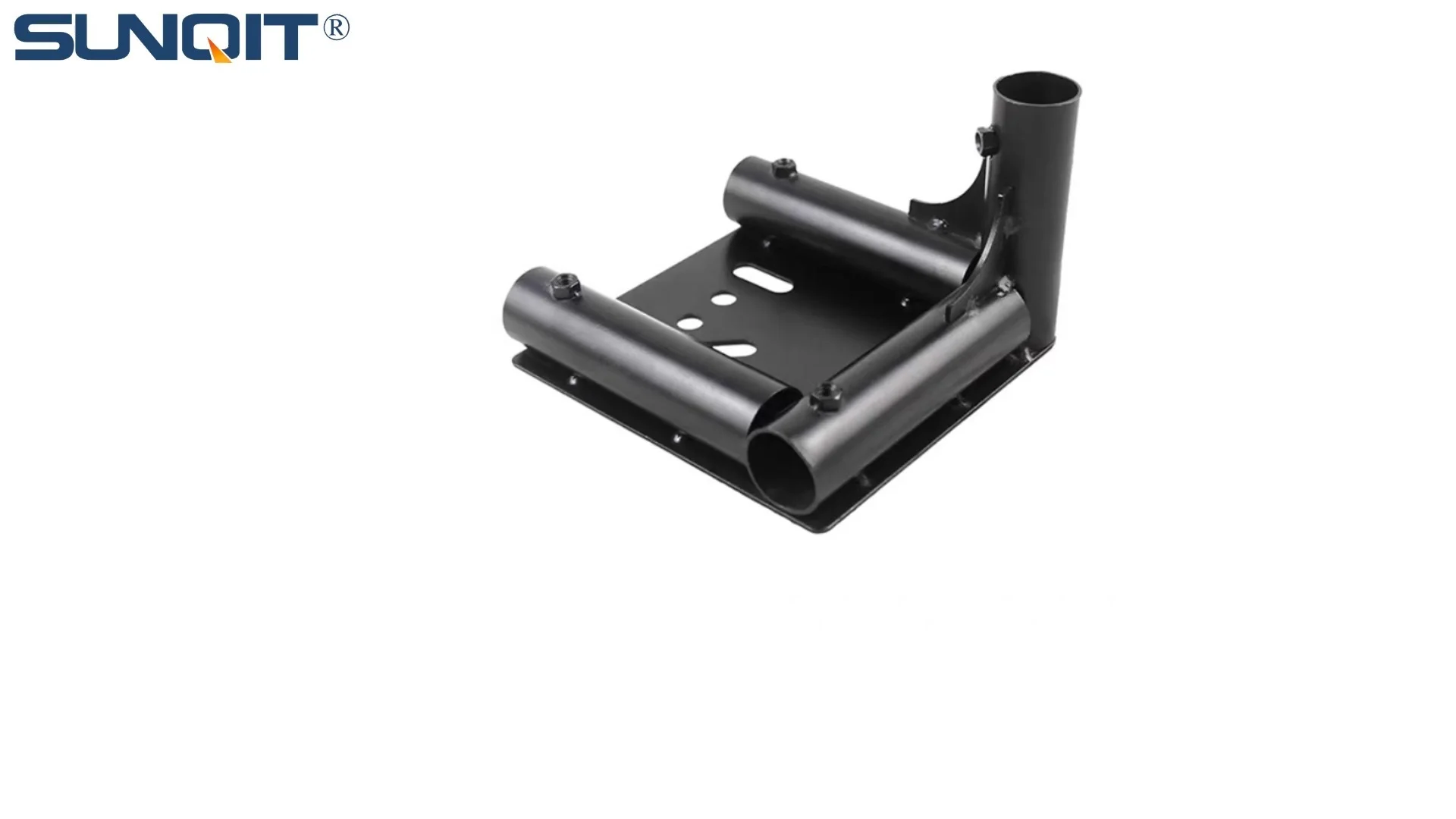
Castor Installation Base
Pipe fitting castor installation base,Well made, precise and strong. Made of high quality of steel,black painting surface treatment for greater resistance to corrosion. It is used for castor or foot lever connection with lean pipe.
The Unsung Hero of Lean Material Handling
In the fast-paced world of automotive manufacturing, where every second counts and efficiency is the name of the game, lean production isn't just a buzzword—it's the backbone of survival. From the assembly line to the warehouse, every process, tool, and component is scrutinized for waste: waste of time, waste of effort, waste of resources. But sometimes, the smallest parts make the biggest difference. Today, we're diving into a real-world case study that proves just that: how a humble
castor installation base
transformed material handling for an automotive parts supplier, turning frustrating inefficiencies into smooth, lean operations.
Let's set the scene: a mid-sized automotive parts manufacturer, let's call them
AutoLink Components
, specializing in precision-engineered parts for electric vehicle (EV) batteries. With a growing client list and tightening delivery deadlines, their lean team was on a mission to eliminate bottlenecks in their material flow. Their biggest pain point? The trolleys used to move parts between production stations and storage areas. These weren't just any trolleys—they were the lifeline of the facility, carrying sensitive components that couldn't afford to be jostled, delayed, or damaged. But for months, they'd been causing more problems than they solved.
The Problem: Wobbly Wheels, Wasted Time
AutoLink's old trolleys looked sturdy enough on paper. They had steel frames, plastic bins, and four caster wheels for mobility. But the issue wasn't the wheels themselves—it was how they were attached. The original caster mounts were generic, bolted directly to the trolley's frame with basic hardware. Over time, the constant jostling from uneven factory floors and heavy loads caused the bolts to loosen. Workers would spend precious minutes stopping to adjust wobbly wheels. Worse, a loose caster meant the trolley didn't roll straight, leading to parts sliding off shelves or getting stuck in doorways.
"We had a trolley get stuck in the narrow hallway between the machining area and the assembly line last quarter," recalls Maria Gonzalez, AutoLink's production supervisor. "It held up two operators who needed parts for the next battery batch. By the time we freed it, we were 20 minutes behind schedule. And that wasn't an isolated incident—we were seeing at least three similar delays a week, not to mention the maintenance team spending hours tightening bolts or replacing bent mounts."
The ergonomics were another headache. A wobbly trolley forces workers to exert extra effort to steer it, increasing fatigue and raising the risk of strains. "Our safety reports started showing more minor injuries—twisted ankles, sore shoulders—all linked to struggling with these trolleys," says Raj Patel, AutoLink's lean coordinator. "We knew we needed a fix, and we needed it fast. That's when we turned to our
lean system supplier
for help."

The Solution: A Purpose-Built Castor Installation Base
AutoLink's lean system supplier had worked with them before, providing
aluminum profile
workbenches and flow racks that streamlined their assembly lines. When Raj and his team explained the trolley issue, the supplier didn't just offer a quick replacement part—they proposed a complete rethinking of how casters attach to the trolley frame. The star of the solution? A heavy-duty castor installation base designed specifically for industrial material handling.
Unlike the generic mounts, this base was engineered with three key goals in mind: stability, durability, and compatibility. Made from high-grade aluminum (matching AutoLink's existing aluminum profile trolleys), it featured a reinforced plate that distributed the trolley's weight evenly across the caster. The base also came with specialized
caster accessories
: locking nuts that prevented bolts from loosening, and a corrosion-resistant coating to withstand the factory's occasional oil spills and humidity.
"What sold us was how it integrated with our existing setup," Raj explains. "We didn't have to replace the entire trolley—just swap out the old mounts for these new bases. The supplier even sent a technician to train our maintenance team on installation. It took less than an hour per trolley, and we could do it during our night shift so production didn't skip a beat."

Technical Deep Dive: How the Base Works
Let's break down the castor installation base's design to understand why it solved AutoLink's problems. At its core, it's a rectangular aluminum plate (6 inches by 4 inches) with pre-drilled holes that align perfectly with standard caster wheel stems. The bottom of the plate has a recessed area where the caster's top plate sits, creating a "lock" that prevents lateral movement. Around the edges, four threaded holes accept high-tensile steel bolts, which are secured with nylon-insert lock nuts—these nuts have a plastic ring inside that grips the bolt threads, stopping them from vibrating loose over time.
The base also includes a small lip around its perimeter, which acts as a shield to keep debris (like metal shavings or dust) from getting between the caster and the mount. "We used to have issues with dirt buildup causing the wheels to stick," Maria notes. "With the lip, that problem vanished. The trolleys roll so smoothly now, even on our older concrete floors."
Perhaps the most underrated feature? Compatibility. AutoLink's trolleys are built using 4040 aluminum profiles (a common industrial standard), and the castor installation base was designed to bolt directly into the profile's T-slots. This meant no welding, no drilling new holes, and no risk of damaging the trolley's frame. "It was like it was made for our setup," Raj says. "That's the beauty of working with a supplier who understands lean—they don't just sell parts; they solve problems."

Results: By the Numbers
AutoLink installed the new castor installation bases on 24 of their most-used trolleys in June 2024. By August, the results were impossible to ignore. Let's look at the metrics:
| Metric | Before (Q1 2024) | After (Q3 2024) | Improvement |
|---|---|---|---|
| Weekly trolley-related delays | 3-4 incidents/week | 0 incidents/week | 100% reduction |
| Maintenance time spent on casters | 8 hours/week | 1 hour/week | 87.5% reduction |
| Worker-reported fatigue (1-10 scale) | Average score: 7.2 | Average score: 3.8 | 47% improvement |
| Part damage during transport | 5-7 parts/week | 0-1 parts/week | 85% reduction |
| Trolley lifespan | 18-24 months | Estimated 36+ months | 50%+ extension |
"The numbers speak for themselves," Raj says, pointing to the table. "But the real win is the intangible stuff. Workers are happier because they're not fighting with trolleys anymore. The maintenance team can focus on bigger projects instead of chasing loose bolts. And we've freed up nearly 30 hours a month in production time—that's enough to assemble 50 more battery components per month. For a company our size, that's a game-changer."
Beyond the Trolley: Ripple Effects on Lean Goals
AutoLink's success with the castor installation base didn't stop at the trolley. The improved material flow had a domino effect across their lean system. For example, the assembly line now receives parts more consistently, reducing the need for large buffer stocks of components. "We used to keep extra parts on the
workbench
just in case a trolley got delayed," Maria explains. "Now, we can pull parts exactly when we need them, cutting down on inventory waste."
The ergonomic improvements also boosted morale. "Our monthly team meetings used to have a lot of complaints about the trolleys," Raj says. "Now, the feedback is all about how much easier the job feels. When workers are less frustrated, they're more engaged—and engaged workers catch quality issues faster, which aligns with our lean focus on defect prevention."
Perhaps the most unexpected benefit? The castor installation base inspired AutoLink to audit other "small" components in their facility. "If a $25 part could save us thousands in delays and injuries, what else were we missing?" Raj says. They've since upgraded their flow rack rollers with higher-quality bearings and added anti-slip mats to their aluminum profile workbenches—small changes with big returns.
Conclusion: Small Parts, Big Lean Wins
AutoLink's story is a powerful reminder that lean production isn't just about grand overhauls or expensive automation. Sometimes, the key to unlocking efficiency lies in the details—the parts we often overlook. A well-designed castor installation base, paired with the right caster accessories and support from a knowledgeable lean system supplier, transformed a daily frustration into a competitive advantage.
"We used to think of lean as 'cutting costs' or 'speeding up lines'," Raj reflects. "But this project taught us it's also about respecting your workers by giving them tools that make their jobs easier. When you do that, efficiency follows naturally."
So, the next time you walk through a factory or warehouse, take a closer look at the trolleys, the workbenches, the little components holding everything together. You might just spot the next lean success story in the making—one castor installation base at a time.