- Company Articles
- Products and Technology
- Application Cases
- Castor Installation Base for Custom Solutions: 3C Assembly Workstation Examples

Castor Installation Base for Custom Solutions: 3C Assembly Workstation Examples
Related Product
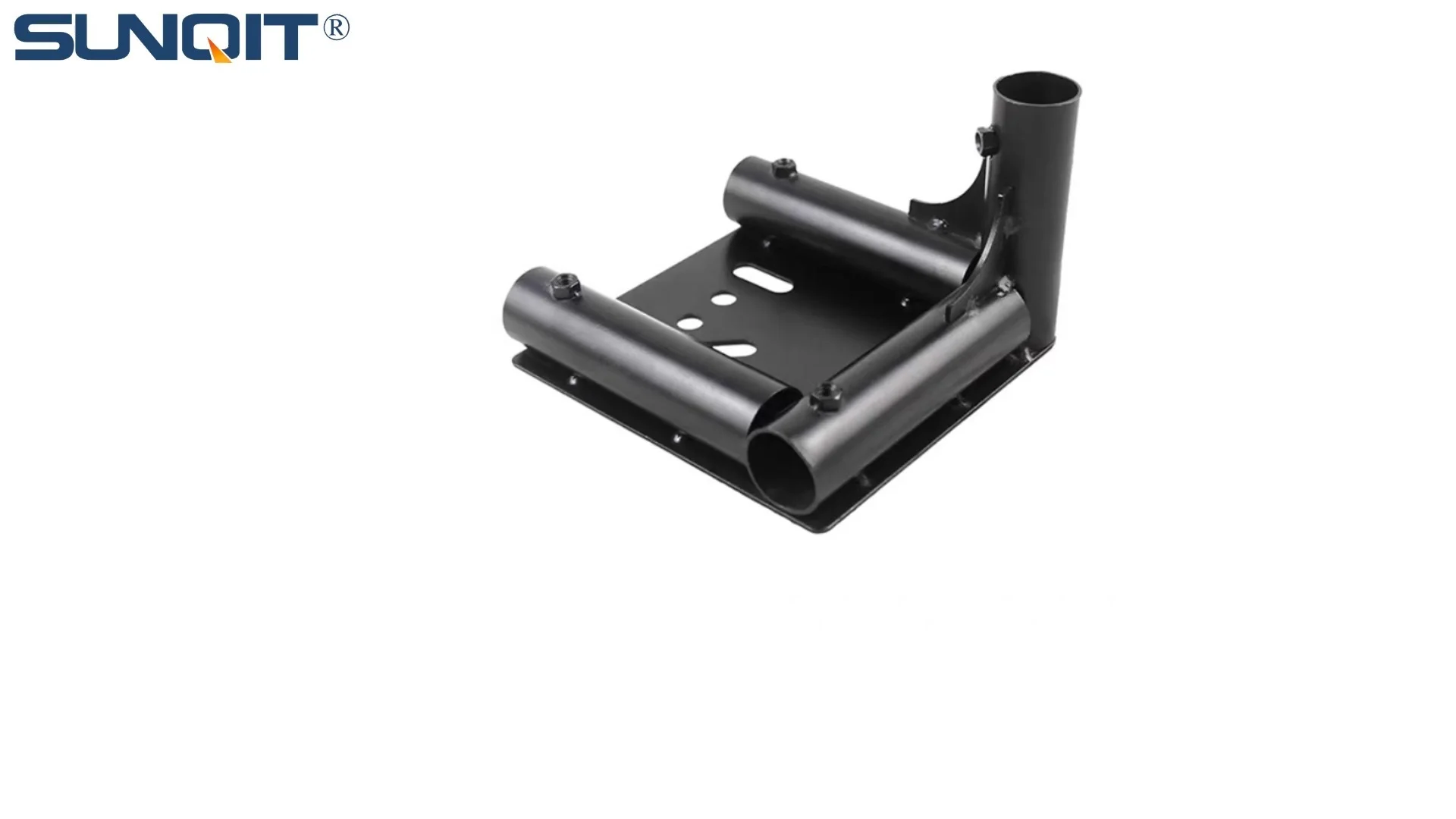
Castor Installation Base
Pipe fitting castor installation base,Well made, precise and strong. Made of high quality of steel,black painting surface treatment for greater resistance to corrosion. It is used for castor or foot lever connection with lean pipe.
In the fast-paced world of 3C manufacturing—where "3C" stands for computers, communication devices, and consumer electronics—every second counts. From assembling the tiniest smartphone components to testing sleek laptops, the efficiency of your assembly line can make or break your ability to keep up with market demands. But here's the thing: no two 3C products are exactly alike, and neither are the workstations that build them. That's where custom solutions come into play, and at the heart of many of these tailored setups lies an often-overlooked hero: the castor installation base. In this article, we'll dive into how this unassuming component, paired with the right tools like aluminum profile and lean pipe workbench systems, transforms rigid factory floors into adaptable, high-performance workspaces. Whether you're reconfiguring a production line for a new smartphone model or optimizing material flow with a turnover trolley and rack, the castor installation base is the quiet force that makes it all possible.
What Exactly Is a Castor Installation Base?
Let's start with the basics. A castor installation base is essentially the "bridge" that connects casters (those small wheels you see on carts and workbenches) to the structure they're meant to move. Think of it as the foundation that ensures your workstation or trolley doesn't just roll around aimlessly but does so smoothly, stably, and safely. Made from durable materials like aluminum or steel, these bases are designed to handle the weight of tools, components, and even workers, all while integrating seamlessly with other system parts like aluminum profile frames or lean pipe workbench structures.
But why does this matter in 3C assembly? Imagine a typical day on the factory floor: a worker needs to move a workstation from one corner to another to align with a new production layout. Without a reliable castor installation base, that workstation might wobble, get stuck on uneven floors, or even damage the components on it. A well-designed base, however, keeps the caster securely attached, distributes weight evenly, and allows for easy swiveling or locking—so the workstation moves exactly where it needs to, when it needs to.
Why Custom Solutions Are Non-Negotiable in 3C Assembly
The 3C industry is defined by rapid innovation. One month, you're assembling a 6-inch smartphone; the next, a foldable tablet with entirely different dimensions. Production runs are often short, and product designs change constantly. In this environment, a "one-size-fits-all" workstation is a recipe for inefficiency. Workers end up stretching to reach tools, materials get bottlenecked in fixed storage areas, and reconfiguring the line for a new product can take hours—if not days.
Custom solutions solve this by adapting to your specific needs. Maybe you need a workstation that's tall enough for standing workers assembling large displays but short enough for seated tasks like circuit board soldering. Or perhaps you need a turnover trolley and rack that can glide between stations, carrying delicate components without jostling them. This is where the castor installation base shines: it's the component that turns static structures into dynamic, customizable tools. By pairing it with modular systems like aluminum profile frames or lean pipe workbench setups, you can build workstations that grow, shrink, move, and adjust as your production needs change.

The Unsung Role of Castor Installation Base in Customization
At first glance, a castor installation base might seem like a simple piece of hardware. But its role in customization is far more critical than you might think. Here's how it enables the flexibility 3C manufacturers need:
- Mobility Without Compromise: The base ensures that when you attach casters to a workstation or turnover trolley and rack, the entire unit moves smoothly. No more stuck wheels or wobbly carts—even when carrying heavy loads like stacks of circuit boards or tool chests.
- Adjustable Stability: Many castor installation bases come with features like height adjusters or locking mechanisms. This means you can lock a workstation in place during assembly for stability, then unlock it to reposition it when the line needs to change.
- Compatibility with Modular Systems: Aluminum profile and lean pipe workbench systems are designed to be modular—you can add, remove, or rearrange parts with minimal tools. The castor installation base fits right into this ecosystem, allowing you to swap out casters (from caster and accessories sets) or adjust the base to fit different frame sizes.
- Ergonomic Adaptability: Workers come in different heights, and repetitive tasks can lead to strain. By using a castor installation base with height-adjustable casters, you can raise or lower workbenches to match each worker's comfort level, reducing the risk of injuries and boosting productivity.

Real-World Examples: 3C Assembly Workstations Powered by Castor Installation Base
To truly understand the impact of castor installation base, let's look at three common scenarios in 3C manufacturing where custom solutions make all the difference. Each example showcases how this component, paired with aluminum profile, lean pipe workbench, and caster and accessories, solves unique challenges.
Example 1: Single-Deck Mobile Workbench for Small Component Assembly
A manufacturer of smartwatch components needed a workstation that could be moved between testing stations but remain stable during intricate assembly tasks (like attaching tiny sensors to watch faces). The solution? A lean pipe workbench frame built with lightweight aluminum profile, topped with a non-slip surface, and mounted on a castor installation base fitted with swivel casters (from their caster and accessories inventory) with brake locks.
The result: Workers can roll the workstation to the testing area, lock the casters for stability while assembling, then unlock and move it back to the main line—all in under a minute. The aluminum profile frame keeps the workstation light enough to maneuver but strong enough to support tools and materials, while the castor installation base ensures the casters stay securely attached, even with daily use.
Example 2: Double-Deck Workstation with Integrated Turnover Trolley
A laptop manufacturer struggled with material flow: components like keyboards and screens were stored on fixed racks, forcing workers to walk back and forth to retrieve them. Their custom solution? A double-deck workstation with an upper deck for assembly and a lower deck that connects to a turnover trolley and rack. The workstation itself is mounted on a castor installation base with heavy-duty rigid casters (for straight-line movement), while the turnover trolley uses swivel casters for easy navigation around corners.
Now, instead of walking to the rack, workers pull the turnover trolley (connected to the workstation via the castor base) right to their station. The double-deck design keeps tools and components within arm's reach, cutting down on wasted motion. And when the production line switches to a new laptop model, the entire setup can be repositioned in minutes by unlocking the workstation's casters and rolling it to the new layout.
Example 3: Height-Adjustable ESD-Protected Workstation for Circuit Boards
Circuit board assembly requires precision—and protection against electrostatic discharge (ESD), which can damage sensitive components. A manufacturer needed a workstation that could adjust to different worker heights, move between static-safe zones, and integrate with ESD mats. Their solution combined an aluminum profile frame (conductive to dissipate ESD), a castor installation base with height-adjustable feet, and swivel casters with ESD-safe wheels (from their caster and accessories selection).
The castor installation base here did double duty: it allowed the workstation to be raised or lowered by 6 inches (to suit standing or seated workers) and enabled smooth movement between assembly and testing areas. The aluminum profile frame ensured conductivity, while the ESD casters prevented static buildup as the workstation moved. This setup reduced assembly errors by 15% and cut down on worker fatigue, thanks to the ergonomic height adjustments.

Key Components That Work Hand-in-Hand with Castor Installation Base
A castor installation base doesn't work alone. To build truly custom 3C workstations, it needs to pair with other components that enhance its functionality. Here are the most critical ones:
Caster and Accessories: Choosing the Right Wheels for the Job
The castor itself is just as important as the base. From the caster and accessories lineup, you'll find options like swivel casters (for 360° movement), rigid casters (for straight-line travel), and brake casters (to lock the workstation in place). For 3C assembly, consider load capacity (most workstations carry 200–500 lbs) and floor type (soft rubber wheels for concrete floors, hard plastic for smooth factory floors). Swivel casters with brakes are a popular choice—they offer flexibility to move in any direction and stability when needed.
Aluminum Profile: The Backbone of Modular Workstations
Aluminum profile is a game-changer for custom setups. Lightweight but incredibly strong, it's easy to cut, drill, and assemble with simple tools. Unlike steel, it won't rust, making it ideal for clean 3C environments. When paired with a castor installation base, aluminum profile frames create workstations that are both mobile and durable. Plus, its modular design means you can add shelves, tool hooks, or bins by simply sliding accessories into the profile's T-slots—no welding required.
Lean Pipe Workbench: Flexibility Meets Affordability
Lean pipe workbench systems (often made with aluminum or steel pipes and joints) are another staple of custom 3C workstations. They're lightweight, easy to reconfigure, and cost-effective—perfect for short production runs. When mounted on a castor installation base, a lean pipe workbench becomes a mobile hub that can adapt to changing tasks. For example, you can add a second tier of pipes for extra storage one week, then remove them the next when you need more surface space for larger components.
The Bottom-Line Benefits of Castor Installation Base in 3C Workstations
Investing in custom workstations with castor installation base, aluminum profile, and quality caster and accessories isn't just about convenience—it's about boosting your bottom line. Here's how these components deliver ROI:
Faster Changeovers, Higher Output
In 3C manufacturing, downtime during line reconfigurations eats into profits. With mobile workstations (thanks to castor installation base), changeovers that once took 8 hours now take 1 hour. That means more time spent producing and less time rearranging—directly increasing output.
Reduced Worker Fatigue and Turnover
Ergonomic, mobile workstations reduce the need for workers to bend, stretch, or walk long distances. A study by the Manufacturing Ergonomics Institute found that companies using adjustable, mobile workstations saw a 20% reduction in worker fatigue and a 15% drop in turnover—saving on training costs and keeping experienced staff on board.
Space Optimization
3C factories often operate in tight spaces, especially in urban areas. Mobile workstations (paired with turnover trolley and rack systems) let you "shrink" the line during slow periods and expand it during peak production. One smartphone manufacturer reported freeing up 15% of floor space by switching to mobile setups—space they repurposed for new testing equipment.
Durability That Lasts
Aluminum profile and steel castor installation bases are built to withstand daily use. Unlike flimsy plastic workstations that need replacement every year, these systems can last 5–10 years with minimal maintenance. Over time, that durability translates to lower replacement costs and less downtime for repairs.
Comparing Custom Workstation Setups: Which Is Right for You?
To help you choose the best setup for your 3C assembly needs, here's a comparison of three common workstation types, all leveraging castor installation base, aluminum profile, and caster and accessories:
| Workstation Type | Caster Type (from Caster and Accessories) | Aluminum Profile Used | Load Capacity | Best For |
|---|---|---|---|---|
| Single-Deck Mobile Workbench | Swivel casters with brake locks | 2020 or 3030 aluminum profile (lightweight) | Up to 300 lbs | Small component assembly (e.g., smartwatch sensors, earbud batteries) |
| Double-Deck with Turnover Trolley | Rigid casters (workstation) + swivel casters (trolley) | 4040 aluminum profile (heavy-duty) | Up to 600 lbs (workstation) + 200 lbs (trolley) | Laptop or tablet assembly (needs storage for keyboards, screens, etc.) |
| Height-Adjustable ESD Workstation | Swivel casters with ESD-safe wheels and height adjusters | 3030 conductive aluminum profile | Up to 400 lbs | Circuit board assembly (requires ESD protection and ergonomic height) |
How to Choose the Right Castor Installation Base and Components
With so many options, selecting the right castor installation base, aluminum profile, and caster and accessories can feel overwhelming. Here's a step-by-step guide to make it easier:
Step 1: Define Your Load Requirements
Start by calculating the maximum weight your workstation will need to support. This includes tools, materials, and any workers leaning on the surface. A good rule of thumb: add 50% to your estimated weight to account for unexpected loads. For example, if you think you'll need 300 lbs, choose a castor installation base and casters rated for 450 lbs.
Step 2: Consider Your Floor Type
Concrete floors can handle most caster types, but smooth factory floors might require soft rubber wheels to prevent slipping. If your facility has thresholds or uneven surfaces, opt for larger casters (at least 3 inches in diameter) to glide over obstacles. The castor installation base should also have a wide footprint to distribute weight and avoid indentations on soft floors.
Step 3: Think About Mobility Needs
Do you need the workstation to move in all directions (swivel casters) or just back and forth (rigid casters)? Will workers need to lock it in place during use (brake casters)? For most 3C setups, swivel casters with brakes offer the best balance of mobility and stability.
Step 4: Match Components to Your System
Ensure the castor installation base is compatible with your aluminum profile or lean pipe workbench. Most manufacturers list compatible frame sizes (e.g., "fits 2020 aluminum profile")—double-check this to avoid mismatched parts. If you're using a lean pipe workbench, look for bases with adjustable clamps that can grip the pipes securely.
Step 5: Test Before Scaling
Before ordering 50 workstations, build one prototype. Test it with actual workers, simulate daily use (rolling it, locking it, loading it with materials), and see how it holds up. This will help you catch issues like wobbly casters or insufficient load capacity before you invest in a full fleet.
Building the Future of 3C Assembly—One Mobile Workstation at a Time
In the 3C industry, adaptability isn't just a nice-to-have—it's survival. Custom workstations powered by castor installation base, aluminum profile, and quality caster and accessories give manufacturers the flexibility to keep up with changing products, worker needs, and market demands. They turn static factory floors into dynamic ecosystems where every workstation, turnover trolley and rack, and tool hub works in harmony to boost efficiency, reduce waste, and keep workers happy and productive.
So the next time you walk through a 3C factory, take a closer look at those mobile workstations. Behind their smooth movement and adaptable design is a castor installation base—quietly doing the hard work of keeping production moving forward. And in an industry where every second counts, that's not just a component—it's a competitive advantage.