- Company Articles
- Products and Technology
- Installation And Maintenance
- Castor Installation Base for Heavy Machinery Trolleys: Industrial-Grade Options

Castor Installation Base for Heavy Machinery Trolleys: Industrial-Grade Options
Related Product
Castor Installation Base
Pipe fitting castor installation base,Well made, precise and strong. Made of high quality of steel,black painting surface treatment for greater resistance to corrosion. It is used for castor or foot lever connection with lean pipe.
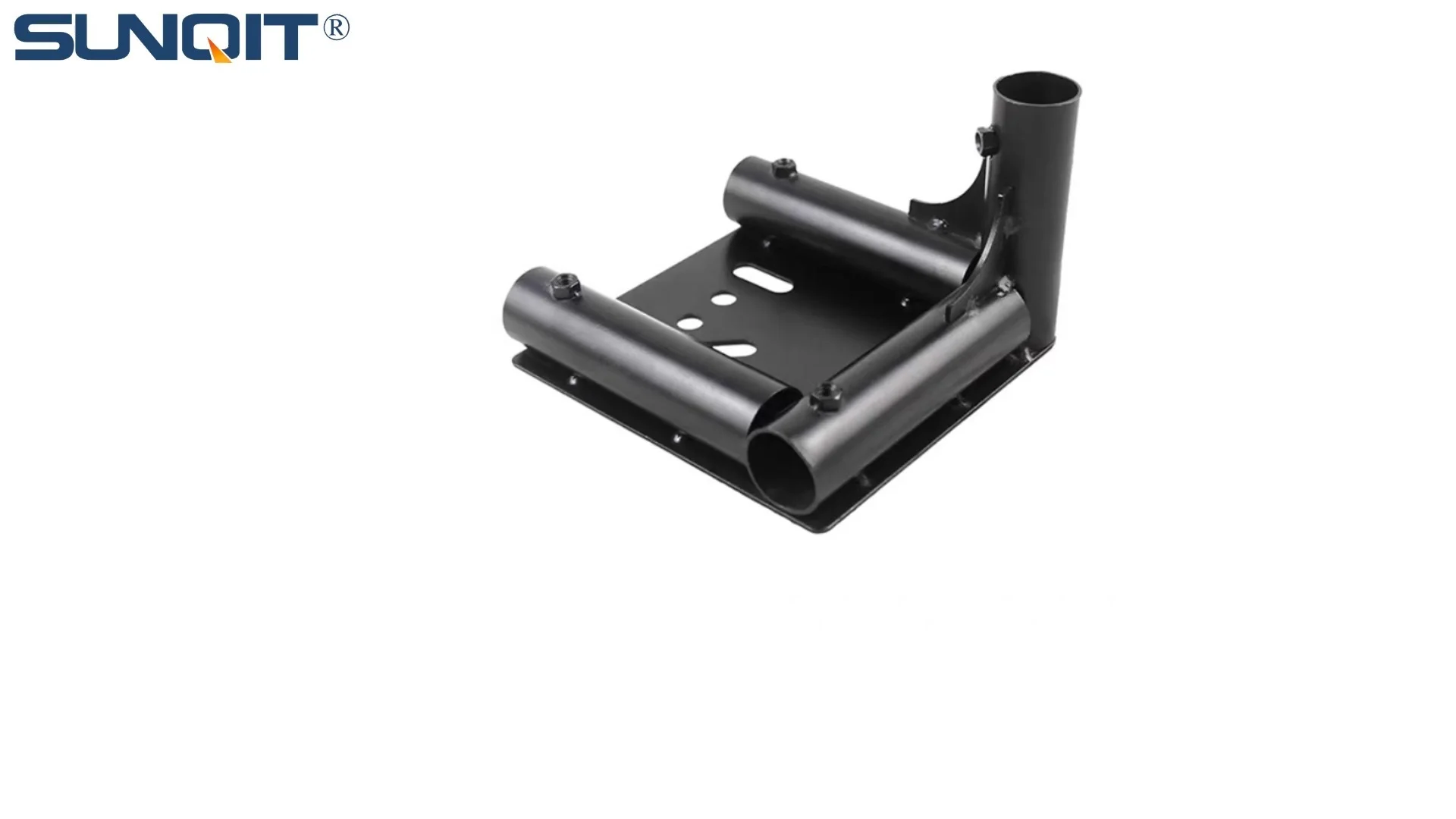
In the bustling world of manufacturing, warehouses, and logistics, heavy machinery trolleys are the unsung heroes that keep operations moving. From transporting raw materials across factory floors to moving finished goods in distribution centers, these workhorses rely on one critical component to function seamlessly: the caster installation base . Often overlooked, this unassuming part is the bridge between the trolley frame and the caster wheel , dictating everything from stability and load capacity to maneuverability and safety. For anyone tasked with selecting equipment for industrial settings, understanding the nuances of industrial-grade castor installation bases isn't just a matter of choice—it's a decision that impacts productivity, worker safety, and long-term operational costs.
The Backbone of Heavy-Duty Mobility: What Is a Castor Installation Base?
At its core, a castor installation base is a mounting component designed to secure casters to the bottom of a trolley, rack, or machinery. Think of it as the foundation that holds the entire mobility system together. Without a robust base, even the highest-quality caster wheel would fail to perform—buckling under heavy loads, wobbling during movement, or even detaching from the trolley entirely. In industrial environments, where trolleys often carry thousands of pounds of materials, the stakes are even higher: a faulty base can lead to damaged goods, workplace accidents, or costly downtime.
But not all castor installation bases are created equal. Industrial-grade options are engineered to withstand the rigors of heavy-duty use, with features like reinforced materials, precision machining, and compatibility with specialized caster accessories (such as brakes, locks, or shock absorbers). Whether you're outfitting a turnover trolley and rack in a automotive plant or a material handling cart in a warehouse, choosing the right base starts with understanding its role in the broader mobility ecosystem.
Key Components: How Castor Installation Bases Work with Caster and Accessories
A castor installation base doesn't operate in isolation—it's part of a larger system that includes the caster wheel, mounting hardware, and optional accessories. Let's break down how these components interact to create a reliable mobility solution:
1. The Base Itself: Material and Design Matter
Industrial-grade bases are typically made from high-strength materials like steel, aluminum, or reinforced alloys. Steel bases are prized for their load-bearing capacity—ideal for trolleys carrying 5,000+ pounds—while aluminum bases offer a lighter alternative without sacrificing durability, making them suitable for medium-heavy applications. The design also varies: some bases feature a flat plate with pre-drilled holes for easy mounting, while others use stem-style attachments for tighter spaces. The key is to match the base's material and design to the trolley's weight capacity and intended use. For example, a steel plate base with welded reinforcements would be better suited for a heavy machinery trolley in a construction yard, while an aluminum stem base might work for a lighter turnover trolley and rack in a food processing facility.
2. Caster Wheel Compatibility: A Perfect Fit
The base must align with the caster wheel's mounting style. Most industrial casters use either plate-mount or stem-mount designs, and the base must mirror this. A plate-mount base, for instance, has a flat surface that bolts directly to the caster's top plate, ensuring a secure connection. Stem-mount bases, on the other hand, feature a hollow tube or threaded rod that inserts into the caster's stem, often secured with a nut or pin. Mismatched mounting styles can lead to instability; imagine trying to attach a stem-mount caster to a plate-mount base—it would be like trying to fit a square peg in a round hole. This is why suppliers often bundle bases with compatible casters, ensuring a seamless fit.
3. Caster Accessories: Enhancing Functionality
No mobility system is complete without caster accessories , and the installation base plays a crucial role in integrating these add-ons. Brakes, for example, are often mounted directly to the base or caster fork, requiring the base to have pre-drilled holes or reinforced brackets for secure attachment. Similarly, shock-absorbing pads or noise-reducing gaskets may be placed between the base and trolley frame to minimize vibration during transport. Even simple accessories like dust covers or rust-resistant coatings depend on the base's design—if the base has crevices or poor drainage, debris can accumulate, leading to corrosion over time. For industrial settings where trolleys operate in harsh environments (e.g., wet warehouses or outdoor yards), these accessories aren't just nice-to-haves; they're essential for extending the system's lifespan.

Industrial-Grade Options: Types of Castor Installation Bases
When shopping for castor installation bases, the sheer variety of options can be overwhelming. To simplify the process, we've categorized the most common industrial-grade types based on their mounting style, material, and intended use:
| Type of Base | Material | Load Capacity (Typical Range) | Best For | Key Features |
|---|---|---|---|---|
| Steel Plate-Mount Base | Carbon Steel or Stainless Steel | 2,000 – 10,000 lbs per base | Heavy machinery trolleys, industrial racks | Welded reinforcements, pre-drilled holes for easy mounting, corrosion-resistant coating |
| Aluminum Stem-Mount Base | 6061-T6 Aluminum Alloy | 500 – 3,000 lbs per base | Medium-duty turnover trolleys, cleanrooms | Lightweight, rust-proof, compatible with stem-mount casters |
| Reinforced Alloy Swivel Base | Chromoly Steel Alloy | 3,000 – 8,000 lbs per base | Trolleys requiring 360° maneuverability (e.g., assembly lines) | Integrated swivel bearing, grease fittings for smooth rotation |
| Stainless Steel Hygienic Base | 304 or 316 Stainless Steel | 1,000 – 5,000 lbs per base | Food processing, pharmaceutical, or cleanroom environments | Smooth, crevice-free design, easy to sanitize, chemical-resistant |
1. Steel Plate-Mount Bases: The Workhorses of Heavy Industry
Steel plate-mount bases are the gold standard for heavy-duty applications. Made from thick-gauge carbon steel (or stainless steel for corrosive environments), these bases feature a flat, rectangular plate with multiple holes for bolting to the trolley frame. The plate is often reinforced with gussets or ribs to distribute weight evenly, preventing bending or warping under load. For example, a ¼-inch thick steel base with a 6x8-inch plate can easily support 5,000 lbs per caster, making it ideal for trolleys transporting engine blocks, steel coils, or palletized goods.
One of the biggest advantages of steel plate-mount bases is their versatility. They work with virtually any plate-mount caster, from rigid (fixed-direction) to swivel models, and can be customized with caster accessories like side brakes or tow bars. Many suppliers also offer them with a powder-coated finish or zinc plating to resist rust, ensuring longevity in damp or outdoor settings.
2. Aluminum Stem-Mount Bases: Lightweight Strength for Medium-Duty Use
Aluminum stem-mount bases are a popular choice for applications where weight matters but durability can't be compromised. Constructed from high-grade aluminum alloys (like 6061-T6), these bases are up to 40% lighter than steel equivalents, making them easier to install and maneuver. They're particularly well-suited for turnover trolley and rack systems in warehouses, where workers need to move loads quickly without straining. A typical aluminum stem base might support 1,500 lbs per caster, enough for boxes of electronics, clothing, or small parts.
Stem-mount designs use a threaded stem (instead of a plate) that screws into a pre-tapped hole in the trolley frame. This creates a low-profile connection, ideal for trolleys with limited ground clearance. Aluminum's natural resistance to rust also makes these bases a good fit for indoor environments like retail backrooms or office supply closets, where moisture is minimal but cleanliness is important.
3. Reinforced Alloy Swivel Bases: Maneuverability Meets Strength
In settings where trolleys need to navigate tight spaces—like assembly lines or narrow warehouse aisles—swivel bases are a game-changer. These bases integrate a bearing raceway into their design, allowing the caster to rotate 360°, making it easy to pivot or change direction. Industrial-grade swivel bases are often made from chromoly steel alloy, a material known for its high tensile strength and resistance to fatigue. This ensures the bearing raceway doesn't wear down, even after thousands of rotations.
Many swivel bases also include a "total lock" feature, which locks both the swivel motion and the wheel rotation, preventing the trolley from moving accidentally. This is critical for safety in environments where workers load or unload materials while the trolley is stationary. For example, in an automotive plant, a swivel base with total lock might be used on a parts trolley, ensuring it stays put while a mechanic retrieves components.
4. Stainless Steel Hygienic Bases: Cleanliness for Sensitive Industries
In industries like food processing, pharmaceuticals, or medical device manufacturing, cleanliness is non-negotiable. Stainless steel hygienic bases are designed to meet strict sanitation standards, with a smooth, crevice-free surface that prevents bacterial growth. Made from 304 or 316 stainless steel (the latter being more corrosion-resistant), these bases can withstand frequent washdowns with harsh chemicals like bleach or ammonia.
Hygienic bases often feature rounded edges and seamless welding to eliminate dirt traps, and they're compatible with caster accessories like sealed bearings (to prevent lubricant leakage) or non-marking wheels (to avoid scuffing clean floors). For a dairy processing plant, for instance, a stainless steel hygienic base on a milk crate trolley would ensure compliance with FDA regulations while maintaining smooth operation.

Why Industrial-Grade Matters: Benefits of Quality Castor Installation Bases
Investing in industrial-grade castor installation bases might cost more upfront than generic options, but the long-term benefits far outweigh the expense. Here's why quality matters:
1. Enhanced Safety for Workers
In 2023, the Bureau of Labor Statistics reported over 50,000 workplace injuries related to material handling equipment. Many of these incidents stem from unstable trolleys or faulty casters. Industrial-grade bases reduce this risk by providing a secure connection between the trolley and caster, minimizing wobbling or tipping. Features like reinforced plates or shock-absorbing mounts also reduce vibration, lowering the strain on workers who push or pull heavy trolleys daily. For example, a steel plate-mount base with a wide footprint distributes weight evenly, making the trolley less likely to tip over when cornering.
2. Reduced Downtime and Maintenance Costs
Cheap, low-grade bases are prone to bending, cracking, or corroding—all of which require frequent replacements. Industrial-grade bases, by contrast, are built to last. A stainless steel base in a food plant might last 10+ years with minimal maintenance, while a generic steel base could rust through in 2–3 years. This longevity translates to fewer replacements, less downtime for repairs, and lower overall maintenance costs. Additionally, many industrial bases come with warranties (5–10 years for premium models), giving buyers peace of mind.
3. Improved Productivity
A well-designed castor installation base makes trolleys easier to move, even under heavy loads. Swivel bases with high-quality bearings, for example, reduce the force needed to pivot, allowing workers to maneuver trolleys more quickly. This might seem like a small improvement, but over a full workday, it adds up: a warehouse worker pushing a trolley with smooth-rolling casters could transport 20% more goods than one struggling with a wobbly, hard-to-move cart. In fast-paced environments like e-commerce fulfillment centers, this boost in productivity directly impacts order processing times and customer satisfaction.
4. Compatibility with a Range of Caster and Accessories
Industrial-grade bases are designed to work with a wide array of caster and accessories , giving businesses the flexibility to customize their mobility solutions. Need to add brakes to a trolley? A steel plate-mount base will have pre-drilled holes for easy installation. Want to switch from rigid to swivel casters? A universal base can accommodate both. This compatibility future-proofs your investment, allowing you to adapt to changing needs without replacing the entire trolley.

Choosing the Right Base: Factors to Consider
Selecting an industrial-grade castor installation base isn't a one-size-fits-all decision. To find the best option for your needs, ask yourself these key questions:
1. What's the Total Load the Trolley Will Carry?
Start by calculating the total weight of the trolley plus its maximum load. Divide this number by the number of casters (typically 4–6 for industrial trolleys) to determine the load per caster. Then, choose a base with a load capacity that exceeds this number by at least 20% (to account for uneven weight distribution or sudden impacts). For example, if a trolley carries 8,000 lbs total with 4 casters, each caster (and base) should support at least 2,000 lbs—so opt for a base rated for 2,400 lbs or more.
2. What's the Environment Like?
Consider the conditions the trolley will operate in: Is it indoors or outdoors? Will it be exposed to moisture, chemicals, or extreme temperatures? For wet environments (e.g., car washes, fisheries), stainless steel or aluminum bases are a must. For outdoor use, look for bases with a weather-resistant coating. In cleanrooms, prioritize hygienic bases with smooth surfaces and sealed components.
3. How Maneuverable Does the Trolley Need to Be?
If the trolley will navigate tight spaces (like between production lines), swivel bases are essential. For straight-line transport (e.g., along warehouse aisles), rigid bases might suffice (and are often cheaper). If maneuverability and stability are both priorities, consider a mix: two swivel bases with brakes and two rigid bases for directional control.
4. What's the Trolley Frame Made Of?
The base must be compatible with the trolley's frame material. A steel base will bolt easily to a steel frame, but attaching it to an aluminum frame may require special hardware (like aluminum-compatible bolts to avoid galvanic corrosion). Similarly, a stem-mount base needs a frame with pre-tapped holes, while a plate-mount base requires a flat, solid surface for bolting.
Real-World Applications: Castor Installation Bases in Action
To illustrate how industrial-grade castor installation bases impact real operations, let's look at two case studies:
Case Study 1: Automotive Manufacturing Plant
A large automotive plant in Michigan was struggling with frequent downtime due to trolley failures. Their existing castor bases, made from low-grade steel, were bending under the weight of engine blocks (each weighing ~1,500 lbs), leading to wobbly trolleys and damaged parts. After consulting with a supplier, they upgraded to steel plate-mount bases with reinforced gussets, rated for 3,000 lbs per base. The result? Trolley failures dropped by 90%, and workers reported less fatigue when moving loads. Over six months, the plant saved $45,000 in repair costs and lost productivity.
Case Study 2: Pharmaceutical Warehouse
A pharmaceutical warehouse in California needed to comply with FDA regulations for sanitization. Their old castor bases had crevices where bacteria accumulated, failing inspection. They switched to stainless steel hygienic bases with sealed bearings and non-marking wheels. The new bases withstood daily washdowns with hydrogen peroxide, and the warehouse passed its next FDA audit with zero violations. Additionally, the smooth-rolling wheels reduced worker strain, cutting down on sick days by 15%.
Maintenance Tips: Extending the Life of Your Castor Installation Bases
Even the best industrial-grade bases require regular maintenance to perform at their best. Here's how to keep them in top shape:
- Inspect Regularly: Check bases for cracks, rust, or loose bolts monthly. Pay special attention to welds and mounting holes—these are common failure points.
- Lubricate Moving Parts: For swivel bases, apply grease to the bearing raceway every 3–6 months (more often in dusty environments) to ensure smooth rotation.
- Clean Thoroughly: In hygienic settings, wash bases with soap and water (or approved chemicals) to remove debris. For outdoor bases, hose off dirt and apply a rust inhibitor annually.
- replace Worn Accessories: If caster accessories like brakes or locks fail, replace them promptly—damage to accessories can strain the base over time.
- Retighten Bolts: Vibration from movement can loosen bolts; retighten them quarterly to maintain a secure connection.
Final Thoughts: Investing in Quality for Long-Term Success
Castor installation bases may not be the most glamorous part of a heavy machinery trolley, but they're undoubtedly one of the most critical. From steel plate-mount bases for industrial racks to stainless steel hygienic bases for cleanrooms, the right choice ensures safety, productivity, and durability. By prioritizing industrial-grade options and considering factors like load capacity, environment, and compatibility with caster and accessories , businesses can avoid costly mistakes and build a mobility system that grows with their needs.
At the end of the day, a castor installation base is more than just a piece of metal—it's an investment in your team's efficiency, your products' safety, and your company's bottom line. So the next time you're outfitting a turnover trolley and rack or upgrading your material handling equipment, remember: the base you choose today will carry your operations forward tomorrow.