- Company Articles
- Products and Technology
- Installation And Maintenance
- Castor Installation Base for Mechanical Manufacturing: Workbench E Mobility Guide

Castor Installation Base for Mechanical Manufacturing: Workbench E Mobility Guide
Related Product
Castor Installation Base
Pipe fitting castor installation base,Well made, precise and strong. Made of high quality of steel,black painting surface treatment for greater resistance to corrosion. It is used for castor or foot lever connection with lean pipe.
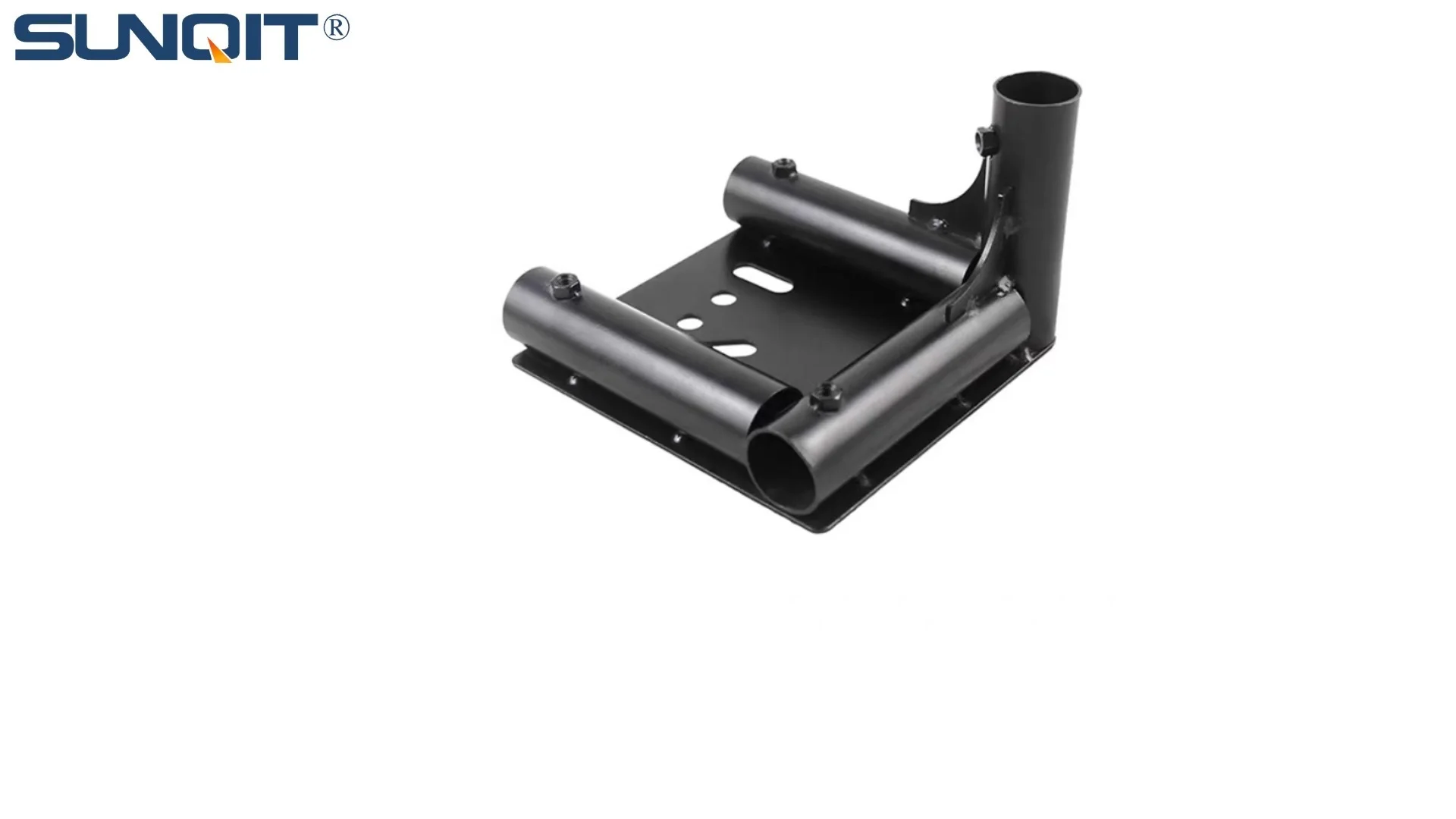
In the fast-paced world of mechanical manufacturing, where every second counts and workflow efficiency can make or break production targets, the tools and equipment on the factory floor play a starring role. Among these, workbenches are the unsung heroes—steady, reliable, and essential for assembling components, inspecting parts, and organizing tools. But what happens when a workbench, designed to be stationary, becomes a bottleneck in a workflow that demands flexibility? Enter the caster installation base : a simple yet transformative component that turns fixed workbenches into mobile assets. In this guide, we'll focus on one of the most common workbench models in manufacturing— Workbench E (single deck-without caster) —and explore how adding a caster installation base can revolutionize mobility, productivity, and workplace adaptability.
1. The Role of Mobility in Modern Manufacturing Workbenches
Gone are the days when manufacturing floors were static, with workbenches bolted to the ground and workflows rigidly mapped around them. Today's factories thrive on agility: shorter production runs, frequent product changes, and teams that need to collaborate across different areas. A fixed workbench, no matter how well-designed, can't keep up with this pace. It limits how workers move materials, share equipment, and adapt to sudden shifts in production needs.
This is where Workbench E (single deck-without caster) comes into play. A staple in many mechanical manufacturing facilities, Workbench E is prized for its durability—often built with robust materials like steel or aluminum—and its simplicity: a single, sturdy deck ideal for light to medium assembly tasks. But as the name suggests, it's born without casters. For years, this was seen as a feature, not a flaw: stability was prioritized over mobility. But in 2024, with lean manufacturing principles driving every decision, stability and mobility are no longer mutually exclusive. The missing piece? A reliable caster installation base that bridges the gap between a fixed workbench and a mobile workstation.
2. Understanding Workbench E: The Foundation Before Mobility
Before we dive into the specifics of caster installation bases, let's take a closer look at Workbench E (single deck-without caster) itself. Knowing its design and limitations will help us appreciate why the right installation base is so critical.
Key Features of Workbench E (Single Deck-Without Caster)
- Structure : Typically a single flat deck (often 1200mm x 600mm or similar dimensions) supported by a steel or aluminum frame. The deck may be made of plywood, MDF, or metal, depending on the application (e.g., ESD-safe surfaces for electronics manufacturing).
- Load Capacity : Ranges from 200kg to 500kg, making it suitable for tools, small machinery, and component bins.
- Stability : Fixed legs (often with adjustable leveling feet for uneven floors) ensure minimal wobble during precision tasks like screwdriving or part fitting.
- Common Uses : Assembly lines, quality control stations, tool storage, and light manufacturing tasks where a steady surface is non-negotiable.
The Limitations of Fixed Workbench E
For all its strengths, a fixed Workbench E has clear drawbacks in dynamic environments:
- Space Constraints : A workbench that can't move takes up permanent floor space, limiting how the factory layout can be reconfigured for new projects or seasonal demand spikes.
- Material Handling Delays : Workers often waste time walking between fixed workbenches to retrieve tools or materials, rather than bringing the workbench to the materials.
- Collaboration Barriers : In team-based tasks, a fixed workbench forces everyone to gather around it, which can be inefficient if the next step in the process is 20 feet away.
These limitations aren't just inconveniences—they translate to lost time, higher labor costs, and missed opportunities to optimize workflows. The solution? Adding mobility without sacrificing the stability that makes Workbench E so reliable. And that's exactly what a caster installation base is designed to do.

3. Castor Installation Base: What It Is and Why It Matters
At its core, a caster installation base is a platform or bracket system that attaches to the bottom of Workbench E, providing a secure mounting point for casters. Think of it as the "middleman" between the workbench and the wheels: it distributes the workbench's weight evenly, ensures the casters can handle the load, and keeps the entire setup stable when in motion or at rest.
Key Functions of a Caster Installation Base
A well-designed caster installation base does more than just hold casters. It performs three critical roles:
- Weight Distribution : Workbench E, when fully loaded with tools, parts, and equipment, can weigh several hundred kilograms. The installation base spreads this weight across multiple casters, preventing any single wheel from bearing too much load (which could cause it to fail or damage the floor).
- Structural Integrity : Workbench E's frame isn't designed to support casters directly. The installation base reinforces the workbench's bottom, ensuring that adding casters doesn't weaken the structure or cause it to wobble during use.
- Compatibility : Casters come in different sizes, load ratings, and styles (swivel, fixed, locking). The installation base acts as an adapter, allowing you to choose casters that fit your specific needs (e.g., heavy-duty casters for rough floors, or soft rubber wheels for sensitive surfaces) without modifying the workbench itself.
Materials Matter: Why Aluminum Profile Stands Out
When it comes to caster installation bases, material choice is critical. The base needs to be strong enough to support the workbench's weight, lightweight enough to not add unnecessary bulk, and durable enough to withstand the wear and tear of factory use. While steel is a common option for heavy-duty applications, aluminum profile has emerged as a top choice for many manufacturers. Here's why:
- Strength-to-Weight Ratio : Aluminum is lighter than steel but still strong enough to handle typical Workbench E loads (200-500kg). This makes the mobile workbench easier to push, reducing worker fatigue.
- Corrosion Resistance : Factories are often dusty, humid, or exposed to oils and chemicals. Aluminum resists rust and corrosion, ensuring the installation base lasts longer with minimal maintenance.
- Modularity : Aluminum profiles (like the 2020 or 3030 series) are designed with T-slots, making it easy to attach casters, brackets, or additional accessories (like adjustable leveling feet for stability when parked).

4. Types of Castor Installation Bases for Workbench E
Not all caster installation bases are created equal. The right one for your Workbench E depends on your workflow needs, floor type, and how much weight the workbench typically carries. Below are the most common types, along with their best use cases:
| Type of Caster Installation Base | Material | Load Capacity (Typical) | Best For | Key Features |
|---|---|---|---|---|
| Flat Plate Base | Steel or Aluminum Profile | 200-400kg | Light to medium-duty Workbench E (e.g., electronics assembly) | Simple, low-profile design; easy to install; ideal for smooth floors |
| Frame-Mounted Base | Steel | 400-800kg | Heavy-duty Workbench E (e.g., automotive part assembly) | Reinforced brackets that attach to the workbench's frame; higher stability for rough use |
| Adjustable Height Base | Aluminum Profile with Steel Hardware | 200-500kg | Workbenches used at different heights or on uneven floors | Includes adjustable leveling feet to stabilize the workbench when parked; height can be to match other work surfaces |
| Modular Base (T-Slot Aluminum) | Aluminum Profile (e.g., 4040 series) | 300-600kg | Factories with changing needs (e.g., adding tool hooks, bins, or extra casters later) | T-slots allow for easy customization; compatible with a wide range of caster and accessories |
For most Workbench E applications—especially those in electronics, light machinery, or precision assembly—the modular aluminum profile base is a standout choice. Its combination of lightweight design, corrosion resistance, and adaptability makes it easy to install, maintain, and upgrade as needs change.

4. Installing a Caster Installation Base on Workbench E: A Step-by-Step Guide
Adding a caster installation base to Workbench E isn't a complex process, but it does require careful planning and attention to detail. Here's a step-by-step breakdown to ensure a safe, successful installation:
Step 1: Gather Your Tools and Materials
Before you start, make sure you have:
- A caster installation base (we recommend aluminum profile for Workbench E).
- 4-6 casters (choose locking swivel casters for maximum mobility and stability; ensure the total load capacity of the casters exceeds the workbench's loaded weight).
- Mounting hardware (bolts, washers, nuts—use stainless steel to prevent rust).
- A drill, wrench set, level, and measuring tape.
- A helper (Workbench E is heavy; you'll need assistance to flip it safely).
Step 2: Prepare Workbench E
Clear the workbench of all tools, parts, and equipment. If the workbench is bolted to the floor, remove the bolts. With help, carefully flip the workbench onto its top (so the bottom frame is exposed). Use a cloth to clean the bottom of the workbench, removing dust or debris that could interfere with the installation base.
Step 3: Position the Installation Base
Place the caster installation base on the bottom of the workbench, aligning it with the frame rails (most bases are pre-drilled for common workbench sizes like Workbench E). Use a measuring tape to ensure the base is centered—this ensures even weight distribution. Once aligned, mark the bolt holes on the workbench frame with a pencil.
Step 4: Attach the Base to the Workbench
Drill pilot holes into the marked spots (use a drill bit slightly smaller than the bolts to prevent splitting the frame). Then, secure the installation base to the workbench using the bolts, washers, and nuts. Tighten the hardware firmly, but avoid over-tightening (which could warp the base or strip the threads).
Step 5: Install the Casters
Now it's time to add the casters to the installation base. Most bases have pre-drilled holes for caster mounting. Attach each caster using the hardware provided with the wheels (or use bolts that fit the base's thread size). If your casters have locks, test them to ensure they engage and release smoothly. For added stability, consider installing two fixed casters (non-swiveling) on one end and two swivel casters on the other—this makes the workbench easier to maneuver in tight spaces.
Step 6: Test and Adjust
With the base and casters installed, carefully flip Workbench E back onto its wheels. Give it a gentle push to see how it rolls—does it move smoothly, or does it wobble? If it wobbles, check that the installation base is level (use a spirit level) and that all bolts are tight. If the workbench tends to drift when moving, adjust the swivel casters to ensure they're aligned. Finally, test the caster locks by parking the workbench and engaging the brakes— it should stay firmly in place even when pushed.
5. Benefits of Adding a Castor Installation Base to Workbench E
The decision to add a caster installation base to Workbench E isn't just about mobility—it's about transforming how your team works. Here are the most impactful benefits manufacturers report after making the switch:
Improved Workflow Efficiency
In a typical fixed workbench setup, workers often walk back and forth between stations to retrieve tools, materials, or finished parts. With a mobile Workbench E, the workbench comes to the worker. Need to assemble a component at the testing station? Roll the workbench over. Running low on screws? Bring the workbench to the supply cart. This reduces walking time, cuts down on fatigue, and keeps the focus on actual production tasks.
Space Optimization
Factory floor space is valuable, and fixed workbenches take up permanent real estate. A mobile Workbench E can be moved out of the way when not in use, freeing up space for other equipment or temporary work areas. For example, during a maintenance shutdown, you can roll all workbenches to one side to make room for heavy machinery repairs, then reposition them afterward.
Enhanced Collaboration
Modern manufacturing relies on teamwork, and a fixed workbench can isolate workers in their own "silos." With a mobile workbench, teams can quickly gather around a single station to troubleshoot a problem, share ideas, or collaborate on a complex assembly. This fosters communication and reduces the need for lengthy meetings—solutions happen faster when everyone can work together at the same workspace.
Cost Savings (Yes, Really!)
At first glance, adding a caster installation base might seem like an extra expense. But over time, it can save money in several ways:
- Fewer Workbenches Needed : A single mobile Workbench E can replace multiple fixed stations, as it can be moved to wherever it's needed most.
- Reduced Material Handling Equipment : Instead of using forklifts or pallet jacks to move heavy materials to fixed workbenches, workers can roll the workbench to the materials, cutting down on equipment costs and training.
- Lower Ergonomic Costs : Workers bending, reaching, or walking long distances are more prone to injuries. A mobile workbench reduces these risks, lowering workers' compensation claims and lost productivity due to downtime.
6. Maintenance Tips for Long-Lasting Performance
A caster installation base is built to last, but like any factory equipment, it needs regular care to perform at its best. Here's how to keep your mobile Workbench E running smoothly for years:
- Inspect Regularly : Once a month, check the installation base for loose bolts, cracks, or signs of wear. Tighten any loose hardware and replace damaged parts immediately (don't wait for a small crack to become a big problem).
- Lubricate Casters : Caster wheels and swivel joints need lubrication to roll smoothly. Use a dry lubricant (like silicone spray) every 3-6 months to prevent rust and reduce friction. Avoid oil-based lubricants, which attract dust and grime.
- Clean the Base : Factory floors are dusty, and debris can get trapped between the installation base and the workbench frame. Use a brush or compressed air to clean these areas regularly—built-up dust can cause the base to corrode or the bolts to loosen.
- Check Wheel Condition : Inspect caster wheels for cracks, flat spots, or embedded debris (like metal shavings). replace wheels that are worn or damaged—they can cause the workbench to wobble or damage the floor.
- Test Leveling Feet (If Equipped) : If your installation base has adjustable leveling feet , check that they're not dragging on the floor when the workbench is in motion (this can wear down the feet and make rolling harder). Retract the feet fully when moving the workbench, and extend them only when parked to stabilize it.
7. Real-World Impact: A Case Study
To put these benefits into perspective, let's look at a real example. A mid-sized automotive parts manufacturer in Michigan was struggling with bottlenecks in their assembly line. They used 12 Workbench E (single deck-without caster) stations for assembling brake components, each bolted to the floor. Workers spent 20% of their shift walking between stations to retrieve tools or share equipment, and reconfiguring the line for new part models took 8 hours (requiring the team to unbolt and move workbenches manually).
The solution? The manufacturer installed modular aluminum profile caster installation bases on all 12 workbenches, paired with locking swivel casters. The results were immediate:
- Walking time decreased by 35%, freeing up 2 hours per worker per day for actual assembly tasks.
- Line reconfigurations now take 1 hour instead of 8, as workbenches can be rolled into new positions in minutes.
- Worker satisfaction scores increased by 40%, with many citing the mobile workbenches as "less tiring" and "more flexible."
The total cost of the installation bases and casters was recouped in just 3 months through productivity gains. Today, the manufacturer has expanded the mobile workbench model to other departments, including quality control and tool storage.
8. Choosing the Right Caster Installation Base for Your Workbench E
Not all caster installation bases are a good fit for every Workbench E. To ensure you choose the right one, ask yourself these key questions:
What's the Maximum Load of Your Workbench?
Start by calculating the total weight Workbench E will carry: the workbench itself (typically 50-100kg) plus tools, parts, and equipment. Choose an installation base with a load capacity at least 20% higher than this total to account for unexpected heavy loads.
What Type of Floor Do You Have?
Rough concrete floors need heavy-duty casters with thick, durable wheels (like polyurethane or steel). Smooth floors (e.g., epoxy-coated) can use softer rubber wheels, which reduce noise and prevent scratches. The installation base should match the caster type—for example, a heavy-duty steel base for steel wheels, or a lightweight aluminum profile base for rubber wheels.
Do You Need Locking Casters?
If the workbench will be used for tasks that require stability (like precision assembly), choose casters with brakes—and ensure the installation base has mounting points for lockable wheels. Some bases even come with integrated brake levers for easy access.
Is Customization Important?
If you think you might add accessories later (like tool hooks, shelves, or extra casters), opt for a modular aluminum profile base with T-slots. This allows you to attach new components without drilling or welding.
9. Conclusion: From Fixed to Flexible—The Future of Workbench E
In a manufacturing landscape that demands speed, adaptability, and efficiency, the humble workbench can no longer afford to be stationary. Workbench E (single deck-without caster) , a reliable workhorse in factories worldwide, becomes even more valuable when paired with a caster installation base . This simple upgrade transforms it from a fixed fixture into a mobile asset, reducing waste, improving collaboration, and unlocking new levels of productivity.
Whether you choose a steel frame base for heavy loads or a modular aluminum profile base for flexibility, the key is to prioritize compatibility, durability, and the specific needs of your workflow. With the right caster installation base, your Workbench E won't just keep up with the pace of modern manufacturing—it will lead the way.
So, if you're still using fixed Workbench E stations, ask yourself: What could your team accomplish if their workbench could go wherever they need it? The answer might just surprise you—and it all starts with a caster installation base.