- Company Articles
- Products and Technology
- Installation And Maintenance
- Castor Installation Base for Trolleys: Reducing Material Handling Time in Warehouses

Castor Installation Base for Trolleys: Reducing Material Handling Time in Warehouses
Related Product
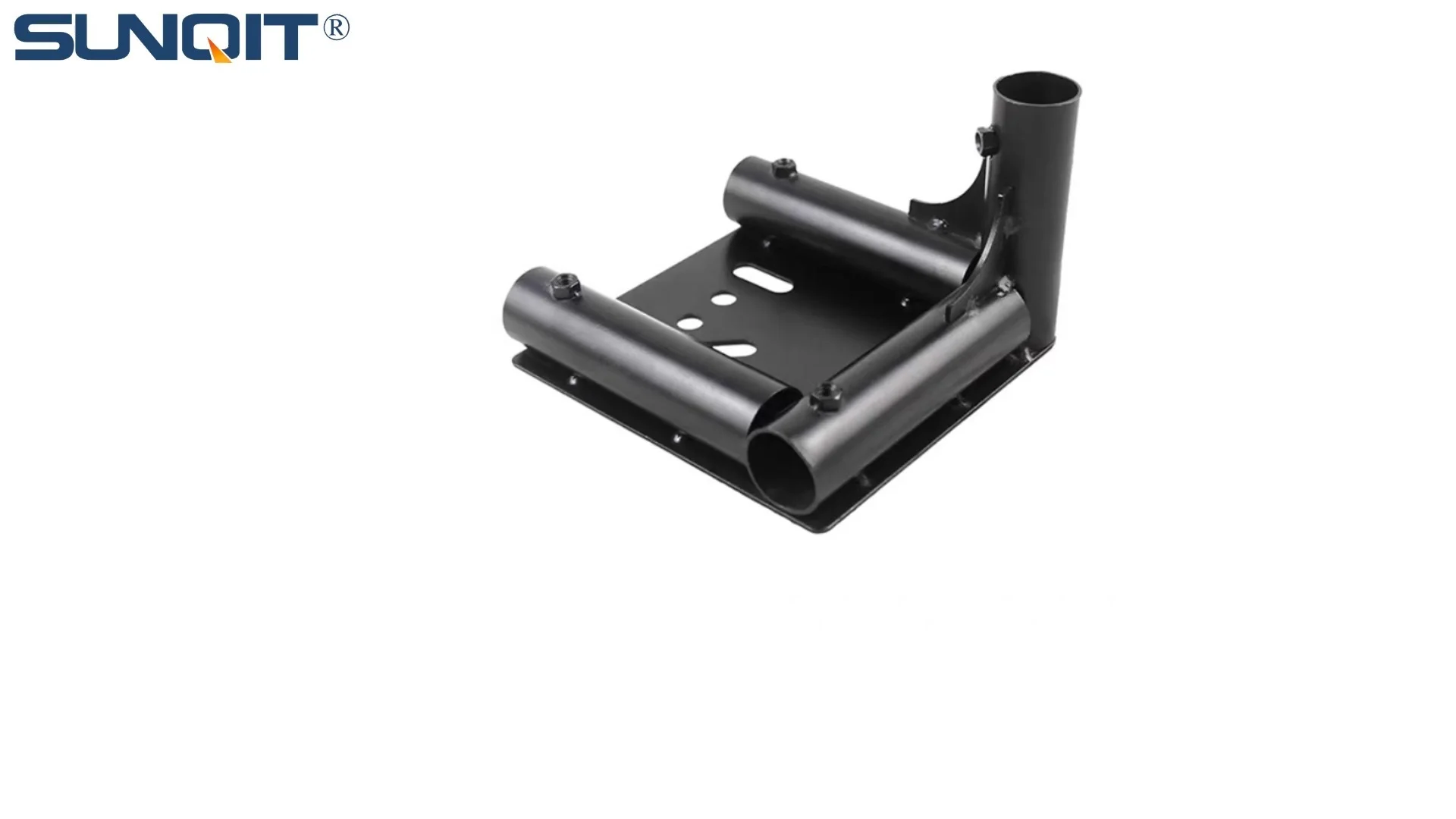
Castor Installation Base
Pipe fitting castor installation base,Well made, precise and strong. Made of high quality of steel,black painting surface treatment for greater resistance to corrosion. It is used for castor or foot lever connection with lean pipe.
Walk into any busy warehouse, and you'll see the same quiet hero at work: the people moving mountains of goods, one trolley at a time. But here's the thing no one talks about enough—those trolleys? They're often holding your team back. Picture this: Maria, a warehouse associate, is pushing a loaded trolley toward the packing station. Halfway there, the trolley lurches. One wheel sticks, then another. She grits her teeth, leans in harder, and feels a twinge in her shoulder. By the time she reaches her destination, she's 3 minutes late. Multiply that by 15 trips a day, and suddenly, an hour of productivity has vanished—just like that.
The culprit? It's not always the trolley itself, or even the caster wheel . More often than not, it's the unsung component connecting them: the castor installation base. That small, unassuming piece of hardware is the difference between a trolley that glides and one that fights you every step of the way. Today, we're diving into how upgrading this "hidden foundation" can transform your warehouse's material handling—saving time, easing strain, and turning frustrating daily tasks into smooth, almost effortless workflows.
What Even Is a Castor Installation Base?
Let's start with the basics. Imagine building a house: you wouldn't skip the foundation, right? A castor installation base is like the foundation for your trolley's mobility. It's the sturdy, often metal component that bolts (or clamps) the caster wheel to the bottom of the trolley, ensuring the wheel stays put, carries the load, and moves exactly how it's supposed to. Think of it as the middleman between the trolley frame and the wheel—if it's weak or poorly designed, everything falls apart (or, more accurately, gets stuck).
But here's where it gets interesting: not all bases are created equal. A cheap, flimsy base might save you a few dollars upfront, but it'll cost you in the long run. It might bend under heavy loads, wiggle loose after a few weeks, or fail to align properly with the caster wheel , leading to that "sticky trolley" scenario we mentioned earlier. On the flip side, a well-made castor installation base? It's quiet, reliable, and so seamless you might forget it's there—until you realize how much easier your day has gotten.
Why the Base Matters More Than You Think
Let's break down the "why" with a simple example. Suppose you're using a standard turnover trolley to move boxes of inventory. Without a solid castor installation base, here's what happens:
- Wobble factor: The base shifts under the load, making the trolley unstable. You slow down to avoid spills, wasting precious seconds.
- Wheel misalignment: The base doesn't hold the caster wheel straight, so it veers off course. You're constantly correcting direction, adding extra steps.
- Stuck brakes: If your trolley has brake-equipped caster accessories (like foot brakes), a shoddy base might prevent them from releasing fully. Now you're dragging a half-braked trolley.
Now, swap in a high-quality castor installation base. Suddenly, the trolley glides. The wheels stay aligned, the load feels lighter, and those caster accessories (brakes, swivel locks) work like a charm. Maria, from our earlier story, isn't straining anymore—she's moving with purpose, and those 3 minutes saved per trip? They add up to hours of regained productivity each week.

5 Ways Castor Installation Bases Slash Handling Time
It's easy to think, "A base is a base—how much difference can it really make?" But in warehouses, where every second counts, the answer is: a lot . Here are the top ways a strong castor installation base turns slow, frustrating material handling into a streamlined process:
1. Faster Movement, Less Effort
The biggest win? Reduced friction—both literal and figurative. A well-designed base ensures the caster wheel rotates freely, so even heavy loads feel lighter. Studies show that workers push trolleys with bases up to 40% faster than those with subpar ones. That's not just speed—it's energy saved. When your team isn't wasting effort fighting a stubborn trolley, they have more stamina for the tasks that matter.
2. No More "Do-Overs"
Ever had a trolley tip slightly, spilling a box? Or watched someone backtrack because a wheel got stuck in a floor crack? A sturdy base minimizes these mishaps by distributing weight evenly. That means fewer stops to fix issues, and fewer trips to clean up spills. For a warehouse processing 100+ orders a day, those "do-overs" add up fast—until a reliable base eliminates them.
3. Seamless Compatibility with Caster and Accessories
Modern warehouses need flexibility. One day, you're moving ESD-sensitive electronics (requiring conductive caster wheel s); the next, you're hauling heavy pallets (needing locking brakes). A good castor installation base plays well with all these caster and accessories . It's designed to fit different wheel sizes, brake types, and load capacities, so you don't need a fleet of specialized trolleys—just one that adapts.
4. Perfect for Turnover Trolley and Rack Systems
If your warehouse uses turnover trolley and rack setups (those handy carts and shelves for storing and moving parts), you know they're only as good as their mobility. A weak base turns a turnover trolley into a stationary shelf on wheels—hardly useful. But with a solid installation base, those trolleys become extensions of your workflow. Need to restock a picking station? Grab a turnover trolley, glide it to the rack, and reload in minutes. No lifting, no dragging, just smooth transitions.
5. Safety = Speed (Yes, Really)
When trolleys are unstable, workers slow down to avoid accidents. It's human nature. But a secure castor installation base builds confidence. Your team knows the trolley won't tip, the wheels won't lock, and they can move at a steady, efficient pace. Less hesitation = more speed, and fewer workplace injuries (which, let's be honest, cost way more than just time).

Choosing the Right Base: A Quick Guide for Warehouse Teams
Not all castor installation bases are built the same, and picking the wrong one can undo all those time-saving benefits. Here's how to choose like a pro, based on your warehouse's unique needs:
| Warehouse Need | Best Castor Installation Base Type | Key Features to Look For |
|---|---|---|
| Light loads (e.g., small parts, tools) | Standard-duty steel base | Lightweight, corrosion-resistant coating, compatible with standard caster wheel s |
| Heavy loads (e.g., pallets, machinery parts) | Heavy-duty reinforced base | Thick steel construction, welded joints, high weight capacity (500+ kg) |
| ESD-sensitive environments (e.g., electronics warehouses) | Conductive base with ESD caster accessories | Anti-static coating, compatible with ESD wheels and brakes |
| Wet or cold environments (e.g., refrigerated warehouses) | Stainless steel base | Rust-proof, sealed joints to prevent ice buildup |
Pro tip: Don't forget to check compatibility with your existing turnover trolley and rack systems. Most bases are designed to fit standard trolley frames, but it never hurts to double-check measurements—you don't want to end up with a base that's too big, too small, or impossible to install.

Real-World Impact: How One Warehouse Saved 120+ Hours Monthly
Let's get concrete. A mid-sized electronics warehouse in Ohio was struggling with slow material handling. Their team of 20 associates was spending 2–3 hours daily just moving parts between turnover trolley and rack setups. The culprit? Trolleys with plastic, flimsy bases that warped under load, causing wheels to stick.
They switched to heavy-duty steel castor installation bases, paired with high-quality caster and accessories (swivel wheels with brakes). The results? Within a month, material handling time dropped by 35%. Associates reported less fatigue, and the warehouse saved over 120 hours of labor monthly—time that went straight into fulfilling more orders and reducing backlogs. "It's like night and day," one supervisor said. "We didn't realize how much we were struggling until we didn't have to anymore."
Maintenance Tips: Keep Your Bases (and Wheels) Rolling
A great castor installation base isn't a "set it and forget it" solution—it needs a little love to keep performing. Here's how to make sure yours lasts (and keeps saving time):
- Tighten bolts monthly: Vibration from daily use can loosen the base's mounting bolts. A quick check with a wrench prevents wobbles.
- Clean the base and wheels: Dust, debris, and spilled liquids can gunk up the works. Wipe down the base and lubricate caster wheel axles every few weeks (use a silicone-based lubricant for best results).
- Inspect for wear: Look for cracks in the base or bent mounting plates. If you spot damage, replace the base ASAP—waiting will only lead to bigger (and costlier) issues.
- Train your team: Make sure everyone knows how to use caster accessories (like brakes) properly. Slamming on brakes or overloading trolleys can strain the base over time.
Conclusion: The Base of Better Warehousing
In the rush to optimize warehouses, we often focus on big-ticket solutions: automation, fancy software, high-tech robots. But sometimes, the smallest upgrades make the biggest difference. The castor installation base is one of those upgrades. It's not flashy, but it's foundational—literally. By turning clunky, frustrating trolleys into tools that work with your team, you're not just saving time. You're making work easier, safer, and more sustainable for the people who keep your operation running.
So, the next time you walk through your warehouse, take a closer look at those trolleys. Are they holding your team back? Or are they gliding toward a more productive future? With the right castor installation base, the answer can be the latter—one smooth roll at a time.