- Company Articles
- Products and Technology
- Installation And Maintenance
- Castor Installation Base in Cold Storage: Low-Temperature Performance Tips

Castor Installation Base in Cold Storage: Low-Temperature Performance Tips
Related Product
Castor Installation Base
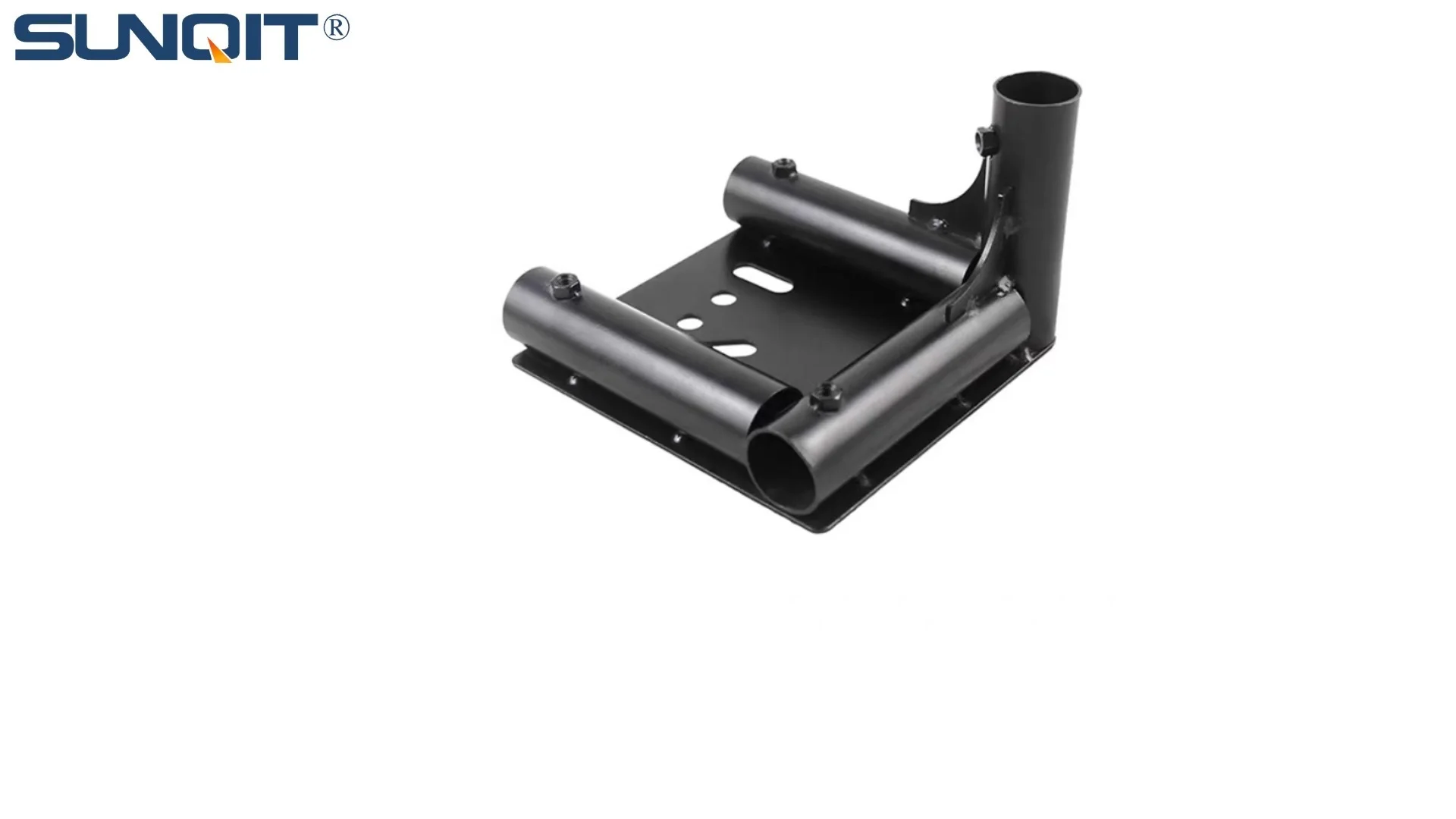
Pipe fitting castor installation base,Well made, precise and strong. Made of high quality of steel,black painting surface treatment for greater resistance to corrosion. It is used for castor or foot lever connection with lean pipe.
Walk into any cold storage facility—whether it's a frozen food warehouse, a pharmaceutical chiller, or a seafood processing plant—and you'll immediately notice the chill. Temperatures can plummet to -30°C, humidity hangs thick in the air, and frost clings to every surface. But beyond the obvious discomfort of the cold, there's a hidden challenge that keeps operations managers up at night: mobility. Trolleys loaded with pallets, lean pipe workbenches holding sensitive equipment, and material racks need to move smoothly, safely, and reliably in these harsh conditions. Yet all too often, the unsung hero of this mobility—castor installation bases—fails to get the attention it deserves. When these bases underperform, casters lock up, equipment tips, and productivity grinds to a halt. In this article, we'll dive into why castor installation bases matter in cold storage, how to optimize their performance, and the key factors that make or break their reliability in subzero temperatures.
1. The Hidden Challenge of Cold Storage Mobility
Cold storage environments are engineered to preserve products, but they're notoriously unforgiving to the equipment that keeps them running. Let's start with the basics: temperatures in freezers can range from -18°C to -40°C, while chillers hover between 0°C and 10°C. Add in high humidity (often above 85% in chillers) and frequent temperature fluctuations when doors open and close, and you've got a perfect storm for mechanical stress. Ice forms on floors, frost builds up on moving parts, and metal components contract—all of which take a toll on mobility.
Mobility isn't a luxury here; it's a necessity. Consider a typical day: workers push turnover trolleys stacked with frozen vegetables from the loading dock to storage racks. A lean pipe workbench on casters glides between packing stations, holding tools and labels. Material racks loaded with pharmaceuticals need to shift positions to make space for new inventory. Every one of these tasks relies on casters that roll freely, brakes that engage securely, and—most critically—castor installation bases that keep everything anchored.
The problem? Standard castor setups aren't built for this. In one facility we worked with, a frozen pizza manufacturer was losing 15% of their daily productivity because their trolleys kept getting stuck. The issue wasn't the caster wheels themselves—it was the castor installation bases. Made from steel, the bases had corroded in the humid, salty air (from the pizza sauce), and the cold had made them brittle. When workers tried to push the trolleys, the bases bent under the load, causing the casters to tilt and jam. It was a costly lesson: in cold storage, the base that holds the caster is just as important as the wheel itself.
2. Understanding Castor Installation Bases: More Than Just a Mount
At first glance, a castor installation base might seem like a simple piece of hardware—a metal plate or bracket that bolts the caster to a trolley or workbench. But in reality, it's the critical link between the equipment and the floor. Think of it as the foundation of a building: if the foundation cracks, the entire structure is at risk. In cold storage, this "foundation" faces unique pressures that demand careful design and material selection.
So, what exactly does a castor installation base do? For starters, it distributes the weight of the equipment and its load evenly across the caster. Without a sturdy base, the caster could pull loose from the trolley, leading to instability or even collapse. It also absorbs shock from uneven floors—common in cold storage, where ice buildup can create bumps and dips. And in environments with frequent movement, the base must withstand constant vibration and torque as the caster swivels and rolls.
In cold storage, these demands are amplified. Low temperatures cause materials to contract: a steel base, for example, might shrink by 0.1% when cooled from room temperature to -20°C. While that sounds minor, over time, this contraction can loosen bolts and create gaps between the base and the caster. Add in moisture, which can seep into those gaps and freeze, expanding and cracking the base, and you've got a recipe for failure. A well-designed castor installation base accounts for these factors, using materials that resist contraction, corrosion, and brittleness.

3. Key Factors Affecting Low-Temperature Performance
To understand how to optimize castor installation bases for cold storage, we need to break down the science of what happens to materials and mechanics in subzero conditions. Let's explore the four critical factors that determine performance.
3.1 Material Brittleness and Flexibility
At room temperature, most metals and plastics have a certain amount of "give"—they bend slightly under stress and return to shape. But in cold temperatures, this flexibility diminishes. Molecules slow down, and the material becomes stiffer, increasing the risk of cracking or shattering under impact. For example, carbon steel, which is strong at room temperature, can become brittle at -20°C, making it prone to snapping if the base is jarred (like when a trolley hits a frost heave).
Plastics face similar issues. Standard nylon, often used in lightweight bases, can lose up to 50% of its impact resistance at -30°C. This is why many cold storage facilities that tried using plastic bases ended up replacing them within months—they simply couldn't withstand the daily bumps and scrapes. The solution? Materials engineered for low temperatures, like glass-reinforced nylon or stainless steel alloys, which maintain flexibility even when frozen.
3.2 Thermal Expansion and Contraction
Everything shrinks when it gets cold, but not all materials shrink at the same rate. This "thermal expansion coefficient" is a big deal for castor installation bases, which are often made of multiple materials (e.g., a steel base with rubber gaskets). If the base and the caster it's mounting have different contraction rates, gaps can form between them as temperatures drop. Moisture then seeps in, freezes, and expands, further widening the gaps. Over time, this cycle loosens bolts and weakens the connection.
Consider a base made of aluminum paired with a steel caster. Aluminum contracts about twice as much as steel when cooled, so at -30°C, the aluminum base would shrink more than the steel caster, creating a loose fit. This is why manufacturers often design bases and casters as matched sets, using materials with similar thermal properties to minimize these gaps.
3.3 Corrosion Resistance
Cold storage isn't just cold—it's often wet. Condensation forms when warm air enters through open doors, and in food processing facilities, there's the added challenge of water, cleaning chemicals, and salt (from brined or frozen foods). All of these accelerate corrosion, which weakens the structural integrity of castor installation bases. Rust, for example, isn't just unsightly; it expands as it forms, cracking the base and creating weak points.
Stainless steel is a popular choice here, but not all stainless steels are created equal. 304 stainless steel resists corrosion in most cold storage environments, but in facilities with high salt or chlorine (like seafood plants), 316 stainless steel—with added molybdenum—is better. Galvanized steel, which is coated in zinc, also works well, but the zinc can chip in cold, exposing the steel underneath. For plastic bases, look for options with UV stabilizers (to resist degradation from cold storage lighting) and chemical resistance to common cleaners like hydrogen peroxide.
3.4 Load-Bearing Capacity Under Stress
Finally, we can't overlook load capacity. Cold storage equipment often carries heavy loads—think 500kg pallets of frozen meat or 300kg racks of pharmaceuticals. The castor installation base must support not just the static load (when the equipment is stationary) but also dynamic loads (when it's moving). In cold conditions, even a base rated for 500kg at room temperature might fail at -20°C because the material is weaker and less flexible.
This is why it's critical to over-engineer for cold storage. A good rule of thumb is to choose a base with a load rating 30% higher than your maximum expected load. For example, if your trolley typically carries 400kg, opt for a base rated for 520kg. This accounts for the loss of strength in cold temperatures and adds a safety buffer for unexpected stresses, like hitting a rough patch of floor.

4. Choosing the Right Materials for Castor Installation Bases
Now that we understand the challenges, let's dive into the best materials for castor installation bases in cold storage. The table below compares the most common options, their pros and cons, and ideal use cases.
| Material | Optimal Temp Range | Corrosion Resistance | Load Capacity (Per Base) | Best For |
|---|---|---|---|---|
| Stainless Steel 304 | -40°C to 100°C | Excellent (resists water, mild chemicals) | Up to 800kg | General cold storage, food processing (low salt) |
| Stainless Steel 316 | -40°C to 100°C | Superior (resists salt, chlorine, acids) | Up to 800kg | Seafood plants, pharmaceutical facilities with harsh cleaners |
| Glass-Reinforced Nylon | -30°C to 80°C | Excellent (resists chemicals, no rust) | Up to 300kg | Lightweight equipment (lean pipe workbenches, small trolleys) |
| Galvanized Steel | -30°C to 80°C | Good (zinc coating; prone to chipping) | Up to 600kg | Chillers (0°C to 10°C), low-humidity environments |
| Aluminum Alloy (6061-T6) | -20°C to 120°C | Good (anodized finish resists corrosion) | Up to 500kg | Light to medium loads, cleanrooms, where weight is a concern |
For most cold storage applications, stainless steel 304 or 316 is the gold standard. It balances strength, corrosion resistance, and flexibility in low temperatures. Glass-reinforced nylon is a great alternative for lighter loads, as it's lighter than steel and won't rust. Avoid carbon steel or untreated aluminum—they simply can't stand up to the cold, moisture, and stress of daily use.

5. Installation Best Practices for Cold Storage Environments
Even the best castor installation base will fail if installed incorrectly. Cold storage adds extra steps to the installation process, from preparing the mounting surface to choosing the right fasteners. Let's walk through the key steps to ensure a secure, long-lasting installation.
5.1 Pre-Installation: Clean and Prep the Surface
Cold storage equipment—whether it's a lean pipe workbench or a turnover trolley—often arrives with factory-applied coatings, oil, or debris on the mounting area. In cold, humid conditions, this debris can trap moisture, leading to corrosion between the base and the equipment. Before installing the base, thoroughly clean the mounting surface with a degreaser (avoiding harsh chemicals that can damage plastic or rubber parts). For metal surfaces, a quick wipe with isopropyl alcohol removes oils and ensures a tight bond.
Also, inspect the surface for flatness. Cold storage equipment can warp slightly in transit or due to temperature changes, creating uneven mounting surfaces. Use a straightedge to check for gaps—if the surface is warped, shim it with thin stainless steel washers to ensure the base sits flat. An uneven base will stress the caster and lead to premature failure.
5.2 Fasteners: The Unsung Heroes of Cold Storage Installation
Bolts, nuts, and washers might seem trivial, but they're critical to keeping the castor installation base secure. In cold storage, standard fasteners can loosen as materials contract and expand. To prevent this, use bolts with a high tensile strength (Grade 8 or higher for steel bases) and lock nuts with nylon inserts (which grip the bolt threads and resist loosening). Avoid regular lock washers—they can compress in cold and lose their grip.
For extra security, apply a thread locker like Loctite 243, which works in temperatures as low as -55°C. Be sure to apply it sparingly—too much can make future removal difficult. Also, choose fasteners made from the same material as the base to avoid galvanic corrosion (when two dissimilar metals react in the presence of moisture). For example, use stainless steel bolts with a stainless steel base, and galvanized bolts with a galvanized base.
5.3 Torque: Tighten, But Don't Over-Tighten
Torque—the amount of force used to tighten a bolt—is a balancing act. Too loose, and the bolt will loosen over time; too tight, and you risk stripping the threads or cracking the base (especially in cold, brittle materials). Always follow the manufacturer's torque specifications, and use a torque wrench to ensure accuracy. For example, a 10mm stainless steel bolt might require 25 Nm of torque at room temperature, but in cold storage, you might need to reduce that by 10% to account for material contraction.
After installation, check the torque again after 24 hours of use. The initial cooling and warming cycle can cause bolts to settle, so re-tightening ensures they stay secure.
5.4 Compatibility: Match Bases to Casters and Equipment
Finally, ensure the castor installation base is compatible with both the caster and the equipment. Most casters come with a mounting plate size (e.g., 100x80mm), and the base should match this exactly. A base that's too small won't distribute the load evenly, while one that's too large will add unnecessary weight. For lean pipe workbenches, which are often modular, look for bases designed to attach to aluminum or steel pipes, with pre-drilled holes that align with standard pipe diameters.
If you're retrofitting existing equipment, measure the caster stem diameter or mounting hole pattern before buying a base. Mismatched bases and casters are a common cause of failure—we once saw a facility use a base with a 12mm stem hole for a caster with a 10mm stem, filling the gap with washers. Predictably, the caster wobbled and the base cracked within weeks.
6. Maintenance: Extending the Life of Your Castor Installation Bases
Even the best-installed castor installation base needs regular maintenance to perform in cold storage. The good news is that with a few simple steps, you can extend their life by 2-3 times. Let's break down the maintenance routine.
6.1 Regular Inspection: Catch Issues Early
Inspect bases weekly for signs of wear: cracks, corrosion, loose bolts, or gaps between the base and the equipment. In cold storage, it's easy to overlook these issues because the cold makes everything feel "stiff," but a small crack today can become a major failure tomorrow. Use a flashlight to check hard-to-see areas, and run your hand along the base to feel for sharp edges or bulges (signs of bending).
Pay special attention to welds (if the base is welded) and bolt holes. Welds can crack in cold, and bolt holes can stretch, making bolts loose. If you find rust, remove it immediately with a wire brush and apply a corrosion-resistant coating (like stainless steel paint or a rust converter). For plastic bases, look for cracks or discoloration, which signal UV or chemical damage.
6.2 Cleaning: Keep Ice and Debris at Bay
Ice, frost, and debris are the enemies of castor installation bases. Ice can build up between the base and the caster, freezing them together and causing stress when the equipment moves. Debris like food particles or packaging can scratch the base, creating entry points for corrosion.
Clean bases monthly (or more often in high-debris areas) with a soft brush to remove frost and debris. For ice buildup, use a plastic scraper (avoid metal scrapers, which can scratch the base). In chillers with high humidity, wipe the base with a dry cloth after cleaning to prevent condensation from freezing. Avoid pressure washers, which can force water into bolt holes and freeze.
6.3 Lubrication: Keep Moving Parts Moving
While the castor installation base itself doesn't have moving parts, the caster swivel and wheel bearings do. Proper lubrication ensures the caster moves smoothly, reducing stress on the base. In cold storage, standard petroleum-based lubricants thicken and become gummy, so use silicone-based or synthetic lubricants rated for low temperatures (down to -40°C).
Lubricate casters every 3-6 months, depending on use. Apply a small amount to the swivel joint and wheel bearings, then rotate the caster to distribute the lubricant. Wipe away excess to prevent attracting debris. For bases with adjustable feet (used to level equipment), lubricate the adjustment threads to prevent them from seizing in cold.
6.4 Replacement: Know When to Let Go
Even with perfect maintenance, castor installation bases will eventually wear out. Knowing when to replace them is key to avoiding downtime. As a general rule, replace bases if you notice:
- Cracks (even small ones—they'll grow in cold conditions)
- Significant corrosion (more than 10% of the base surface is rusted or pitted)
- Bolts that keep loosening despite re-tightening
- Bending or warping (the base no longer sits flat)
In high-use facilities, consider a preventive replacement schedule—every 2-3 years for steel bases, 1-2 years for plastic bases. It's cheaper to replace a base proactively than to deal with a failure that halts production.
7. Case Study: From Frustration to Efficiency in a Frozen Food Warehouse
To put all this into perspective, let's look at a real-world example. A large frozen food distributor in the Midwest was struggling with their order picking process. Their warehouse had 100 lean pipe workbenches on casters, used by pickers to sort and pack orders. The workbenches were supposed to glide between aisles, but in the -25°C freezer, they were slow and unreliable. Casters locked up, bases bent, and workers were spending 20 minutes per shift just wrestling with the workbenches.
The root cause? The workbenches were using castor installation bases made of galvanized steel, paired with rubber caster wheels. The galvanized coating had chipped in the cold, leading to rust, and the rubber wheels were hardening, losing traction. The bases were also undersized—rated for 200kg, but the workbenches often carried 250kg of tools and orders.
The solution was a complete overhaul: switching to stainless steel 316 castor installation bases (rated for 350kg) and caster wheels with polyurethane treads (which stay flexible in cold). The bases were also matched to the workbenches' aluminum lean pipes, with pre-drilled holes for easy installation. Fasteners were upgraded to Grade 8 stainless steel with nylon lock nuts and thread locker.
The results were dramatic. Within a month, workbench movement time decreased by 75%, and pickers reported less fatigue. The bases showed no signs of corrosion after six months, and the casters rolled smoothly even in icy conditions. The distributor estimated the upgrade paid for itself in three months through increased productivity.
8. Conclusion: Investing in the Foundation of Cold Storage Efficiency
Castor installation bases might not be the most glamorous part of cold storage equipment, but they're the backbone of mobility. In subzero temperatures, where materials contract, corrosion runs rampant, and every movement is a battle against the elements, these bases determine whether your operation runs smoothly or stalls. By choosing the right materials, following proper installation practices, and maintaining regularly, you can transform a hidden weakness into a competitive advantage.
Remember: in cold storage, mobility isn't just about casters—it's about the bases that hold them. Whether you're using lean pipe workbenches, turnover trolleys, or material racks, investing in high-quality castor installation bases designed for low temperatures will save you time, money, and frustration in the long run. After all, in a world where every second counts, the last thing you need is a stuck trolley and a cracked base standing between you and your goals.