- Company Articles
- Products and Technology
- Installation And Maintenance
- Castor Installation Base in Medical Device Manufacturing: Cleanroom Compliance Tips

Castor Installation Base in Medical Device Manufacturing: Cleanroom Compliance Tips
Related Product
Castor Installation Base
Pipe fitting castor installation base,Well made, precise and strong. Made of high quality of steel,black painting surface treatment for greater resistance to corrosion. It is used for castor or foot lever connection with lean pipe.
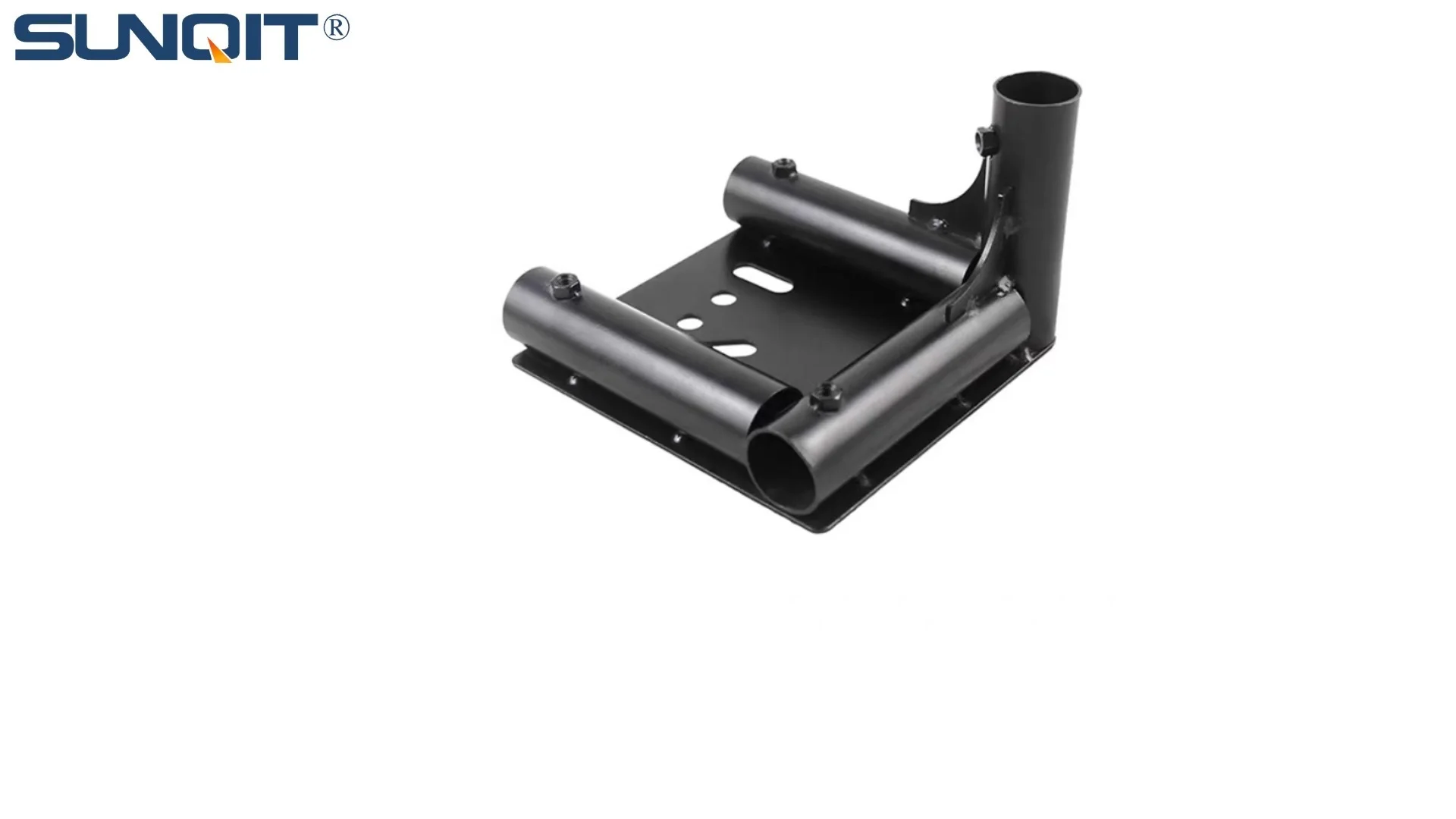
In the high-stakes world of medical device manufacturing, where precision meets sterility, every component—no matter how small—plays a critical role in ensuring patient safety and regulatory compliance. Among these unsung heroes? The castor installation base. Often overlooked, this unassuming part is the backbone of mobility in cleanrooms, allowing equipment, workstations, and material racks to move smoothly without compromising the ultra-clean environment. Let's dive into why castor installation bases matter, how they support lean systems and ESD workstations, and the key tips to keep your cleanroom compliant.
The Cleanroom Challenge: Balancing Mobility and Sterility
Walk into any medical device cleanroom, and you'll immediately sense the tension between two priorities: mobility and control . Technicians need to move workstations, transport raw materials, and reconfigure lines to keep up with production demands—yet every wheel turn, every adjustment, risks introducing particles or disrupting the carefully controlled environment. ISO 14644, the global standard for cleanrooms, sets strict limits on airborne particles (e.g., ISO 5 allows no more than 3,520 particles of 0.5μm per cubic meter). Even a tiny scratch from a poorly designed caster wheel can become a breeding ground for contaminants, putting compliance at risk.
This is where the castor installation base steps in. More than just a "wheel holder," it's a precision-engineered component that anchors casters to equipment, ensuring stability, reducing vibration, and minimizing particle generation. For example, a misaligned installation base can cause casters to wobble, creating friction that sheds microplastics or metal shavings—exactly what cleanroom protocols aim to prevent. In short, the right castor installation base isn't just about moving things around; it's about moving them responsibly .
Key Requirements for Cleanroom Castor Installation Bases
Not all castor installation bases are created equal—especially in cleanrooms. Here's what to prioritize when selecting one:
1. Material Matters: Resistance to Corrosion and Contamination
Cleanrooms are harsh environments. Daily cleaning with disinfectants (like hydrogen peroxide or isopropyl alcohol), high humidity, and strict chemical exposure standards demand materials that won't degrade or leach harmful substances. Stainless steel is a top choice: its smooth surface resists corrosion, is easy to sanitize, and doesn't harbor bacteria. Aluminum, while lighter, works well for lighter loads and offers good corrosion resistance, though it may require anodization to enhance durability. Avoid painted or coated bases—chips in the finish can become particle sources.
2. Load Capacity: Safety First
Medical devices and their components—think MRI machine parts or delicate surgical tools—can be surprisingly heavy. A castor installation base must support not just the weight of the equipment but also dynamic loads (e.g., when moving a loaded workstation over a threshold). Underestimating load capacity leads to base deformation, caster failure, or even equipment tipping—all disasters in a cleanroom. Always factor in a 20-30% safety margin to account for unexpected weight spikes.
3. Particle Emission: The "Invisible" Compliance Killer
Even the smoothest caster wheel will generate some particles, but the installation base can mitigate this. Look for bases with rounded edges (to prevent dust buildup in crevices), sealed joints (to avoid trapping contaminants), and minimal exposed threads (which can collect debris). Some manufacturers offer "cleanroom-grade" bases with specialized coatings that repel particles, making them easier to wipe down during daily cleaning.

Supporting Lean Systems: Mobility as a Tool for Efficiency
Lean manufacturing isn't just a buzzword in medical device production—it's a lifeline for reducing waste, cutting costs, and accelerating time-to-market. At its core, lean is about creating flexible, adaptive workflows, and castor installation bases are a secret weapon here. Imagine a cleanroom where workstations are fixed in place: if a production line needs to shift from assembling catheters to pacemakers, reconfiguring takes hours (or days), leading to downtime and lost productivity.
With a robust castor installation base, workstations become modular. Technicians can roll ESD workstations to the assembly line, position material racks exactly where operators need them, and even reorient equipment to optimize workflow—all in minutes. This agility aligns with lean principles like "just-in-time" material delivery and "continuous improvement," as teams can quickly test new layouts and refine processes without disrupting the entire facility. For example, a leading medical device manufacturer in Minnesota reported a 25% reduction in changeover time after upgrading to modular workstations with heavy-duty castor installation bases, directly supporting their lean initiative to eliminate "motion waste."

ESD Workstations and Castor Installation Bases: A Critical Partnership
Static electricity is a silent threat in medical device manufacturing. A single electrostatic discharge (ESD) can damage sensitive electronics in devices like heart monitors or insulin pumps, rendering them useless (or worse, unsafe). That's why ESD workstations are non-negotiable—and their mobility relies on castor installation bases designed for static control.
How does this work? ESD-compliant castor installation bases are typically made with conductive materials (like stainless steel) or have integrated grounding straps that connect the base to the cleanroom's grounding system. When a workstation with ESD-sensitive components is moved, the base ensures any static charge generated by the casters is safely dissipated, rather than building up and discharging onto the product. Look for bases tested to ANSI/ESD S20.20 standards, which set strict limits on resistance (typically 10^6 to 10^9 ohms) to balance conductivity and safety.
Pro tip: Don't overlook caster and accessories here. Conductive caster wheels paired with a grounded installation base create a complete ESD protection system. Avoid plastic wheels unless they're specifically labeled "ESD-safe"—ordinary plastics can insulate charge, turning your mobile workstation into a static hazard.

Choosing the Right Castor Installation Base: A Comparison Guide
With so many options on the market, selecting the perfect castor installation base can feel overwhelming. To simplify, here's a comparison of common types used in medical device cleanrooms:
| Base Type | Material | Best For | Cleanroom Class Suitability | ESD Compliant? | Key Advantage |
|---|---|---|---|---|---|
| Stainless Steel Heavy-Duty | 304/316 Stainless Steel | Heavy equipment (e.g., MRI part racks) | ISO 5-7 | Yes (with grounding) | Corrosion resistance; ideal for wet cleaning |
| Aluminum Lightweight | Anodized Aluminum | Mobile ESD workstations, small material trolleys | ISO 6-8 | Yes (with conductive coating) | Lightweight; easy to maneuver |
| Composite Polymer | Reinforced Polypropylene | Low-load applications (e.g., sample transport) | ISO 7-8 | Limited (check manufacturer specs) | Chemical resistant; no rust risk |
Case Study: How a Castor Installation Base Upgrade Solved a Compliance Crisis
A mid-sized medical device company in California faced a frustrating problem: their ISO 6 cleanroom kept failing particle count tests, despite rigorous cleaning protocols. The culprit? Their old, painted steel castor installation bases on material racks. Over time, the paint had chipped, leaving sharp edges that trapped dust; when the racks were moved, these particles were released into the air. Worse, the bases weren't grounded, leading to occasional ESD events that damaged sensitive circuit boards.
The solution? Upgrading to stainless steel castor installation bases with sealed joints and integrated grounding straps. Within three months, particle counts dropped by 45%, ESD incidents became non-existent, and the company passed its FDA inspection with zero findings. The team also reported easier cleaning—no more scrubbing crevices with toothbrushes—and greater confidence in their workflow flexibility. As one technician put it: "It's amazing how something as simple as a better base made our jobs safer and less stressful."
Maintenance Tips: Keeping Your Castor Installation Bases Compliant
Even the best castor installation base won't last forever without proper care. Here's how to maintain compliance and extend their lifespan:
1. Daily Inspections: Catch Issues Early
Make it part of your cleanroom checklist to inspect bases for cracks, loose bolts, or deformation. Pay special attention to welds (if applicable) and caster attachment points—these are common failure spots. A quick visual check takes 30 seconds per base but can prevent catastrophic failures.
2. Cleaning: Use the Right Tools
Clean bases with lint-free microfiber cloths and FDA-approved disinfectants (avoid abrasive pads, which can scratch surfaces). For stubborn debris in joints, use a soft-bristled brush (never metal) to dislodge particles, then wipe immediately. Schedule deep cleans monthly, where bases are removed, disassembled (if possible), and sanitized thoroughly.
3. Lubrication: Less Is More
Caster wheels need lubrication to roll smoothly, but over-lubing can attract dust. Use only cleanroom-grade, food-safe lubricants (e.g., silicone-based) and apply sparingly to axle points. Wipe away excess to prevent drips that could contaminate the floor.
4. replace When Needed
Even with perfect maintenance, castor installation bases wear out. Signs it's time for a replacement: persistent wobbling, visible rust (on steel bases), or difficulty keeping the base level. Don't wait for a failure—proactive replacement is far cheaper than a compliance violation or equipment damage.
Future Trends: What's Next for Castor Installation Bases?
As medical device manufacturing evolves, so too will the tools that support it. Here are two emerging trends to watch for castor installation bases:
1. Smart Bases with IoT Sensors
Imagine a castor installation base that alerts you before it fails. Some manufacturers are experimenting with embedded sensors that monitor load, vibration, and temperature, sending real-time data to a facility management system. This predictive maintenance can flag issues like a loose caster bolt or excessive wear, allowing teams to address problems before they impact compliance.
2. Antimicrobial Coatings
In the wake of the COVID-19 pandemic, cleanrooms are doubling down on biosecurity. New antimicrobial coatings for castor installation bases—infused with silver ions or copper—can inhibit the growth of bacteria and fungi on surfaces, adding an extra layer of protection against contamination. While not a replacement for regular cleaning, these coatings offer peace of mind in high-risk environments.
Final Thoughts: The Foundation of Cleanroom Success
In medical device manufacturing, compliance isn't optional—it's the difference between saving lives and facing costly recalls. The castor installation base, though small in size, is a cornerstone of this compliance, enabling mobility without sacrificing sterility, supporting lean systems, and protecting ESD-sensitive components. By prioritizing material quality, load capacity, and particle control, and pairing it with regular maintenance, you can turn this humble part into a strategic asset for your cleanroom.
At the end of the day, it's the little things that make the biggest difference. And in a cleanroom, where every particle counts, the castor installation base is proof that even the smallest components can have a huge impact on patient safety and manufacturing success.