- Company Articles
- Products and Technology
- Installation And Maintenance
- Castor Installation Base in Warehousing Logistics: Streamlining Material Flow

Castor Installation Base in Warehousing Logistics: Streamlining Material Flow
Related Product
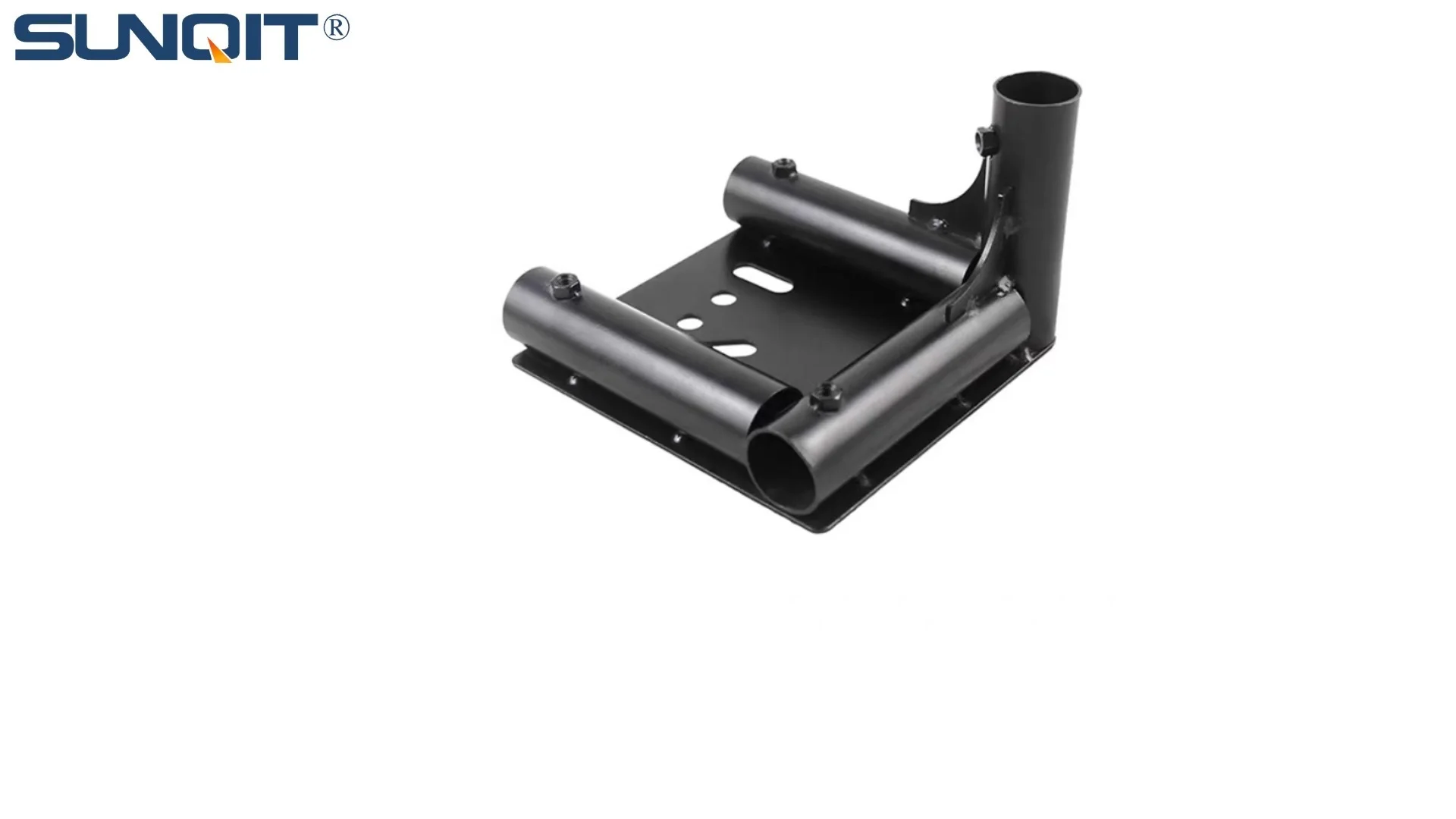
Castor Installation Base
Pipe fitting castor installation base,Well made, precise and strong. Made of high quality of steel,black painting surface treatment for greater resistance to corrosion. It is used for castor or foot lever connection with lean pipe.
In the fast-paced world of warehousing and logistics, every second counts. From the moment raw materials arrive at the dock to the final shipment of finished goods, efficiency is the backbone of success. Yet, many facilities still grapple with hidden inefficiencies: static storage racks that force workers to carry heavy loads across long distances, workbenches fixed in place that limit flexibility, and turnover trolleys that feel more like anchors than tools. These small, daily friction points add up—wasting time, increasing worker fatigue, and ultimately slowing down the entire supply chain. The good news? Sometimes, the solution lies in a component so unassuming, it's easy to overlook: the castor installation base.
You might be wondering: What exactly is a castor installation base, and how can it transform material flow? Think of it as the unsung hero that turns ordinary equipment into mobile powerhouses. By securely attaching caster wheels to trolleys, workbenches, and racks, this simple yet robust component unlocks mobility, adaptability, and efficiency in ways that static setups never could. In this article, we'll dive deep into how castor installation bases, paired with the right caster wheels and accessories, are revolutionizing warehousing logistics—making material movement smoother, safer, and more responsive to the demands of modern operations.
What Is a Castor Installation Base, and Why Does It Matter?
At its core, a castor installation base is a mounting component designed to bridge the gap between equipment (like a turnover trolley, workbench, or material rack) and caster wheels. It's the critical link that ensures casters are securely attached, stable under load, and able to rotate or roll smoothly without compromising safety. Imagine trying to attach a caster wheel directly to a flimsy wooden shelf—over time, the weight would warp the wood, the wheel would wobble, and the whole setup could collapse. The castor installation base solves this by providing a sturdy, standardized platform that distributes weight evenly and withstands the rigors of daily use.
But its role goes beyond just "holding things together." A well-designed castor installation base is engineered to work with specific caster types, load capacities, and equipment designs. For example, bases used on heavy-duty turnover trolleys might be made of thick steel to handle thousands of pounds, while those on lightweight workbenches could use aluminum for a balance of strength and portability. Some bases even include built-in features like bolt holes for quick assembly, or recessed areas to protect caster wheel mechanisms from debris. In short, it's not just a "part"—it's a precision tool that ensures mobility doesn't come at the cost of stability.
The Dynamic Duo: Castor Installation Base + Caster Wheels & Accessories
A castor installation base is only as good as the caster wheels and accessories it supports. To truly streamline material flow, you need to pair the right base with the right caster setup. Let's break down the key players in this partnership:
Caster Wheels: The "Mobility Engine"
Caster wheels are the workhorses of mobility. They come in a variety of designs to suit different needs: swivel caster wheels rotate 360 degrees, making tight turns and maneuvering in narrow aisles a breeze; rigid caster wheels roll straight, ideal for equipment that moves back and forth along a fixed path (like assembly line trolleys); and braked caster wheels add a safety lock, ensuring equipment stays put when loading/unloading or during use. The castor installation base acts as the foundation, ensuring these wheels align properly, bear weight evenly, and maintain their functionality over time.
Caster Accessories: The "Fine-Tuners"
No mobility setup is complete without caster accessories—small but mighty tools that enhance performance and longevity. For example, caster accessories like dust covers keep debris out of wheel bearings, preventing jams and extending lifespan. Brake levers with ergonomic grips make it easier for workers to lock/unlock wheels, reducing strain. Even simple items like mounting bolts and washers, when paired with a well-designed castor installation base, ensure a tight, rattle-free connection that won't loosen over time. Together, these accessories turn a basic "mobile cart" into a reliable, low-maintenance tool.
Real-World Example: The Wobbly Trolley Dilemma
A mid-sized electronics warehouse recently upgraded its turnover trolleys with new swivel caster wheels—but they quickly ran into a problem: the trolleys wobbled dangerously when loaded with heavy circuit boards. After inspecting the setup, the team realized the issue wasn't the wheels themselves, but the old, mismatched wooden bases they were attached to. The bases were warped, causing the wheels to sit at uneven angles. By replacing the wooden bases with steel castor installation bases (designed to fit their specific caster wheels), the wobbling stopped. Workers reported feeling safer, and the trolleys could now carry 30% more weight without issue.

5 Ways Castor Installation Bases Streamline Material Flow
Now that we understand the "what" and "how" of castor installation bases, let's explore the "why." How exactly do these components transform material flow in warehouses and logistics centers? Here are five key benefits:
1. Reduces Manual Labor and Worker Fatigue
In static setups, workers often spend hours pushing, pulling, or carrying materials between storage, production, and shipping areas. A single box might be moved three or four times before it reaches its destination. With a castor installation base-equipped turnover trolley, that same box can be loaded once and wheeled directly to where it's needed—no heavy lifting, no multiple trips. Studies show that mobile equipment reduces manual handling by up to 40%, cutting down on worker fatigue and lowering the risk of strains or injuries. When workers aren't exhausted from moving materials, they're more focused, productive, and engaged.
2. Enables Flexible Workflows and Rapid Reconfiguration
Modern warehouses rarely stay the same for long. Seasonal demand spikes, new product lines, or shifts in customer orders can require quick changes to layouts. Static workbenches and racks make this nearly impossible—reconfiguring a production line might take days of disassembly and rebuilding. With mobile workbenches (thanks to castor installation bases), teams can rearrange workstations in hours, or even minutes. Need to add a new picking station near the shipping dock? Just roll a mobile workbench into place. Sudden surge in orders for a specific product? Reposition turnover trolleys to create a dedicated assembly line. Flexibility like this turns "adapting to change" from a headache into a competitive advantage.
3. Improves Material Tracking and Inventory Accuracy
Ever spent hours searching for a missing pallet or a misplaced box? Static storage often leads to disorganization—materials get stacked in "temporary" spots, labels fall off, and inventory counts become guesswork. Mobile turnover trolleys and racks, equipped with castor installation bases, change this. When materials are stored on mobile units, they can be labeled, color-coded, and moved to designated zones (e.g., "ready for shipping," "needs inspection"). This makes it easier to track inventory in real time, reducing errors and minimizing the risk of stockouts or overstocking. One warehouse reported a 25% drop in "lost" inventory after switching to mobile storage units—saving thousands in reordering costs.
4. Enhances Safety in High-Traffic Areas
Warehouses are busy places, with forklifts, pallet jacks, and workers all sharing space. Static equipment can create bottlenecks—imagine a worker struggling to carry a heavy load around a fixed rack, blocking a forklift path. Mobile equipment, when paired with braked caster wheels (secured via a castor installation base), eliminates these hazards. Trolleys can be moved out of the way when not in use, workbenches can be positioned to keep walkways clear, and braked wheels ensure equipment doesn't roll unexpectedly. Additionally, stable, wobble-free casters reduce the risk of spills or tip-overs, protecting both workers and products.
5. Boosts Throughput and Order Fulfillment Speed
At the end of the day, efficiency translates to speed—and speed translates to happier customers. When material flow is smooth, orders get picked, packed, and shipped faster. For example, a clothing warehouse using mobile picking carts (with castor installation bases) saw their order fulfillment time drop from 45 minutes to 25 minutes per order. Why? Because pickers could roll their carts directly to the shelves, eliminating backtracking. Similarly, a manufacturing plant using mobile workbenches reported a 30% increase in daily production—workers no longer wasted time walking to tools; the tools came to them. In a world where customers expect next-day delivery, these gains aren't just "nice to have"—they're essential.

Applications: Where Castor Installation Bases Shine Brightest
Castor installation bases aren't one-trick ponies—they excel in a variety of warehousing and logistics scenarios. Let's explore two key applications where they make the biggest impact:
Turnover Trolley and Rack: From Static Storage to Mobile Inventory
Turnover trolleys and racks are the backbone of material handling—used to store everything from small parts to large pallets. But when they're static, they're little more than expensive shelves. Add a castor installation base, and suddenly they become dynamic tools for moving inventory where it's needed most. For example:
- Raw Material Transport: A food processing plant uses mobile turnover racks to move bulk ingredients (flour, sugar) from the cold storage room directly to mixing stations, cutting down on double-handling.
- Work-in-Progress (WIP) Storage: An automotive factory stores partially assembled parts on mobile trolleys, rolling them from one assembly station to the next as workers complete their tasks.
- Returns Processing: A retail warehouse uses mobile racks to collect returned items, wheeling them to inspection stations without needing to unload and reload boxes.
The key here is adaptability. A single mobile turnover trolley can serve multiple roles throughout the day—morning as a picking cart, afternoon as a staging unit for shipping, and evening as a storage solution for overstock. This versatility reduces the need for multiple pieces of equipment, saving space and cost.
Workbench: The Mobile Command Center
Workbenches are where the magic happens—whether it's assembling products, packing orders, or repairing equipment. But a fixed workbench limits workers to one spot, forcing them to walk back and forth for tools, materials, or colleagues. A mobile workbench, made possible by a castor installation base, changes this. Imagine a technician repairing a machine on the factory floor: instead of carrying tools back and forth from a static bench, they roll their mobile workbench right next to the machine, keeping everything within arm's reach. Or a packer in an e-commerce warehouse: during peak hours, they can position their workbench near the conveyor belt, reducing the distance packages need to travel from picking to packing.
Even better, many mobile workbenches are designed with built-in storage (drawers, shelves) and tool holders, so everything stays organized during movement. This means no more lost screwdrivers or misplaced labels—productivity stays high, and errors stay low.

Choosing the Right Castor Installation Base and Caster Pair
Not all castor installation bases and caster wheels are created equal. To maximize efficiency, you need to match the setup to your specific needs. Here's a breakdown of key factors to consider, plus a handy comparison table to guide your decision:
Key Factors to Consider
- Load Capacity: What's the maximum weight the equipment will carry? A base designed for 500 lbs. will fail under a 1,000 lbs. load.
- Floor Type: Smooth concrete, rough asphalt, or carpet? Soft rubber caster wheels work best on smooth floors to prevent scratches, while hard plastic or steel wheels handle rough surfaces.
- Maneuverability Needs: Do you need tight turns (swivel casters) or straight-line movement (rigid casters)?
- Environment: Indoor vs. outdoor? Moisture, dust, or chemicals? Stainless steel bases and casters resist rust, while sealed bearings keep out debris.
| Caster Type | Load Capacity (lbs.) | Recommended Base Material | Ideal Application | Essential Accessories |
|---|---|---|---|---|
| Swivel Caster Wheel with Brake | 300 – 800 | Aluminum or Steel | Mobile workbenches, picking carts, small turnover trolleys | Brake lever, dust cover, non-slip wheel tread |
| Rigid Caster Wheel | 500 – 2,000 | Steel | Heavy-duty turnover racks, pallet transporters (fixed paths) | Reinforced mounting bolts, grease fittings for bearings |
| Heavy-Duty Swivel Caster Wheel | 1,000 – 5,000+ | Thick-Gauge Steel | Industrial material racks, large component trolleys | Dual-wheel design, locking pin (for extra stability), shock-absorbing tires |
Pro Tip: When in doubt, overestimate your load capacity by 20%. Warehouses often experience "peak loads" (e.g., holiday seasons, bulk orders) where equipment carries more than its daily average. A base and caster setup that can handle the extra weight will last longer and reduce the risk of failure.
Maintenance: Keeping Your Castor Installation Base and Casters Rolling Smoothly
Even the best castor installation base and caster setup will underperform without proper maintenance. Here's how to keep them in top shape:
1. Regular Inspections (Weekly)
Walk through your facility and check for loose bolts on the castor installation base—tighten any that are wobbly. Inspect caster wheels for cracks, flat spots, or debris stuck in the tread (e.g., string, small rocks). Check brake mechanisms to ensure they engage/disengage smoothly—sticky brakes can cause accidents or damage to the base over time.
2. Clean and Lubricate (Monthly)
Wipe down castor wheels and bases with a damp cloth to remove dust and grime. For caster wheels with bearings, apply a few drops of lubricating oil (check the manufacturer's recommendations—some use grease instead) to keep rotation smooth. Avoid over-lubricating, as this can attract more dirt.
3. replace Worn Parts Promptly
Caster wheels, bearings, and even castor installation bases wear out over time. If a wheel is cracked, replace it immediately—don't wait for it to fail. Similarly, if the base shows signs of bending or rust (in non-stainless setups), consider upgrading to a heavier-duty model. Investing in replacement parts now is cheaper than repairing damaged equipment or paying for worker injuries later.
The Future of Material Flow: Castor Installation Bases in Smart Warehouses
As warehouses embrace automation and smart technology, the role of castor installation bases is evolving too. Today's mobile equipment isn't just "wheeled"—it's connected. For example, some turnover trolleys now feature RFID tags or barcode scanners to track inventory in real time, while mobile workbenches might include power outlets for laptops or tools. The castor installation base remains the foundation, but now it's supporting not just physical weight, but also the technology that makes warehouses smarter.
Looking ahead, we'll likely see bases designed for even greater integration—e.g., built-in sensors that alert maintenance teams when casters need lubrication, or bases with modular designs that allow quick swapping of caster types (swivel to rigid) based on the task. The goal? To make material flow not just efficient, but predictive—anticipating needs before they arise.
Conclusion: Small Component, Big Impact
In the grand scheme of warehousing logistics, the castor installation base might seem like a small detail. But as we've explored, it's the linchpin that turns static equipment into dynamic, mobile tools for efficiency. By securely attaching caster wheels and accessories, it reduces manual labor, enhances flexibility, improves safety, and speeds up material flow—all while keeping costs in check.
Whether you're running a small distribution center or a large manufacturing plant, the right castor installation base and caster setup can transform how you handle materials. So the next time you walk through your facility, take a closer look at those "" trolleys and workbenches. With a little help from this unsung hero, they might just become your secret weapon for success.