- Company Articles
- Products and Technology
- Installation And Maintenance
- Castor Installation Base Innovation: Future Trends in Flexible Manufacturing

Castor Installation Base Innovation: Future Trends in Flexible Manufacturing
Related Product
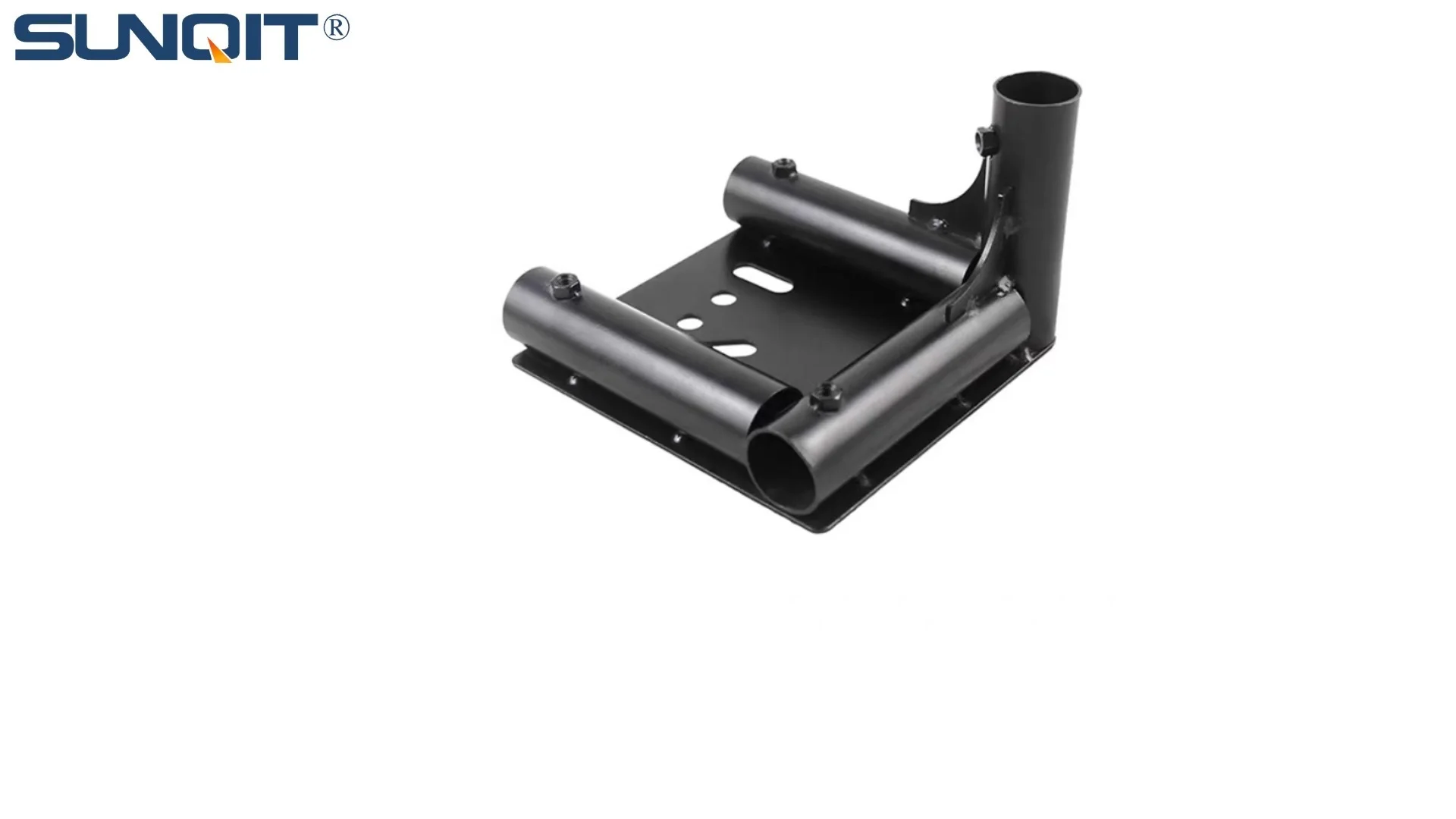
Castor Installation Base
Pipe fitting castor installation base,Well made, precise and strong. Made of high quality of steel,black painting surface treatment for greater resistance to corrosion. It is used for castor or foot lever connection with lean pipe.
Introduction: The Unsung Hero of Modern Manufacturing
Walk into any modern factory, warehouse, or production facility today, and you'll notice a subtle yet critical shift: the days of rigid, immovable workspaces are fading. In their place, dynamic, reconfigurable setups dominate—spaces that adapt in real time to changing production needs, seasonal demands, or new product lines. At the heart of this transformation lies a component so it's often overlooked: the castor installation base. These unassuming pieces of hardware, paired with caster and accessories, are the quiet architects of flexible manufacturing, turning static workbenches into mobile workstations, fixed material racks into agile transport systems, and rigid assembly lines into fluid, adaptable workflows.
In an era where lean system principles—minimizing waste, maximizing efficiency, and prioritizing adaptability—are no longer optional but essential, the role of castor installation bases has evolved from mere "mobility enablers" to strategic tools. They're not just about moving things around; they're about reimagining how work happens. Whether it's a small electronics manufacturer reconfiguring a production line overnight or a large automotive plant scaling up for a new model launch, the right castor base can mean the difference between costly downtime and seamless transition. And as manufacturing continues to embrace automation, IoT, and smart technologies, these bases are poised to become even more integral, bridging the gap between human-centric workflows and cutting-edge machinery.
The Backbone of Flexible Workspaces: Understanding Castor Installation Bases
To appreciate the innovation in castor installation bases, it helps to start with the basics. A castor installation base is the foundation that connects a caster wheel to a piece of equipment—whether it's a workbench, a turnover trolley, or a material rack. Traditionally, these bases were simple, heavy, and one-size-fits-all: think thick steel plates welded or bolted into place, offering little adjustability and even less compatibility with modern materials like aluminum profile. They got the job done, but they came with trade-offs: limited mobility, difficulty in replacement, and a tendency to add unnecessary weight to equipment, which in turn increased energy use and wear on floors.
Today's castor installation bases, however, are a world apart. Designed with flexibility in mind, they're lightweight yet durable, modular, and engineered to integrate seamlessly with other components of a lean system. Take, for example, bases made from high-grade aluminum extrusion profile: not only do they reduce overall weight by up to 40% compared to traditional steel bases, but their T-slot design allows for easy attachment of accessories—think brake levers, height adjusters, or even sensors for smart monitoring. This modularity means a single base can adapt to different caster types (swivel, rigid, locking) or load capacities, eliminating the need for multiple specialized bases and reducing inventory costs.
Another key advancement is adjustability. Modern bases often feature threaded inserts or sliding mechanisms that let operators fine-tune height, alignment, or even swivel tension, ensuring equipment stays level on uneven floors or maintains stability during high-speed movement. For instance, a workbench used in electronics assembly might need precise height adjustment to accommodate ergonomic standards, while a heavy-duty material rack B (3 row and 3 floor) requires a base that can lock into place to prevent shifting during loading and unloading. Innovations like suction cup anti-slip foot adjusters or heavy-duty split foot seats further enhance stability, making these bases suitable for everything from delicate component handling to rugged industrial use.

Design Evolution: From Static to Dynamic—A Look at Key Innovations
Modularity: The End of "One-and-Done" Bases
Perhaps the most significant shift in castor installation base design is the move toward modularity. Traditional bases were often custom-built for specific equipment, meaning replacing a damaged base or upgrading to a higher-capacity caster required a complete overhaul. Today, modular bases—compatible with standard aluminum profile accessories—change that. Using T-slot aluminum profile as a frame, these bases allow for quick swaps of caster wheels, brakes, or leveling feet without welding or specialized tools. For example, a base designed for a workbench E (single deck-without caster) can easily be retrofitted with casters and brakes if the need for mobility arises later, or reconfigured with anti-slip feet if the workbench is moved to a permanent location.
This modularity extends to compatibility with other lean manufacturing components, too. A well-designed castor base can integrate with roller track systems, allowing a mobile workstation to seamlessly connect to a static assembly line via roller track connector. Imagine a scenario where a material cart, equipped with a modular base and swivel roller balls 1 inch, glides smoothly from a storage area onto a roller track, then locks into place at a workbench—all without manual lifting or awkward maneuvering. This level of integration reduces handling time, minimizes the risk of injury, and keeps workflows flowing without interruption.
Material Science: Aluminum Profiles and the Rise of Lightweight Durability
If modularity is the "how" of modern castor bases, material innovation is the "why." Traditional steel bases, while strong, are heavy, prone to rust, and difficult to modify. Enter aluminum extrusion profile: a material that offers the best of both worlds—strength and lightness. Aluminum lean pipe and aluminum profile accessories have revolutionized base design, cutting weight by up to 50% compared to steel while maintaining comparable load capacities. This not only makes equipment easier to move (reducing operator fatigue and the risk of strain injuries) but also lowers energy costs for automated systems that transport these bases, such as conveyor belts or robotic loaders.
Aluminum's natural resistance to corrosion is another game-changer, especially in environments like food processing, pharmaceuticals, or electronics manufacturing, where cleanliness and moisture control are critical. Unlike steel, which requires painting or coating to prevent rust, aluminum bases can withstand exposure to water, chemicals, or humidity without degradation. For facilities using stainless steel pipe series for hygiene-critical applications, aluminum bases offer a compatible, lightweight alternative that integrates seamlessly with existing stainless steel infrastructure—think stainless steel swivel roller balls paired with an aluminum base for a workstation that's both mobile and easy to sanitize.
Ergonomics and Safety: Putting People at the Center
Modern manufacturing isn't just about machines—it's about people. Castor installation bases now prioritize ergonomics, with features designed to reduce operator strain and enhance safety. Adjustable height bases, for example, allow workbenches or trolleys to be raised or lowered to match an operator's waist height, preventing bending or stooping during long shifts. Similarly, bases with soft-start/soft-stop casters (equipped with internal braking mechanisms) reduce jolting when moving heavy loads, lowering the risk of product damage or operator injury.
Safety innovations extend to stability, too. Anti-tip designs, such as wider base widths or low-center-of-gravity configurations, prevent equipment from tipping during sharp turns or sudden stops—critical in busy facilities where foot traffic and machinery coexist. For example, a turnover trolley with a castor base featuring caster accessories like dual-wheel casters and swivel locks is far less likely to wobble or tip than one with a narrow, unstable base. Even small details, like rounded edges on aluminum profile frames or non-slip caster wheels, contribute to a safer work environment, reducing the risk of cuts, slips, or trips.

Integration with Lean Systems: Streamlining Workflows, Reducing Waste
At its core, lean manufacturing is about eliminating waste—whether that's wasted time, wasted space, or wasted effort. Castor installation bases, when paired with other lean components like roller tracks, workbenches, and material racks, are powerful tools for achieving this. Let's take a closer look at how these integrations work in practice.
From Static Racks to Mobile Material Delivery: The Role of Roller Tracks and Casters
Consider a traditional warehouse setup: material racks are fixed to the floor, and operators spend hours each day walking back and forth to retrieve parts. With a lean system approach, that same rack can be mounted on a castor installation base, turning it into a mobile unit that can be wheeled directly to the assembly line. Add a roller track guide rail (yellow or grey, depending on the facility's color-coding system) to the rack, and suddenly, parts slide smoothly from the rack onto the assembly line via roller track placon mount for rail connection—no lifting, no carrying, no wasted steps.
This integration is particularly impactful in just-in-time (JIT) manufacturing, where materials must arrive exactly when they're needed, not a minute sooner or later. A mobile material rack B (3 row and 3 floor), equipped with a modular castor base and plastic roller track guide rail, can be positioned at the assembly line in the morning, restocked during breaks, and moved to storage in the evening—maximizing floor space during off-hours and ensuring materials are always within arm's reach during production. The result? Reduced walking time, fewer errors, and a workflow that adapts to demand in real time.
Workbenches: From Fixed Desks to Mobile Command Centers
Workbenches are the heart of any production line, and their mobility (or lack thereof) can make or break efficiency. A workbench bolted to the floor might work for a single product line, but what if the facility needs to reconfigure for a new product? Enter the workbench with a castor installation base: a mobile command center that can be positioned anywhere on the shop floor, connected to power, tools, and materials via retractable cords or overhead supply systems. For example, a workbench A, fitted with a base using aluminum guide rail B and swivel roller balls 0.5 inch, can glide alongside a conveyor belt during peak hours, then be moved to a testing area during quality checks—all without disrupting the flow of production.
These mobile workbenches also shine in collaborative environments. In a facility where cross-functional teams work on prototyping or problem-solving, a group of mobile workbenches can be quickly arranged into a U-shape for brainstorming, then reconfigured into a linear assembly line when it's time to build. This flexibility not only saves time but also fosters collaboration, turning isolated workstations into connected hubs of innovation.
| Traditional Setup | Innovative Lean Setup (with Castor Bases) | |
|---|---|---|
| Static material racks; operators walk 5-10 miles/day retrieving parts | Mobile racks on castor bases; materials delivered directly to the line via roller tracks | |
| Fixed workbenches; reconfiguration requires days of disassembly/reassembly | Mobile workbenches with modular bases; reconfigured in minutes for new tasks | |
| Heavy steel bases; high energy use for automated transport | Lightweight aluminum profile bases; 40% reduction in energy costs for movement | |
| Limited compatibility; custom bases for each equipment type | Modular design; compatible with caster and accessories, roller tracks, and aluminum profiles |

Future Trends: What's Next for Castor Installation Bases?
As manufacturing continues to evolve, so too will the technology that powers it. Castor installation bases are no exception—in fact, they're poised to become even more integral as smart manufacturing and Industry 4.0 take hold. Here are three trends to watch:
Smart Casters: IoT-Enabled Bases for Real-Time Monitoring
Imagine a castor installation base equipped with sensors that track everything from wheel wear and load capacity to movement patterns and location. This isn't science fiction—it's the future of smart manufacturing. IoT-enabled casters, paired with RFID tags or Bluetooth beacons, could send real-time data to a central dashboard, alerting maintenance teams when a wheel needs lubrication, a brake is failing, or a base is being overloaded. For example, a material cart used to transport heavy aluminum honeycomb panels could automatically trigger an alert if it's carrying more than its rated capacity, preventing damage to the cart or injury to operators.
Location tracking could also revolutionize inventory management. In a large warehouse, knowing the exact position of every mobile rack or trolley in real time would eliminate "hunting for tools" and reduce lost or misplaced equipment. Combined with AI-powered analytics, this data could even optimize workflows—identifying bottlenecks in movement patterns and suggesting more efficient routes or workstation layouts.
Sustainable Materials: Beyond Aluminum—Eco-Friendly Innovations
Sustainability is no longer a buzzword; it's a business imperative. As manufacturers strive to reduce their carbon footprints, the materials used in castor installation bases will come under greater scrutiny. While aluminum is already more eco-friendly than steel (it's 100% recyclable and requires less energy to produce), we're likely to see even more innovations in this space. Think bio-based plastics for caster wheels, recycled aluminum for profiles, or self-lubricating bearings made from renewable materials—all designed to reduce environmental impact without sacrificing performance.
Another area of focus will be energy efficiency. Casters with low-friction wheels or regenerative braking systems (which capture energy from movement and store it for later use) could reduce the energy needed to move heavy loads, making automated transport systems more sustainable. For example, a conveyor system using energy-recovering casters might generate enough power to run its own sensors or lights, lowering overall facility energy costs.
Customization at Scale: 3D Printing and On-Demand Manufacturing
Finally, 3D printing is set to transform how castor installation bases are designed and produced. While mass-produced, standard bases will always have a place, 3D printing allows for hyper-customization—creating bases tailored to unique equipment, unusual load requirements, or specialized environments. For a small manufacturer producing custom medical devices, for example, a 3D-printed castor base could be designed to fit a non-standard workbench shape or integrate with specialized tools, all without the high costs of traditional custom manufacturing. As 3D printing technology advances, we'll see shorter lead times, lower costs for small-batch production, and a new era of "design it, print it, use it" flexibility.
Conclusion: The Quiet Revolution Continues
Castor installation bases may not grab headlines like robots or AI-powered systems, but their impact on modern manufacturing is undeniable. From enabling lean system principles to powering the shift toward flexible, adaptable workspaces, these unassuming components are the backbone of the factories of tomorrow. As design innovations like modularity and lightweight aluminum profiles continue to push boundaries, and emerging trends like smart casters and 3D printing open new possibilities, one thing is clear: the future of manufacturing is mobile, modular, and built on the foundation of better, smarter castor installation bases.
For manufacturers looking to stay competitive in a fast-changing world, investing in these innovations isn't just a choice—it's a necessity. After all, in a industry where every second, every square foot, and every dollar counts, the ability to move, adapt, and evolve is what separates the leaders from the laggards. And at the heart of that ability? The humble castor installation base—proving that even the smallest components can drive the biggest revolutions.