- Company Articles
- Products and Technology
- Installation And Maintenance
- Castor Installation Base Material Guide: Why Aluminum is Ideal for Sustainable Improvement

Castor Installation Base Material Guide: Why Aluminum is Ideal for Sustainable Improvement
Related Product
Castor Installation Base
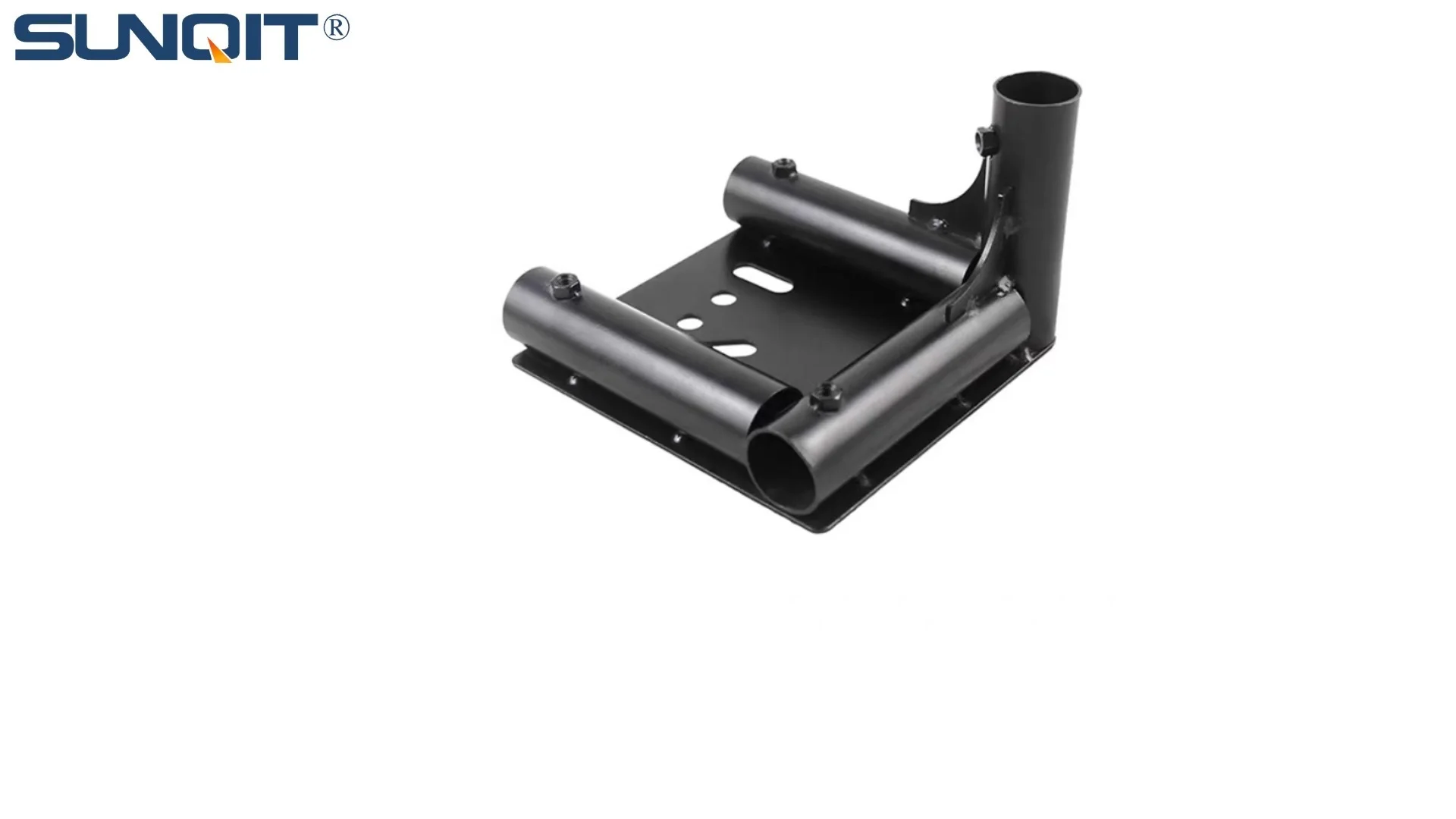
Pipe fitting castor installation base,Well made, precise and strong. Made of high quality of steel,black painting surface treatment for greater resistance to corrosion. It is used for castor or foot lever connection with lean pipe.
In the bustle of a manufacturing plant, a warehouse, or even a busy workshop, there's a silent workhorse that keeps operations moving—quite literally. It's not the high-tech machinery or the cutting-edge software, but something far more foundational: the castor installation base. These unassuming components are the unsung heroes that turn static workbenches into mobile stations, heavy material racks into maneuverable units, and rigid assembly lines into flexible workflows. Yet, despite their critical role, the choice of material for these bases is often overlooked—until a cracked plastic base gives way, a rusted steel frame slows down movement, or a bulky setup eats into efficiency. Today, we're diving deep into why aluminum has emerged as the gold standard for castor installation bases, especially when sustainability and long-term improvement are on the line.
The Foundation of Movement: Why Material Matters for Castor Bases
Before we talk about aluminum, let's take a step back. What makes a castor installation base "good"? At its core, it needs to balance three key traits: strength to support heavy loads, durability to withstand daily wear and tear, and adaptability to fit diverse industrial needs. Whether you're building a turnover trolley for parts transport, a mobile workbench for assembly lines, or a flow rack for just-in-time production, the base material dictates how well that tool will perform over time—and how much it will cost you in maintenance, replacements, or inefficiencies.
For decades, manufacturers relied on two primary materials: steel and plastic. Steel, with its raw strength, was the go-to for heavy-duty applications. It could handle tons of weight without bending, making it a staple in warehouses and factories. But steel comes with a price: it's heavy. A steel castor base adds significant bulk to any equipment, making it harder to move, increasing strain on floors, and even raising shipping costs. Worse, without constant maintenance—like painting or galvanizing—steel rusts, especially in humid or industrial environments, turning a reliable base into a corroded liability.
Plastic, on the other hand, offered a lightweight alternative. It was cheap to produce, resistant to rust, and easy to mold into custom shapes. But plastic's Achilles' heel is durability. Under heavy loads or repeated impact, plastic bases crack or warp. They also struggle with temperature extremes—softening in heat, becoming brittle in cold—making them a poor fit for factories with fluctuating conditions. For businesses aiming for lean, long-term operations, plastic often ends up being a "cheap now, costly later" choice.
Aluminum: The Sweet Spot of Strength, Sustainability, and Smart Design
Enter aluminum. In recent years, this versatile metal has quietly revolutionized how we think about castor installation bases—and for good reason. Aluminum isn't just a middle ground between steel and plastic; it's a material that redefines the rules. Let's break down why it's become the top choice for businesses focused on sustainable improvement.
Sustainability: More Than Just a Buzzword
Sustainability isn't just about "going green" for PR—it's about building operations that are efficient, cost-effective, and future-proof. Aluminum shines here. Unlike steel, which requires intensive mining and energy-heavy production, aluminum is 100% recyclable. In fact, recycling aluminum uses just 5% of the energy needed to produce new aluminum from raw ore. For manufacturers aiming to reduce their carbon footprint, this is a game-changer. Imagine a scenario where your old castor bases, instead of ending up in a landfill, are melted down and reused to create new components—no loss in quality, minimal environmental impact.
But aluminum's sustainability goes beyond recycling. Its lightweight nature reduces energy consumption in shipping and transportation. A truckload of aluminum bases carries far more units than steel bases, cutting down on fuel use and emissions. Even in daily operations, lighter equipment means less energy spent moving tools around the factory floor—whether manually by workers or via automated systems. Over time, these small energy savings add up to significant cost reductions and a smaller environmental footprint.
Strength Without the Weight
One of aluminum's most impressive traits is its strength-to-weight ratio. Pound for pound, aluminum is just as strong as steel, but up to 60% lighter. For castor installation bases, this translates to bases that can support heavy loads—think workbenches stacked with tools, flow racks loaded with parts, or turnover trolleys full of inventory—without adding unnecessary bulk. This lightness makes equipment easier to maneuver, reducing strain on workers and lowering the risk of workplace injuries. It also means less wear and tear on floors, as aluminum bases exert less pressure per square inch than steel ones. For facilities with sensitive flooring or older structures, this can extend the life of the workspace itself.
Take, for example, a lean system where tools and materials need to be repositioned frequently to adapt to changing production needs. A steel-based mobile workbench might require two workers to move; an aluminum-based one? One person can reposition it with ease. This flexibility isn't just about convenience—it's about agility. In today's fast-paced manufacturing landscape, the ability to adjust workflows quickly can mean the difference between meeting a tight deadline and falling behind.
Durability That Stands the Test of Time
Aluminum is naturally resistant to corrosion, thanks to a thin oxide layer that forms on its surface when exposed to air. Unlike steel, which needs coatings or treatments to fight rust, aluminum holds up in humid environments, near chemicals, or even outdoors. This makes it ideal for factories, warehouses, and workshops where moisture or spills are common. A castor base made from aluminum won't degrade over time, meaning fewer replacements and less downtime for maintenance.
But durability isn't just about resisting corrosion—it's about withstanding daily use. Aluminum's malleability allows it to absorb impacts without cracking, unlike plastic, which can shatter. And when paired with the right aluminum profile accessories—like reinforced joints or T-slot connectors—it becomes even more robust. For instance, aluminum profile systems use interlocking designs that distribute weight evenly across the base, preventing stress points that lead to failure. This combination of natural resilience and smart engineering makes aluminum bases a long-term investment, not a short-term fix.

Aluminum Profile: The Backbone of Customizable, Efficient Bases
At the heart of aluminum's success in castor installation bases is the aluminum profile. These extruded aluminum shapes—think of them as modular building blocks—are designed with versatility in mind. Most aluminum profiles feature T-slots, grooves that run along their length, allowing for easy attachment of caster accessories, brackets, or other components. This modularity means you're not stuck with a one-size-fits-all base; you can customize it to your exact needs.
Need a base for a narrow turnover trolley? Use smaller aluminum profiles. Building a heavy-duty workbench? Opt for thicker profiles with reinforced T-slots. Want to add brakes to your casters for stability? The T-slots make it simple to attach caster accessories like brake levers or locking mechanisms. This flexibility is a cornerstone of lean system thinking—why invest in multiple specialized bases when one customizable aluminum base can adapt to different tools and tasks?
Aluminum profiles also excel in precision. Extrusion manufacturing ensures consistent dimensions, so every profile fits perfectly with its accessories. This tight tolerance reduces wobble or instability in the base, which is critical for equipment like workbenches where precision matters (imagine assembling small electronics on a wobbly surface). It also makes assembly faster: no drilling or welding required—just slide in a bolt, tighten a nut, and you're done. For businesses looking to reduce setup time and get equipment operational quickly, this is a huge advantage.

Caster Accessories and Aluminum: A Match Made in Efficiency
A castor installation base is only as good as the casters it supports—and aluminum plays well with the full range of caster accessories. Whether you need swivel casters for 360-degree movement, rigid casters for straight-line transport, or heavy-duty brake casters for stability, aluminum bases provide a secure, adaptable platform.
The T-slots in aluminum profiles allow for easy adjustment of caster placement. Need to widen the base for better stability? Simply reposition the caster brackets along the T-slot. Want to swap out a damaged caster? No need to replace the entire base—just loosen the bolts, remove the old caster, and install a new one. This modularity reduces downtime and keeps maintenance costs low. For example, in a busy assembly line, a single stuck caster could halt production; with an aluminum base, that caster can be replaced in minutes, not hours.
Aluminum also pairs well with specialized caster accessories, like shock-absorbing casters or ESD (electrostatic discharge) wheels. In environments where sensitive electronics are handled, ESD-safe workbenches and trolleys are a must. Aluminum's conductive properties can be harnessed to ground static electricity, and when combined with ESD caster wheels, it creates a complete ESD protection system. This level of integration is hard to achieve with steel (which can rust and disrupt grounding) or plastic (which is non-conductive and can trap static).

Real-World Applications: How Aluminum Bases Transform Workflows
To truly understand the impact of aluminum castor installation bases, let's look at two common industrial tools: the workbench and the flow rack. These are workhorses in manufacturing, and their performance is directly tied to the quality of their bases.
Workbench: From Static to Dynamic
A workbench is more than just a table—it's a command center for assembly, testing, or packaging. Traditional workbenches are often fixed in place, limiting flexibility. But with an aluminum castor base, a workbench becomes a mobile station that can be moved to where it's needed most. Imagine a team assembling a product that requires multiple stages: instead of carrying parts back and forth between fixed workbenches, the workbench itself moves to the parts. This cuts down on wasted motion, a key principle of lean system design.
Aluminum's lightweight nature means even a fully loaded workbench—with tools, parts bins, and equipment—can be moved by one person. And because aluminum bases are durable, there's no fear of the bench wobbling or tipping during movement. Add in adjustable height features (made possible by aluminum profile accessories) and you've got a workbench that adapts to workers of different heights, reducing ergonomic strain and boosting productivity.
Flow Rack: Streamlining Material Handling
Flow racks are the backbone of just-in-time inventory systems, using gravity to feed parts to assembly lines. A flow rack's efficiency depends on its ability to maintain a smooth, consistent flow of materials. Here, the castor base plays a hidden but critical role. An aluminum base ensures the flow rack is level and stable, preventing jams or uneven material movement. Its lightweight design also makes it easy to reposition the rack if production lines are rearranged—no need for heavy machinery or a team of workers.
Aluminum's corrosion resistance is another plus for flow racks, which often hold parts that may be oily, greasy, or exposed to cleaning agents. Unlike steel, an aluminum base won't rust or degrade when in contact with these substances, ensuring the rack remains functional for years. And when paired with roller track accessories—like plastic roller track guide rails—aluminum bases create a seamless, low-friction system that keeps materials moving efficiently.
Comparing Materials: The Case for Aluminum in Numbers
To put it all together, let's compare steel, plastic, and aluminum side by side. The table below highlights key factors that matter most for castor installation bases:
| Material | Strength-to-Weight Ratio | Corrosion Resistance | Recyclability | Customization (with Accessories) | Long-Term Cost (10-Year Lifespan) |
|---|---|---|---|---|---|
| Steel | High strength, but very heavy | Poor (requires coatings) | Recyclable, but high energy cost | Limited (welding/ drilling needed) | High (maintenance + replacement costs) |
| Plastic | Low strength, lightweight | Good, but prone to cracking | Limited (often not recyclable) | Basic (molded shapes only) | Very high (frequent replacements) |
| Aluminum | High strength, 60% lighter than steel | Excellent (natural oxide layer) | 100% recyclable, low energy cost | High (T-slots + modular accessories) | Low (minimal maintenance, long lifespan) |
The data speaks for itself: aluminum outperforms steel and plastic in nearly every category that matters for sustainable, efficient operations. It's stronger than plastic, lighter than steel, more customizable than both, and far more sustainable in the long run.
Conclusion: Aluminum Bases—Building for the Future
In the world of manufacturing and industrial operations, success depends on the details—the small, foundational components that keep workflows moving. The castor installation base is one such detail, and choosing the right material can transform a good operation into a great one. Aluminum isn't just a trend; it's a material that aligns with the core principles of modern manufacturing: sustainability, efficiency, and adaptability.
Whether you're building a mobile workbench, a flexible flow rack, or a fleet of turnover trolleys, an aluminum castor base offers the strength to handle heavy loads, the durability to last for years, and the flexibility to adapt as your needs change. It reduces energy costs, minimizes maintenance headaches, and supports your sustainability goals—all while keeping your team productive and your operations lean.
So, the next time you're evaluating equipment for your facility, don't overlook the base. Choose aluminum, and build a foundation that doesn't just support your tools—it supports your success.