- Company Articles
- Products and Technology
- Installation And Maintenance
- Castor Installation Base Material Thickness: Balancing Durability & Weight

Castor Installation Base Material Thickness: Balancing Durability & Weight
Related Product
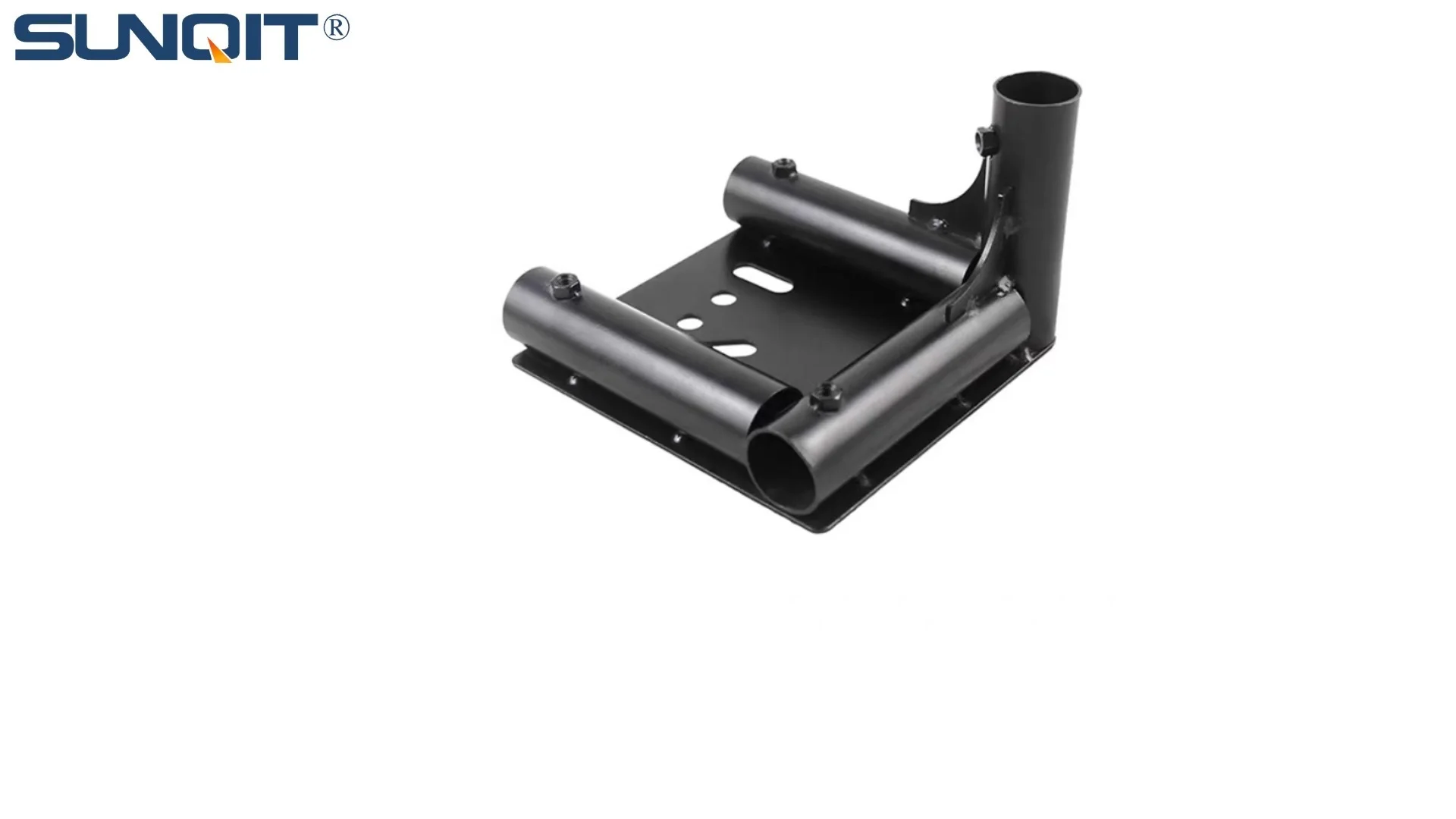
Castor Installation Base
Pipe fitting castor installation base,Well made, precise and strong. Made of high quality of steel,black painting surface treatment for greater resistance to corrosion. It is used for castor or foot lever connection with lean pipe.
How the right thickness keeps your equipment moving smoothly—without breaking down or weighing you down
Introduction: The Unsung Hero of Your Caster System
Think about the last time you pushed a heavy cart across a warehouse floor, or adjusted a mobile workbench in your workshop. Chances are, you didn't spare a second thought for the metal plate or frame that connects the caster wheels to the cart itself—the castor installation base. But here's the truth: that humble base is the backbone of your entire mobility system. It's what stands between a smoothly rolling trolley and a wobbly, frustrating mess. And one of its most critical features? Material thickness.
Too thin, and the base bends under pressure, leading to broken casters, unstable loads, and even workplace injuries. Too thick, and you're stuck hauling around unnecessary weight, wasting energy, and making maneuvering a chore. The sweet spot? A thickness that balances durability (the ability to withstand wear, weight, and impact) with weight (how easy it is to move the equipment). It's a delicate dance, but get it right, and you'll transform how your facility operates—from assembly lines to warehouses, hospitals to retail floors.
In this article, we'll dive deep into the world of castor installation base material thickness. We'll explore why it matters, how different materials (like aluminum profile and stainless steel pipe series) stack up, and how to choose the perfect thickness for your needs. Along the way, we'll touch on real-world applications, common pitfalls, and even a case study of a manufacturing plant that solved its mobility woes by rethinking this often-overlooked component. Whether you're a facility manager, a procurement specialist, or just someone curious about the mechanics of everyday equipment, this guide will help you make smarter, more efficient choices for your caster and accessories.
What Is a Castor Installation Base, Anyway?
First, let's clarify: a castor installation base is the structural component that attaches caster wheels to the equipment they're moving. It can be a simple flat plate, a rectangular frame, or even a custom bracket, depending on the application. Its job? To distribute the weight of the load evenly across the casters, absorb shocks from uneven floors, and provide a stable mounting point for the caster and accessories (like brakes, locks, or swivel mechanisms).
Imagine a mobile workbench in a factory. The bench itself might be made of wood or metal, but the part that connects the legs to the caster wheels is the installation base. If that base is flimsy—say, a thin sheet of aluminum that's only 1mm thick—it won't take long for the weight of tools, parts, and workers leaning on the bench to warp it. The casters will start to tilt, the bench will wobble, and eventually, the base might crack, leaving the bench immobile. On the flip side, a base made of 10mm thick steel would be nearly indestructible, but good luck pushing that bench across the floor. It would be so heavy that even strong workers would struggle, leading to fatigue and slowed productivity.
So, the castor installation base isn't just a "part"—it's a bridge between strength and practicality. And at the heart of that bridge lies material thickness.

Why Thickness Matters: Durability vs. Weight
At its core, the debate over thickness is a tug-of-war between two priorities: durability and weight. Let's break down what each means in real terms.
Durability: The Base's Ability to "Take a Beating"
Durability here refers to how well the base resists deformation, corrosion, and wear over time. A durable base can handle:
- Static loads: The weight of the equipment and its contents when it's stationary. A workbench loaded with tools, for example, might sit idle for hours, pressing down on the base.
- Dynamic loads: The stress of movement—think sudden stops, turns, or bumps in the floor that jolt the base.
- Environmental factors: Moisture, chemicals, or temperature extremes (like a food processing plant's cold storage or a warehouse in a humid climate).
Thicker materials generally mean more durability. A 4mm steel base, for instance, will bend less under a heavy load than a 2mm one. But thickness alone isn't enough—material choice plays a huge role, too. That's where options like stainless steel pipe series and aluminum profile come into play, each offering unique strengths.
Weight: The Hidden Cost of Overbuilding
Weight, on the other hand, affects everything from worker ergonomics to energy efficiency. A heavy base:
- Makes equipment harder to push or pull, increasing worker fatigue and the risk of strains or sprains.
- Raises transportation costs—whether you're shipping equipment to a customer or moving it between facilities.
- Limits where the equipment can go. A too-heavy cart might damage delicate floors or struggle to navigate ramps.
- Reduces the lifespan of other components, like caster wheels and bearings, which have to work harder to move the extra mass.
The goal, then, is to find the thinnest possible material that still meets your durability needs. It's not about cutting corners—it's about engineering efficiency.

Materials Matter: Aluminum Profile vs. Stainless Steel Pipe Series
When it comes to castor installation bases, two materials dominate the market: aluminum (often in the form of aluminum profile) and stainless steel (from stainless steel pipe series). Each has its own sweet spot for thickness, depending on the application. Let's compare them.
Aluminum Profile: Lightweight and Corrosion-Resistant
Aluminum is a favorite for applications where weight is a top priority. Its natural corrosion resistance (thanks to a thin oxide layer that forms on its surface) makes it ideal for damp or humid environments, like food processing plants or outdoor warehouses. Aluminum profile bases are typically made from alloys like 6061 or 6063, which offer a good mix of strength and malleability.
Thickness for aluminum profile bases usually ranges from 1.5mm to 5mm. At 1.5mm, it's best for light loads—think small tool carts or mobile shelving with minimal weight. At 5mm, it can handle heavier loads, like industrial workbenches or parts trolleys, without adding too much bulk. The key advantage? Aluminum is about 30% lighter than steel, so even a 5mm aluminum base weighs less than a 3mm steel base.
Stainless Steel Pipe Series: Strength for Heavy-Duty Jobs
When the load gets serious, stainless steel from the stainless steel pipe series steps in. Stainless steel is alloyed with chromium and nickel, giving it unmatched strength and resistance to rust and staining. It's the go-to for environments with heavy loads, frequent impact, or harsh chemicals—like automotive manufacturing plants or marine facilities.
Stainless steel bases are thicker than aluminum ones, typically starting at 2mm and going up to 8mm or more. A 2mm stainless steel base can handle loads that would bend a 3mm aluminum base, and an 8mm base? It might as well be a tank. But that strength comes with a price: weight. Stainless steel is dense, so even a 4mm base can feel significantly heavier than an aluminum equivalent.
Honorable Mention: Carbon Steel
Carbon steel (mild steel) is another option, often used in budget-sensitive applications. It's strong (similar to stainless steel) but lacks corrosion resistance, so it's usually painted or coated. Thickness ranges from 2mm to 6mm, but it's heavier than aluminum and prone to rust if the coating chips. We'll focus on aluminum profile and stainless steel pipe series here, as they're the most versatile for modern facilities.

Finding the Balance: A Comparison Table
To make it easier to see how thickness, material, and performance align, let's look at a side-by-side comparison. This table breaks down common materials, their thickness ranges, load capacities, and ideal uses:
| Material | Thickness Range (mm) | Typical Load Capacity (kg) | Weight per Meter (kg) | Best Applications |
|---|---|---|---|---|
| Aluminum Profile (6061 Alloy) | 1.5 – 3.0 | 50 – 200 | 0.8 – 1.6 | Light tool carts, mobile shelving, retail display units |
| Aluminum Profile (6061 Alloy) | 3.0 – 5.0 | 200 – 500 | 1.6 – 2.7 | Industrial workbenches, parts trolleys, hospital supply carts |
| Stainless Steel Pipe Series (304 Grade) | 2.0 – 4.0 | 300 – 800 | 2.5 – 5.0 | Heavy-duty warehouse trolleys, automotive assembly lines |
| Stainless Steel Pipe Series (316 Grade) | 4.0 – 8.0 | 800 – 2000+ | 5.0 – 10.0 | Marine equipment, chemical processing, foundry carts |
Notice how aluminum profile shines in mid-range loads, offering a load capacity of up to 500kg at 5mm while keeping weight under 3kg per meter. Stainless steel, meanwhile, takes over for the heaviest jobs, but at nearly double the weight. The takeaway? There's no "one-size-fits-all" thickness—you need to match the material and thickness to your specific load and mobility needs.
Real-World Applications: When Thickness Makes All the Difference
Let's put this into context with a few common scenarios. How does thickness play out in everyday facilities?
Manufacturing: Assembly Lines and Workbenches
In a manufacturing plant, mobile workbenches are the lifeblood of assembly lines. Workers need to move tools, parts, and even half-finished products quickly and safely. Here, adjustable leveling feet often pair with casters—meaning the base must support both the caster wheels and the leveling mechanism when the bench is stationary. A 3mm aluminum profile base works well here: it's light enough to push around the line but strong enough to hold a workbench loaded with power tools (up to 200kg). Go thinner (1.5mm), and the base might warp when the leveling feet are adjusted; go thicker (5mm), and workers will struggle to reposition the bench during shift changes.
Warehousing: Turnover Trolleys and Material Racks
Warehouses deal with constant movement—trolleys loaded with boxes, pallets, or raw materials. For medium-weight loads (300-500kg), a 4mm stainless steel base from the stainless steel pipe series is a smart choice. It can handle the jostling of uneven warehouse floors and the occasional bump against a rack without bending. For lighter loads (under 200kg), though, a 3mm aluminum profile base is better. One warehouse we worked with switched from 4mm steel to 3mm aluminum for their picking trolleys and saw a 25% reduction in worker fatigue reports—all while keeping the trolleys stable.
Healthcare: Medical Carts and Equipment
Hospitals and clinics demand mobility with precision. Medical carts carry sensitive equipment, medications, and even patients (in some cases). Here, weight is critical—nurses and doctors can't waste energy pushing heavy carts through tight corridors. Aluminum profile bases (2-3mm) are the standard, as they're lightweight and easy to sanitize (thanks to aluminum's corrosion resistance). A 2.5mm aluminum base can hold up to 150kg (enough for an EKG machine and supplies) and weighs just 1.2kg per meter, making it easy to maneuver around beds and doorways.
Case Study: How a Food Processing Plant Solved Its "Heavy Cart" Problem
The Problem: A mid-sized food processing plant in the Midwest was struggling with its ingredient transport carts. The carts, used to move bulk flour, sugar, and spices from storage to mixing stations, were built with 5mm carbon steel bases. They were durable, but each cart weighed over 80kg empty—making them difficult for workers to push, especially in humid conditions (the plant kept temperatures cool to preserve ingredients, leading to condensation on floors).
The Solution: The plant reached out to a supplier specializing in caster and accessories. After assessing the load (each cart carried up to 300kg of ingredients), the supplier recommended switching to a 4mm aluminum profile base. Aluminum's corrosion resistance would handle the condensation, and the 4mm thickness was more than enough to support 300kg (aluminum profile 6061 at 4mm has a yield strength of 276 MPa, far exceeding the required load).
The Result: The new aluminum bases reduced cart weight by 35% (from 80kg to 52kg empty). Workers reported less fatigue, and cart movement time between stations dropped by 15%. Best of all, after six months of use, there was zero signs of corrosion or bending—proving that aluminum profile could stand up to the plant's tough conditions without the extra weight of steel.
How to Choose the Right Thickness for Your Needs
Now that you understand the basics, how do you pick the perfect thickness for your castor installation base? Follow these steps:
Step 1: Calculate Your Maximum Load
Start by figuring out the total weight the base will need to support. This includes the weight of the equipment itself, plus the maximum load it will carry. For example, a mobile workbench might weigh 50kg empty and hold 150kg of tools—so your base needs to handle 200kg total. Always add a 20% buffer to account for sudden impacts (like hitting a bump) or uneven weight distribution.
Step 2: Consider Your Environment
Humid, wet, or corrosive environments (like coastal areas or chemical plants) call for corrosion-resistant materials—aluminum profile or stainless steel pipe series. Dry, indoor settings might allow for carbon steel (if budget is tight), but stainless steel is still safer for long-term durability.
Step 3: Think About Mobility
How often will the equipment be moved? If it's stationary 90% of the time (like a workbench that only moves during reconfigurations), a thicker, heavier base (stainless steel) is acceptable. If it's moved hourly (like a warehouse trolley), prioritize lightweight aluminum profile to save energy.
Step 4: Check Compatibility with Other Components
Don't forget about the rest of your caster system! If you're using adjustable leveling feet, the base must be thick enough to mount both the casters and the feet without bending. Similarly, if your casters have heavy-duty locks or brakes, the base needs to distribute the force of those locks without warping.
Step 5: Consult the Experts
When in doubt, reach out to a supplier who specializes in caster and accessories. They can run stress tests, recommend materials, and even provide samples to test in your facility. A good supplier will ask about your load, environment, and mobility needs before suggesting a thickness—avoid anyone who pushes a "one-size-fits-all" solution.
Common Mistakes to Avoid
Even with the best intentions, it's easy to get thickness wrong. Here are three pitfalls to steer clear of:
Mistake 1: Overestimating Load and Choosing Too Thick
It's tempting to "play it safe" by picking the thickest base available, but this backfires more often than not. A 6mm stainless steel base might seem like overkill for a 200kg load, but it will add unnecessary weight, making the equipment harder to move and increasing costs. Always calculate your actual load (with buffer) and choose the thinnest material that meets that number.
Mistake 2: Underestimating Environmental Wear
Corrosion, impact, and vibration can weaken even a thick base over time. A 3mm aluminum profile base might handle 200kg in a dry workshop, but in a saltwater processing plant, it could corrode and fail in months. If your environment is harsh, opt for a slightly thicker base (or a more durable material like stainless steel pipe series) to extend lifespan.
Mistake 3: Ignoring Worker Feedback
At the end of the day, your workers are the ones using the equipment. If they complain about carts being too heavy or wobbly, listen—they're giving you real-world data. A base that "looks strong on paper" but is impractical to use is worse than no base at all.
Conclusion: The Right Thickness = Smoother Operations
Castor installation base material thickness might not be the most glamorous topic, but it's one that directly impacts your bottom line. A base that's too thin leads to downtime, repairs, and frustration. One that's too thick slows down work and wastes resources. The sweet spot? A thickness that balances durability (standing up to weight, impact, and environment) with weight (keeping equipment easy to move).
Whether you choose aluminum profile for lightweight agility or stainless steel pipe series for heavy-duty strength, the key is to match the material and thickness to your specific needs. Calculate your load, consider your environment, and never underestimate the power of worker feedback. And when in doubt, partner with a supplier who understands the nuances of caster and accessories—they'll help you find that perfect balance.
After all, the best castor installation base is the one you never have to think about. It just works—day in, day out, moving your equipment, your products, and your business forward.