- Company Articles
- Products and Technology
- Installation And Maintenance
- Castor Installation Base on Material Rack B: Preventing Overloading Accidents

Castor Installation Base on Material Rack B: Preventing Overloading Accidents
Related Product
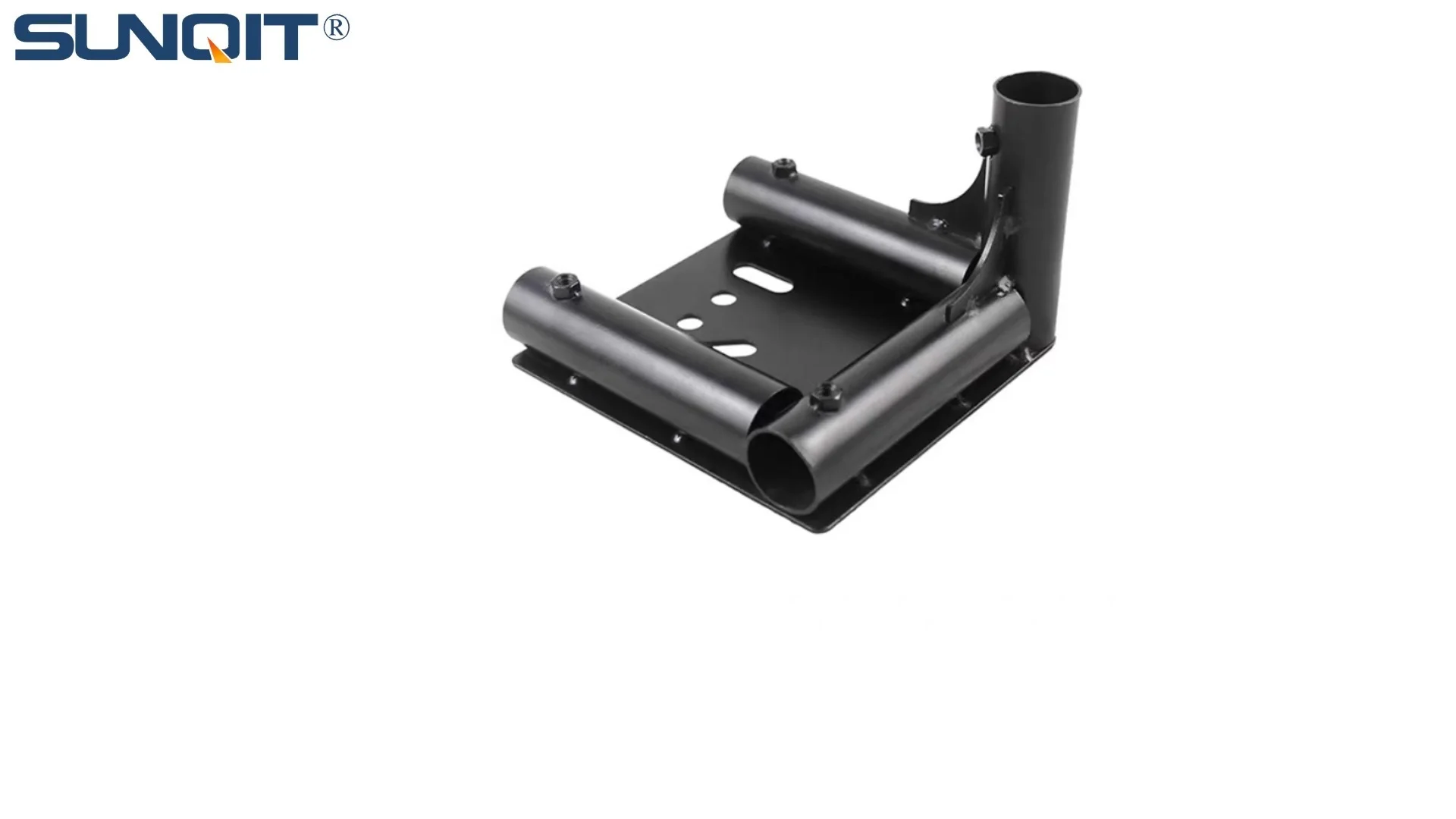
Castor Installation Base
Pipe fitting castor installation base,Well made, precise and strong. Made of high quality of steel,black painting surface treatment for greater resistance to corrosion. It is used for castor or foot lever connection with lean pipe.
In the bustling environment of a manufacturing plant or warehouse, where every second counts and efficiency is king, the components often play the biggest roles in keeping operations running smoothly. Take, for example, the Material Rack B (3 row and 3 floor) —a workhorse in production lines, tasked with holding everything from raw materials to finished products across three levels of storage. It's sturdy, reliable, and designed to maximize vertical space. But even the most well-engineered rack can become a liability if one critical part is overlooked: the castor installation base . This small but mighty component is the unsung hero that connects the rack to its mobility system, ensuring that when workers move the rack across the factory floor, it stays stable, balanced, and—most importantly—safe. Overloading, a common pitfall in busy facilities, can turn a routine task into a disaster. A rack that's overstuffed with heavy items, paired with a weak or poorly installed castor base, becomes a ticking time bomb: goods can topple, racks can collapse, and worst of all, workers can get injured. In this article, we'll dive deep into why the castor installation base is non-negotiable for Material Rack B, how it prevents overloading accidents, and why investing in quality here is an investment in your team's safety and your operation's efficiency.
Understanding Material Rack B: The Backbone of Storage
Before we zoom in on the castor installation base, let's first get to know the star of the show: Material Rack B (3 row and 3 floor). If you've ever walked through a production assemble line or a warehouse, you've probably seen this rack in action. Its design is deceptively simple: a frame built from durable materials like steel or aluminum, with three horizontal rows and three vertical floors, creating nine separate storage spaces. This layout isn't random—it's engineered to balance accessibility and capacity. The lower floors are easy to reach for frequently used items, while the upper floors handle bulk storage, keeping the workspace clutter-free and aligned with lean system principles of minimizing waste and maximizing flow.
Material Rack B is versatile, too. It's used in electronics manufacturing to hold circuit boards, in automotive plants for tools and parts, and in logistics centers for sorting packages. Its popularity stems from its ability to adapt to different load types: heavy metal components on the bottom, lighter plastic parts on the top, or even fragile items secured with dividers. But here's the catch: its versatility can sometimes lead to overconfidence. Workers might assume, "If it can hold X on one floor, it can hold 3X on three floors!" That's where the trouble starts. The rack's total weight capacity isn't just about the frame—it's about how that weight is distributed, and how the mobility system (the casters and their base) can handle the load when the rack is in motion.
Let's break down the specs. A standard Material Rack B typically has a maximum static load capacity of 1,500 kg (around 3,300 lbs) when stationary. But when it's moving? That number drops. Why? Because motion introduces dynamic forces: bumps in the floor, sudden stops, or turns can create additional stress on the rack's structure. If the castor installation base isn't designed to handle these dynamic loads, even a "within limit" static load can become dangerous. For example, imagine a rack loaded with 1,200 kg of goods—under the static limit—being pushed quickly around a corner. The centrifugal force could cause the rack to tip if the base isn't securing the casters properly. That's why the base isn't just a "nice-to-have"; it's a critical safety feature that bridges the gap between the rack's load capacity and its mobility.
The Problem with Overloading: More Than Just a "Heavy Load"
Overloading isn't just about putting "too much stuff" on a rack. It's a chain reaction of poor judgment, inadequate equipment, and sometimes, sheer urgency. In a facility racing to meet deadlines, workers might cut corners: "Just one more box—we'll move it later," or "This floor looks strong enough; it can handle a little extra." But "a little extra" adds up. Let's say each floor of Material Rack B is rated for 500 kg. If someone loads 600 kg on the top floor, 550 kg on the middle, and 550 kg on the bottom, the total is 1,700 kg—200 kg over the static limit. Now, add movement: pushing that rack requires force, and the uneven weight distribution (heavier on top) makes it prone to tipping. Without a robust castor installation base, the casters might shift, the base might crack, and suddenly, you're looking at a collapsed rack, damaged inventory, and a halted production line.
The consequences of overloading go beyond broken goods. According to the Occupational Safety and Health Administration (OSHA), over 20% of warehouse injuries are caused by falling objects or collapsing storage systems. These incidents don't just result in medical bills; they lead to lost workdays, decreased morale, and even legal liabilities. For a small to medium-sized business, a single overloading accident can cost tens of thousands of dollars in repairs, replacements, and fines. And in the context of a lean system, where efficiency is measured by uptime and waste reduction, downtime from an accident is the ultimate waste. It disrupts workflow, delays orders, and erodes customer trust. Simply put, overloading isn't a risk worth taking—and the castor installation base is your first line of defense.
The Castor Installation Base: What It Is and Why It Matters
So, what exactly is a castor installation base? At its core, it's a plate or frame that attaches to the bottom of Material Rack B, providing a secure mounting point for casters. Think of it as the "feet" of the rack—without a solid foundation, the entire structure becomes unstable. But not all bases are created equal. A cheap, flimsy base might be made from thin steel or plastic, with weak welds or poorly placed bolt holes. A quality base, on the other hand, is engineered to distribute weight evenly across all casters, resist bending under stress, and lock the casters in place to prevent shifting.
Let's break down its key functions:
1. Load Distribution: When a rack is loaded, the weight isn't just sitting on the frame—it's pressing down on the casters. Without a base, the casters might be attached directly to the rack's legs, which are often narrow and not designed to bear the full brunt of dynamic loads. The base spreads the weight across a larger surface area, ensuring each caster carries its fair share. For example, a base with four mounting points (one for each caster) will divide the rack's total weight by four, reducing stress on individual casters and preventing them from sinking into the floor or breaking off.
2. Stability During Movement: Moving a loaded rack isn't like pushing a shopping cart. The rack has height, which means it has a higher center of gravity. When you push it, especially around corners, the top floors tend to sway. The castor installation base acts as a counterbalance, keeping the rack grounded. It does this by anchoring the casters firmly to the rack's frame, so they don't swivel or wobble unexpectedly. A well-designed base also includes features like reinforced edges and anti-slip coatings, which prevent the rack from sliding sideways when stopped suddenly.
3. Compatibility with Caster and Accessories: Not all casters are the same. Some are designed for heavy loads, others for smooth floors; some have brakes, others don't. The castor installation base needs to work seamlessly with your chosen caster and accessories to ensure a tight fit. For example, if you're using heavy-duty casters with a 5-inch wheel, the base should have pre-drilled holes that match the caster's mounting pattern. A mismatch here—say, a base with holes that are too small or spaced incorrectly—will lead to loose casters, which is a recipe for disaster. The base is the bridge between the rack and the caster, so compatibility isn't optional.
4. Durability Against Wear and Tear: Factory floors are tough environments. There are oil spills, debris, and constant foot and equipment traffic. The castor installation base is on the front lines, taking hits from stray pallet jacks, scuffs from shoes, and exposure to moisture. A base made from low-quality materials will rust, bend, or crack over time, weakening its ability to support the rack. High-quality bases, however, are made from galvanized steel or aluminum, which resist corrosion and stand up to daily abuse. They're also powder-coated to add an extra layer of protection, ensuring they last for years—even in harsh conditions.
How the Castor Installation Base Prevents Overloading Accidents
Now that we understand what the castor installation base does, let's connect the dots: how exactly does it stop overloading from turning into an accident? Let's walk through a scenario. Imagine two identical Material Rack B units in a factory. Rack A has a generic, thin steel castor base that came with the rack as a "standard" accessory. Rack B has an upgraded, reinforced castor installation base made from heavy-gauge steel with welded joints and anti-slip pads. Both are loaded with 1,600 kg of goods—100 kg over the static limit (a common mistake in a hurry). Now, workers need to move both racks to the assembly line.
As Rack A is pushed, the overloaded weight strains the thin base. The bolts holding the casters start to loosen because the base isn't distributing the load evenly. One caster tilts, causing the rack to lean to one side. The upper floor, heavy with goods, shifts, and suddenly, the rack tips over. Boxes crash to the floor, and a worker nearby narrowly avoids being hit. Rack B, however, tells a different story. Its reinforced base spreads the 1,600 kg evenly across all four casters. The welded joints don't flex, and the anti-slip pads keep the base from sliding on the floor. Even with the extra weight, the rack moves smoothly, stays balanced, and reaches the assembly line safely. The difference? The castor installation base turned a potential disaster into a routine task.
But the base doesn't just "handle" overloading—it also discourages it in the first place. Many quality bases come with load capacity labels clearly printed on them, serving as a visual reminder to workers of the maximum weight the rack can safely carry when mobile. Some even include built-in indicators, like a small gauge or a color-changing strip, that show when the load is approaching the limit. This proactive feature helps prevent overloading before it starts, turning the base into a training tool as much as a safety device.
Another key way the base prevents accidents is through its connection to the rack. A cheap base might use flimsy screws or clips to attach to the rack's legs. Over time, these can loosen, especially under heavy loads, creating play between the base and the rack. A quality base, however, uses high-tensile bolts or welding to create a permanent, rock-solid connection. This means even if the rack is overloaded, the base won't separate from the frame, reducing the risk of collapse. It's like the difference between using duct tape to hold a bookshelf together versus screws—one is a temporary fix, the other is built to last.
Real-World Impact: Case Studies in Safety
To truly grasp the importance of the castor installation base, let's look at two real-world examples of businesses that learned this lesson—one the hard way, and one by investing upfront.
Case Study 1: The Cost of Cutting Corners
A mid-sized electronics manufacturer in the Midwest relied on Material Rack B units to store circuit boards and components. To save costs, they purchased the racks with the cheapest castor installation bases available—thin, plastic bases that came "free" with the order. For months, things went smoothly. But during a peak production season, workers began overloading the racks to keep up with demand. One afternoon, a rack loaded with 1,800 kg (300 kg over the limit) was being moved to the testing area. The plastic base, already weakened by months of use, cracked under the strain. The rack tipped, sending circuit boards crashing to the floor. The damage? $25,000 in broken components, a production delay of three days, and a worker with a sprained ankle. The company later replaced all their plastic bases with steel ones, costing an additional $10,000—a small price compared to the accident's total toll.
Case Study 2: Proactive Protection Pays Off
A automotive parts supplier in Texas made the castor installation base a priority from day one. They opted for heavy-duty steel bases with reinforced corners and compatibility with their existing caster and accessories. Even when workers occasionally overloaded the racks (despite training), the bases held firm. During a routine safety audit, an inspector noted that the supplier had zero accidents related to moving racks in over five years. When asked, the warehouse manager pointed to the bases: "They're the first thing we check during maintenance. We tighten the bolts monthly, clean them to prevent rust, and replace any that show wear. It's a small task, but it keeps everyone safe and the line moving." The result? Lower insurance premiums, higher employee morale, and a reputation for reliability among clients.
These stories highlight a simple truth: the castor installation base isn't an expense—it's a protector. It turns "what if" into "it won't happen," and that peace of mind is invaluable.
Choosing the Right Castor Installation Base for Material Rack B
Now that you're convinced of the base's importance, how do you choose the right one for your Material Rack B? It's not as simple as picking the first option you see online. Here are the key factors to consider:
1. Load Capacity: Match It to Your Needs
The base's load capacity should exceed the maximum weight your rack will ever carry—including a buffer for accidental overloading. For Material Rack B, which has a static capacity of 1,500 kg, look for a base rated for at least 2,000 kg. This ensures that even if the rack is overloaded by 500 kg (a worst-case scenario), the base can handle it. Don't skimp here: a base with a lower capacity than the rack is a wasted investment.
2. Material: Steel vs. Aluminum
Steel bases are the gold standard for heavy-duty applications. They're strong, durable, and resistant to bending. Galvanized steel adds rust protection, making it ideal for damp environments (like food processing plants). Aluminum bases are lighter and corrosion-resistant, making them a good choice for cleanrooms or facilities where weight is a concern (e.g., upper floors with weight limits). However, aluminum isn't as strong as steel, so it's best for lighter loads (under 1,000 kg). For Material Rack B, steel is usually the safer bet.
3. Compatibility with Casters and Rack
Before buying, check the base's mounting holes to ensure they match your caster's bolt pattern. Most casters use a standard pattern (e.g., 4x4 inches), but it's always better to measure. Also, confirm that the base fits your Material Rack B's leg dimensions. Some racks have square legs, others round; the base should wrap around or attach securely to the leg without gaps. If you're unsure, ask the supplier for a compatibility chart—reputable suppliers will have one.
4. Design Features: Reinforcements and Safety Add-Ons
Look for bases with reinforced edges, welded joints (not just bolted), and anti-slip pads. Reinforced edges prevent bending when the rack is pushed, while welded joints are stronger than bolted ones. Anti-slip pads keep the base from sliding on smooth floors, adding an extra layer of stability. Some bases even come with built-in levelers, which adjust for uneven floors—a common issue in older factories.
5. Supplier Reputation: Don't Buy Cheap Knockoffs
The castor installation base is too important to leave to unknown brands. Stick with reputable lean pipe supplier or material handling specialists who have a track record of quality. Read reviews, ask for references, and check if the base meets industry standards (like ISO or OSHA certifications). A cheap base might save you $50 today, but it could cost you thousands tomorrow.
Maintaining Your Castor Installation Base: A Simple Routine for Long-Term Safety
Even the best castor installation base won't last forever without proper care., maintenance is simple and takes just a few minutes each month. Here's a quick routine to follow:
Monthly Inspections: Check the base for cracks, rust, or bending. Tighten any loose bolts using a torque wrench (follow the manufacturer's recommended torque settings). Clean the base with a damp cloth to remove dirt and debris, which can hide damage.
Quarterly Lubrication: If your base has moving parts (like adjustable levelers), lubricate them with a silicone-based spray to prevent rust and ensure smooth movement.
Annual Replacement Check: Even with maintenance, bases wear out. If you notice significant rust, bent edges, or bolts that won't stay tight, replace the base immediately. Don't wait for a failure—be proactive.
In the context of a lean system, this maintenance is part of "preventive maintenance," a key pillar of lean manufacturing. By investing a little time in upkeep, you avoid costly breakdowns and keep your operation running smoothly.
Conclusion: The Small Part That Makes a Big Difference
Material Rack B is more than just a storage unit—it's a vital part of your production ecosystem. And the castor installation base is the unsung hero that keeps it safe, mobile, and efficient. Overloading accidents are preventable, and it starts with choosing the right base, maintaining it properly, and training your team to respect weight limits. In the end, the castor installation base is a symbol of a larger commitment: to your workers, your products, and your business. It says, "We care about safety," "We value efficiency," and "We don't cut corners." So the next time you're setting up a new rack or inspecting your existing ones, take a moment to look down at the base. It might be small, but its impact is enormous. Because in the world of manufacturing, the best defense against accidents is often the smallest detail.
| Feature | Cheap/Inferior Castor Base | Quality Castor Installation Base |
|---|---|---|
| Material | Thin plastic or low-grade steel | Heavy-gauge steel or aluminum (galvanized for rust resistance) |
| Load Capacity | Below rack's maximum weight (e.g., 1,000 kg for a 1,500 kg rack) | Exceeds rack's capacity (e.g., 2,000 kg for a 1,500 kg rack) |
| Design | Basic, no reinforcements; weak joints | Reinforced corners, welded joints, anti-slip pads |
| Compatibility | One-size-fits-all; may not match caster bolt patterns | Customizable; matches standard caster and accessories |
| Durability | Prone to cracking, rust, and wear; lasts 6–12 months | Resists corrosion and impact; lasts 5+ years with maintenance |