- Company Articles
- Products and Technology
- Installation And Maintenance
- Castor Installation Base Stability: 5 Tips for Uneven Factory Floors

Castor Installation Base Stability: 5 Tips for Uneven Factory Floors
Related Product
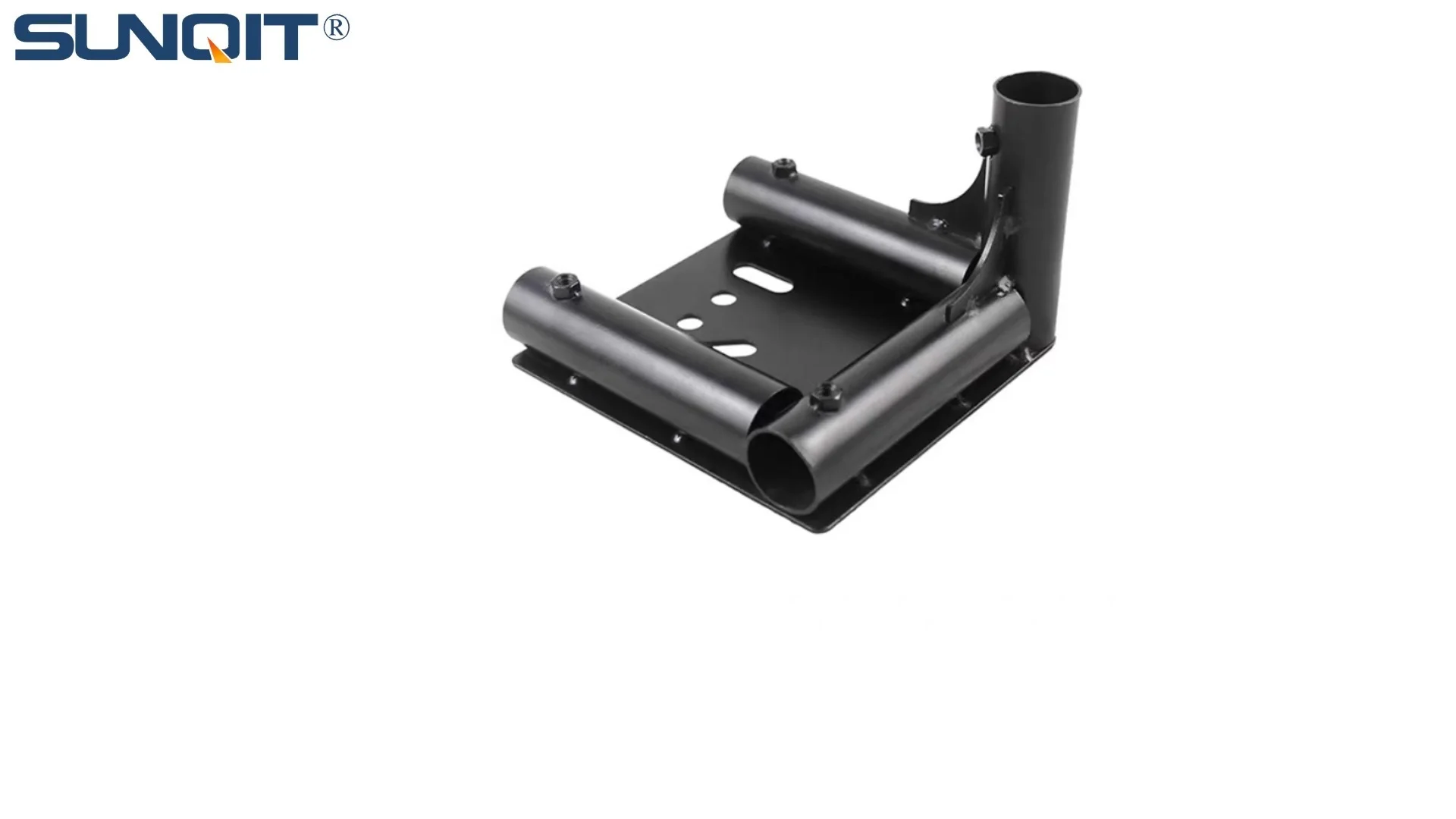
Castor Installation Base
Pipe fitting castor installation base,Well made, precise and strong. Made of high quality of steel,black painting surface treatment for greater resistance to corrosion. It is used for castor or foot lever connection with lean pipe.
Castor Installation Base Stability: 5 Tips for Uneven Factory Floors
Walk into any busy factory, and you'll likely hear the hum of machinery, the clatter of tools, and the steady roll of material trolleys. Behind this orchestrated chaos lies a critical, often overlooked foundation: the condition of the factory floor. Over time, concrete floors bear the brunt of heavy equipment, constant foot traffic, temperature fluctuations, and the occasional spill—all of which can lead to cracks, dips, and uneven surfaces. While these imperfections might seem minor, they pose a significant threat to one of the most essential components of factory operations: the stability of equipment and trolleys supported by castor installation bases.
A wobbly workbench, a trolley that veers off course, or a conveyor that vibrates excessively isn't just an annoyance. It can disrupt production schedules, increase the risk of workplace accidents, damage sensitive materials, and even lead to worker fatigue. The root cause? More often than not, it's an unstable castor installation base struggling to adapt to an uneven floor. In this article, we'll explore five practical tips to ensure your castor installation bases remain stable, reliable, and safe—even on the most challenging factory floors. Whether you're setting up a new production line or upgrading existing equipment, these strategies will help you mitigate the impact of uneven surfaces and keep your operations running smoothly.
Why Floor Unevenness Matters for Castor Installation Bases
Before diving into solutions, let's first understand why factory floor unevenness is such a critical issue for castor installation bases. Castors—those small but mighty wheels attached to the bottom of workbenches, trolleys, and racks—rely on a stable foundation to function properly. When the floor beneath them isn't level, several problems arise:
- Uneven weight distribution: Dips or bumps cause some castors to bear more weight than others, leading to premature wear, squeaking, or even failure of the caster wheel itself.
- Vibration and instability: Equipment mounted on unstable bases vibrates excessively, which can loosen bolts, damage sensitive components (like electronics on an ESD workstation), or compromise the accuracy of assembly tasks.
- Safety risks: Trolleys with unstable castors are more likely to tip over, especially when carrying heavy loads. Workers may also trip on unevenly positioned equipment, increasing the risk of falls.
- Reduced productivity: A trolley that jams or a workbench that wobbles slows down tasks, forcing workers to adjust their pace or stop to realign equipment—costing valuable time and resources.
The good news is that with the right approach, these issues are entirely preventable. Let's explore how to achieve stable castor installation bases, even when the floor isn't perfect.
Tip 1: Conduct a Thorough Floor Assessment Before Installation
You wouldn't build a house without surveying the land first, and the same logic applies to installing castor bases. The first step to ensuring stability is understanding the "lay of the land"—or, in this case, the condition of your factory floor. A thorough assessment helps you identify problem areas, measure unevenness, and make informed decisions about the type of castor and accessories needed.
Pro Tip: Don't rely on a quick visual scan. Small dips or slopes (less than 1/8 inch) can still cause instability over time, especially for equipment with multiple castors.
How to Assess Your Floor:
1. Visual Inspection: Start by walking the area where the equipment will be placed. Look for obvious signs of damage: cracks, chips, or areas where the concrete has settled. Note any oil stains, as these can affect caster wheel traction later. Mark problem spots with tape for easy reference.
2. Measure Height Differences: Use a 4-foot level tool to check for slopes. Place the level on the floor and observe the bubble—if it's off-center, the floor is uneven. For more precise measurements, use a laser level or a digital inclinometer to quantify the degree of slope (e.g., 1° or 2°). Record these measurements; they'll guide your choice of adjustable components later.
3. Map the Area: Sketch a simple diagram of the installation site, noting dips, bumps, and high-traffic zones. For example, a section near a loading dock might have more wear than a corner rarely used. This map will help you prioritize stability solutions for high-risk areas.
By investing time in assessment, you'll avoid costly mistakes like installing rigid castors on a sloped floor or using undersized leveling feet in a dip. Think of it as a roadmap—one that ensures your castor installation base is built to handle the floor's unique challenges.
Tip 2: select the Right Caster and Accessories for the Environment
Not all castors are created equal, and choosing the wrong type for your factory floor is a recipe for instability. Castor and accessories come in a variety of materials, designs, and load capacities—each suited to specific conditions. When shopping for castors, ask yourself: What's the floor like? How much weight will the base support? Will the equipment move frequently or stay stationary? Let's break down the key factors to consider.
Caster Wheel Material: Traction and Durability
The material of the caster wheel directly impacts how well it grips the floor and absorbs unevenness. Here's a quick guide to common options:
| Caster Wheel Material | Best For | Key Benefit for Uneven Floors |
|---|---|---|
| Polyurethane | Smooth concrete, tile, or painted floors | Shock-absorbent; reduces vibration on minor dips |
| Rubber | Rough concrete or floors with small debris | High traction; conforms to slight unevenness |
| Steel | Heavy loads on industrial concrete | Durable; handles large weight but less forgiving on bumps |
| Nylon | Clean, dry environments (e.g., electronics assembly) | Resistant to chemicals; low rolling resistance |
Load Capacity: Don't Skimp on Strength
Every castor has a maximum load rating, and exceeding it is a surefire way to cause instability. When calculating load capacity, remember to include the weight of the equipment, the materials it will hold, and even the occasional worker leaning on it. A good rule of thumb: choose castors with a load rating that's 20% higher than your estimated maximum weight. For example, if your trolley will carry 500 lbs, opt for castors rated for 600 lbs or more. This extra margin ensures the castor installation base can handle sudden shifts in weight without wobbling.
Swivel vs. Fixed Castors: Balance Maneuverability and Stability
Swivel castors rotate 360°, making trolleys easy to maneuver, but they're more prone to instability on uneven floors. Fixed castors, which only roll forward and backward, offer better straight-line stability but less flexibility. For most factory applications, a mix works best: two swivel castors (often with brakes) and two fixed castors per base. This combination balances maneuverability with stability, ensuring the base doesn't "walk" or tip when moving over bumps.
Accessories That Enhance Stability
Caster and accessories aren't just about the wheel—add-ons like brakes, shock absorbers, and floor locks can make a world of difference on uneven surfaces. For example:
- Total-lock brakes: These lock both the wheel and the swivel motion, preventing the base from moving or rotating on slopes.
- Shock-absorbing castors: Designed with springs or rubber cushions, they reduce vibration caused by uneven floors, protecting sensitive equipment.
- Wheel guards: Prevent debris from getting stuck in the wheel, which can cause jamming and instability.
By matching the caster and accessories to your floor's condition and operational needs, you'll create a base that's not just stable, but also tailored to your factory's unique rhythm.
Tip 3: Utilize Adjustable Leveling Feet to Compensate for Unevenness
Even with the best castors, some floor unevenness is too severe to ignore. That's where adjustable leveling feet come in—a simple yet powerful tool to "level the playing field," so to speak. These devices, often mounted alongside castors or in place of them on stationary equipment, allow you to (fine-tune) the height of each corner of the base, compensating for dips and bumps.
How Adjustable Leveling Feet Work
Most adjustable leveling feet consist of a threaded rod attached to a base plate or suction cup. By rotating the rod, you raise or lower the foot, adjusting the height of the equipment at that corner. This ensures all four (or more) points of the base make even contact with the floor, eliminating wobble. For factory settings, look for models with:
- Anti-slip bases: Rubber or suction cup bottoms that grip the floor, preventing the base from sliding.
- Heavy-duty construction: Steel or aluminum materials to support large loads without bending.
- Corrosion resistance: Important in factories with high humidity or chemical exposure.
Real-World Example: A manufacturer of electronic components was struggling with a wobbly ESD workstation on a floor with a 1/4-inch dip. By installing adjustable leveling feet at the low corner, they raised that side by 0.25 inches, making the workstation perfectly level. Not only did this reduce vibration, but it also improved the accuracy of assembly tasks, cutting down on product defects.
When to Use Leveling Feet with Castors
Adjustable leveling feet aren't a replacement for castors—they're a complement. For mobile equipment (like trolleys), install leveling feet alongside castors: when the trolley is in use, engage the feet to stabilize it; when moving, retract the feet and rely on the castors. For stationary equipment (like workbenches), use leveling feet instead of castors, as they provide superior stability for long-term use.
When installing, make sure the feet are positioned at the corners of the base, not the center—this distributes weight evenly. Use a level tool to check progress, and tighten the locking nut on each foot once the desired height is reached to prevent loosening over time.
Tip 4: Ensure Secure Connections with Quality Lean Pipe Joints and Castor Installation Bases
Even the best castors and leveling feet can't compensate for a weak or poorly assembled base. The castor installation base itself—the frame, pipes, and joints that hold everything together—must be rigid, well-constructed, and properly connected to withstand the stress of uneven floors. This is where quality components like lean pipe joints come into play.
Why Lean Pipe Joints Matter
Lean pipe systems, often used to build workbenches, trolleys, and racks, rely on modular joints to connect pipes and create custom structures. These joints—typically made of metal or aluminum—are the "glue" that holds the base together. A loose or low-quality joint can cause the frame to flex, leading to instability, even if the castors and feet are perfectly adjusted.
When selecting lean pipe joints for your castor installation base, prioritize:
- Material strength: Steel or aluminum joints are better than plastic for heavy loads.
- Secure locking mechanisms: Look for joints with bolts, clamps, or cam levers that tighten firmly and resist loosening from vibration.
- Corrosion resistance: Zinc-plated or stainless steel joints are ideal for factories with moisture or chemicals.
Proper Installation of the Castor Installation Base
Even high-quality joints won't perform well if installed incorrectly. Follow these steps to ensure a sturdy base:
- Align pipes carefully: Misaligned pipes create stress on joints, leading to premature wear. Use a square tool to ensure 90° angles where needed.
- Tighten joints evenly: Avoid over-tightening one joint before others—this can warp the frame. Instead, tighten them incrementally, checking for square as you go.
- Reinforce high-stress areas: Corners and areas where castors are mounted (bear) the most weight. Add extra joints or cross-bracing here for added rigidity.
Think of the castor installation base as the skeleton of your equipment. A strong skeleton supports the body; a weak one leads to collapse. By investing in quality lean pipe joints and proper assembly, you'll create a base that can handle both the load and the floor's imperfections.
Tip 5: Implement Regular Maintenance and Adjustment Protocols
Stability isn't a "set it and forget it" achievement. Factory floors shift over time—concrete settles, cracks expand, and new wear patterns emerge. Even the best castor installation bases will require occasional adjustments to stay stable. That's why a proactive maintenance plan is essential.
What to Include in Your Maintenance Routine
Schedule weekly or monthly inspections (depending on equipment usage) with these tasks:
- Check castor wheels: Look for signs of wear, such as flat spots, cracks, or debris stuck in the tread. replace worn wheels immediately—they can cause vibration and instability.
- Tighten joints and leveling feet: Vibration from daily use can loosen bolts on lean pipe joints and adjustable feet. Use a wrench to snug them up, but avoid over-tightening.
- Test stability: Push gently on each corner of the base. If it rocks, adjust the leveling feet or check for loose joints.
- Clean castors and feet: Wipe away oil, dust, or debris that could affect traction or adjustability.
- Reassess the floor: Over time, new unevenness may develop. Repeat the floor assessment process annually to update your stability strategy.
Training Your Team
Your maintenance team isn't the only one who can spot issues—frontline workers interact with the equipment daily and are often the first to notice wobbles or strange noises. Train them to report instability immediately, and provide simple tools (like a level) for quick checks. For example, a line operator might notice that a trolley "pulls" to the left when moving—this could indicate a worn caster wheel or uneven floor, which can be addressed before it leads to a bigger problem.
Maintenance Hack: Create a "stability checklist" and attach it to each piece of equipment. Include simple yes/no questions (e.g., "Does the base rock when pushed?" "Are all castor wheels touching the floor?") to make inspections quick and consistent.
By treating stability as an ongoing process, you'll extend the life of your equipment, reduce downtime, and keep your factory floor safe for everyone.
Conclusion: Stability Starts with Preparation
Uneven factory floors are a reality, but they don't have to be a barrier to stable, efficient operations. By following these five tips—assessing the floor, choosing the right caster and accessories, using adjustable leveling feet, securing connections with quality lean pipe joints, and maintaining regularly—you can ensure your castor installation bases remain steady, reliable, and safe. Remember, stability isn't just about preventing wobbles; it's about protecting your workers, your materials, and your bottom line.
So, the next time you're setting up a new workbench or troubleshooting a wobbly trolley, take a step back and consider the floor beneath you. With the right tools and strategies, you can turn even the most uneven surface into a foundation for success.