- Company Articles
- Products and Technology
- Installation And Maintenance
- Castor Installation Base Vibration Absorption: Protecting Sensitive 3C Components

Castor Installation Base Vibration Absorption: Protecting Sensitive 3C Components
Related Product
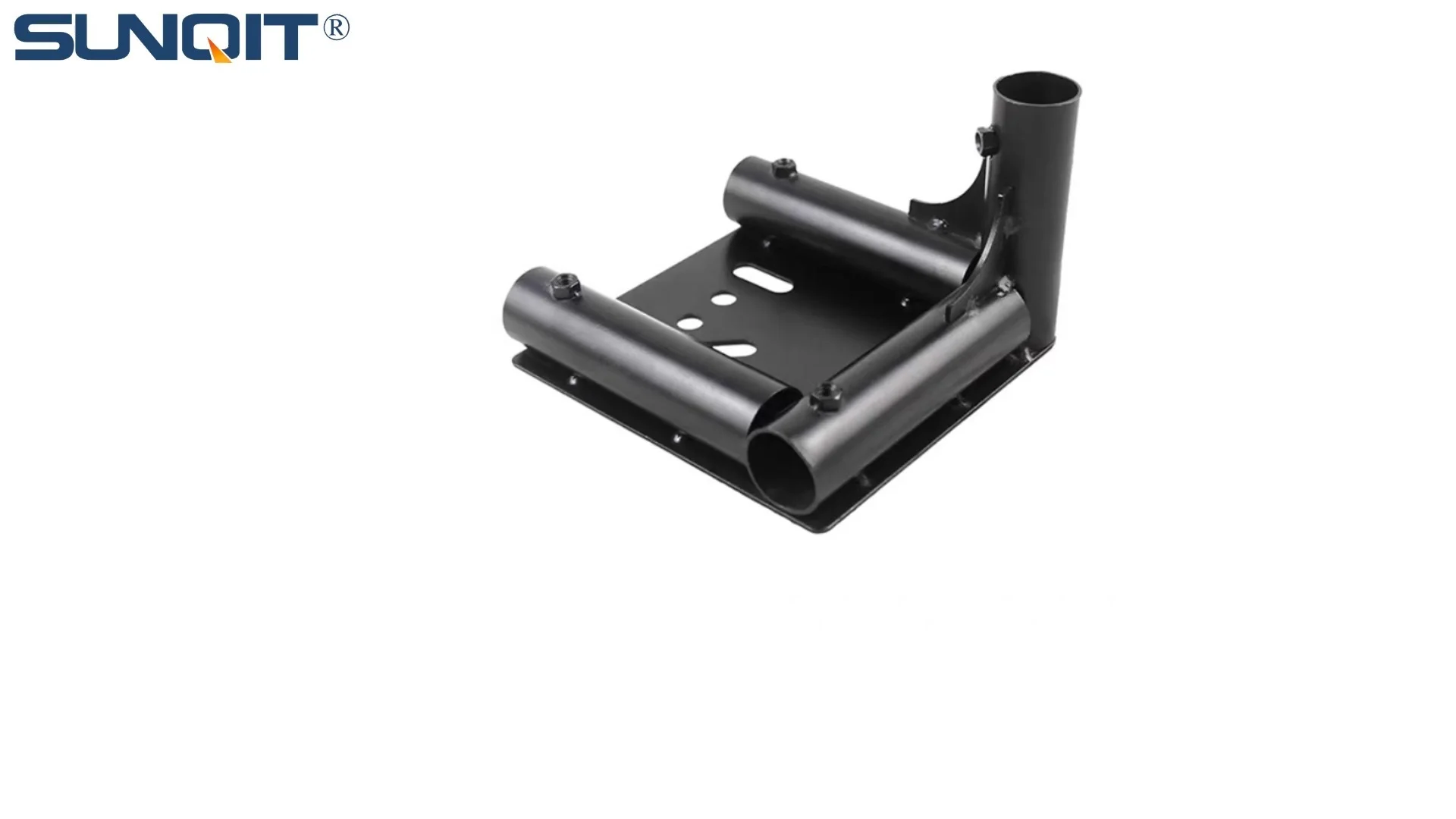
Castor Installation Base
Pipe fitting castor installation base,Well made, precise and strong. Made of high quality of steel,black painting surface treatment for greater resistance to corrosion. It is used for castor or foot lever connection with lean pipe.
The Hidden Threat of Vibration in 3C Manufacturing
Walk into any modern 3C (computers, communications, consumer electronics) manufacturing facility, and you'll witness a carefully choreographed dance of productivity: workbenches gliding across the floor, turnover trolleys ferrying circuit boards between stations, and conveyor systems humming as components progress through assembly lines. Yet beneath this seamless operation lies an invisible adversary that can quietly sabotage product quality: vibration. For manufacturers of smartphones, laptops, smartwatches, and other precision devices, even the smallest tremors can spell disaster for delicate components like microchips, camera modules, and LCD screens. This is where the humble castor installation base steps in—not as a mere afterthought, but as a critical line of defense in preserving the integrity of sensitive electronics.
3C components are marvels of miniaturization. A single smartphone camera module, for example, contains tiny lenses, image sensors, and actuators that must align with micrometer precision to capture crisp photos. A solder joint on a circuit board, thinner than a human hair, can crack from repeated vibrations, leading to device failures down the line. Even microscopic dust particles, dislodged by vibrations, can scratch delicate LCD panels or interfere with sensor calibration. In an industry where defect rates are measured in parts per million, controlling vibration isn't just a best practice—it's a business imperative.
Understanding Vibration: Sources and Impact
Vibration in manufacturing environments originates from countless sources. Heavy machinery like stamping presses or CNC machines sends rhythmic shocks through concrete floors. Conveyor belts, with their rotating motors and moving parts, generate continuous vibrations that propagate through the facility. Even foot traffic from workers or the hum of HVAC systems can create low-frequency tremors that, over time, take a toll on equipment and components. The problem isn't just the intensity of these vibrations, but their ability to travel—they can ripple across floors, climb up workbench legs, and transfer directly to the sensitive components resting on those surfaces.
For 3C components, the impact of unchecked vibration is multifaceted. Semiconductor chips, with their intricate wiring, are prone to "tin whisker" growth—a phenomenon where tiny metal filaments form on solder joints under mechanical stress, potentially causing short circuits. Camera modules, with their delicate autofocus mechanisms, can suffer misalignment, leading to blurry photos or failed quality checks. LCD and OLED screens, which rely on precise pixel spacing, may develop dead pixels or color distortion if the glass substrate is jostled during production. Even ESD (electrostatic discharge) workstations, designed to protect components from static, can become less effective if vibrations disrupt the grounding pathways or cause components to shift, increasing the risk of static buildup.

Castor Installation Bases: More Than Just "Wheels for Workbenches"
At first glance, a castor installation base might seem like a simple piece of hardware—just a plate or bracket that attaches casters to a workbench, trolley, or material rack. But in reality, it's the unsung hero of vibration management. As part of the broader "caster and accessories" ecosystem, these bases serve as the critical interface between moving equipment and the factory floor, tasked with absorbing shocks, dampening vibrations, and stabilizing loads. Unlike generic bases that prioritize cost over performance, vibration-absorbing castor installation bases are engineered with materials and designs that actively mitigate the transfer of energy from the floor to the equipment above.
Think of it this way: if a workbench with standard castor bases is like a car with no shock absorbers—every bump in the road jolts the passengers—a vibration-absorbing base is the suspension system that smooths out the ride. It uses a combination of damping materials, spring mechanisms, and geometric design to "soak up" vibrations before they reach the components resting on the workbench or trolley. This is especially crucial for mobile equipment like turnover trolleys or portable workbenches, which are constantly on the move and exposed to varying floor conditions.

How Vibration-Absorbing Castor Installation Bases Work
Materials: The Foundation of Damping
The key to a castor installation base's vibration-absorbing ability lies in its materials. Most high-performance bases use a combination of rigid structural components (like steel or aluminum) for load-bearing strength and elastomeric materials (such as rubber or polyurethane) for damping. Rubber, with its high flexibility and energy-absorbing properties, is a popular choice—it compresses under impact, converting vibrational energy into heat, which dissipates harmlessly. Polyurethane, meanwhile, offers a balance of durability and elasticity, making it ideal for heavy loads or environments where chemical resistance is needed (like factories using cleaning agents).
Some advanced bases even incorporate viscoelastic materials, which behave like both solids and liquids—stiffening under sudden shocks to prevent large movements and softening under sustained vibrations to absorb energy over time. This "adaptive" damping is particularly effective in environments with variable vibration sources, such as a factory floor where both conveyor belts (constant vibration) and occasional forklift traffic (impulse shocks) are present.
Design Features: Engineering for Stability
Beyond materials, the design of the castor installation base plays a pivotal role. Many bases feature a "floating" design, where the top plate (attached to the workbench) is separated from the bottom plate (attached to the caster) by a damping layer. This separation breaks the direct path of vibration transfer. Some models also include spring-loaded mechanisms, where coiled springs or Belleville washers provide additional shock absorption, especially for heavy loads like industrial workbenches stocked with testing equipment.
Another critical design element is integration with adjustable leveling feet—a feature that ensures stability even on uneven floors. While adjustable leveling feet are often associated with stationary equipment, they work hand-in-hand with castor bases: when a trolley or workbench is parked, the leveling feet can be lowered to lift the casters off the ground, anchoring the equipment and preventing vibrations from traveling through the wheels. This dual functionality—mobility when needed, stability when parked—makes vibration-absorbing castor installation bases versatile for dynamic 3C manufacturing environments.

Why Vibration Absorption Matters for Lean Systems
In the world of 3C manufacturing, where lean system principles dominate, efficiency and waste reduction are paramount. Lean systems aim to eliminate non-value-added activities—like rework, scrap, and quality inspections triggered by defects. Vibration-induced damage directly contradicts these goals: it leads to scrapped components, delayed production timelines, and increased labor costs for rework. By investing in vibration-absorbing castor installation bases, manufacturers can reduce these hidden wastes, creating a more streamlined, cost-effective operation.
Consider a typical lean workflow: components move from one workstation to the next in a continuous "flow," with minimal wait times. If a trolley transporting circuit boards vibrates excessively, some boards may arrive at the next station with damaged solder joints. These defects might not be detected until final testing, requiring the boards to be pulled from the line, repaired, and reinserted—a process that disrupts the flow and increases lead times. With a vibration-absorbing base, the trolley glides smoothly, ensuring components arrive intact, and the lean system remains unbroken.
Comparing Standard vs. Vibration-Absorbing Castor Bases
| Feature | Standard Castor Installation Base | Vibration-Absorbing Castor Installation Base |
|---|---|---|
| Primary Material | Steel or aluminum (rigid, no damping layer) | Steel/aluminum + rubber/polyurethane/viscoelastic damping layer |
| Vibration Damping Efficiency | Low (transfers 80-90% of vibrations to equipment) | High (absorbs 60-90% of vibrations, depending on design) |
| Load Capacity | Moderate (limited by rigid material strength) | High (damping materials complement structural strength) |
| Integration with Adjustable Leveling Feet | Rare (often sold separately) | Common (built-in or compatible designs for stability) |
| ESD Compatibility | Basic (may require additional grounding) | Enhanced (damping materials can be formulated for ESD protection) |
| Cost | Lower upfront cost | Higher upfront cost, but lower long-term costs (reduced defects) |
Real-World Applications: Protecting 3C Components on the Factory Floor
ESD Workstations: Safeguarding Against Static and Vibration
ESD workstations are the frontline of 3C component protection, designed to prevent electrostatic discharge from damaging sensitive electronics. But even the best ESD workstation is only as effective as its ability to stay stable. A workstation that vibrates excessively can cause components to shift, increasing the risk of static buildup as parts rub against each other. Vibration-absorbing castor installation bases solve this by keeping the workstation steady—whether it's parked in place (with adjustable leveling feet deployed) or being moved to a new location. For example, a smartphone assembly line might use ESD workstations with these bases to handle camera modules; the damping ensures the modules remain aligned during testing, reducing the number of units that fail focus checks.
Turnover Trolleys: Smooth Transport for Delicate Parts
Turnover trolleys are the workhorses of 3C manufacturing, shuttling everything from circuit boards to display panels between assembly stations. Without proper vibration control, a trolley rolling over a cracked floor tile or a bump near a conveyor belt can jostle components, leading to microcracks in solder joints or scratches on screens. Vibration-absorbing castor installation bases transform these trolleys into "gentle transporters." Take a laptop manufacturer, for instance: their motherboard trolleys, equipped with these bases, can move across the factory floor without disturbing the delicate surface-mount components (like resistors and capacitors) soldered onto the boards. This reduces the need for post-transport inspections, speeding up production.
Material Racks: Stable Storage for High-Value Components
Material racks, used to store components before assembly, are often overlooked as vibration sources—but they're far from immune. If a rack is positioned near a noisy machine, vibrations can cause components to shift or collide on the shelves. A vibration-absorbing castor installation base (paired with adjustable leveling feet to anchor the rack) isolates the stored components from floor vibrations. This is especially critical for high-value items like semiconductor wafers or camera sensors, which can cost hundreds of dollars per unit. By keeping these components stable, manufacturers avoid costly scrap and ensure a steady supply of defect-free parts for assembly.
Choosing the Right Castor Installation Base: A Buyer's Guide
Selecting a vibration-absorbing castor installation base isn't a one-size-fits-all process. To ensure optimal performance, manufacturers must consider several key factors:
- Load Capacity: Calculate the total weight the base will support, including the equipment (workbench, trolley, rack) and the maximum load of components. Overloading a base can compress the damping materials beyond their limits, reducing effectiveness.
- Vibration Frequency: Identify the primary sources of vibration in your facility (e.g., 60Hz from conveyor motors, 10Hz from foot traffic). Choose a base with a damping frequency range that matches these sources—this ensures the base resonates with and absorbs the specific vibrations affecting your operation.
- Floor Conditions: Uneven floors require bases with adjustable leveling feet to ensure stability when parked. For smooth floors, a simpler floating design may suffice, but consider reinforced damping for areas with frequent trolley traffic.
- ESD Requirements: If the base will be used with ESD workstations or in areas handling static-sensitive components, opt for models with ESD-safe damping materials (e.g., carbon-infused rubber) that dissipate static charges rather than insulating them.
- Environmental Factors: Factories with high humidity, temperature extremes, or exposure to chemicals need bases with corrosion-resistant materials (like stainless steel) and damping compounds that won't degrade under these conditions.
It's also wise to test potential bases in your specific environment. Many suppliers offer sample units—mount them on a trolley or workbench, load them with typical components, and measure vibration levels using accelerometers. Compare results to see which base best reduces vibrations to acceptable levels (usually below 0.1g for sensitive 3C components).
Case Study: How One 3C Manufacturer Cut Defects by 40% with Vibration-Absorbing Bases
A mid-sized manufacturer of smartwatches was struggling with a recurring issue: their camera module assembly line had a 12% defect rate, with most failures traced to misaligned image sensors. The problem persisted despite rigorous quality checks and ESD controls. A root-cause analysis revealed that the portable workbenches used to test the modules were vibrating excessively—they were mounted on standard castor bases, and the floor beneath them vibrated from a nearby stamping machine used to make watch cases.
The manufacturer replaced the standard bases with vibration-absorbing castor installation bases featuring polyurethane damping pads and adjustable leveling feet. Within two weeks, the defect rate dropped to 7.2%. After fine-tuning the base's damping frequency to match the stamping machine's 15Hz vibration, the rate plummeted further to 4.8%—a 40% reduction overall. The savings from reduced scrap and rework quickly offset the cost of the new bases, and the manufacturer expanded their use to other sensitive assembly lines, including LCD screen mounting and battery installation.
The Future of Vibration Absorption: Innovations on the Horizon
As 3C components grow smaller and more delicate—think foldable phone screens or micro-LED displays—demand for advanced vibration control will only increase. Suppliers are already developing next-generation castor installation bases with smart features: integrated sensors that monitor vibration levels in real time and adjust damping stiffness via piezoelectric materials or magnetic actuators. These "active damping" bases can adapt to changing conditions (e.g., a sudden increase in conveyor speed) without manual intervention.
Another trend is the use of sustainable materials. Manufacturers are experimenting with recycled rubber and plant-based polyurethanes for damping pads, reducing the environmental impact of these bases while maintaining performance. Additionally, modular designs that allow damping pads to be replaced individually (rather than replacing the entire base) are emerging, extending product lifespans and cutting waste—aligning with the lean system principle of minimizing resource use.
Conclusion: Investing in Protection, Investing in Quality
In the fast-paced world of 3C manufacturing, where innovation and precision are the keys to success, vibration control is no longer optional—it's a critical component of product quality and operational efficiency. Castor installation bases, often overlooked in the past, have emerged as essential tools in this effort, combining robust design, advanced materials, and smart engineering to protect sensitive components from the hidden threat of vibration.
Whether paired with ESD workstations, turnover trolleys, or material racks, these bases do more than just "reduce shaking"—they preserve the integrity of the microchips, sensors, and screens that power our modern devices. For manufacturers, the investment in vibration-absorbing castor installation bases isn't just about avoiding defects; it's about building a reputation for reliability, streamlining lean systems, and staying competitive in an industry where the margin for error is measured in micrometers.
So the next time you see a workbench gliding across a factory floor or a trolley transporting circuit boards, take a moment to appreciate the unsung hero beneath it: the castor installation base, quietly ensuring that the devices we rely on every day are built to last.