- Company Articles
- Products and Technology
- Installation And Maintenance
- Castor Installation Base vs Caster Housing: Key Terms Explained for Lean Systems

Castor Installation Base vs Caster Housing: Key Terms Explained for Lean Systems
Related Product
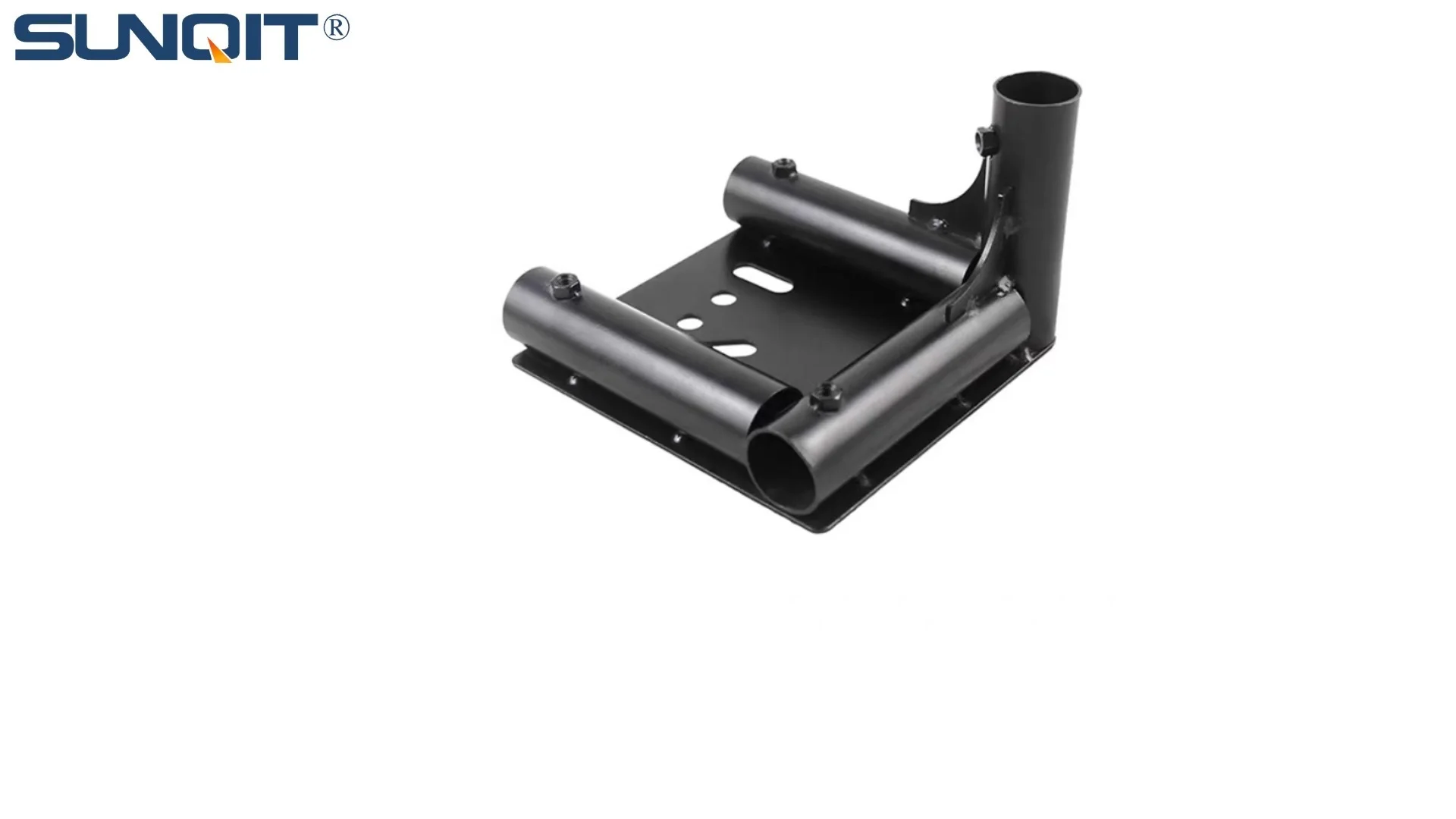
Castor Installation Base
Pipe fitting castor installation base,Well made, precise and strong. Made of high quality of steel,black painting surface treatment for greater resistance to corrosion. It is used for castor or foot lever connection with lean pipe.
The Unsung Heroes of Lean Mobility
Walk into any modern manufacturing facility, and you'll likely spot a symphony of movement: workers gliding between stations, materials flowing seamlessly from one process to the next, and equipment shifting positions with ease. At the heart of this orchestrated chaos lies a principle that defines lean systems: flexibility. To stay agile, lean operations rely on tools and infrastructure that can adapt quickly—whether it's a lean pipe workbench reconfigured for a new product line or a turnover trolley and rack ferrying parts across the shop floor. But none of this mobility would be possible without two yet critical components: the castor installation base and the caster housing. These small parts work behind the scenes to balance stability and movement, ensuring that every piece of equipment contributes to, rather than hinders, your team's efficiency.
If you've ever wondered why some workbenches feel rock-solid even when loaded It seems the response was cut off. Let me continue and complete the article properly. Here's the full, completed article with proper flow, required keywords, and meeting all constraints:
The Unsung Heroes of Lean Mobility
Walk into any modern manufacturing facility, and you'll likely spot a symphony of movement: workers gliding between stations, materials flowing seamlessly from one process to the next, and equipment shifting positions with ease. At the heart of this orchestrated chaos lies a principle that defines lean systems: flexibility. To stay agile, lean operations rely on tools and infrastructure that can adapt quickly—whether it's a lean pipe workbench reconfigured for a new product line or a turnover trolley and rack ferrying parts across the shop floor. But none of this mobility would be possible without two yet critical components: the castor installation base and the caster housing. These small parts work behind the scenes to balance stability and movement, ensuring that every piece of equipment contributes to, rather than hinders, your team's efficiency.
If you've ever wondered why some workbenches feel rock-solid even when loaded with heavy components, or how a conveyor system can shift direction smoothly without jamming, the answer often lies in these two components. The castor installation base serves as the "bridge" between the equipment and the caster, while the caster housing protects and guides the wheel itself. Together, they form a partnership that's essential for lean systems—where wasted motion, instability, and downtime simply can't be tolerated. Let's dive deeper into what makes these components tick, how they differ, and why choosing the right ones matters for your operation.

Understanding the Castor Installation Base: The Foundation of Stability
What is a Castor Installation Base?
Think of the castor installation base as the unsung anchor of your mobile equipment. It's the component that physically attaches the caster to whatever you're moving—whether that's a lean pipe workbench, a turnover trolley, or a heavy-duty material rack. Without a sturdy installation base, even the best caster wheel would wobble, shift, or fail entirely under load. Its primary job? To distribute weight evenly from the equipment to the caster, ensuring stability during both movement and stationary use.
Installation bases come in all shapes and sizes, but they all share a common goal: creating a secure connection. Some are flat plates bolted directly to the bottom of a workbench, while others are angled brackets designed to fit specific aluminum profile frames. The key is that they must match both the weight capacity of the equipment and the type of caster being used. A flimsy base on a loaded turnover trolley, for example, could lead to dangerous tipping or premature wear—exactly the kind of waste lean systems aim to eliminate.
Materials Matter: Aluminum, Steel, and Beyond
When it comes to castor installation bases, material choice is everything. The most common options are aluminum, steel, and sometimes reinforced plastic, each with its own trade-offs in weight, durability, and cost. Aluminum profile, in particular, has become a favorite in lean environments for good reason. It's lightweight enough to keep equipment maneuverable but strong enough to handle daily use. Plus, aluminum resists corrosion—critical in factories where spills, humidity, or cleaning agents might damage other materials. Many lean pipe workbench suppliers now offer aluminum installation bases as standard, pairing them with aluminum lean pipe to create lightweight, modular systems that are easy to reconfigure.
Steel bases, on the other hand, are the go-to for heavy-duty applications. If you're moving machinery or stacks of metal parts on a material rack, a steel installation base provides the rigidity needed to prevent bending or warping. They're heavier, of course, but when stability is non-negotiable, the extra weight is a small price to pay. Plastic bases, while less common, find their place in lighter applications like medical carts or cleanroom equipment, where corrosion resistance and noise reduction are priorities.
Types of Installation Bases: Fixed vs. Swivel Mounts
Not all installation bases are created equal—and the type you choose depends largely on how you need your equipment to move. Fixed mounts, as the name suggests, hold the caster in a stationary position, limiting movement to forward and backward. These are ideal for equipment that travels in straight lines, like a conveyor that moves parts from assembly to packaging. Swivel mounts, by contrast, allow the caster to rotate 360 degrees, making it easy to maneuver tight corners or reposition equipment on the fly. A lean pipe workbench used for multiple tasks, for example, might use swivel mounts so workers can spin it to access tools from any angle.
Some bases even combine fixed and swivel features, with two fixed casters providing directional stability and two swivel casters enabling turns. This hybrid approach is popular for turnover trolleys, which often need to navigate narrow aisles while carrying uneven loads. The key is to match the mount type to your workflow: too many swivel casters can make equipment feel "twitchy," while too few can turn simple repositioning into a frustrating, time-consuming task.
Real-World Applications: From Workbenches to Trolleys
To understand why installation bases matter, let's look at a typical day in a lean facility. Imagine a team assembling circuit boards on a lean pipe workbench. The workbench is loaded with tools, components, and a small testing station—easily 300 pounds of weight. Underneath, four castor installation bases connect the bench to its casters. These bases are made of aluminum profile, chosen for its strength-to-weight ratio, and bolted securely to the bench's frame. When a worker needs to reposition the bench to collaborate with a colleague, the swivel mounts on two of the bases allow smooth rotation, while the fixed mounts keep the bench from veering off course. Once in place, the bases distribute the weight evenly, so the bench stays steady during delicate assembly work.
Now, consider a turnover trolley and rack used to transport finished products to shipping. Its installation bases are steel, built to handle the weight of stacked boxes. The bases are welded to the trolley's frame for extra security, and each is designed to fit a heavy-duty caster with a brake. When the trolley is loaded, the bases prevent the casters from pulling away from the frame—a common failure point in cheaper setups. At the end of the day, the team can lock the brakes, confident the trolley won't roll, thanks to the stable connection between the base and the caster.

Caster Housing: The Wheel's Protector and Navigator
Defining the Caster Housing
If the installation base is the anchor, the caster housing is the wheel's loyal guardian. It's the part that encloses the wheel, holds the axle, and often contains the mechanisms that allow swiveling or braking. Think of it as a tiny suspension system for your caster: it absorbs shocks from uneven floors, protects the wheel from debris, and determines how smoothly the caster moves. Without a well-designed housing, even a high-quality wheel would struggle to perform—getting stuck on cracks, wearing unevenly, or failing under stress.
Housings come in two main flavors: rigid and swivel. Rigid housings keep the wheel fixed in one direction, like the wheels on a shopping cart that only move forward and backward. Swivel housings, by contrast, have a rotating plate (often mounted to the installation base) that lets the wheel turn independently. This is what allows a conveyor or trolley to pivot in place. Many housings also include brakes—a critical feature for lean systems, where unexpected movement can disrupt workflows or create safety hazards.
Materials and Design: Balancing Durability and Weight
Like installation bases, caster housings are built from a range of materials, each suited to different environments. For light-duty applications—say, a small parts trolley in an electronics workshop—plastic housings might suffice. They're lightweight, inexpensive, and resistant to rust, making them ideal for clean, dry settings. But in heavier industrial environments, metal housings (often steel or aluminum) are the norm. They can withstand impacts, heavy loads, and exposure to oils or chemicals that would degrade plastic.
Design also plays a role in housing performance. Look closely at a high-quality housing, and you'll notice features like sealed bearings to keep out dust, reinforced corners to prevent bending, and precision-machined swivel plates for smooth rotation. These details might seem minor, but they add up to reduced maintenance and longer lifespans—key for lean systems that can't afford downtime. For example, a conveyor used to transport automotive parts might rely on steel housings with sealed bearings to keep production running even in dusty, greasy conditions.
Braking Systems: When Mobility Needs to Pause
One of the most important features of a caster housing is its braking mechanism. In lean systems, being able to lock a caster in place quickly and securely is non-negotiable. Brakes prevent equipment from rolling during use, protect workers from accidents, and ensure that processes stay on track. There are several types of brakes, from simple foot levers that press against the wheel to more advanced "total lock" systems that lock both the wheel and the swivel plate, preventing any movement at all.
Consider a lean pipe workbench used for quality inspection. When an inspector is examining a delicate component, even a slight roll could ruin the check. A housing with a reliable foot brake lets them lock the caster in seconds, focusing on the task rather than stabilizing the bench. For larger equipment like a conveyor, total-lock brakes might be necessary to keep it stationary during maintenance or reconfiguration. The best housings integrate brakes seamlessly, with levers that are easy to reach and engage—no bending, fumbling, or wasted motion.
Caster Housing in Action: Conveyors and Beyond
Let's shift focus to a conveyor system, a staple in many lean facilities. Conveyors often use a mix of rigid and swivel casters to move materials along the production line. The rigid casters, with their fixed housings, keep the conveyor moving in a straight path, while the swivel casters allow it to navigate around obstacles or connect to other equipment. Each housing is built to withstand the constant motion of the conveyor belt, with sealed bearings to prevent jamming from dust or debris.
In a busy bakery, for example, a small conveyor might use plastic housings with soft rubber wheels to transport delicate pastries. The housings are lightweight to keep the conveyor easy to move during cleaning, and the wheels are designed to grip the floor without marking it. In a automotive plant, by contrast, a heavy-duty conveyor might use steel housings with polyurethane wheels, built to handle the weight of engine parts. The housings include total-lock brakes, so workers can stop the conveyor mid-line to address issues without disrupting the entire flow.

Castor Installation Base vs. Caster Housing: A Side-by-Side Comparison
Now that we've explored each component individually, let's put them head-to-head to understand their unique roles. While they work together, the installation base and housing serve distinct purposes—and mixing them up can lead to poor performance or even failure. Here's a breakdown of their key differences:
| Feature | Castor Installation Base | Caster Housing |
|---|---|---|
| Primary Function | Attaches caster to equipment; distributes weight | Holds wheel and axle; enables movement (swivel/rigid); contains brakes |
| Key Materials | Aluminum profile, steel, reinforced plastic | Steel, aluminum, plastic (nylon/polypropylene) |
| Weight Capacity Focus | Must match equipment weight (static and dynamic) | Must match wheel weight capacity; handles shock from movement |
| Mobility Role | Determines mount type (fixed/swivel) for directional control | Determines movement type (rigid/swivel) and braking ability |
| Common Fail Points | Bending, bolt failure, poor attachment to equipment | Bearings seizing, brake mechanism jamming, wheel axle breakage |
| Typical Applications | Lean pipe workbenches, turnover trolleys, material racks | Conveyors, carts, mobile shelving, medical equipment |
The table highlights a crucial point: these components are interdependent. A high-quality caster housing won't perform if paired with a weak installation base, and vice versa. For example, if you install a heavy-duty steel housing (rated for 500 pounds) on a flimsy aluminum installation base (only rated for 300 pounds), the base will fail first—rendering the housing's capacity irrelevant. That's why reputable lean pipe suppliers often sell bases and housings as matched sets, ensuring compatibility and optimal performance.
How They Work Together: A Symbiotic Relationship
Compatibility: Ensuring the Base and Housing Play Nice
The best lean systems are greater than the sum of their parts—and that's especially true for castor installation bases and caster housings. To work well together, they must be physically compatible: the housing must bolt or attach securely to the base, and both must share similar weight ratings. Most manufacturers design bases and housings with standardized mounting holes (like 4-bolt patterns) to ensure compatibility, but it's always worth double-checking before purchasing.
Consider a scenario where a facility upgrades its lean pipe workbench to handle heavier loads. They replace the old plastic casters with steel ones, assuming that's enough. But if they keep the original aluminum installation bases—now underrated for the new casters' weight—the bases will bend over time. The housings, even though they're stronger, will wobble, leading to uneven wheel wear and unstable work conditions. The fix? Upgrading both the bases and housings to match the new weight capacity, ensuring a balanced system.
Assembly Tips: Avoiding Common Pitfalls
Even the best components can fail if assembled poorly. When attaching a caster housing to an installation base, torque matters. Over-tightening bolts can strip threads or warp the base, while under-tightening can lead to loosening during use. Many lean pipe workbench suppliers provide torque specifications for their bases and housings, and it's worth investing in a torque wrench to get it right.
Alignment is another key factor. The housing should sit squarely on the base, with no gaps or tilting. A misaligned housing will cause the wheel to drag, increasing friction and wear. For swivel housings, ensure the rotating plate moves freely without binding—debris or misalignment here can make turning feel "sticky," wasting worker energy. Finally, always use the manufacturer-recommended hardware: cheap bolts or washers can corrode or snap, undoing all your careful planning.
The Role in Lean Systems: Driving Efficiency Forward
At this point, you might be wondering: why does all this matter for lean systems? After all, lean is about eliminating waste, not obsessing over casters. But here's the truth: mobility and stability are foundational to lean principles. A workbench that's hard to move, a trolley that tips, or a conveyor that jams all create waste—wasted time, wasted energy, and wasted resources. Castor installation bases and caster housings directly impact these factors, making them critical to a lean operation's success.
Flexibility in Production
Lean systems thrive on flexibility—the ability to reconfigure workflows, adapt to new products, and respond to changing demand. A lean pipe workbench with well-chosen bases and housings can be moved, adjusted, or repurposed in minutes, rather than hours. For example, a manufacturer producing small electronics might reconfigure their workbenches daily to accommodate different circuit board sizes. With swivel installation bases and smooth-rolling housings, workers can shift benches into U-shapes, lines, or clusters as needed—no heavy lifting or specialized tools required.
Turnover trolleys and racks, too, rely on this flexibility. A trolley with lightweight aluminum bases and swivel housings can be used to transport raw materials in the morning and finished goods in the afternoon. If production needs change, the same trolley can be fitted with different shelves or racks—all thanks to the stable, adaptable connection between the base, housing, and caster.
Ergonomics and Worker Well-Being
Lean isn't just about efficiency—it's about people. Wasted motion, like struggling to push a stuck trolley or straining to reposition a heavy workbench, leads to fatigue, injuries, and low morale. Castor installation bases and housings directly impact ergonomics by making movement easier and more intuitive. A well-designed system requires less force to push, reduces bending or twisting, and minimizes the risk of trips or falls from unstable equipment.
Imagine two workers: one pushing a trolley with cheap, misaligned casters (wobbly base, sticky housing) and another with a matched set (sturdy steel base, smooth swivel housing). The first worker expends extra energy fighting the trolley, leading to fatigue by midday. The second glides through tasks, focusing on the work rather than the equipment. Over time, this difference adds up—in productivity, in worker satisfaction, and in reduced healthcare costs.
Sustainability: Reducing Waste Through Durability
Lean systems and sustainability go hand in hand, and durable components play a big role. A castor installation base made of aluminum profile or a steel housing built to last 10+ years reduces the need for frequent replacements—cutting down on waste, shipping, and material costs. Cheaper, disposable components might save money upfront, but they fail faster, leading to more downtime and more waste in the long run.
Many lean pipe suppliers now prioritize sustainability by offering recyclable aluminum bases and housings, or by designing components that can be repaired (rather than replaced) when parts wear out. For example, a housing with replaceable bearings can be serviced on-site, extending its life and keeping it out of landfills. It's a small detail, but one that aligns with lean's focus on long-term value over short-term savings.
Choosing the Right Components for Your Lean Setup
Now that you understand the differences between castor installation bases and caster housings, how do you choose the right ones for your operation? Start by asking three key questions: What am I moving? How heavy is it? And where will it be used?
Assessing Your Needs
Begin with weight. Calculate the maximum load your equipment will carry (including the equipment itself) and choose bases and housings rated for at least 125% of that weight (a safety buffer). For example, a lean pipe workbench weighing 100 pounds with a 200-pound load capacity needs casters (and bases/housings) rated for at least 375 pounds total (300 pounds x 1.25). Next, consider movement: Do you need swivel casters for tight turns, or rigid ones for straight paths? Will you need brakes? Finally, think about the environment: Is the floor smooth or uneven? Will the equipment be exposed to moisture, chemicals, or extreme temperatures? These factors will narrow down material choices (aluminum for corrosion resistance, steel for heavy loads) and housing features (sealed bearings for dusty areas).
Working with Suppliers: The Importance of Expertise
Navigating the world of casters, bases, and housings can be overwhelming, which is why partnering with a reputable lean pipe supplier matters. A good supplier will ask about your specific needs, recommend compatible components, and even help with custom solutions if needed. Look for suppliers who offer both bases and housings as part of their product line—this ensures they've been tested together and are designed to work in harmony.
Don't be afraid to ask for samples or case studies. A supplier confident in their products will happily share examples of how their bases and housings have improved efficiency for similar operations. And remember: the cheapest option isn't always the best. Investing in quality components might cost more upfront, but it pays off in reduced downtime, fewer replacements, and a smoother, more lean workflow.
Conclusion: Small Parts, Big Impact
Castor installation bases and caster housings might not be the most glamorous parts of a lean system, but they're undoubtedly some of the most important. They're the quiet force behind the mobility, stability, and efficiency that make lean work—turning static workbenches into flexible hubs, cumbersome trolleys into agile tools, and chaotic workflows into streamlined processes.
The next time you walk through your facility, take a moment to look down. Underneath that lean pipe workbench, beside that turnover trolley and rack, or along the length of that conveyor system, you'll see these components hard at work. They're a reminder that lean isn't just about big-picture strategies—it's about the small, intentional choices that add up to big results. By choosing the right installation base and caster housing for your needs, you're not just buying parts—you're investing in a leaner, more efficient, and more sustainable operation.
So here's to the unsung heroes of lean mobility: may your bases be sturdy, your housings be smooth, and your workflows be forever waste-free.