- Company Articles
- Products and Technology
- Installation And Maintenance
- Castor Installation Base vs Caster Plate: Key Differences for Lean Pipe Systems

Castor Installation Base vs Caster Plate: Key Differences for Lean Pipe Systems
Related Product
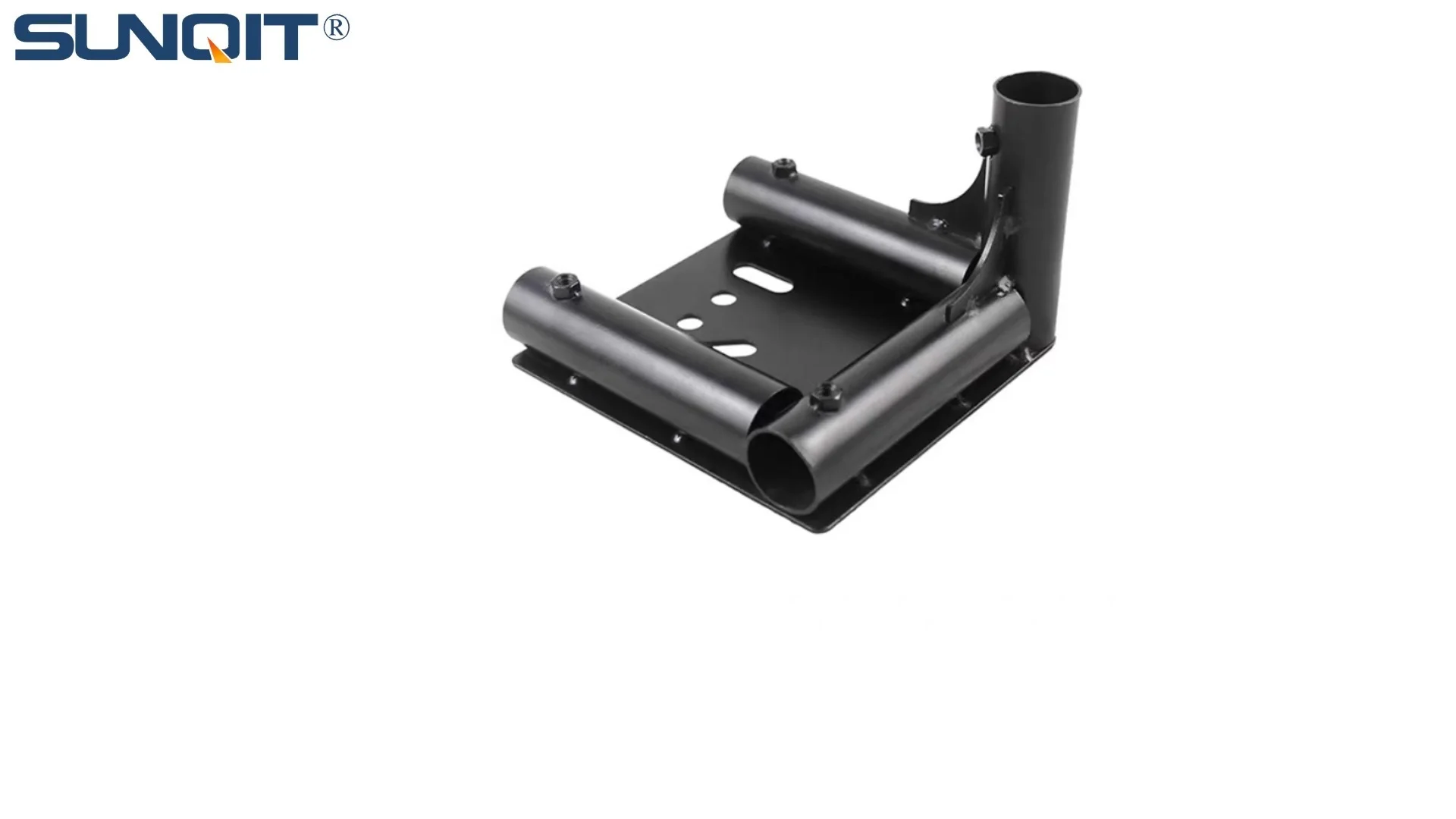
Castor Installation Base
Pipe fitting castor installation base,Well made, precise and strong. Made of high quality of steel,black painting surface treatment for greater resistance to corrosion. It is used for castor or foot lever connection with lean pipe.
In the world of lean manufacturing, where efficiency is king and waste is the enemy, every component of your workflow matters—even the smallest ones. Lean pipe systems, with their modular design and adaptability, have become the backbone of modern production lines, warehouses, and assembly stations. They're the unsung heroes that keep materials moving, workbenches organized, and teams productive. But within these systems, two parts often fly under the radar: the castor installation base and the caster plate. While they might look similar at first glance, choosing between them can mean the difference between a system that hums with precision and one that stumbles with friction, delays, or even safety risks. Let's dive into what makes these two components unique, how they impact your lean system, and which one deserves a spot in your next setup.
Understanding Lean Pipe Systems: The Foundation of Efficiency
Before we zoom in on castor installation bases and caster plates, let's take a step back to appreciate the bigger picture: lean pipe systems. At their core, these systems are built around the principles of lean manufacturing—maximizing value while minimizing waste. They use lightweight, durable pipes (often aluminum lean pipe or stainless steel) and a variety of joints, brackets, and accessories to create custom structures like workbenches, material racks, turnover trolleys, and conveyors. What makes them so powerful is their modularity: you can assemble, disassemble, and reconfigure them on the fly, adapting to changing production needs without investing in entirely new equipment.
Central to any lean pipe system's functionality is mobility. Whether it's a trolley ferrying parts between stations or a workbench that needs to shift to accommodate a new assembly line layout, casters are the key to keeping things moving. But casters don't just attach themselves to pipes—they need a bridge between the caster wheel and the frame of your structure. That's where castor installation bases and caster plates come in. These two components serve as the critical link, ensuring casters stay secure, loads stay stable, and movement stays smooth.
What is a Castor Installation Base?
Think of a castor installation base as the "heavyweight champion" of caster mounting components. Designed for stability and strength, it's a specialized bracket or housing that provides a secure, rigid connection between a caster and a lean pipe frame. Typically made from robust materials like aluminum alloy or steel (depending on load requirements), castor installation bases are engineered to distribute weight evenly, reducing stress on both the caster and the lean pipe itself.
Structurally, most castor installation bases feature a cylindrical or rectangular sleeve that slides over the end of a lean pipe, with a flat or angled plate at the bottom where the caster attaches. Some models include internal threads or set screws to lock the base onto the pipe, preventing slippage even under heavy loads. Others might use welding or bolt-on designs for permanent installations. What sets them apart is their focus on rigidity: once mounted, they minimize movement between the caster and the frame, making them ideal for applications where stability is non-negotiable.
One of the key advantages of a castor installation base is its compatibility with heavy-duty casters and accessories. If you're building a turnover trolley that needs to carry 500kg of materials or a material rack that will be moved daily across a factory floor, a castor installation base ensures the caster stays firmly in place, reducing the risk of wobbling, tipping, or premature wear. They're also popular in environments where vibration is a concern, as their rigid design dampens movement and keeps loads steady.

What is a Caster Plate?
If the castor installation base is the heavyweight, the caster plate is the "versatile lightweight" of the two. Also known as a caster mounting plate, it's a flat, often rectangular piece of metal (or sometimes plastic, for lighter applications) with pre-drilled holes that allow it to attach to both the lean pipe frame and the caster. Unlike the installation base, which wraps around the pipe, a caster plate is typically mounted to the side or bottom of a lean pipe structure using bolts, brackets, or clamps.
Caster plates prioritize flexibility and adjustability. Their flat design makes them easy to position at different angles or heights along a lean pipe frame, and their multiple holes allow for quick swapping of casters—no need to disassemble the entire base if a caster needs replacement. This makes them a favorite for applications where mobility needs change frequently, such as workbenches that might be stationary one week and mobile the next, or lightweight trolleys used in small-batch production.
Materials for caster plates vary widely: aluminum plates are common for their lightweight and corrosion resistance (a boon in cleanrooms or food processing facilities), while steel plates offer extra strength for medium-duty loads. Some plates even come with rubber or plastic coatings to reduce noise or prevent scratching on delicate floors. What unites them is their simplicity: they're easy to install, easy to adjust, and easy to replace, making them a go-to for lean systems that need to adapt quickly.
Caster plates also shine in modular setups. If you're using aluminum profile or t-slot aluminum pipe, a caster plate can be attached using t-slot nuts or brackets, allowing you to reposition it along the length of the profile without drilling new holes. This modularity aligns perfectly with lean principles, where minimizing setup time and maximizing flexibility are top priorities.

Key Differences: Castor Installation Base vs. Caster Plate
To truly understand how these two components stack up, let's break down their differences across critical categories. The table below compares their design, functionality, and ideal use cases:
| Feature | Castor Installation Base | Caster Plate |
|---|---|---|
| Design | Sleeve-like structure that wraps around the end of a lean pipe, with a mounting plate for the caster. | Flat plate with pre-drilled holes, mounted to the side or bottom of a lean pipe frame. |
| Primary Material | Steel or heavy-gauge aluminum for maximum strength. | Aluminum, steel, or plastic (depending on load requirements). |
| Installation Complexity | Moderate to high: Often requires precise alignment with the pipe end; may need tools for locking (set screws, welding). | Low to moderate: Bolt-on or clamp-on design; easy to reposition with basic tools. |
| Load Capacity | High (typically 300kg+ per caster, depending on material). | Medium to high (up to 300kg per caster; lower for plastic plates). |
| Flexibility | Low: Fixed position once installed; difficult to reposition without disassembly. | High: Easy to reposition along the frame; compatible with multiple caster types. |
| Stability | Excellent: Rigid connection minimizes movement between caster and frame. | Good: Stable but may allow slight flexing under heavy loads. |
| Typical Applications | Heavy-duty trolleys, material racks (e.g., Material Rack B with 3 rows and 3 floors), stationary workbenches with casters. | Light to medium-duty trolleys (e.g., Hand Trolley A), mobile workbenches, modular lean systems. |
| Cost | Higher: More material and engineering go into the sleeve design. | Lower: Simpler design and materials reduce production costs. |
As the table shows, the choice between a castor installation base and a caster plate boils down to your specific needs. Are you prioritizing strength and stability, or flexibility and cost-effectiveness? Let's explore their real-world applications to see how these differences play out.

Applications in Lean Systems: When to Choose Which
Castor Installation Base Applications:
- Heavy-Duty Trolleys and Racks: If you're building a turnover trolley to transport engine parts or a material rack that holds multiple layers of heavy components (like Material Rack B, with 3 rows and 3 floors), castor installation bases are a must. Their high load capacity and rigidity prevent the structure from swaying, even when fully loaded.
- Outdoor or Rough Terrain Use: For lean pipe systems used outside or on uneven floors (e.g., loading docks), castor installation bases provide the stability needed to navigate bumps without jostling loads.
- Permanent Installations: When you don't need to reposition casters frequently, a castor installation base's fixed design ensures long-term reliability with minimal maintenance.
Caster Plate Applications:
- Mobile Workbenches: Workbenches that need to shift between stations (like Workbench E, a single-deck model without casters that might later be retrofitted with mobility) benefit from caster plates. Their easy installation and adjustability make adding or removing casters a quick task.
- Light to Medium-Duty Trolleys: Hand Trolley A, used for moving small parts or tools between assembly lines, doesn't require the heavy-duty strength of a castor installation base. A caster plate keeps costs low while providing enough stability for lighter loads.
- Modular Lean Systems: In setups where you might reconfigure the system weekly (e.g., adding a new conveyor or rearranging material racks), caster plates allow you to swap casters or reposition them along the frame without rebuilding the entire structure.
- Heavy-Duty Trolleys and Racks: If you're building a turnover trolley to transport engine parts or a material rack that holds multiple layers of heavy components (like Material Rack B, with 3 rows and 3 floors), castor installation bases are a must. Their high load capacity and rigidity prevent the structure from swaying, even when fully loaded.
- Outdoor or Rough Terrain Use: For lean pipe systems used outside or on uneven floors (e.g., loading docks), castor installation bases provide the stability needed to navigate bumps without jostling loads.
- Permanent Installations: When you don't need to reposition casters frequently, a castor installation base's fixed design ensures long-term reliability with minimal maintenance.
Caster Plate Applications:
- Mobile Workbenches: Workbenches that need to shift between stations (like Workbench E, a single-deck model without casters that might later be retrofitted with mobility) benefit from caster plates. Their easy installation and adjustability make adding or removing casters a quick task.
- Light to Medium-Duty Trolleys: Hand Trolley A, used for moving small parts or tools between assembly lines, doesn't require the heavy-duty strength of a castor installation base. A caster plate keeps costs low while providing enough stability for lighter loads.
- Modular Lean Systems: In setups where you might reconfigure the system weekly (e.g., adding a new conveyor or rearranging material racks), caster plates allow you to swap casters or reposition them along the frame without rebuilding the entire structure.
How to Choose: Factors to Consider
Selecting between a castor installation base and a caster plate isn't about which is "better"—it's about which fits your system's unique demands. Here are the key factors to weigh:
1. Load Requirements: Start with the numbers. If your system will regularly carry loads over 300kg, a castor installation base is the safer bet. For lighter loads (under 200kg), a caster plate will likely suffice and save you money.
2. Mobility Frequency: Do you need to reposition casters often? Caster plates make adjustments quick and tool-friendly. If casters will stay in place long-term, a castor installation base's rigidity is an asset.
3. Environmental Conditions: Wet or corrosive environments (e.g., food processing) may require aluminum or stainless steel components. Caster plates are often available in corrosion-resistant materials, while castor installation bases may need extra coating for protection.
4. Budget: Caster plates are generally more affordable than castor installation bases, making them a good choice for cost-sensitive projects. However, investing in a castor installation base for heavy loads can prevent costly repairs down the line.
5. Supplier Support: A reliable lean pipe supplier can help you assess your needs and recommend the right component. They'll consider your specific workflow, load data, and future expansion plans to ensure you don't overbuy or under-spec.
1. Load Requirements: Start with the numbers. If your system will regularly carry loads over 300kg, a castor installation base is the safer bet. For lighter loads (under 200kg), a caster plate will likely suffice and save you money.
2. Mobility Frequency: Do you need to reposition casters often? Caster plates make adjustments quick and tool-friendly. If casters will stay in place long-term, a castor installation base's rigidity is an asset.
3. Environmental Conditions: Wet or corrosive environments (e.g., food processing) may require aluminum or stainless steel components. Caster plates are often available in corrosion-resistant materials, while castor installation bases may need extra coating for protection.
4. Budget: Caster plates are generally more affordable than castor installation bases, making them a good choice for cost-sensitive projects. However, investing in a castor installation base for heavy loads can prevent costly repairs down the line.
5. Supplier Support: A reliable lean pipe supplier can help you assess your needs and recommend the right component. They'll consider your specific workflow, load data, and future expansion plans to ensure you don't overbuy or under-spec.
The Role of a Lean Pipe Supplier in Making the Right Choice
While understanding the differences between castor installation bases and caster plates is crucial, partnering with a knowledgeable lean pipe supplier can take the guesswork out of the equation. A reputable supplier won't just sell you parts—they'll act as a consultant, asking questions about your workflow, load requirements, and long-term goals to recommend the best components for your system.
For example, if you're unsure whether a caster plate can handle the load of your material rack, a supplier can provide load-test data or suggest reinforced models. If you need a custom solution (e.g., a caster plate with extra holes for unique caster bolts), they may offer fabrication services or point you to compatible accessories from their inventory (like caster and accessories kits). They can also help you source complementary parts, such as aluminum lean pipe for lightweight frames or stainless steel swivel roller balls for smooth material flow, ensuring your entire system works in harmony.
Maintenance and Longevity: Caring for Your Components
Both castor installation bases and caster plates require minimal maintenance, but their design differences affect how you care for them. For castor installation bases, focus on checking set screws or welds regularly to ensure they're tight—loose connections can lead to instability. If using steel models, inspect for rust and apply lubricant to moving parts (like caster axles) to prevent seizing.
Caster plates, on the other hand, need attention to their mounting bolts. Over time, vibration can loosen bolts, so periodic tightening is key. If the plate is attached to an aluminum lean pipe, avoid over-tightening to prevent damaging the pipe's finish. For plastic caster plates, keep an eye out for cracks or warping, especially in high-temperature environments.
In both cases, cleaning is simple: wipe down with a damp cloth to remove dust and debris, and avoid using harsh chemicals that could corrode materials. With proper care, both components can last for years, ensuring your lean pipe system remains efficient and reliable.
Conclusion: Small Parts, Big Impact
Castor installation bases and caster plates may be small components, but their impact on your lean pipe system's performance is enormous. The castor installation base excels in stability and heavy-duty applications, while the caster plate offers flexibility and cost-effectiveness for lighter, more dynamic setups. By understanding their differences and aligning them with your load requirements, mobility needs, and budget, you can build a lean system that not only meets today's demands but adapts to tomorrow's challenges.
And remember: you don't have to navigate this alone. A trusted lean pipe supplier can guide you through the selection process, ensuring you choose the right component for every part of your system. After all, in lean manufacturing, success lies in the details—and that includes the humble link between your caster and your pipe.