- Company Articles
- Products and Technology
- Installation And Maintenance
- Castor Installation Base vs Floor Lock: When to Use Each in Flexible Workstations

Castor Installation Base vs Floor Lock: When to Use Each in Flexible Workstations
Related Product
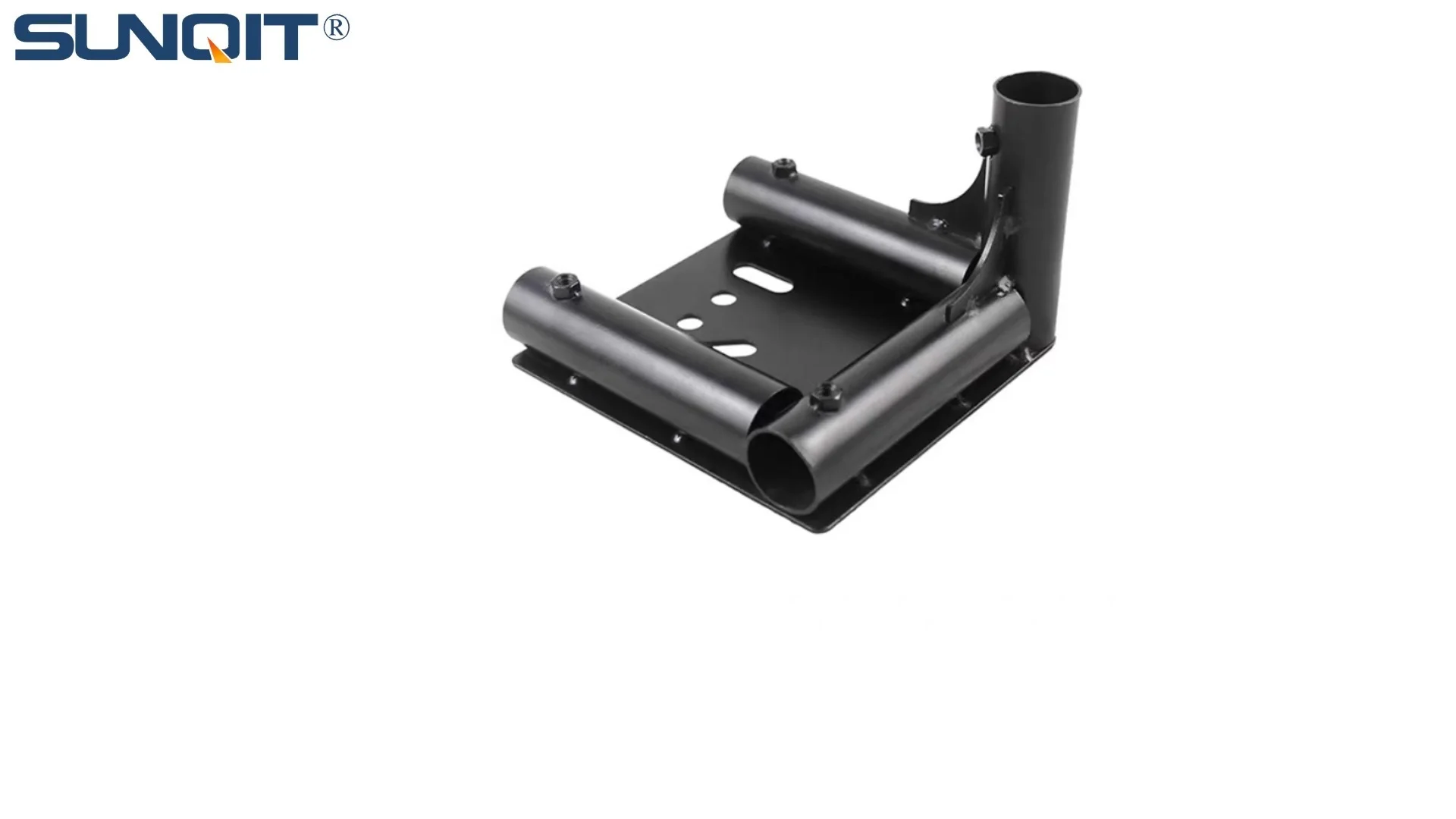
Castor Installation Base
Pipe fitting castor installation base,Well made, precise and strong. Made of high quality of steel,black painting surface treatment for greater resistance to corrosion. It is used for castor or foot lever connection with lean pipe.
In today's fast-paced manufacturing, warehousing, and logistics environments, flexibility isn't just a buzzword—it's a necessity. As businesses strive to adapt to shifting production demands, evolving customer needs, and lean system principles, the design of workstations has become a critical factor in operational efficiency. At the heart of this flexibility lies a fundamental choice: mobility or stability. Two components often stand at the center of this decision: the castor installation base and the floor lock. Both play pivotal roles in shaping how workstations function, but understanding when to prioritize one over the other can mean the difference between seamless workflows and costly disruptions. In this article, we'll dive deep into the nuances of castor installation bases and floor locks, exploring their benefits, drawbacks, and ideal applications—all while keeping an eye on how they integrate with essential elements like workbenches, turnover trolleys, and the broader goals of lean system implementation.
Understanding the Castor Installation Base: Mobility as a Core Asset
Before we compare these two components, let's start by unpacking what a castor installation base is and why it's a staple in flexible work environments. Simply put, a castor installation base is a structural component that serves as the interface between a piece of equipment—whether it's a workbench, a turnover trolley, or a material rack—and the casters (wheels) that enable movement. Think of it as the foundation that ensures casters are securely attached, distributing weight evenly and allowing for smooth, controlled mobility. But it's more than just a "holder" for wheels; it's a critical part of the "caster and accessories" ecosystem, designed to balance durability, load capacity, and adaptability.
Types of Casters and Their Role in the Installation Base
Not all casters are created equal, and the type of caster paired with the installation base directly impacts performance. Common variants include swivel casters, which rotate 360 degrees for maximum maneuverability; fixed casters, which only move forward and backward for straight-line travel; and brake-equipped casters, which add a layer of control by allowing temporary immobilization. The installation base must be compatible with these caster types, with features like mounting holes, bolt patterns, and weight ratings tailored to the caster's design. For example, a heavy-duty workbench used in automotive assembly might require a castor installation base rated for 500+ pounds, paired with steel swivel casters with brake locks to handle both weight and occasional stationary use.
Benefits of Integrating Castor Installation Bases
The primary advantage of a castor installation base is, of course, mobility—and the flexibility that comes with it. In lean system environments, where the goal is to eliminate waste and optimize workflows, being able to reposition workstations on demand is invaluable. Imagine a electronics manufacturing facility that needs to shift production from smartphone assembly to tablet assembly overnight. With workbenches mounted on castor installation bases, the team can quickly rearrange the line, moving tools, components, and work surfaces to align with the new product's assembly sequence—no heavy lifting or disassembly required. This reduces downtime, minimizes labor costs, and keeps production on track.
Mobility also enhances ergonomics. Workers no longer need to strain to reach materials stored across the shop floor; instead, a turnover trolley with a castor installation base can bring supplies directly to the workbench. This not only reduces the risk of musculoskeletal injuries but also keeps employees focused on value-adding tasks rather than logistics. Additionally, castor installation bases often allow for height adjustments (when paired with adjustable casters), enabling workstations to be tailored to individual workers' heights—another win for ergonomics and productivity.
Compatibility is another key benefit. Castor installation bases are designed to work with a wide range of equipment, from lightweight plastic workbenches to heavy steel material racks. This versatility makes them a cost-effective choice for businesses that use diverse tools and need a standardized mobility solution. For example, a warehouse might use the same castor installation base on both a small parts turnover trolley and a larger pallet rack, streamlining maintenance and replacement parts inventory.
Drawbacks to Consider
While mobility is a powerful tool, it's not without trade-offs. The most obvious challenge with castor installation bases is stability. Even with brake-equipped casters, a workstation on wheels is inherently less stable than one anchored to the floor. This can be problematic in environments where precision is critical—think of a lab technician performing delicate measurements on a workbench that shifts slightly when leaned on, or an assembly worker trying to align small components on a surface that wobbles. Over time, repeated movement can also loosen the connection between the castor and the base, leading to increased vibration, noise, and even safety hazards if not properly maintained.
Weight limitations are another consideration. While heavy-duty castor installation bases can handle significant loads, there's always a threshold. Exceeding the base's weight rating can lead to bent frames, cracked mounting points, or premature caster failure. This is especially true for equipment like metalworking workbenches or loaded turnover trolleys, where uneven weight distribution (e.g., a rack with heavier items on one side) can stress the base beyond its limits. Additionally, casters themselves are prone to wear and tear—wheels can flat-spot from prolonged stationary use, bearings can seize without lubrication, and debris on the floor (like loose screws or gravel) can damage wheel treads. All of this adds up to ongoing maintenance costs, which must be factored into the decision to use castor installation bases.
Floor Locks: Stability When Precision Matters Most
If castor installation bases are all about mobility, floor locks are the counterbalance: they prioritize stability by immobilizing equipment, ensuring it stays exactly where it's placed. A floor lock (sometimes called a "caster brake" or "stabilizer") is a device that, when engaged, presses a pad or foot against the floor, creating friction that prevents movement. Unlike caster brakes, which lock the wheel itself, floor locks distribute pressure across a larger surface area, offering superior stability—even on uneven floors. They're commonly integrated into workbenches, conveyor systems, and material racks, where stationary operation is non-negotiable.
How Floor Locks Work: Beyond Simple Immobilization
Floor locks come in several designs, each suited to different environments. Foot-operated floor locks are the most common; they feature a lever or pedal that, when stepped on, lowers a rubber or metal pad to the floor. Manual floor locks require a hand crank or wrench to engage, offering more precise control over pressure. Automatic floor locks, though less common, use sensors or weight triggers to engage when the equipment is loaded, ensuring stability without manual intervention. The key here is that floor locks don't replace casters—they complement them. Many workstations are equipped with both casters (for mobility) and floor locks (for stability), allowing operators to switch between modes as needed.
Advantages of Floor Locks in Critical Work Environments
The primary benefit of floor locks is uncompromising stability. In settings where precision work is the norm—such as electronics assembly, medical device manufacturing, or quality control inspections—even minor movement can lead to defects, rework, or safety incidents. A workbench equipped with floor locks remains steady during tasks like soldering tiny circuit boards, measuring components with micrometers, or packaging fragile goods. This stability also reduces operator fatigue, as workers don't have to compensate for a moving surface, leading to better focus and higher quality output.
Safety is another major advantage. Unintended movement of heavy equipment—whether from a bumped turnover trolley or a caster brake that fails—can cause injuries, damage to products, or collisions with other equipment. Floor locks mitigate this risk by creating a secure anchor point. For example, in a warehouse where forklifts and pallet jacks operate near workstations, a floor-locked material rack is far less likely to shift into a traffic lane than one relying solely on caster brakes. Additionally, floor locks often meet strict safety standards (e.g., OSHA requirements for stationary equipment), making them a must-have in regulated industries like aerospace or pharmaceuticals.
Durability is also a selling point. Floor locks are built to withstand heavy use, with robust materials like steel or aluminum and replaceable friction pads that can be swapped out when worn. Unlike casters, which have moving parts prone to jamming, floor locks have fewer components, reducing the risk of mechanical failure. This makes them ideal for high-traffic environments where equipment is used continuously, such as busy assembly lines or 24/7 distribution centers.
Drawbacks of Floor Locks
The biggest downside to floor locks is the loss of mobility. Once engaged, a floor-locked workstation is effectively anchored, which can be a barrier to reconfiguration. In lean system environments that thrive on adaptability—for example, a small-batch manufacturer that changes production runs weekly—constantly engaging and disengaging floor locks can slow down workflow and create bottlenecks. Additionally, floor locks require manual operation (in most cases), which adds a step to the process of moving equipment. For workers already juggling multiple tasks, this extra step can feel like a hassle, leading to shortcuts (e.g., forgetting to engage the lock) that compromise safety.
Installation complexity is another consideration. Floor locks must be properly aligned with the equipment's base to ensure even pressure distribution; misalignment can cause the lock to engage unevenly, leading to instability or damage to the floor (e.g., scuff marks or indentations on concrete). Some floor locks also require drilling into the equipment or floor, which can be impractical for rented spaces or temporary setups. Finally, cost can be a factor: high-quality floor locks (especially automatic or heavy-duty models) are often more expensive than basic caster brakes, and they may require professional installation, adding to the upfront investment.

Castor Installation Base vs. Floor Lock: A Head-to-Head Comparison
To better visualize how these two components stack up, let's compare them across key metrics. The table below highlights their core functions, ideal environments, and trade-offs:
| Feature | Castor Installation Base | Floor Lock |
|---|---|---|
| Primary Function | Enables mobility by attaching casters to equipment | Immobilizes equipment by pressing against the floor |
| Best For | Environments requiring frequent reconfiguration (e.g., lean system work cells, temporary workstations, turnover trolleys) | Environments requiring precision or safety (e.g., lab work, assembly lines, heavy equipment stations) |
| Stability | Low to moderate (depends on caster type; brake-equipped casters offer temporary stability) | High (immobilizes equipment completely when engaged) |
| Mobility | High (easy to move, even in tight spaces with swivel casters) | Low (requires disengagement to move equipment) |
| Maintenance Needs | Moderate to high (casters require lubrication, wheel replacement, and base inspection for looseness) | Low (replace friction pads periodically; minimal moving parts) |
| Installation Complexity | Low to moderate (bolt-on mounting; compatible with most equipment bases) | Moderate to high (may require alignment, drilling, or professional installation) |
| Cost | Lower upfront (base + casters); ongoing costs for maintenance | Higher upfront (especially heavy-duty models); lower long-term maintenance costs |
| Safety Focus | Relies on caster brakes; risk of unintended movement if brakes fail | Superior safety; minimizes movement via direct floor contact |

When to Choose Castor Installation Bases: Scenarios Where Mobility Drives Efficiency
Now that we've explored their pros and cons, let's zero in on the situations where a castor installation base is the clear winner. The first and most obvious scenario is when frequent reconfiguration is part of the workflow. Take, for example, a small manufacturing business that produces custom furniture. Each order may require a different assembly sequence, so workbenches need to be moved to accommodate larger pieces, specialized tools, or team collaboration. A castor installation base allows the team to rearrange the workspace in minutes, rather than hours, aligning perfectly with lean system principles of flexibility and waste reduction.
Another ideal application is for equipment that needs to "follow" the workflow. Turnover trolleys are a classic example: these wheeled racks are used to transport materials from storage to the production line, and from the line to packaging. A castor installation base ensures the trolley can be easily pushed to where it's needed, reducing the time workers spend walking back and forth. Similarly, mobile workbenches in retail settings (e.g., stockrooms or pop-up shops) benefit from castor bases, as they can be moved to serve as temporary checkout stations during peak hours or rearranged for inventory counts.
Temporary or seasonal setups also favor castor installation bases. For instance, a logistics company handling holiday shipments might need to expand its packing stations in November and December, then downsize in January. With castor-equipped workbenches, the extra stations can be rolled into storage when not in use, saving space. Similarly, event venues or trade show booths use mobile equipment with castor bases to quickly set up and break down displays, maximizing efficiency during tight timelines.

When to Choose Floor Locks: Stability as a Non-Negotiable
On the flip side, floor locks shine in environments where stability is critical. One such environment is precision manufacturing, where even the smallest movement can ruin a product. Consider a semiconductor plant, where workers assemble microchips with components smaller than a grain of sand. A workbench with a floor lock ensures the assembly area remains vibration-free, preventing costly defects. Similarly, in medical device manufacturing, where tools like 3D printers or laser cutters require pinpoint accuracy, floor locks are essential to maintaining calibration and quality control.
Heavy equipment is another area where floor locks are non-negotiable. Machinery like industrial sewing stations, metal presses, or CNC routers generates significant force during operation; without a floor lock, the equipment could "walk" across the floor, damaging itself, the floor, or nearby tools. Even medium-heavy equipment, like loaded material racks in warehouses, benefit from floor locks—especially in earthquake-prone regions, where seismic activity can cause unsecured equipment to tip or shift.
Finally, safety-sensitive environments (e.g., chemical labs, clean rooms, or construction sites) often require floor locks. In labs handling hazardous materials, a spilled solvent on a mobile workbench could spread quickly if the bench moves, increasing the risk of exposure. In clean rooms, where air quality is tightly controlled, moving equipment can disrupt airflow or stir up contaminants—floor locks help maintain a stable environment. Construction sites, with their uneven terrain and heavy foot traffic, rely on floor locks to prevent tools and workbenches from sliding on ramps or uneven concrete.
The Hybrid Approach: Combining Mobility and Stability
In many cases, the best solution isn't choosing between castor installation bases and floor locks—it's using them together. This hybrid approach leverages the mobility of casters with the stability of floor locks, offering the best of both worlds. For example, a workbench might feature a castor installation base with four swivel casters (two with brakes) and two floor locks. When mobility is needed, the floor locks are disengaged, and the workbench can be moved; when stability is required, the floor locks are engaged, immobilizing the bench even if the caster brakes fail. This setup is particularly popular in lean system environments, where adaptability and precision are equally important.
Another example is the "mobile workstation" used in automotive assembly plants. These workstations are mounted on castor installation bases for easy movement between production lines but are equipped with heavy-duty floor locks that engage automatically when the workstation is positioned. This ensures workers can reposition the station quickly during line changes but have a stable surface for installing car parts during production. The key here is integration: the castor base and floor lock are designed to work seamlessly, with features like ergonomic foot pedals for quick engagement/disengagement and compatibility with the workstation's weight and size.
Conclusion: Aligning with Workflow Needs
At the end of the day, the choice between a castor installation base and a floor lock comes down to one question: What does your workflow demand? If your operations thrive on adaptability—frequent reconfigurations, mobile tools, or temporary setups—a castor installation base (paired with quality casters and brakes) is likely the way to go. It empowers your team to move equipment where it's needed, when it's needed, supporting lean system goals of efficiency and waste reduction. On the other hand, if precision, safety, or heavy equipment use is central to your work, a floor lock is non-negotiable—it provides the stability to keep operations running smoothly and workers safe.
And let's not forget the hybrid approach: for many businesses, combining castor installation bases with floor locks offers the flexibility to adapt without sacrificing stability. Whether you're outfitting a small workshop with a few workbenches or a large warehouse with dozens of turnover trolleys, the key is to evaluate your specific needs—considering factors like workflow frequency, equipment weight, precision requirements, and safety standards. By doing so, you'll not only choose the right components but also create a workstation ecosystem that supports long-term success, efficiency, and growth.