- Company Articles
- Products and Technology
- Installation And Maintenance
- Castor Installation Base Weight Capacity: Calculating for Medical Industry Carts

Castor Installation Base Weight Capacity: Calculating for Medical Industry Carts
Related Product
Castor Installation Base
Pipe fitting castor installation base,Well made, precise and strong. Made of high quality of steel,black painting surface treatment for greater resistance to corrosion. It is used for castor or foot lever connection with lean pipe.
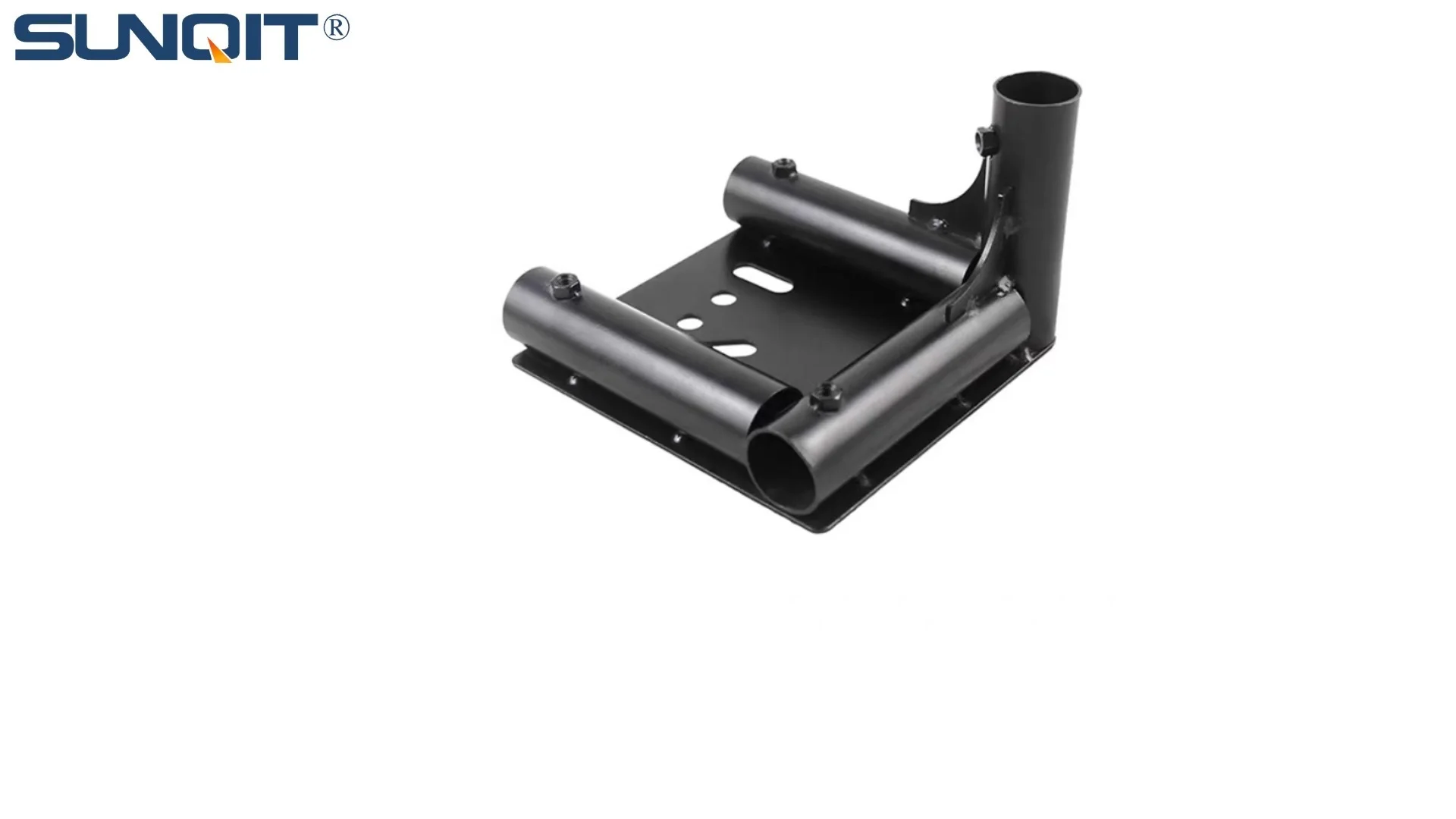
In the fast-paced world of healthcare, every piece of equipment plays a silent yet critical role in ensuring smooth operations, patient safety, and staff efficiency. Among these unsung heroes are medical carts—versatile workhorses that ferry medications, surgical instruments, lab samples, and even portable monitors across clinics, hospitals, and laboratories. While their functionality often takes center stage, there's a foundational component that determines their reliability: the castor installation base. This unassuming part, which connects the cart's frame to its caster wheels, bears the weight of not just the cart itself, but also the precious (and sometimes fragile) cargo it carries. Miscalculating its weight capacity isn't just a matter of equipment failure; it could lead to spills, delays, or even injuries. In this article, we'll dive deep into the world of castor installation bases, exploring how to calculate their weight capacity for medical carts, the factors that influence performance, and why getting it right matters for healthcare settings.
Understanding the Castor Installation Base: More Than Just a "Connector"
Before we delve into calculations, let's clarify what a castor installation base is and why it's so vital. Think of it as the bridge between a medical cart's frame and its caster wheels. Typically made from robust materials like aluminum, stainless steel, or reinforced plastic, this base is designed to distribute the cart's total load evenly across all caster wheels, ensuring stability whether the cart is stationary or in motion. In medical environments—where carts often navigate tight corridors, uneven elevator thresholds, or busy nurse stations—this distribution isn't just about smooth movement; it's about preventing tipping, wheel damage, or structural stress on the cart itself.
A well-designed castor installation base also accounts for the unique demands of healthcare. For example, carts carrying sterile surgical tools need to be easy to clean, so bases made from stainless steel (a material often found in stainless steel pipe series products) are preferred for their corrosion resistance and compatibility with harsh disinfectants. Similarly, carts used in pediatric wards might prioritize lightweight materials like aluminum to reduce strain on staff pushing them, without compromising on strength. In short, the castor installation base isn't an afterthought—it's a engineered component that balances load-bearing capacity, durability, and practicality.
Weight Capacity 101: Static vs. Dynamic Loads
When we talk about "weight capacity" for a castor installation base, we're actually referring to two distinct types of loads: static and dynamic. Understanding the difference between them is key to accurate calculations.
Static Load: The Weight When Parked
Static load is the maximum weight the castor installation base can support when the cart is stationary. This includes the weight of the cart's frame, any built-in shelves or drawers, and the payload (e.g., medication vials, instruments, or lab samples) when the cart is parked at a nurse's station, operating room, or lab bench. In medical settings, static load is critical because carts often remain stationary for extended periods—think of a medication cart parked outside a patient's room during rounds or a specimen cart waiting to be picked up by a lab technician. If the static load exceeds the base's capacity, the base may warp, bend, or even crack over time, leading to instability when the cart is eventually moved.
Dynamic Load: The Weight When Moving
Dynamic load, on the other hand, is the maximum weight the base can handle when the cart is in motion. This is typically lower than the static load because movement introduces additional forces: bumps in the floor, sudden stops, turns, or even vibrations from uneven surfaces. For example, when a nurse pushes a cart down a corridor and hits a small threshold, the dynamic load on the castor installation base spikes momentarily. If the base isn't rated for this extra stress, it could fail, causing the cart to tip or the wheels to detach.
In medical carts, dynamic load is especially important because many carry delicate items. A sudden jolt from an overloaded base could cause vials of medication to break, lab samples to spill, or surgical tools to shift—all scenarios that risk contamination, waste, or delays in patient care. That's why manufacturers often recommend using a dynamic load rating that's 20-30% higher than the expected maximum moving weight to account for these unexpected stresses.

Calculating Weight Capacity: A Step-by-Step Guide
Now that we understand static and dynamic loads, let's walk through how to calculate the required weight capacity for a castor installation base on a medical cart. The process involves three key steps: determining the total load, accounting for load distribution, and selecting a base with adequate ratings.
Step 1: Calculate the Total Load
The total load is the sum of the cart's empty weight (including its frame, shelves, and any built-in features like drawers or locks) and the maximum payload it will carry. For medical carts, payload can vary widely: a medication cart might carry 50-100 kg of drugs, syringes, and paperwork, while a surgical instrument cart could weigh 150-200 kg when fully stocked with tools and sterile packs. To get an accurate number, start by weighing the empty cart (if you already have it) or checking the manufacturer's specifications for the frame weight. Then, estimate the heaviest payload the cart will ever carry—err on the side of caution here, as underrating the payload is a common mistake.
Example: Let's say we have a medication cart with an empty weight of 45 kg. The maximum payload (medications, IV supplies, and a laptop for electronic records) is 80 kg. Total load = 45 kg (cart) + 80 kg (payload) = 125 kg.
Step 2: Account for Load Distribution
Most medical carts have four caster wheels (two fixed, two swivel with brakes), so the total load is distributed across these four points. However, load distribution isn't always perfectly even. For instance, if a cart is loaded heavier on one side (e.g., a stack of heavy instrument trays on the left), the castor installation base on that side will bear more weight. To account for this, engineers typically use a "safety factor"—a multiplier that ensures the base can handle uneven loads. For medical carts, a safety factor of 1.3 (or 30%) is standard. This means the per-caster load capacity should be 30% higher than the average load per wheel.
Example: Using our 125 kg total load with four casters: Average per-caster load = 125 kg / 4 = 31.25 kg. With a 30% safety factor: 31.25 kg x 1.3 = 40.625 kg. So each caster (and its installation base) should be rated for at least 41 kg of dynamic load.
Step 3: Choose Between Static and Dynamic Ratings
Finally, match the calculated per-caster load to the castor installation base's ratings. Remember: static load (when parked) is usually higher than dynamic load (when moving). For our example, if the cart is often stationary (e.g., parked at a nurses' station for hours), the base's static load rating should be at least 41 kg per caster. If it's frequently moved (e.g., transported between operating rooms), prioritize the dynamic load rating. In most cases, manufacturers list both, so ensure the base meets or exceeds both values for your calculated load.
| Cart Type | Empty Cart Weight (kg) | Max Payload (kg) | Total Load (kg) | Number of Casters | Average Per-Caster Load (kg) | Required Dynamic Load (with 30% safety factor, kg) |
|---|---|---|---|---|---|---|
| Medication Cart | 45 | 80 | 125 | 4 | 31.25 | 41 |
| Surgical Instrument Cart | 60 | 180 | 240 | 4 | 60 | 78 |
| Lab Specimen Cart | 35 | 50 | 85 | 4 | 21.25 | 28 |
| Mobile Monitor Cart | 55 | 40 (monitor + accessories) | 95 | 4 | 23.75 | 31 |

Key Factors That Influence Castor Installation Base Performance
Calculating weight capacity is just the starting point. Several factors can affect how well a castor installation base performs in real-world medical settings. Let's break them down:
Material Matters: Aluminum vs. Stainless Steel
The material of the castor installation base directly impacts its strength and durability. Aluminum bases are lightweight and corrosion-resistant, making them ideal for carts used in cleanrooms or pediatric units where staff need to maneuver them easily. However, they may not be the best choice for extremely heavy loads (e.g., carts carrying MRI equipment). Stainless steel bases, often part of stainless steel pipe series products, are stronger and more scratch-resistant, making them better for high-load carts or environments with frequent exposure to moisture (like operating rooms). When choosing, balance weight, load capacity, and environmental needs: a lightweight aluminum base might save staff energy, but a stainless steel one could last longer in harsh conditions.
Caster Wheel Quality and Type
The castor installation base is only as good as the caster wheels it supports. Caster wheel material, size, and design all play a role in how the base performs. For example, rubber wheels are quiet and non-marking (great for patient rooms), but they may flatten under heavy static loads over time. Polyurethane wheels offer better durability and roll more smoothly on rough floors, making them suitable for dynamic loads. Wheel diameter also matters: larger wheels (5-6 inches) distribute weight better than smaller ones (3-4 inches), reducing stress on the installation base. When pairing wheels with a base, ensure the wheel's axle size matches the base's mounting holes—ill-fitting wheels can cause wobbling, which strains the base.
Caster Accessories: Brakes, Bearings, and Locks
Caster accessories like brakes, bearings, and locking mechanisms might seem secondary, but they indirectly affect the castor installation base's load capacity. A brake that's poorly designed, for example, can cause uneven pressure on the base when engaged, leading to stress cracks over time. Similarly, low-quality bearings can increase rolling resistance, making it harder to push the cart and putting extra strain on the base. Opt for accessories that are engineered to work with your base: for instance, heavy-duty brakes with reinforced mounting plates or ball bearings rated for the cart's dynamic load. These small details add up to longer base lifespan and safer operation.
Floor Conditions and Maintenance
Even the strongest castor installation base can fail if the floor it's on is uneven or debris-covered. Cracks, thresholds, or loose tiles create (bumpiness) that jolts the base with each pass, increasing dynamic load. Regular floor maintenance—filling cracks, cleaning up spills, and using floor mats in high-traffic areas—can reduce this stress. Similarly, maintaining the base itself is critical: tighten loose bolts (a common issue with frequent use), lubricate moving parts, and inspect for signs of wear (like bent metal or stripped threads). A base that's well-maintained will retain its load capacity longer than one that's neglected.

Why Medical Settings Demand Extra Precision
You might be wondering: why not just "over-engineer" the castor installation base with a much higher weight capacity than needed? While it's tempting to play it safe, over-sizing has downsides. Heavier bases add unnecessary weight to the cart, making it harder for staff to push—especially during long shifts. They also increase costs, which can strain hospital budgets. Moreover, in healthcare, space is often limited: a bulky base might make the cart too wide to fit through narrow doorways or elevator doors. The goal is to find the sweet spot: a base that's strong enough to handle the load, but not so heavy or large that it hinders functionality.
Another reason precision matters is compliance. Healthcare equipment is regulated by bodies like the FDA (in the U.S.) or CE (in Europe), which set standards for safety and performance. A castor installation base that doesn't meet load capacity requirements could cause the entire cart to fail certification, delaying its deployment. Worse, if a cart fails in use due to an under-rated base, it could lead to liability issues or damage to expensive medical equipment. In short, accurate weight capacity calculations aren't just about engineering—they're about meeting regulatory standards and protecting patients and staff.
Real-World Scenario: When Miscalculations Go Wrong
To illustrate the importance of getting this right, let's consider a hypothetical (but realistic) scenario. A hospital purchases a new line of medication carts with castor installation bases rated for 30 kg dynamic load per caster. The carts are used to carry 70 kg of payload, plus their 40 kg empty weight, totaling 110 kg. With four casters, the average per-caster load is 27.5 kg—below the base's 30 kg rating. At first, everything seems fine. But over time, nurses notice the carts are becoming harder to push, and the wheels sometimes lock up. Upon inspection, the maintenance team discovers the castor installation bases are bent slightly, and the caster wheel axles are starting to crack. What went wrong?
The issue: the hospital forgot to account for the 30% safety factor. While 27.5 kg is below the 30 kg rating, the dynamic load during movement (especially over uneven elevator thresholds) spiked to 35 kg per caster—exceeding the base's capacity. Over months of use, this repeated stress bent the bases, leading to wheel misalignment and axle damage. The solution? Upgrading to bases with a 40 kg dynamic load rating, which included a stainless steel reinforcement plate (from a stainless steel pipe series ) to handle the extra stress. The new bases cost more upfront, but they eliminated downtime and reduced the risk of medication spills.
Troubleshooting Common Castor Installation Base Issues
Even with careful calculations, issues can arise. Here are some common problems and how to address them:
- Wobbling or instability when moving: Check if the castor installation base is bent or if the wheels are unevenly tightened. Loose bolts or misaligned wheels can cause wobbling, which strains the base. Tighten bolts and ensure all wheels are the same size and inflated (if pneumatic).
- Cracks in the base: This is a red flag. Cracks usually indicate the base is overloaded or fatigued from repeated stress. replace the base immediately—don't try to weld or repair it, as this weakens the material further.
- Wheels sticking or not rolling smoothly: This could be due to dirty bearings or debris trapped in the caster accessories (like brake mechanisms). Clean the wheels and bearings, then lubricate with a medical-grade lubricant (avoid oil-based products in sterile areas).
- Base mounting holes stripping: Over-tightening bolts or using the wrong size can strip the base's mounting holes. Use bolts with the correct thread size and torque them to the manufacturer's specifications—invest in a torque wrench for precision.
Conclusion: The Foundation of Safe, Efficient Medical Carts
In the grand scheme of healthcare technology, castor installation bases might not get the attention of MRI machines or surgical robots. But as we've explored, they're the quiet foundation upon which reliable medical carts are built. Calculating their weight capacity isn't just a technical exercise—it's a commitment to patient safety, staff well-being, and operational efficiency. By considering factors like total load, material strength, caster wheel quality, and caster accessories , healthcare facilities can ensure their carts perform as intended, day in and day out.
So the next time you see a nurse pushing a medication cart down the hallway, take a moment to appreciate the engineering that goes into its wheels and base. Behind that smooth movement is a careful calculation, a choice of materials (maybe aluminum or stainless steel), and a focus on details like bearings and brakes. In healthcare, where every second and every item counts, the castor installation base is more than a part—it's a promise that the tools staff rely on will hold up, no matter what.