- Company Articles
- Products and Technology
- Product knowledge
- Chemical Resistance of T-Slot Rubber Seal Covers: Which Rubber Type Withstands Solvents and Oils?

Chemical Resistance of T-Slot Rubber Seal Covers: Which Rubber Type Withstands Solvents and Oils?
Related Product
T-slot Rubber Seal Cover
The rubber T-slot seal cover prevents dust and debris buildup, covers wires in the T-slot channel, and adds an extra layer of protection to applications. It rolls into the T-slot, making it easy to assemble.
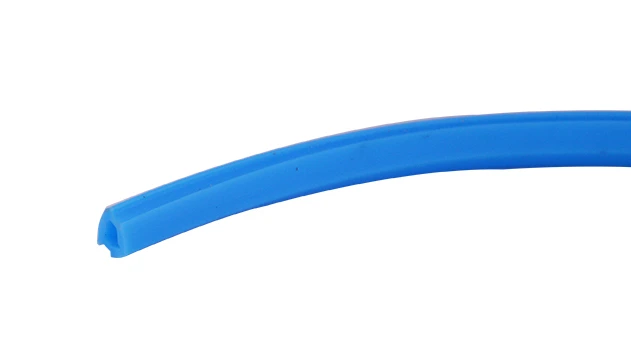
In the bustling world of manufacturing and industrial setups, every component—no matter how small—plays a role in keeping operations running smoothly. If you've ever walked through a factory floor, you've likely seen those sleek, modular structures holding up conveyor belts, workbenches, or material racks. Chances are, those structures are built from aluminum profile systems—versatile, durable, and endlessly customizable. But what holds these systems together, protects their inner workings, and ensures they stand up to the harsh chemicals often present in these environments? Enter the unsung hero: the t-slot rubber seal cover .
T-slot rubber seal covers are more than just tiny strips of rubber. They're the silent guardians of aluminum profile systems, filling the gaps in the T-slots (the signature grooves that make aluminum profiles so adaptable) to prevent dust, debris, and yes—harmful chemicals—from seeping in. For anyone who's ever dealt with a corroded profile or a jammed accessory, you know how critical these small aluminum profile accessories can be. But not all rubber seal covers are created equal. When solvents like acetone or oils like hydraulic fluid enter the mix, the wrong rubber type can degrade, crack, or fail entirely—threatening both the profile's integrity and the safety of the workspace.
In this article, we'll dive into the world of t-slot rubber seal covers, focusing on a question that keeps maintenance managers and facility engineers up at night: Which rubber types actually stand up to solvents and oils? We'll break down the most common rubber materials used in these seals, compare their chemical resistance, and share practical insights to help you choose the right one for your setup. Whether you're running a automotive assembly line, a pharmaceutical lab, or a food processing plant, understanding this small but mighty component could save you time, money, and a lot of headaches down the line.
What Are T-Slot Rubber Seal Covers, Anyway?
Before we jump into chemical resistance, let's make sure we're all on the same page about what t-slot rubber seal covers are and why they matter. Imagine an aluminum profile—long, extruded, with a T-shaped groove running along its length. This T-slot is what makes aluminum profiles so versatile: you can slide in bolts, brackets, or other accessories to build everything from workbenches to machine guards. But that groove also leaves an opening. Without a seal, dust, water, and chemicals can get trapped inside, leading to corrosion, rust, or even damage to the profile's structural integrity over time.
That's where the t-slot rubber seal cover comes in. These covers are designed to fit snugly into the T-slot, creating a tight barrier. They're typically made from flexible rubber or silicone, allowing them to bend and conform to the profile's shape while still being easy to install or remove when you need to add new accessories. Think of them like the weatherstripping on your car doors—small, but essential for keeping the bad stuff out.
But here's the catch: not all work environments are the same. A warehouse storing dry goods might only need basic dust protection, but a factory using industrial solvents or a workshop dealing with machine oils? That's where chemical resistance becomes non-negotiable. A seal cover that dissolves or cracks when exposed to these substances isn't just useless—it can become a liability. So, how do you know which rubber type to choose?
Why Chemical Resistance Matters in Industrial Settings
Let's paint a picture: You've just invested in a brand-new aluminum profile system for your production line. The profiles are shiny, the accessories are perfectly aligned, and everything runs like a dream—for the first month. Then, you notice something off: the T-slots are starting to look discolored, and some of the accessories feel loose. Upon closer inspection, you realize the rubber seal covers have turned brittle and cracked, allowing hydraulic oil from the nearby machinery to seep into the slots. Now, you're facing costly repairs, downtime, and the hassle of replacing both the seals and potentially damaged profiles.
This scenario isn't hypothetical—it's a common problem in environments where chemicals are present. Solvents (like degreasers, acetone, or isopropyl alcohol) and oils (hydraulic fluid, motor oil, even vegetable oil in food processing) are everywhere in industrial settings. They clean parts, lubricate machinery, and help products move through the production line. But when they come into contact with rubber, they can cause swelling, hardening, softening, or even complete breakdown of the material.
The consequences of using a non-resistant rubber seal cover go beyond just the seal itself. If the seal fails, chemicals can corrode the aluminum profile from the inside out, weakening its structural strength. In extreme cases, this could lead to profile failure, putting workers at risk. Additionally, degraded rubber can leave behind residues that contaminate products—especially critical in industries like pharmaceuticals or food processing, where cleanliness is paramount. Simply put: skimping on a chemical-resistant seal cover isn't worth the risk.

Common Rubber Types for T-Slot Seal Covers
Now that we understand why chemical resistance matters, let's meet the main players: the rubber types most commonly used in t-slot rubber seal covers. Each has its own set of strengths, weaknesses, and ideal use cases. We'll focus on five of the most popular: Nitrile (Buna-N), EPDM, Silicone, Viton (FKM), and Neoprene. By the end, you'll have a clear sense of which one is best suited for solvents, oils, or both.
1. Nitrile (Buna-N) Rubber
Nitrile rubber—often called Buna-N—is the workhorse of the rubber world. Made from a copolymer of acrylonitrile and butadiene, it's prized for its excellent resistance to oils, fuels, and greases. If you've ever used a rubber glove while changing motor oil, it was probably nitrile. That's because nitrile has a natural affinity for repelling hydrocarbons (the molecules found in most oils and fuels), making it a top choice for environments where mineral oils, hydraulic fluids, or gasoline are present.
But what about solvents? Nitrile's solvent resistance is a bit more nuanced. It holds up well to aliphatic solvents (think mineral spirits or hexane) but can struggle with aromatic solvents (like benzene) or strong polar solvents (such as acetone). It also has a decent temperature range, typically handling -40°C to 120°C (-40°F to 248°F), which covers most industrial environments. For many factories, nitrile is the go-to choice for t-slot seal covers because it balances performance, cost, and availability.
2. EPDM Rubber
EPDM (Ethylene Propylene Diene Monomer) rubber is the champion of weather resistance. If you've ever seen a rubber roof membrane or a garden hose that doesn't crack in the sun, EPDM is likely the material behind it. It's highly resistant to UV light, ozone, and water, making it ideal for outdoor or damp environments. But how does it fare with chemicals?
EPDM's Achilles' heel is oil resistance. Unlike nitrile, EPDM swells and degrades when exposed to petroleum-based oils and fuels. That said, it's excellent with polar solvents (like ethanol or methanol) and dilute acids/bases. If your workspace uses a lot of water-based cleaners or mild chemicals but minimal oil, EPDM could be a solid choice. Just keep it away from the hydraulic fluid.
3. Silicone Rubber
Silicone rubber is the versatile one. Made from silicon-oxygen bonds, it's known for its extreme temperature resistance (ranging from -60°C to 230°C/-76°F to 446°F) and flexibility. You'll find it in everything from oven mitts to medical devices because it's non-toxic and can handle both high heat and freezing cold. But when it comes to chemicals, silicone is a mixed bag.
Silicone has poor resistance to oils, fuels, and most solvents. It can swell in mineral oil and may even dissolve in strong solvents like toluene. However, it does resist water, steam, and some weak acids. For t-slot seal covers, silicone is best used in clean, dry environments (like electronics assembly) where temperature extremes are a concern, but chemicals are not.
4. Viton (FKM) Rubber
Viton (a brand name for FKM, or Fluorocarbon Rubber) is the heavyweight champion of chemical resistance. Developed by DuPont, Viton is made with fluorine atoms, which create incredibly strong bonds that repel most chemicals. If you work in an environment with aggressive solvents—think acetone, MEK, or even some acids—Viton is often the only game in town. It also holds up to oils, fuels, and high temperatures (up to 200°C/392°F), making it a favorite in aerospace, chemical processing, and oil refineries.
The downside? Viton is expensive—often 3-5 times the cost of nitrile. For most everyday applications, it's overkill. But if your process involves harsh chemicals that would eat through other rubbers, the investment is worth it. Just remember: Viton is stiff compared to other rubbers, so it may not conform as easily to irregular T-slot shapes.
5. Neoprene Rubber
Neoprene (Polychloroprene) is the all-arounder. Developed in the 1930s as a synthetic alternative to rubber, it offers a balance of oil resistance, weather resistance, and durability. Neoprene handles moderate exposure to mineral oils and greases, though not as well as nitrile. It also resists ozone, UV light, and some solvents (like alcohols and mild acids). Its temperature range (-40°C to 120°C/-40°F to 248°F) is similar to nitrile, making it a solid backup option when nitrile isn't quite right.
Neoprene's Achilles' heel? It's more expensive than nitrile and less chemical-resistant than Viton. For many, it's a "good enough" choice for mixed environments where chemicals are present but not in high concentrations.

Comparing Chemical Resistance: Solvents and Oils
Now that we've met the rubber types, let's put them head-to-head. Below is a comparison table breaking down how each performs against common solvents and oils. Keep in mind that "resistance" can vary by formulation (some nitriles have higher acrylonitrile content for better solvent resistance, for example), but this will give you a general guide.
| Rubber Type | Oil Resistance (Mineral, Hydraulic, Motor Oil) | Solvent Resistance (Aliphatic, Aromatic, Polar) | Best For | Price Range |
|---|---|---|---|---|
| Nitrile (Buna-N) | Excellent (resists swelling, hardening) | Good (aliphatic solvents); Poor (aromatic/polar solvents like acetone) | Automotive, manufacturing with mineral oils | Low to Moderate |
| EPDM | Poor (swells, degrades in petroleum oils) | Good (polar solvents, alcohols); Fair (mild acids) | Outdoor setups, water-based chemical environments | Moderate |
| Silicone | Poor (swells in mineral oil) | Poor (most solvents); Good (water, steam) | High-temperature, clean rooms (electronics, food) | Moderate to High |
| Viton (FKM) | Excellent (resists all oils, fuels) | Excellent (most solvents, acids, fuels) | Chemical processing, aerospace, aggressive solvents | High (3-5x nitrile) |
| Neoprene | Fair (moderate resistance, may swell slightly) | Fair (alcohols, mild acids); Poor (strong solvents) | Mixed environments, moderate chemical exposure | Moderate |
Let's dig deeper into a few real-world scenarios to see how these rubbers hold up. Imagine you run a small machine shop where you use hydraulic lifts (hydraulic oil) and occasionally clean parts with mineral spirits (an aliphatic solvent). Nitrile would be your best bet here—it resists both hydraulic oil and mineral spirits, and it's affordable. On the flip side, if you work in a lab where you regularly use acetone (a polar solvent) to clean equipment, nitrile would crack, and EPDM might swell—so you'd need Viton, even though it costs more.
Another example: a food processing plant using vegetable oil (a non-petroleum oil) and caustic soda (a mild base) for cleaning. Nitrile works here too, as it resists vegetable oils and mild bases. But if the plant switches to using citrus-based degreasers (which can contain d-limonene, an aromatic solvent), nitrile might struggle, and Viton could become necessary.
Practical Considerations When Choosing a Seal Cover
Chemical resistance isn't the only factor to consider when choosing a t-slot rubber seal cover. Here are a few other practical things to keep in mind:
1. Temperature Extremes
Rubber can become brittle in cold temperatures or soft and sticky in high heat. If your workspace has ovens, freezers, or outdoor exposure, make sure the rubber's temperature range matches your needs. Silicone and Viton handle high heat best, while nitrile and neoprene are better for cold environments.
2. Exposure Time
A brief splash of solvent might not harm a nitrile seal, but constant immersion will. If chemicals are a regular part of your process (not just occasional spills), opt for a more resistant rubber like Viton.
3. Mechanical Stress
T-slot seal covers need to stay in place even when accessories are added or removed. Softer rubbers like silicone might tear more easily during installation, while stiffer ones like Viton could crack under repeated bending. Nitrile strikes a good balance here—it's flexible but durable.
4. Cost vs. Performance
It's tempting to go for the cheapest option, but replacing failed seals (and damaged profiles) costs more in the long run. If your environment is harsh, investing in Viton or high-quality nitrile will save you money over time. For low-risk setups, standard nitrile or EPDM might be all you need.
5. Compatibility with Aluminum Profiles
Not all rubber seal covers are designed for every aluminum profile. Some profiles have wider T-slots, others deeper ones. Make sure the seal cover's dimensions match your profile's T-slot specs—an ill-fitting seal won't protect anything, no matter how chemically resistant it is.
Case Study: Real-World Applications
To bring this all to life, let's look at a real-world example. A mid-sized automotive parts manufacturer in the Midwest was using standard EPDM t-slot seal covers on their aluminum profile workbenches. For years, it worked fine—until they upgraded their cleaning process to use a stronger degreaser containing acetone to remove stubborn oil residues from parts. Within weeks, maintenance crews noticed the EPDM seals were swelling, turning sticky, and peeling away from the profiles. Dust and degreaser were seeping into the T-slots, causing the profiles to corrode and some accessories to loosen.
After consulting with their aluminum profile accessories supplier, they switched to nitrile seal covers. The difference was night and day. Nitrile resisted the acetone (since it was only used for spot cleaning, not constant exposure) and held up to the mineral oils from the machinery. Six months later, the profiles were still corrosion-free, and the seals showed no signs of degradation. The cost of switching was minimal compared to the savings from avoiding profile replacements and downtime.
Another example: a pharmaceutical lab using aluminum profiles to build fume hood enclosures. They regularly used isopropyl alcohol (a polar solvent) and occasionally ethanol. EPDM was a natural choice here—it resists polar solvents and holds up to the lab's strict cleanliness standards. The EPDM seals have been in place for over a year, with no signs of degradation, proving that sometimes the "lesser-known" rubber type is the right fit.
Conclusion: Choosing the Right Rubber for Your Needs
At the end of the day, the best t-slot rubber seal cover for your setup depends on one thing: your environment. If oils are your main concern, nitrile is your workhorse. If solvents like acetone or aggressive chemicals are present, Viton is worth the investment. For water-based or outdoor setups, EPDM shines. And for high temperatures with minimal chemicals, silicone does the job.
Remember, these small aluminum profile accessories play a big role in protecting your aluminum profile systems. Cutting corners on seal covers might save a few dollars upfront, but it could cost you far more in repairs, downtime, and replacements later. Take the time to assess your workspace's chemicals, temperatures, and mechanical needs—your future self (and your aluminum profiles) will thank you.
So, the next time you're setting up a new aluminum profile system or replacing old seal covers, ask yourself: What chemicals are in my environment? How often are they present? And which rubber type can stand up to them? With the right t-slot rubber seal cover, you'll keep your profiles protected, your operations running smoothly, and your mind at ease.