- Company Articles
- Products and Technology
- Product knowledge
- Chemical-Resistant Flat Swivel Castor Wheel with Brake for Laboratory & Pharma Settings

Chemical-Resistant Flat Swivel Castor Wheel with Brake for Laboratory & Pharma Settings
Related Product
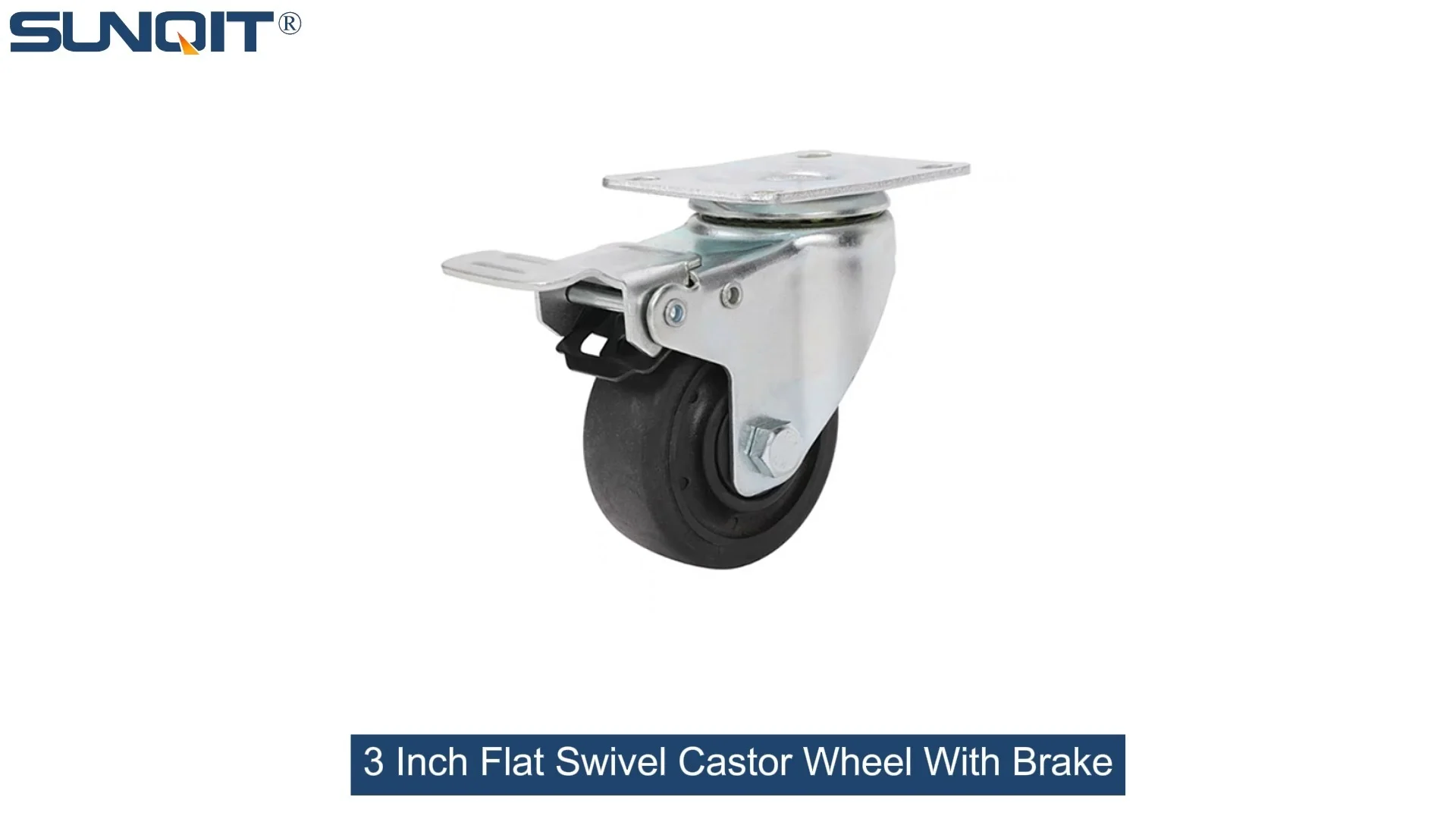
Flat Swivel Castor Wheel With Brake
Chair Casters Ball Bearing Wheels Rubber Base with brake design. Resistant to abrasion, impact and corrosion. Heavy payload can hold 70Kgs per pcs,which can make it works at a stable and smooth status.
Walk into any modern laboratory or pharmaceutical facility, and you'll notice a quiet but critical truth: mobility is the backbone of efficiency. From workstations loaded with sensitive instruments to trolleys carrying reagents and samples, nearly every piece of equipment needs to move—safely, smoothly, and without disrupting the strict standards of cleanliness and safety that define these spaces. At the heart of that mobility? Casters. But not just any casters. In environments where a single spill or equipment failure could compromise research, patient safety, or regulatory compliance, the right caster isn't just a convenience—it's a necessity. Today, we're diving into one such essential tool: the chemical-resistant flat swivel castor wheel with brake, a hero that keeps labs and pharma facilities running like well-oiled machines.
The Unique Challenges of Lab & Pharma Mobility
Labs and pharmaceutical plants aren't your average workspaces. They're places where precision meets pressure. Imagine moving a fully loaded esd workstation across a floor that's just been sanitized with harsh disinfectants. Or wheeling a trolley stacked with glass vials of corrosive solvents down a corridor, knowing that a sudden jolt could lead to a spill—and a compliance nightmare. The challenges here are unlike those in warehouses or offices. Let's break them down:
- Harsh Chemical Exposure: Daily cleaning routines involve everything from ethanol and isopropyl alcohol to bleach and industrial-grade disinfectants. Even accidental spills of acids, bases, or organic solvents are par for the course. Standard rubber or plastic casters often degrade quickly under these conditions, leading to cracks, swelling, or brittleness.
- Strict Cleanliness Standards: Contamination is the enemy. Casters with crevices, porous materials, or hard-to-clean surfaces can trap bacteria, dust, or chemical residues, turning them into hidden sources of cross-contamination.
- Heavy Loads, Delicate Cargo: Lab equipment isn't light. An esd workstation might hold centrifuges, spectrometers, or microscopes, weighing hundreds of pounds. Meanwhile, the cargo—samples, reagents, or finished pharmaceuticals—demands stability to avoid breakage or spills.
- Safety First, Always: When a workstation is in use, it needs to stay put. A caster that rolls unexpectedly could lead to injuries, damaged equipment, or ruined experiments. Conversely, when it's time to move, the caster needs to glide without jarring the load.
In short, labs and pharma facilities need casters that can handle punishment, resist chemicals, stay clean, support heavy weights, and lock securely. That's where the chemical-resistant flat swivel castor wheel with brake comes in.
Why Chemical Resistance Isn't Optional
Let's talk about chemical resistance first because it's often the make-or-break factor. A caster that isn't built to withstand lab-grade chemicals doesn't just wear out faster—it fails dangerously. Here's why:
Most standard casters use rubber or low-grade plastics for their wheels. When exposed to solvents like acetone or isopropyl alcohol, rubber can swell or become sticky, making the wheel hard to roll. Over time, it may crack, leaving fragments that could contaminate surfaces. Plastic wheels might melt, warp, or lose their structural integrity when in contact with strong acids or bases. Even metal components, like axles or swivel plates, can corrode if they're not made from stainless steel or another resistant alloy, leading to seized wheels or wobbly equipment.
The consequences of this degradation are real. A cracked wheel might suddenly lock up, causing a trolley to tip. A swollen caster could leave skid marks on the floor, requiring extra cleaning and risking scratches that harbor bacteria. Worst of all, a degraded caster might shed particles into the air or onto surfaces, compromising the sterility of the environment. For pharma facilities, that could mean batches of medication being deemed unsafe for use. For labs, it could invalidate weeks of research. In both cases, the cost—financial, reputational, and ethical—is too high to ignore.
Key Features of the Chemical-Resistant Flat Swivel Castor Wheel with Brake
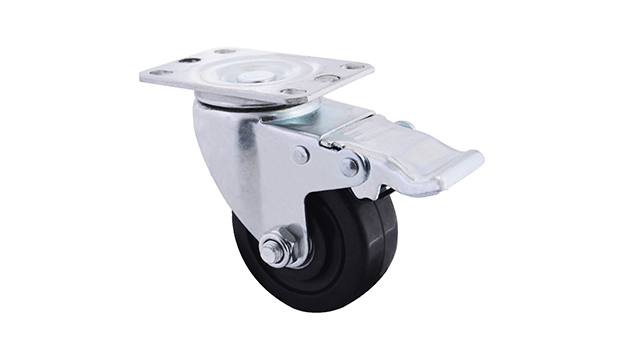
So, what makes this caster different? Let's unpack its design and how each feature addresses the unique needs of lab and pharma settings:
1. Chemical-Resistant Wheel Materials
At the core of this caster is its wheel, typically made from a specialized elastomer or polyurethane blend engineered to resist a broad range of chemicals. Unlike standard rubber, these materials stand up to repeated exposure to alcohols, disinfectants, acids (like sulfuric or hydrochloric), and even organic solvents. They don't swell, crack, or degrade, ensuring the wheel maintains its shape and rolling performance over time. Some models even use stainless steel cores for added durability, preventing rust when in contact with liquid spills.
2. Flat Swivel Design for Stability
The "flat swivel" part matters more than you might think. Traditional casters often have a raised swivel housing, which can create instability on uneven floors or when carrying heavy loads. The flat design lowers the center of gravity, making the caster (and whatever it's attached to) less likely to tip. This is especially critical for tall esd workstations or trolleys stacked with equipment—stability isn't just about movement; it's about preventing accidents when the equipment is stationary, too.
3. Reliable Brake Mechanism
A caster without a strong brake is a liability in labs and pharma settings. The brake on this model isn't an afterthought—it's a precision component. Most feature a "total lock" design, which locks both the wheel and the swivel motion, ensuring the equipment stays completely stationary when engaged. This is a step up from basic wheel-only brakes, which can still allow the caster to pivot, risking movement. The brake lever is also designed to be easy to engage and disengage, even when wearing gloves—because in a lab, you're rarely handling equipment with bare hands.
4. Load Capacity Built for Heavy Equipment
Lab gear is heavy, and the caster needs to keep up. These casters are typically rated for loads ranging from 200 to 500 pounds per wheel, meaning a set of four can easily support a fully loaded esd workstation or a trolley stacked with reagents. The secret? Reinforced housings, high-quality ball bearings, and sturdy axles that distribute weight evenly, preventing premature wear.
5. Compatibility with ESD Workstations
Many labs and pharma facilities use esd workstations to protect sensitive electronics from electrostatic discharge. The best chemical-resistant casters are ESD-compliant, meaning they conduct static electricity away from the workstation and into the floor, preventing damage to microscopes, circuit boards, or other sensitive instruments. This integration ensures that mobility doesn't compromise another critical safety feature.

Beyond the Wheel: Caster Accessories and Complementary Components
A great caster is only as good as the system it's part of. That's where caster accessories come into play, turning a standalone wheel into a complete mobility solution. Here are a few key accessories that often pair with the chemical-resistant flat swivel castor wheel with brake:
- Mounting Plates: These metal plates attach the caster to the bottom of equipment, ensuring a secure fit. In labs, where vibrations from centrifuges or mixers are common, a sturdy mounting plate prevents the caster from loosening over time.
- Sealed Bearings: Standard bearings can trap dust and moisture, leading to squeaky, stiff casters. Sealed bearings keep out contaminants, reducing maintenance needs and extending the caster's lifespan—perfect for environments where downtime for repairs is costly.
- Adjustable Leveling Feet: While casters handle mobility, adjustable leveling feet step in when equipment needs to stay put for extended periods. Many workstations and trolleys come with a mix of casters and leveling feet, allowing users to lock the casters, lower the feet, and create a stable, immobile base. This combination is ideal for equipment that's moved occasionally but used primarily in one spot.
Adjustable leveling feet, in particular, are a game-changer. Imagine setting up an esd workstation in a lab where the floor isn't perfectly level. Even with locked casters, the workstation might wobble, making precise work impossible. Leveling feet let you tweak each corner to ensure stability, all while the casters remain ready for the next move. It's the best of both worlds: mobility when you need it, rock-solid stability when you don't.

Real-World Applications: How This Caster Makes a Difference
Let's ground this in real life. Consider a pharmaceutical manufacturing facility producing injectable medications. The production line relies on mobile workstations that hold filling machines, labeling equipment, and quality control tools. These workstations are cleaned daily with hydrogen peroxide-based disinfectants to meet FDA standards. A standard caster here would start to degrade within months, leading to sticky wheels, uneven rolling, and eventually, the need for replacement. The chemical-resistant flat swivel castor with brake, though? It withstands the daily disinfection, rolls smoothly for years, and locks securely during production runs, ensuring the workstation doesn't shift—critical for maintaining precise filling levels in vials.
Or take a research lab studying infectious diseases. Biosafety cabinets and esd workstations here are moved regularly to accommodate new experiments or deep cleaning. The casters on these workstations must resist the bleach and alcohol used to sanitize surfaces, and they must lock firmly to prevent movement when technicians are handling pathogens. A caster with a weak brake could lead to a cabinet shifting mid-experiment, risking exposure. With the total-lock brake, the workstation stays put, giving researchers peace of mind to focus on their work, not equipment stability.
Choosing the Right Caster: A Quick Comparison
Not all casters are created equal, and choosing the wrong one can lead to headaches down the line. To help, here's a quick comparison between standard industrial casters and the chemical-resistant flat swivel castor wheel with brake, focusing on the features that matter most in lab and pharma settings:
| Feature | Standard Industrial Caster | Chemical-Resistant Flat Swivel Castor with Brake |
|---|---|---|
| Chemical Resistance | Limited; degrades in contact with alcohols, acids, or solvents | High; withstands repeated exposure to disinfectants, acids, and organic solvents |
| Brake Type | Wheel-only lock (may still pivot) | Total lock (locks wheel and swivel motion) |
| Stability | Raised swivel housing (higher center of gravity) | Flat design (lower center of gravity, less tipping risk) |
| ESD Compatibility | Rarely (may generate static) | Often (conducts static to floor, protecting equipment) |
| Maintenance Needs | Frequent (bearings trap dirt; materials degrade quickly) | Low (sealed bearings; chemical-resistant materials resist wear) |
Installation and Maintenance Tips
Even the best caster performs poorly if installed or maintained incorrectly. Here's how to get the most out of your chemical-resistant flat swivel castor wheel with brake:
- Installation: Always use the correct mounting hardware (often included with caster accessories). Tighten bolts securely to prevent wobbling, but avoid over-tightening, which can crack the mounting plate. If attaching to an esd workstation, ensure the caster's ESD path is continuous—no paint or debris should block the connection between the caster and the workstation frame.
- Cleaning: Wipe casters down regularly with a damp cloth and a mild detergent (avoid abrasive cleaners that can scratch the wheel surface). For deep cleaning, use the same disinfectants as the rest of the facility—these casters are built to handle it. Pay extra attention to the brake mechanism, as dried chemical residue can make it stick.
- Inspection: Check brakes weekly to ensure they engage fully. Test the swivel motion for stiffness—if it's hard to turn, the bearings may need lubrication (use a food-grade lubricant in pharma settings to avoid contamination). replace worn caster accessories, like bearings or brake pads, at the first sign of damage—don't wait for a complete failure.
Final Thoughts: Mobility with Peace of Mind
In labs and pharmaceutical facilities, every detail matters. From the precision of an experiment to the sterility of a production line, success hinges on tools that you can trust—even the ones you rarely think about. The chemical-resistant flat swivel castor wheel with brake may not be the flashiest piece of equipment in the room, but it's a workhorse that ensures mobility doesn't come at the cost of safety, compliance, or durability.
Whether you're outfitting a new esd workstation, upgrading old trolleys, or simply replacing casters that have seen better days, investing in a chemical-resistant model is an investment in peace of mind. It's knowing that when you lock that brake, your equipment isn't going anywhere. That when you roll across a freshly cleaned floor, the casters won't degrade. That when a spill happens (and let's face it, spills happen), your casters will hold up, keeping your facility running safely and efficiently.
In the end, labs and pharma facilities don't just need casters—they need partners in precision. And the chemical-resistant flat swivel castor wheel with brake? It's a partner you can count on.