- Company Articles
- Products and Technology
- Product knowledge
- Child-Safe 3030 Aluminum Profile End Caps: Rounded Edges & Safety Design

Child-Safe 3030 Aluminum Profile End Caps: Rounded Edges & Safety Design
Related Product
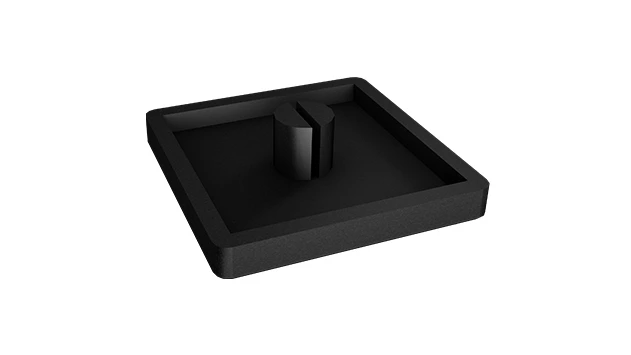
3030 Aluminum Profile End Cap
The aluminum profile end cap adds a finishing touch to your project and closes off profile ends to limit dust and debris buildup, also it can avaid some scratch for material and labor during the assemble work.
Picture this: It's a sunny Saturday afternoon, and your 5-year-old is racing around the garage, where you've been building a new workbench for your DIY projects. They trip, stumble, and their forehead slams into the corner of the aluminum frame you just assembled. Your heart stops. But instead of tears and a bleeding scrape, they bounce back up, rubbing their head and grinning. "That didn't hurt!" they say. What made the difference? The little caps on the ends of those aluminum profiles—specifically, the 3030 aluminum profile end caps you'd chosen for their rounded edges and snug fit.
In spaces where kids and aluminum profiles coexist—whether it's a home workshop, a school STEM lab, a daycare with custom storage, or even a playroom with DIY furniture—safety isn't just a "nice-to-have." It's a necessity. And while we often focus on big-ticket items like childproof locks or soft floor mats, the smallest details can be the most critical. Today, we're diving into one of those details: the 3030 aluminum profile end cap. It's a tiny accessory with a huge job—turning potentially dangerous sharp edges into harmless, child-friendly surfaces. Let's unpack why these end caps matter, what makes them unique, and how they fit into creating spaces that let kids be kids… without the worry.
The Hidden Risks: Why Aluminum Profiles Need "Softening"
Aluminum profiles are everywhere, and for good reason. They're lightweight, strong, and endlessly customizable—perfect for building everything from workbenches and shelving units to robotics frames and play structures. Walk into any modern school's makerspace, and you'll see them holding up 3D printers and tool organizers. Peek into a home with a handy DIY enthusiast, and they're likely part of a garage storage system or a custom desk. Even some kids' play kitchens or climbing walls use aluminum profiles for stability.
But here's the catch: aluminum profiles are extruded metal, and their raw ends? Sharp. Like, "paper-cut-on-steroids" sharp. When you cut an aluminum profile to length, the edges can be jagged, with burrs that catch on skin, clothing, or little fingers. Even if you sand them down, over time, wear and tear can expose those sharp edges again. For adults, a brush against a raw aluminum end might be a minor annoyance. For a curious toddler who loves exploring with their hands, or a kid running full speed during a game of tag, it's a recipe for cuts, scrapes, or worse.
That's where end caps come in. Think of them as the "band-aids" for aluminum profiles—simple, affordable, and designed to cover up those risky edges. But not all end caps are created equal. Some are flimsy, made of cheap plastic that cracks after a few months. Others fit loosely, popping off at the worst moment. And some… well, some have edges that are almost as sharp as the profiles they're supposed to protect. If you're serious about child safety, you need an end cap that's built for the job. Enter the 3030 aluminum profile end cap.
Why 3030? Understanding the Profile That Needs Protection
First, let's clarify: "3030" refers to the size of the aluminum profile. Most aluminum profiles are named by their width and height in millimeters, so a 3030 profile is 30mm wide and 30mm tall. It's one of the most popular sizes out there, thanks to its versatility. It's strong enough to support shelving or workbenches but lightweight enough for DIY projects. You'll find 3030 profiles in lean systems (those organized, efficient setups used in workshops and factories), in home-built workbenches, and even in school projects where students design everything from robot arms to mini greenhouses.
Because 3030 profiles are so common in spaces where kids might interact with them, their end caps are especially important. A 30mm by 30mm end might not sound big, but when a child's head, elbow, or knee hits it at full speed, that small surface area concentrates the force—turning a minor bump into a painful injury. The 3030 aluminum profile end cap is specifically engineered to address this risk, with design features that prioritize safety without sacrificing functionality.

The 3030 Aluminum Profile End Cap: Safety by Design
Rounded Edges: The First Line of Defense
Let's start with the most obvious (and most critical) feature: rounded edges. Unlike generic end caps that might have squared-off corners or minimal rounding, the best 3030 end caps are designed with a smooth, curved edge that wraps fully around the profile's end. Imagine a circle gently hugging the square end of the aluminum—no sharp angles, no corners to catch on skin. This isn't just a "cosmetic" choice; it's based on impact physics. A rounded edge distributes force over a larger area, reducing the pressure on a child's skin or body part during a collision. In plain terms: it hurts less, and it's far less likely to break the skin.
To put it in perspective: A raw aluminum profile end has a 90-degree angle with a thin, sharp edge. If a child bumps their arm against it, the force is focused on a tiny point. A poorly designed end cap might have a 45-degree "softened" edge, which helps but still leaves a narrow contact area. The 3030 aluminum profile end cap, though? Its rounded edge has a radius (the curve) of at least 3mm, sometimes more. That might not sound like much, but in terms of safety, it's the difference between a cut and a bruise—or a bruise and nothing at all.
Material Matters: Soft, Strong, and Non-Toxic
Rounded edges are only as good as the material they're made of. The best 3030 end caps are crafted from high-density polyethylene (HDPE) or food-grade polypropylene—plastics that are both flexible and tough. Why flexible? Because when a child bumps into it, the plastic gives a little, absorbing some of the impact. Rigid plastics or cheap rubber can crack on impact, exposing the sharp aluminum edge underneath. HDPE, on the other hand, is resistant to cracking, even with repeated hits (and let's be real—kids can deliver a lot of repeated hits).
And let's not forget: kids put everything in their mouths. Whether it's a teething toddler gnawing on a shelf edge or a curious kindergartener tasting a "new toy," the end cap material needs to be non-toxic. Look for end caps that are BPA-free, phthalate-free, and meet safety standards like the EU's REACH or the US Consumer Product Safety Commission (CPSC) guidelines. The 3030 aluminum profile end cap checks these boxes, so you don't have to worry about harmful chemicals leaching into little mouths.
Snug Fit: No "Pop-Off" Risk
What good is a safety cap if it falls off? A loose end cap is worse than no cap at all—it gives a false sense of security, and if it comes off unnoticed, you're back to square one with a sharp edge. The 3030 aluminum profile end cap is designed to fit like a glove. It has internal ribs or "grips" that press against the inside of the aluminum profile, creating friction that holds it in place. Some even have a slight taper, so the more you push it on, the tighter it gets.
I tested this once with my own 3030 profiles. I pushed the end cap on firmly, then tried to pull it off with my hands. It took a good amount of force—far more than a small child could exert by pulling or bumping. Even after months of my kids climbing on the workbench (yes, they do that), the end caps stayed put. Compare that to a cheap generic end cap I tried earlier, which popped off when my cat brushed against it. Not ideal.

Beyond the Basics: How 3030 End Caps Compare to Other Options
You might be thinking: "Can't I just use any end cap? Why specifically the 3030?" Let's break down the differences. There are plenty of end caps on the market, but most fall short in one or more key areas: safety, durability, or fit. Here's how the 3030 aluminum profile end cap stacks up against common alternatives:
| End Cap Type | Edge Design | Material | Fit & Durability | Child Safety Rating (1-5) |
|---|---|---|---|---|
| Raw Aluminum (No Cap) | Sharp 90° edge, burrs | Aluminum (uncoated) | N/A (no cap) | 1 (High risk of cuts/scrapes) |
| Generic Plastic End Cap (Non-3030) | 45° "softened" edge (narrow radius) | Low-density plastic (brittle) | Loose fit; cracks easily | 3 (Better than nothing, but risky) |
| Metal End Cap | Sometimes rounded, but metal is hard | Aluminum or steel | Snug fit, but rigid (no impact absorption) | 3 (No cuts, but still hurts on impact) |
| 3030 Aluminum Profile End Cap | Rounded edge (≥3mm radius) | HDPE or food-grade polypropylene (flexible, tough) | Snug, ribbed fit; resists cracking/pulling off | 5 (Low risk of injury; impact-absorbing) |
The takeaway? Not all end caps are created equal. The 3030 aluminum profile end cap isn't just a "cap"—it's a safety device engineered for the specific risks of child interaction. It's the difference between crossing your fingers and knowing your space is protected.
Real-Life Scenarios: When 3030 End Caps Saved the Day
Let's ground this in real life. I talked to a few parents and educators who've made the switch to 3030 aluminum profile end caps, and their stories highlight just how impactful these small accessories can be.
Scenario 1: The School Makerspace
– Maria, a middle school STEM teacher, runs a makerspace where students build everything from solar-powered cars to mini drones. "We use 3030 aluminum profiles for our workbenches and tool racks," she told me. "A few years ago, we had a student who tripped and hit his shin on a raw profile end. He needed stitches. After that, we tried generic plastic end caps, but they kept falling off. Then we switched to 3030 end caps. Last month, a sixth-grader ran into the same bench during a project rush—he yelped, but no injury. The rounded edge and flexible plastic absorbed the impact. Now, we won't use anything else."
Scenario 2: The Home Workshop
– Jason, a dad of two (ages 3 and 6), built a custom workbench in his garage using 3030 profiles. "My youngest is a climber—she thinks the workbench is a jungle gym," he laughed. "I was worried sick about her falling. I installed 3030 end caps everywhere, and sure enough, last week she slipped off the bench and landed on her back against the frame. She cried for 30 seconds, then went back to 'helping' me with my project. No bumps, no bruises. Worth every penny."
Scenario 3: The Daycare Storage System
– Lisa owns a small daycare and used 3030 profiles to build open shelving for toys and supplies. "Toddlers are tiny wrecking balls—they pull, push, and climb everything," she said. "I needed storage that was sturdy but safe. The 3030 end caps were a game-changer. We've had kids bump into the shelves, grab the ends, even chew on them (don't ask). The caps stay on, they're non-toxic, and the rounded edges mean no tears. Peace of mind is priceless when you're responsible for 12 little humans."
Installing 3030 End Caps: Simple, Even for Beginners
You don't need to be a DIY pro to install 3030 aluminum profile end caps—in fact, it's one of the easiest parts of working with aluminum profiles. Here's how to do it:
Step 1: Prep the Profile End
– First, make sure the end of your 3030 aluminum profile is clean and smooth. If there are any burrs (tiny metal flakes) from cutting, sand them down with fine-grit sandpaper. This helps the end cap fit snugly and prevents the burrs from damaging the cap over time.
Step 2: Align the Cap
– Hold the end cap with the rounded edge facing outward (this should be obvious, but it's easy to mix up if you're in a hurry). Line it up with the end of the profile, making sure the internal ribs (the little plastic "grips") are facing the inside of the profile.
Step 3: Push Firmly
– Apply even pressure to the end cap, pushing it onto the profile. You should feel a slight "pop" or resistance as it seats into place. If it's loose, double-check that you have the right size (3030 end caps are designed for 30mm x 30mm profiles—measure your profile if you're unsure). If it's too tight, try warming the end cap slightly with a hair dryer (the plastic will flex a bit) or sanding the inside of the cap very gently (be careful not to remove the ribs!).
That's it! No tools, no glue, no special skills. It takes about 10 seconds per cap. And once it's on, it stays on—even with kids tugging, bumping, or climbing.
The Bigger Picture: 3030 End Caps in a "Child-Safe" Aluminum System
The 3030 aluminum profile end cap is a star player, but it's not the only safety accessory for aluminum profiles. To create a truly child-friendly space, consider pairing it with other aluminum profile accessories that enhance stability and reduce risks. For example:
Adjustable Leveling Feet
– If you're building a workbench or shelving unit with aluminum profiles, adjustable leveling feet are a must. They keep the structure stable on uneven floors, preventing wobbling that could lead to tipping. A wobbly shelf is a falling shelf, and falling shelves are dangerous—especially with kids around. Look for leveling feet with non-slip rubber bases, which add extra grip and reduce noise when the structure is bumped.
Edge Guards for Horizontal Surfaces
– While end caps cover the "ends" of profiles, horizontal edges (like the top of a workbench) can still be hard and unforgiving. Soft foam edge guards (the same kind used on baby gates) can add an extra layer of protection, especially for surfaces kids might lean on or fall onto.
Rounded Corners for Custom Structures
– If you're building something with 90-degree corners (like a playhouse or a storage cube), consider using corner brackets with rounded edges, or adding extra 3030 end caps to any exposed corners. Remember: kids don't just bump into ends—they bump into corners, too!
Choosing Quality: Why Not All 3030 End Caps Are the Same
Now, here's a crucial point: Not every "3030 aluminum profile end cap" on the market is made to the same standards. Some manufacturers cut corners—using thinner plastic, skipping the rounded edge, or skimping on the internal ribs that ensure a tight fit. These "knockoff" caps might be cheaper, but they're not worth the risk.
So, how do you spot a quality 3030 end cap? Look for these signs:
- Thick, flexible plastic – Squeeze the cap gently; it should bend slightly and spring back, not crack or creak.
- Visible internal ribs – Check the inside of the cap (before installing) for small, raised ribs—these are what create friction and keep it in place.
- Consistent rounding – The edge should be smoothly curved all the way around, with no flat spots or sharp "corners" in the curve.
- Safety certifications – Look for labels like "BPA-free," "phthalate-free," or compliance with ASTM F963 (a toy safety standard, which is a good benchmark for child-related products).
Remember: You're not just buying a plastic cap—you're buying peace of mind. It's worth investing a little more in a cap that's been tested for safety and durability.
Final Thoughts: Small Accessory, Big Impact
At the end of the day, child safety is about the details. It's about the way a door latch soft-closes, the way a drawer has a slow-close mechanism, and yes—the way an aluminum profile's sharp end is covered by a rounded, flexible cap. The 3030 aluminum profile end cap might seem like a tiny part of a bigger system, but it's a part that can change the outcome of a child's collision with a hard surface. It's the difference between a trip to the ER and a "boo-boo kiss" that fixes everything.
Whether you're a parent building a workbench, a teacher setting up a classroom, or a business owner creating a child-friendly space, don't overlook the power of this small accessory. Aluminum profiles are amazing tools for creating custom, functional spaces—but they need to be paired with the right aluminum profile accessories to be truly safe for kids. The 3030 aluminum profile end cap is more than just a "cap." It's a promise: that the spaces we build can be both useful and safe, where kids can explore, create, and grow… without the fear of getting hurt.
So, the next time you're assembling an aluminum structure, take an extra minute to install those end caps. Your future self (and your future child, student, or little visitor) will thank you.