- Company Articles
- Products and Technology
- Product knowledge
- Choosing 3060 Aluminum Angle Yards: Alloy 6061 vs 6063 Comparison

Choosing 3060 Aluminum Angle Yards: Alloy 6061 vs 6063 Comparison
Related Product
3060 Aluminum Angle Yards
It used for 90° flat connection for 20 series aluminum profile.
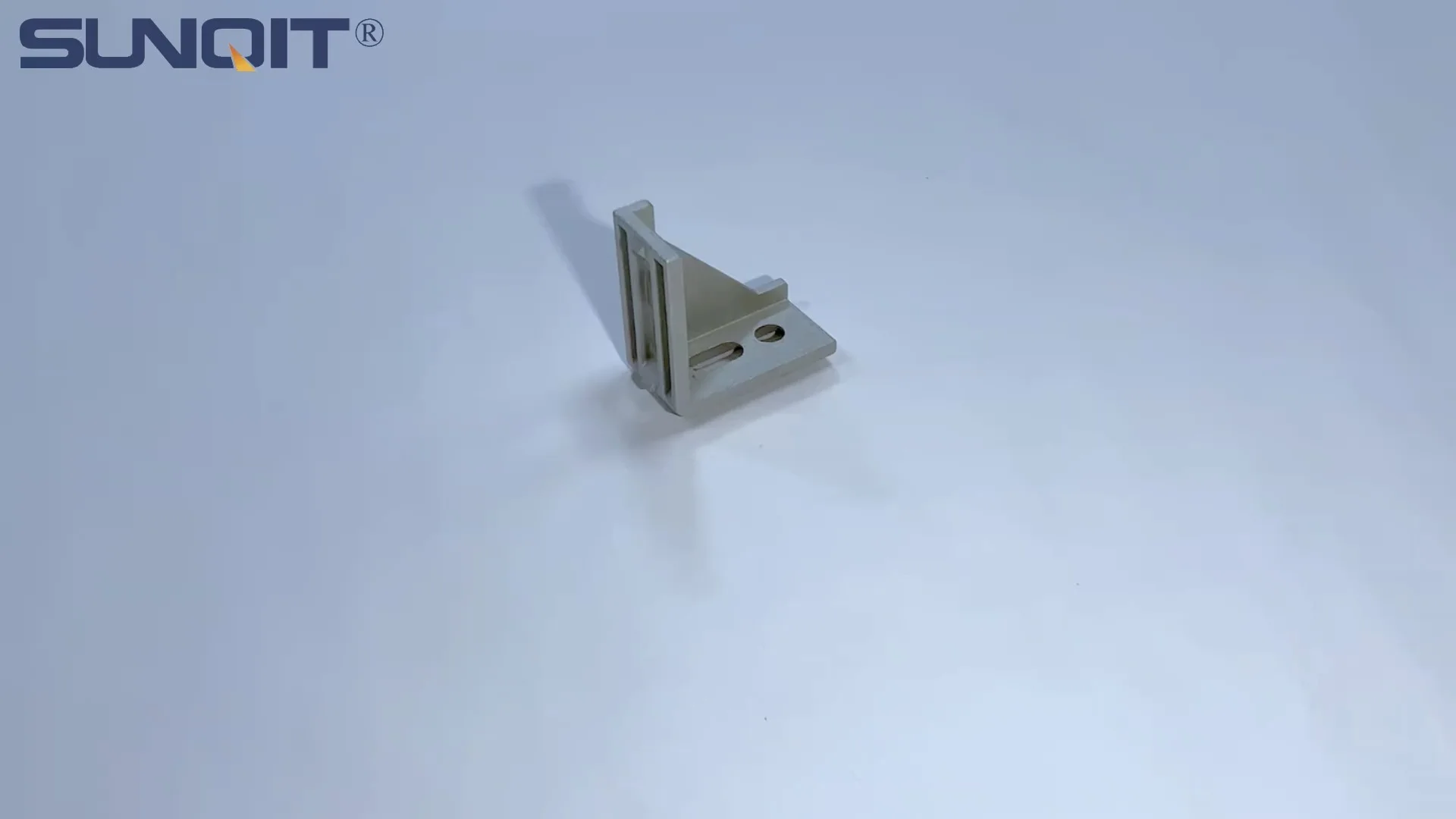
If you've ever walked through a manufacturing plant, assembled a modular workstation, or even built a custom shelf, chances are you've encountered aluminum angle yards. These unassuming structural components—long, L-shaped pieces of aluminum—are the unsung heroes of countless projects, providing stability, support, and flexibility where rigid materials like steel might be overkill. Among the most popular sizes is the 3060 aluminum angle yard , a versatile profile with a 30mm x 60mm cross-section that balances strength and weight. But here's the catch: not all 3060 angle yards are created equal. The alloy they're made from—specifically 6061 vs. 6063—can make or break your project, affecting everything from load capacity to corrosion resistance to how easily you can customize it with aluminum profile accessories . Let's dive into what makes these alloys different, and how to pick the right one for your needs.
What Even Are 3060 Aluminum Angle Yards?
Before we get into alloys, let's make sure we're on the same page about the star of the show: 3060 aluminum angle yards. These are extruded aluminum profiles shaped like a right angle, with each leg measuring 30mm and 60mm (hence "3060"). They're part of a broader family of aluminum extrusion profiles —products made by forcing heated aluminum through a die to create consistent, complex shapes. Unlike generic aluminum bars, angle yards are designed for structural applications: think framing workbenches, building machine guards, reinforcing shelving, or creating modular conveyor systems. Their L-shape distributes weight evenly, making them stronger than flat bars of the same thickness, and their hollow or solid cores (depending on the design) keep them lightweight.
But why 3060 specifically? It's a sweet spot in the aluminum profile world. At 30mm x 60mm, it's sturdy enough to support heavy loads (like stacks of inventory on a rack) but not so bulky that it's hard to handle or overpowers smaller projects (like a desktop organizer). It's also widely compatible with standard aluminum profile accessories —connectors, end caps, hinges, and brackets—that let you bolt, clamp, or snap pieces together without welding. Whether you're a small workshop owner building a custom assembly line or a DIY enthusiast crafting garage storage, 3060 angle yards are likely on your radar. Now, the question is: 6061 or 6063?
The Basics: What Are 6061 and 6063 Alloys?
Aluminum alloys are metals mixed with other elements to boost specific properties—strength, corrosion resistance, weldability, etc. Both 6061 and 6063 fall into the "6000 series" family, which means their main alloying elements are magnesium and silicon. This combo creates a material that's strong, formable, and heat-treatable (meaning you can strengthen it by heating and cooling it). But that's where the similarities start to fade. Let's break down their compositions and personalities:
Alloy 6061: The Workhorse
6061 is often called the "all-purpose" aluminum alloy, and for good reason. Its chemical makeup includes about 0.6% silicon, 1.0% magnesium, 0.28% copper, and small amounts of chromium. This blend gives it a reputation for strength and durability. After heat treatment (a process called "T6" temper), 6061 has a tensile strength of around 310 MPa (megapascals)—that's roughly 45,000 psi, strong enough to hold up a small car (though we don't recommend testing that). It's also highly machinable, meaning you can drill, saw, or mill it without too much hassle, and it welds well with the right techniques. You'll find 6061 in everything from bicycle frames to aircraft parts to marine hardware—applications where "tough" is the name of the game.
Alloy 6063: The Finisher
6063, on the other hand, is the "aesthetic" sibling. It has a higher silicon content (around 0.45-0.9%) and lower magnesium (0.45-0.9%), with almost no copper. This recipe makes it softer and more malleable than 6061, which is why it's the go-to for extrusions that need smooth, precise shapes—like window frames, door sills, or decorative trim. It's also known for its excellent surface finish: after anodizing (a process that adds a protective oxide layer), 6063 develops a bright, uniform color that resists fading. Think of 6061 as the construction worker in steel-toed boots, and 6063 as the interior designer with a paintbrush—both useful, but for very different jobs.

Head-to-Head: Key Properties Compared
To really understand which alloy is right for your 3060 angle yard, we need to compare their critical properties. Let's put them side by side in a table, then dig into what each difference means for real-world use:
| Property | Alloy 6061 (T6 Temper) | Alloy 6063 (T5/T6 Temper) | What This Means for Your Project |
|---|---|---|---|
| Tensile Strength | 310 MPa (45,000 psi) | 180-240 MPa (26,000-35,000 psi) | 6061 can handle heavier loads without bending or breaking. |
| Yield Strength | 276 MPa (40,000 psi) | 145-215 MPa (21,000-31,000 psi) | 6061 resists permanent deformation under stress better than 6063. |
| Weldability | Good, but may require post-weld heat treatment to restore strength. | Excellent—welds cleanly with minimal distortion, no post-treatment needed. | 6063 is easier to weld for DIYers or projects without heat-treating equipment. |
| Corrosion Resistance | Very good (resists saltwater, chemicals). | Excellent (especially in marine or humid environments). | 6063 is slightly better for outdoor or wet applications, but both are far better than steel. |
| Machinability | Good, but can be "gummy" if not sharp tools are used. | Excellent—soft enough to cut, drill, and shape with basic tools. | 6063 is friendlier to home workshops with limited equipment. |
| Surface Finish | Good, but may have minor extrusion lines. | Excellent—smooth, uniform, ideal for anodizing or painting. | 6063 looks better for visible parts (e.g., retail displays, furniture). |
| Cost | Higher (10-20% more than 6063). | Lower (more budget-friendly for large projects). | 6063 saves money if you don't need 6061's extra strength. |
| Extrusion Complexity | Best for simple shapes; may crack with intricate dies. | Excellent for complex, detailed profiles (thanks to lower extrusion pressure). | 6063 is better if your angle yard has custom cutouts or thin walls. |
Digging Deeper: Key Differences in Action
Let's take these properties out of the lab and into real scenarios. Suppose you're building a material rack for a warehouse—something that needs to hold pallets of heavy parts. If you use 6063 angle yards, you might hit a problem: at 240 MPa max strength, the rack legs could start to bow under the weight of a 500kg pallet. Swap in 6061, and suddenly you're looking at 310 MPa—enough to handle that load with room to spare. On the flip side, if you're making a display shelf for a boutique, where looks matter more than brute strength, 6063's smooth, anodized finish will make your products pop, and its lower weight will make the shelf easier to mount on drywall.
Weldability is another big one. Say you're fabricating a custom workbench frame and need to join angle yards at odd angles. With 6063, you can grab a MIG welder, run a bead along the joint, and call it a day—the weld will be strong enough for most tasks, and the metal won't warp much. With 6061, welding can weaken the material near the joint (since heat-treating is disrupted), so you'd need to anneal (re-heat-treat) the area afterward to get back that 310 MPa strength. That's doable for a factory with an oven, but a huge hassle for a small shop.
Corrosion resistance is a toss-up, but 6063 edges ahead here. Both alloys resist rust (aluminum forms a protective oxide layer naturally), but 6063 has less copper, which can trigger galvanic corrosion when in contact with other metals (like steel bolts) in wet environments. If you're building a outdoor tool rack that'll get rained on, or a conveyor system in a food processing plant with frequent washdowns, 6063's extra corrosion resistance might save you from premature failure.

Applications: When to Pick 6061, When to Pick 6063
The best way to decide between 6061 and 6063 3060 angle yards is to match the alloy to your project's "pain points." What matters most: strength? Cost? Looks? Ease of assembly? Let's map out common use cases and which alloy shines in each:
Choose 6061 If...
- You're building something that carries heavy loads. Think industrial workbenches holding CNC machines, material racks stacked with steel parts, or automotive frames. 6061's high tensile strength ensures these structures won't sag or collapse over time.
- Precision and rigidity are non-negotiable. 6061 has lower thermal expansion than 6063, meaning it stays dimensionally stable in temperature swings. This is critical for things like jigs and fixtures in manufacturing, where even a 1mm shift can ruin a product.
- You need to machine or drill intricate parts. 6061 holds threads better than 6063, so if you're tapping holes for bolts or cutting slots for accessories, it won't strip or deform as easily. This is a big plus for custom aluminum profile accessories that need a tight fit.
- You're working in high-wear environments. 6061 is harder than 6063, so it resists scratches, dents, and abrasion better. If your angle yards will be bumped by forklifts, dragged across concrete, or used as guides for sliding parts, 6061 will last longer.
Choose 6063 If...
- Appearance matters. 6063's smooth, uniform surface takes anodizing beautifully—think bright silver, black, or even custom colors. If you're building retail displays, office furniture, or trade show booths, 6063 will look more professional than 6061's slightly grainy finish.
- Budget is tight, and you don't need max strength. 6063 is typically 10-20% cheaper than 6061, which adds up fast on large projects (like a 50-foot conveyor system). If your angle yards are just holding lightweight items (e.g., plastic bins, cardboard boxes), 6063's 240 MPa strength is more than enough.
- You're assembling with basic tools. 6063 is softer, so it's easier to cut with a hacksaw, drill with a hand drill, or bend slightly to align parts. This is a godsend for DIYers or small teams without access to power tools.
- You're using lots of aluminum profile accessories . 6063's malleability makes it easier to clamp, bolt, or snap onto accessories like T-slot nuts, corner brackets, and hinge plates. The material gives a little under pressure, creating a tighter, rattle-free connection than 6061.
The Wildcard: 3060 National Standard Profile A
If you're sourcing 3060 angle yards from a supplier, you might see specs mentioning " 3060 national standard profile a ." This is a Chinese national standard (GB/T 6892-2015) that defines dimensions, tolerances, and performance requirements for aluminum extrusion profiles. It's like a quality stamp—ensuring the profile's legs are exactly 30mm x 60mm, the wall thickness is consistent, and the surface is free of cracks or dents.
How does this relate to 6061 vs. 6063? The standard doesn't specify an alloy, but it does set minimum strength and ductility thresholds. For example, 3060 national standard profile a requires a tensile strength of at least 160 MPa for general-purpose profiles. Both 6061 and 6063 exceed this (6063 starts at 180 MPa), so either alloy can be used. However, some suppliers tailor their 3060A profiles to 6063 by default because it's cheaper and easier to extrude to tight tolerances. If you need 6061, you may have to ask for a "heavy-duty" version of 3060A, which will cost more but meet higher strength standards.

Aluminum Profile Accessories: The Unsung Partners
No 3060 angle yard project is complete without aluminum profile accessories —the nuts, bolts, brackets, and connectors that hold everything together. These small parts can subtly influence your alloy choice, too. Let's see how 6061 and 6063 interact with common accessories:
Connectors and Fasteners
Most aluminum profile accessories rely on friction or mechanical clamping to attach to angle yards. For example, T-slot nuts slide into the angle yard's grooves and tighten against bolts, while corner brackets use set screws to bite into the profile's surface. 6063's softer material lets these accessories "grip" better—set screws sink in slightly, creating a tighter joint that's less likely to loosen over time. 6061, being harder, may require more torque to get the same grip, and there's a higher risk of stripping threads if you overtighten.
End Caps and Covers
End caps are plastic or metal plugs that seal the ends of angle yards, preventing dust, water, or debris from getting inside. They're usually press-fit or glued on. 6063's smoother surface (thanks to better extrusion quality) ensures end caps sit flush and stay put, while 6061's occasional surface imperfections (like minor die lines) can create gaps. If you're building something where aesthetics matter (like a retail display), 6063+end caps will look cleaner.
Hinges and Pivots
Hinges for aluminum profiles often mount via screws drilled into the angle yard's legs. 6063 is easier to drill—bits glide through it with less effort, and there's less chance of the metal chipping around the hole. 6061, being harder, may require cobalt drill bits (or slower drilling speeds) to avoid overheating. For high-frequency hinges (like a folding workbench lid), 6061's strength is better, though—hinge screws are less likely to pull out under repeated stress.
Cost: The Bottom Line
Let's talk money. 6063 3060 angle yards are almost always cheaper than 6061, often by 10-20% per linear meter. Why? Extruding 6063 is faster and less energy-intensive—it flows through dies more easily, so manufacturers can produce more profiles per hour. 6061, with its higher magnesium and copper content, also costs more to raw material suppliers. For a small project (say, a 2-meter-long shelf), the difference might be $5-$10—hardly worth stressing over. But for a large-scale build (like a 50-meter conveyor system with 100 angle yards), that 10% savings adds up to hundreds of dollars.
But here's the catch: cheaper upfront doesn't always mean cheaper long-term. If you skimp on alloy strength and your 6063 rack collapses under a heavy load, you'll pay for replacements, downtime, and maybe even damaged inventory. Conversely, overbuying 6061 for a light-duty project (like a spice rack) is a waste of money—you're paying for strength you'll never use. The sweet spot is to calculate your maximum load, then pick the alloy that meets (but doesn't exceed) that need.
Making Your Decision: A Step-by-Step Guide
Still on the fence? Walk through these questions to narrow it down:
- What's the maximum weight the angle yard will support? If it's over 200kg (440 lbs) per linear meter, lean toward 6061. Under that, 6063 is probably fine.
- Will it be exposed to moisture, chemicals, or extreme temperatures? 6063 for wet/coastal areas; 6061 for high heat or chemical exposure (it resists oils and solvents better).
- Do you need to weld, drill, or machine the profile? 6063 is easier for DIYers; 6061 if you have industrial tools.
- Does appearance matter? 6063 for visible projects; 6061 for hidden structural parts.
- What's your budget? If cost is critical and strength needs are low, 6063. If reliability is worth a premium, 6061.
Final Thoughts: It's About Balance
At the end of the day, choosing between 6061 and 6063 3060 aluminum angle yards isn't about picking a "better" alloy—it's about picking the right tool for the job. 6061 is the brawny workhorse, ideal for heavy loads and precision. 6063 is the versatile artist, perfect for budget-friendly, good-looking projects that don't push the limits of physics. Both are excellent aluminum extrusion profiles , and when paired with the right aluminum profile accessories , they'll help you build something durable, functional, and even a little bit impressive.
So, the next time you're staring at a shelf of 3060 angle yards at the hardware store, or scrolling through supplier listings for "3060 national standard profile a," remember: the answer is in your project's needs. Ask yourself what matters most, and let the alloy's properties guide you. Whether you go with 6061 or 6063, you're choosing a material that's lightweight, recyclable, and built to last—two great options in a world of compromises.